















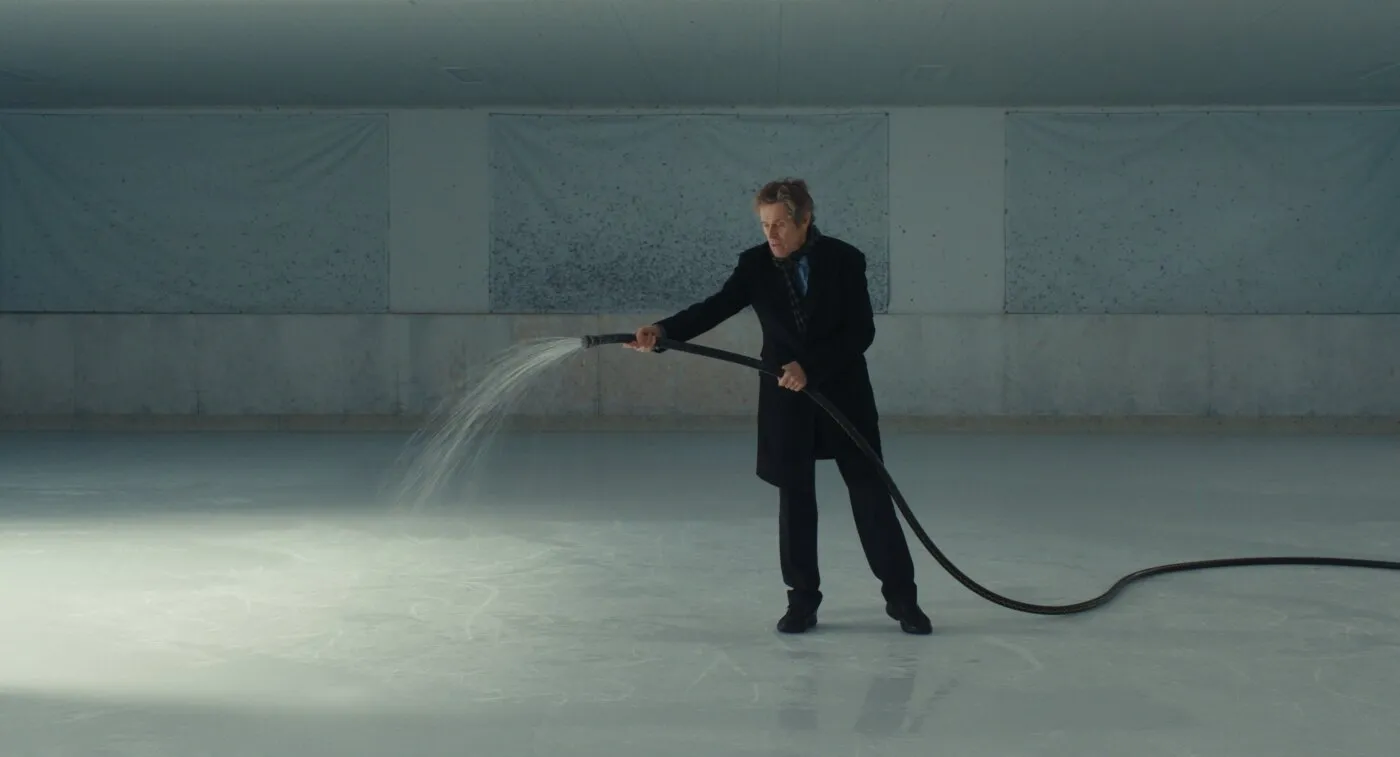

A soufflé is a minor miracle of structural integrity. It is an act of culinary defiance, a temporary sculpture of air and egg held together by little more than heat and conviction. One admires its craft and its perfect, fleeting rise from the ramekin, knowing its collapse is an essential part of its nature.
It is a beautiful, delicious folly. Gastón Solnicki’s film, The Souffleur, understands this principle deep in its bones. His setting is Vienna’s InterContinental Hotel, a once-glorious monument to mid-century luxury now succumbing to a gentle decay. The chandeliers still glitter, but the carpets have yellowed and the staff move with a quiet weariness.
Within these walls presides Lucius Glantz, the hotel’s manager, played by Willem Dafoe with the haunted energy of a museum curator watching his prized exhibit get tagged for demolition. For Lucius, the hotel is his entire world, an institution he has nurtured for decades.
The news that an Argentine mogul (played by Solnicki himself) has purchased the building with plans to tear it down is an extinction-level event. The film presents the slow, quiet apocalypse of one man’s purpose. What happens when the edifice that contains your identity is scheduled for destruction?
Dafoe, Our Atlas
The film is a fragile, fragmented thing, and Willem Dafoe is the performer tasked with holding its disparate pieces together. He is the movie’s gravitational center, his presence making its artistic experiments and cryptic silences accessible.
His gaunt face, a remarkable landscape of sharp angles and deep-set eyes, projects a manic desperation that is at once humorous and deeply sad. Lucius is a man clinging to the wreckage of a glorious past, his faith in the hotel’s importance a delusion that feels both pitiable and somehow noble. His obsession with its fading relevance mirrors his own existential panic, a fear of being a relic in a world that has moved on.
Much of the film rests on Dafoe’s wry, mournful narration. His voice carries entire sequences, turning complaints about kitchen politics or observations about marionette mechanics into a kind of world-weary poetry. It’s a performance of immense control and quiet eccentricity, a masterclass in what we might call performance-gravity; he grounds the film’s arthouse inclinations in something recognizably human.
We have seen a version of this before in The Florida Project, where he acted as the professional anchor amidst a cast of newcomers, a caretaker of the marginalized. Here again, his seasoned authenticity makes the whole enterprise work, preventing it from floating away on its own intellectual currents. He shows us a man whose very posture, the slight stoop in his shoulders as he walks the empty halls, communicates a lifetime of dutiful responsibility.
Solnicki’s Static Elegy
Director Gastón Solnicki is less interested in story than in atmosphere. He constructs his film from a series of beautifully composed, often disconnected scenes, building an experience rather than a plot. The result is an impressionistic tone poem about loss, a mood piece that drifts through its subject with the quiet detachment of a ghost.
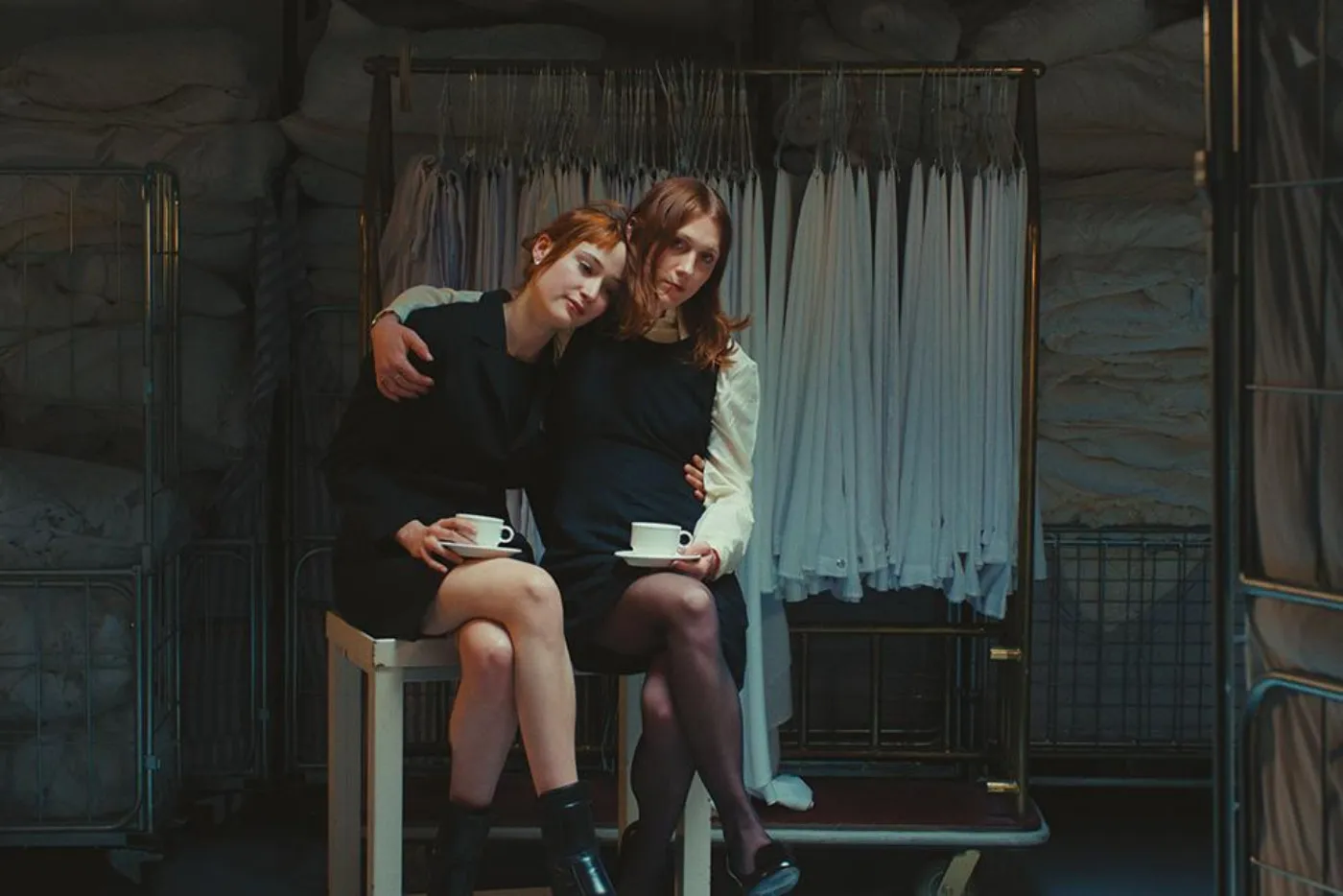
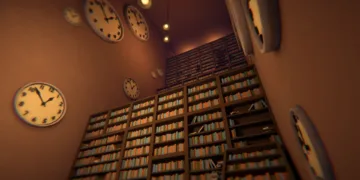
The hotel’s decay is mirrored by a series of surreal flourishes that suggest a world, an organism, coming undone at the seams. Clocks spin erratically, pipes clog without reason, and most symbolically, the chef’s signature soufflés refuse to rise.
These are the physical symptoms of Lucius’s internal collapse, the building’s failing systems becoming a metaphor for his own body and mind breaking down. The ambient sound design, full of humming vents and distant clatter, enhances this feeling of a living machine slowly powering off.
Rui Poças’s cinematography captures Vienna with a painterly calm. His camera is often still, observing characters as they enter and leave the static frame with a sense of cool observation. The city itself is a character, but it is a Vienna drained of its imperial romance.
We see abandoned football goals in parks and strange, obsolete machinery humming in the hotel’s basement. It is a landscape of obsolescence, a perfect reflection of Lucius’s own feelings of being left behind by time. Solnicki weaves in archival, black-and-white footage of the hotel’s glamorous past, images that haunt the present-day narrative with the quiet melancholy of what has been lost forever.
The Aftertaste of Impermanence
The Souffleur is a quiet meditation on the erasure of legacy in a world that prizes demolition over preservation. It is a commentary on a certain strain of global capitalism, where unique, character-filled institutions are flattened to make way for something new, something likely more profitable and less soulful.
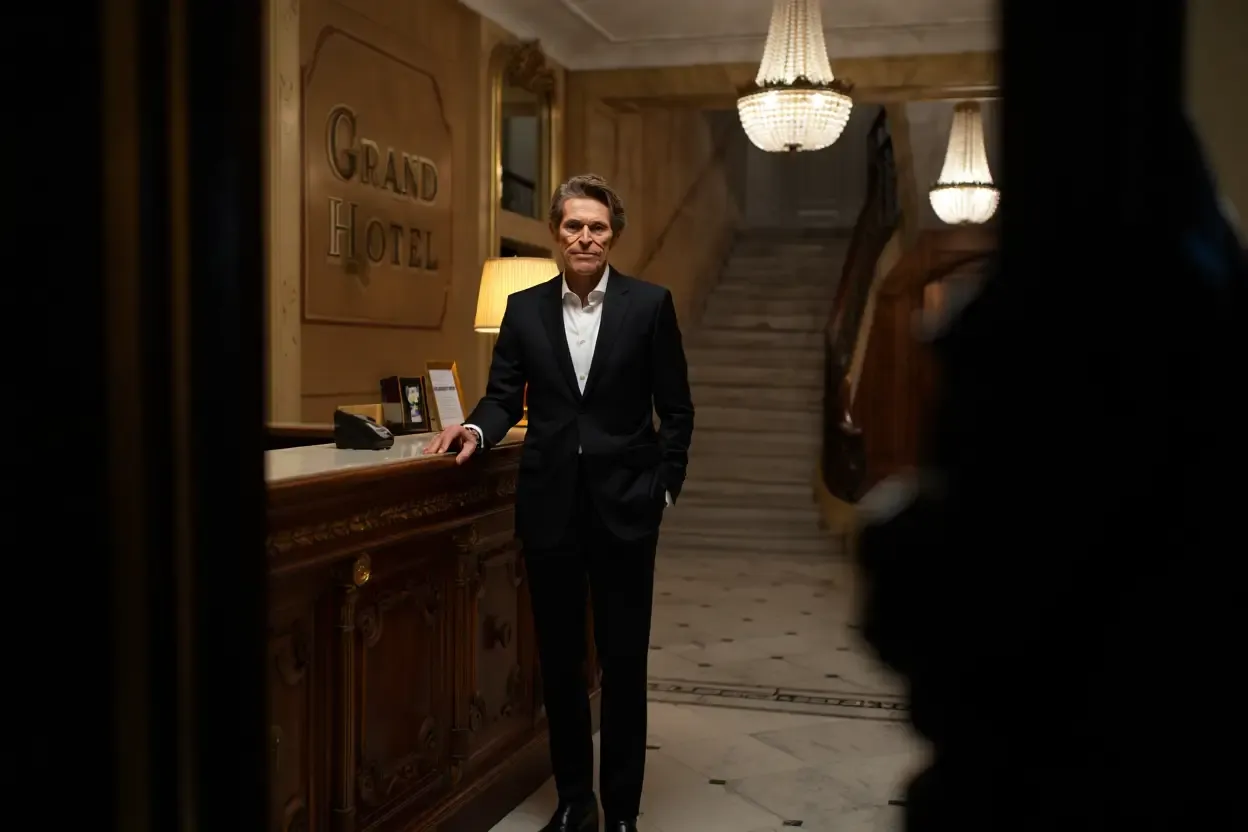
The film examines how these physical structures give shape to our lives and what remains when they are gone. It is a study in purposeful contradiction; it is visually exquisite and held aloft by a magnificent central performance, yet its narrative is whisper-thin.
The supporting characters are sketches, ghosts who drift through the hotel without making a lasting impression. Their lack of substance might be a flaw, or it could be a deliberate choice to heighten Lucius’s profound isolation; to him, the only thing truly real is the building.
Its brief 78-minute runtime is another of its paradoxes. The film is commendably concise, never overstaying its welcome. At the same time, it feels underdeveloped, too short to give its potent ideas the space they need to breathe and deepen.
Like its namesake dish, the movie is a thing of delicate craft, beautiful in its fleeting form. It rises with promise and collapses with a quiet sigh, leaving behind an impression of wit and melancholy that quickly dissipates. You admire the artistry, even as you are left feeling slightly hungry for something more substantial. The film is a perfect, hollow confection.
The Souffleur, an Austrian and Argentinian dark comedy film, had its world premiere at the 82nd Venice International Film Festival on August 31, 2025. The movie, which has a running time of 78 minutes, received distribution in Italy via Revolver & Madison Group for a theatrical release, while Filmladen acquired rights for Austria. The film was still seeking US distribution at the time of its premiere, so streaming availability will depend on future deals.
Full Credits
Director: Gastón Solnicki
Writers: Gastón Solnicki, Julia Niemann
Producers and Executive Producers: Gastón Solnicki, Gabriele Kranzelbinder, Paolo Calamita, Eugenio Fernández Abril, Filip Jan Rymsza
Cast: Willem Dafoe, Lilly Lindner, Stéphanie Argerich, Gastón Solnicki, Imona Mirrakhimova, Claus Philipp, Camille Clair
Director of Photography (Cinematographer): Rui Poças
Editors: Ana Godoy
The Review
The Souffleur
The Souffleur is an admirable piece of arthouse filmmaking, anchored by a masterful Willem Dafoe performance and stunning, painterly visuals. It successfully captures a mood of quiet melancholy and existential dread. Its intellectual rigor is impressive, yet its fragmented narrative and emotional distance prevent it from being truly affecting. Like its namesake dessert, the film is a delicate, beautiful construction that is impressive in the moment but leaves one feeling that its substance is as fleeting as its form. It is a film to be appreciated more than loved.
PROS
- A magnetic and anchoring central performance by Willem Dafoe.
- Artful, beautifully composed cinematography and strong visual direction.
- A successfully crafted melancholic and dreamlike atmosphere.
- Wry, poetic narration and moments of effective dry humor.
CONS
- The narrative is thin, fragmented, and lacks substantial development.
- Supporting characters are underdeveloped, feeling more like sketches than people.
- The film’s style can create an emotional distance, making it intellectually cold.
- Its central metaphor, while fitting, sometimes feels heavy-handed.