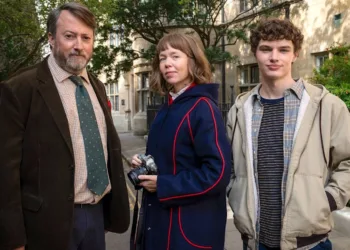












Tommy, Fred, and Chad are seventeen, bored with school, obsessed with music, and convinced that whatever adulthood has planned for them can probably wait. That conviction gives Nimrods its most persuasive streak. Lee Kirk’s film treats teenage rebellion less as political awakening than as the simple refusal to accept that sensible choices should outrank ridiculous dreams.
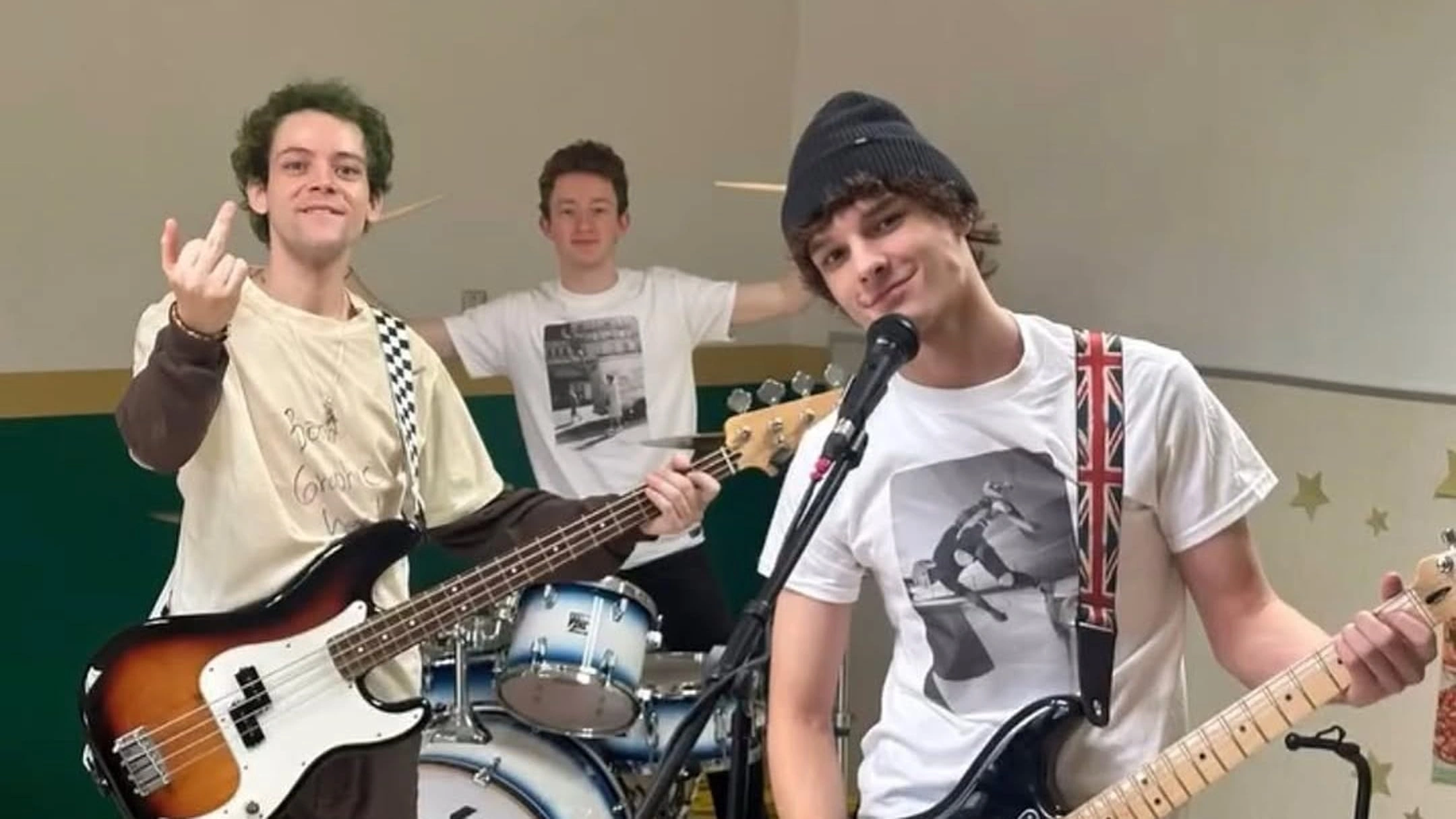
Mason Thames plays Tommy, singer and guitarist for garage punk band Analog Dogs, alongside Kylr Coffman’s bassist Fred and Ryan Foust’s drummer Chad. After the trio meet Green Day and hand over a cassette demo, Tommy receives a phone call apparently inviting them to open the band’s New Year’s Eve concert in Los Angeles. The call actually comes from Tommy’s older brother Wayne and his friend Keith, turning a stupid prank into a cross-country expedition.
Tommy steals Wayne’s vehicle, collects his bandmates, and heads west from Kansas City. Their planning is terrible. Their confidence is magnificent. The setup knowingly belongs to an older tradition of teenage comedy in which escape means mobility. School, parents, money, geography: everything represents somebody else’s rules. A vehicle offers the temporary possibility of outrunning them.
Three Idiots on the Road
The film survives its familiar structure because Thames, Coffman, and Foust behave like friends who have already spent years getting on each other’s nerves. Their conversations carry the petty cruelty and immediate forgiveness of teenage friendship. Fred blurts out whatever enters his head. Chad worries about consequences.
Tommy pushes the others forward with the confidence of someone who has confused determination with competence. None of these traits requires an explanatory monologue because the actors establish them through rhythm.
Coffman gets many of the funniest beats. Fred’s lack of restraint gives even basic logistical disasters an extra kick, while Foust makes Chad’s anxiety useful rather than merely timid. Thames has the harder job. Tommy steals a car, lies freely, ignores warnings, and repeatedly places his friends inside situations they did not request. His charm keeps the character from becoming unbearable.
The road provides the expected collection of humiliations. They fill the vehicle with the wrong fuel, discover that ambition does not count as money, attempt to dine and dash, and then realize their escape plan is useless because the vehicle cannot take them anywhere. A battle of the bands gives them an excuse to perform, while a muddy outdoor concert turns punk nostalgia into physical comedy.
Kirk occasionally mistakes accumulation for escalation. The friends argue, separate emotionally, reunite, then repeat the cycle. By the third fracture, reconciliation has become part of the itinerary.
The motel detour exposes the same problem. Its bizarre discovery generates one of the movie’s stranger jokes, yet the sequence belongs to a slightly different comedy, inserted between episodes that already have enough trouble generating momentum.
Punk, Packaged Carefully
Green Day are everywhere in Nimrods, sometimes literally and almost constantly through the soundtrack. “Longview,” “American Idiot,” “Know Your Enemy,” “Wake Me Up When September Ends,” and “Waiting” help turn the film into an affectionate scrapbook of the band’s different eras.
That could easily have produced a vanity project. Kirk avoids the worst version of that movie by letting Green Day appear early. Tommy meeting his heroes does not become a sacred final reward. It happens near the beginning, awkwardly, and the narrative quickly returns to Analog Dogs.
The decision matters because Nimrods is less interested in celebrity than in the mythology surrounding amateur music: cassette demos, garage rehearsals, terrible venues, unreliable transport, homemade recordings, and the belief that one great performance could rearrange your life.
Tommy’s attachment to analogue technology contributes to that fantasy. The cassette tapes and camcorder footage create a peculiar temporal bubble. These teenagers live in a contemporary world while behaving like children from an earlier musical culture, protected from the efficiency that smartphones would bring to the plot.
There is commercial calculation here, certainly. Green Day songs are placed generously, references reward fans, and the muddy concert evokes the band’s famous Woodstock ’94 appearance. Yet the film’s most appealing use of nostalgia lies in giving younger characters permission to inherit it. Punk becomes cultural hand-me-down clothing, slightly oversized, enthusiastically worn.
The Trouble With Growing Up
For all the stolen vehicles, mushrooms, smutty jokes, green hair, and attempted delinquency, Nimrods is remarkably gentle about its teenagers. Tommy, Fred, and Chad behave badly without seeming malicious. Their rebellion rarely threatens anyone beyond themselves and whichever adult currently has to rescue them.
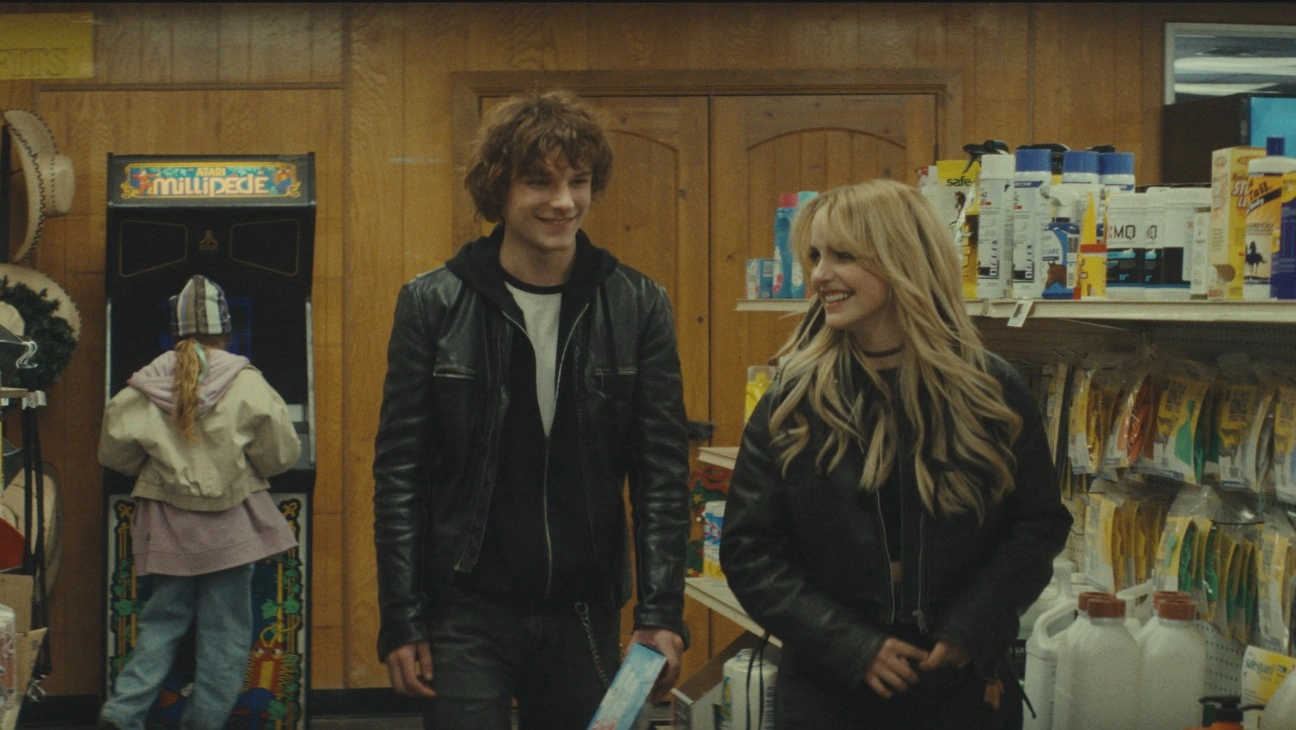
That sweetness extends to the supporting cast. Jenna Fischer brings an easy warmth to Tommy’s mother, while Chad’s relationship with his protective mother gives his gradual independence a comic edge. Mckenna Grace’s Olivia offers Tommy a romantic connection through their shared interest in music, though the screenplay gives her too little space outside his development.
The film reaches for heavier emotion through Tommy’s late father. His grief is meant to explain some of the hostility between Tommy and Wayne and to deepen his obsession with succeeding as a musician. The material never receives enough attention for those moments to feel fully earned. The father is invoked when the screenplay needs gravity, then pushed aside when another misadventure arrives.
Wayne suffers from the same compression. His prank sets the entire story in motion, and the shared loss between the brothers hints at resentment far richer than their limited scenes can explore.
Nimrods is sharper when it leaves that emotional machinery alone and watches three teenagers make music, insult each other, ruin their own plans, and keep moving toward Los Angeles anyway. The film’s version of punk rebellion may be unusually polite beneath the dirt and noise, but perhaps that contradiction is exactly why Green Day make such natural patrons for it.
Nimrods premiered at the Toronto International Film Festival on September 12, 2025, with an official theatrical release on August 14, 2026. The coming-of-age comedy follows three teenagers driving cross-country under the false belief that their band is opening for Green Day.
Where to Watch Nimrods (2025) Online




Full Credits
Title: Nimrods
Distributor: Inaugural Entertainment
Release date: September 12, 2025 (Toronto International Film Festival), August 14, 2026 (General Release)
Running time: 116 minutes
Director: Lee Kirk
Writers: Lee Kirk
Producers and Executive Producers: Live Nation Productions
Cast: Mason Thames, Kylr Coffman, Ryan Foust, Jenna Fischer, Mckenna Grace, Angela Kinsey, Keen Ruffalo, Ignacio Diaz-Silverio
Director of Photography (Cinematographer): David Robert Jones
Editors: Ryan Brown
Composer: Alec Puro
The Review
Nimrods
Nimrods dresses a familiar teenage road movie in cassette tapes, green hair, stolen cars, and a soundtrack built almost entirely from Green Day, yet its strongest rebellion is its refusal to turn youthful foolishness into cynicism. Lee Kirk’s film loses momentum through repeated arguments, convenient setbacks, and thinly developed grief, but Mason Thames, Kylr Coffman, and Ryan Foust give the friendship enough unruly warmth to survive the screenplay’s machinery. Its punk credentials may be carefully packaged, but the affection behind them feels sincere.
PROS
- Excellent chemistry between the three leads
- Affectionate treatment of punk culture
- Energetic Green Day soundtrack
- Several memorable road-trip disasters
- Strong final concert stretch
CONS
- Repetitive friendship conflicts
- Underdeveloped grief subplot
- Thin romantic material
- Uneven motel detour
- Familiar road-movie structure