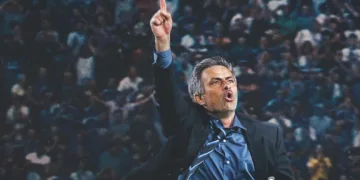






















Mourinho’s fiercest opponent in Netflix’s three-part documentary is occasionally the edit itself. José Mourinho insists that English journalists invented “The Special One,” only for director Joe Pearlman to cut back to his first Chelsea press conference, where the newly arrived Champions League winner calls himself “a special one.” Mourinho objects to the definite article. The footage objects to almost everything else.
That exchange captures the tension running through Mourinho. Pearlman has access to a manager who remains one of football’s most magnetic storytellers, joined by Frank Lampard, John Terry, Petr Čech, Zlatan Ibrahimović, Sami Khedira and Sir Alex Ferguson. Yet access on streaming television increasingly comes with an invisible negotiation: the subject enters the room, but how far may the documentary follow? Here, Mourinho keeps hold of the keys.
Manufacturing the Special One
The early Chelsea material shows why television cameras loved Mourinho before streaming platforms began turning famous sports figures into prestige-documentary franchises. His suits, clipped press conferences and appetite for confrontation transformed managerial communication into entertainment. He understood that Premier League football had become an international media product, and he behaved like someone who knew the manager could be one of its central characters.
The players explain how that performance worked inside the dressing room. Terry says he would have left the pitch in a coffin for Mourinho. Čech recalls playing with a broken shoulder. Mourinho describes ignoring Terry while the defender was injured, using emotional distance as motivation.
Such stories sound almost absurd beside the contemporary language of player welfare, yet they reveal the bargain his teams accepted. Mourinho demanded extreme devotion and made players feel that extreme devotion proved membership in something exclusive. The word repeatedly used is “family.” The series leaves enough evidence to make that description uncomfortable.
Mourinho’s families needed enemies. Referees, journalists, rival managers and club hierarchies could all fill the role. His answer when asked what winning feels like is simply “normality,” a revealing standard for someone whose environments regularly became emotionally overheated. Victory was ordinary. Conflict supplied the drama. The documentary is strongest when it lets those two instincts occupy the same frame.
Beautiful Fights, Convenient Silences
Pearlman follows the major victories with confidence: Porto’s Champions League triumph, Chelsea’s domestic dominance, Inter Milan’s treble and Real Madrid’s attempt to break Barcelona’s grip on Spanish football. Mourinho calls such confrontations a “beautiful fight,” language that suits both his managerial philosophy and the documentary’s preferred version of him. Several details could have produced far tougher television.

Terry recalls Chelsea obtaining footage of a Bolton training session that showed Sam Allardyce preparing his team to target William Gallas. The anecdote lands, raises obvious questions about competitive conduct, then largely passes. Mourinho’s relationship with Roman Abramovich receives similar treatment. His return to Stamford Bridge with Inter becomes a story of revenge against the owner who dismissed him, while the financial machinery that helped transform Chelsea receives limited scrutiny.
The Real Madrid material comes closer to exposing the cost of Mourinho’s method. The 5-0 defeat to Pep Guardiola’s Barcelona punctures the aura of control, and Khedira describes the dressing room atmosphere as a “nightmare” and “poisonous.” Those words suggest a stronger line of inquiry: what happens when siege mentality stops protecting a team and begins consuming it?
Other controversies appear without sustained pressure. Mourinho’s accusations surrounding referee Anders Frisk are revisited, along with the threats that preceded Frisk’s resignation and UEFA’s decision to clear Mourinho of responsibility. The Eva Carneiro dispute at Chelsea surfaces too.
The series records these episodes, but recording misconduct and interrogating its patterns are different editorial choices. Streaming documentaries about powerful living subjects have become very good at acquiring archive footage. Asking impolite follow-up questions remains less fashionable.
The Missing Decade
The sharpest frustration arrives once Mourinho reaches the period that could have tested its own argument. His Manchester United tenure is compressed. Tottenham barely gets room to breathe. Roma and Fenerbahçe arrive near the end rather than receiving the attention granted to Chelsea or Madrid. That imbalance produces a flattering historical shape: Mourinho’s ascent and domination become narrative, while the years that might reveal changing football cultures, declining institutional patience and limits to his methods become an epilogue.
Tottenham alone could have supported an episode. Here was Mourinho without the authority he possessed during his first Chelsea reign, coaching players from another generation inside a club with different expectations. The series never seriously asks if football changed faster than Mourinho did.
It barely examines his tactics either, a strange omission for a documentary celebrating a manager whose reputation was built through obsessive preparation. We hear about psychological techniques and dressing-room loyalty, yet little explains what his teams did with the ball, how defensive structures evolved, or why later versions became less dominant.
The personal material proves equally scarce, which makes each fragment unusually revealing. Mourinho admits that his failed playing career left him feeling outside football’s “tribe.” He speaks tenderly about his father Félix, noting that everybody loved him. Discussion of his father’s death nearly brings him to tears before he stops the conversation. Then comes an even quieter admission. His children, Mourinho says, enjoy life more without him.
It is a startling sentence from a man who elsewhere says that, during the walk from dressing room to pitch, he stops thinking about the people he loves and enters another world. For a few seconds, the documentary reaches beyond football mythology and finds the cost of living permanently inside that other world. Then the guard returns.
Mourinho premiered on Netflix on August 11, 2026. The sports documentary series explores the extraordinary rise and high-stakes career of iconic football manager José Mourinho.
Where to Watch Mourinho Online


Full Credits
Title: Mourinho
Distributor: Netflix
Release date: August 11, 2026
Rating: TV-MA
Running time: 55–60 minutes per episode
Director: Joe Pearlman
Producers and Executive Producers: John Battsek, Miles Coleman
Cast: José Mourinho, Sir Alex Ferguson, John Terry, Iker Casillas, Zlatan Ibrahimović, Didier Drogba, Frank Lampard
The Review
Mourinho
Mourinho has access to one of football’s great self-mythologizers and then largely accepts the terms he sets. Joe Pearlman gets sharper material whenever the archive footage challenges Mourinho’s preferred memory, particularly around “The Special One,” yet the series rarely applies that same pressure to his later failures, tactical decline, or increasingly short managerial cycles. The flashes involving his father and children suggest a richer portrait sitting behind the public performance. Three episodes spend plenty of time admiring the institution José Mourinho built around himself. They spend far less time asking what that institution cost.
PROS
- Excellent archive footage
- Mourinho remains magnetic on camera
- Strong testimony from former players
- Revealing flashes of personal vulnerability
- Sharp nickname contradiction
CONS
- Later career badly compressed
- Limited scrutiny of controversies
- Little serious tactical analysis
- Personal access remains guarded
- Too deferential to Mourinho’s preferred narrative