

























Rhaenyra Targaryen has reached the stage of prophecy where destiny starts resembling a legal defense. By the Season 3 finale, her claim to the Iron Throne has expanded beyond dynastic succession. It has absorbed religion, historical obligation, bloodline exceptionalism, and the conviction that a future larger than herself depends on her victory. That is a very efficient philosophy for surviving civil war. It is also a frightening philosophy for anyone standing in the way.
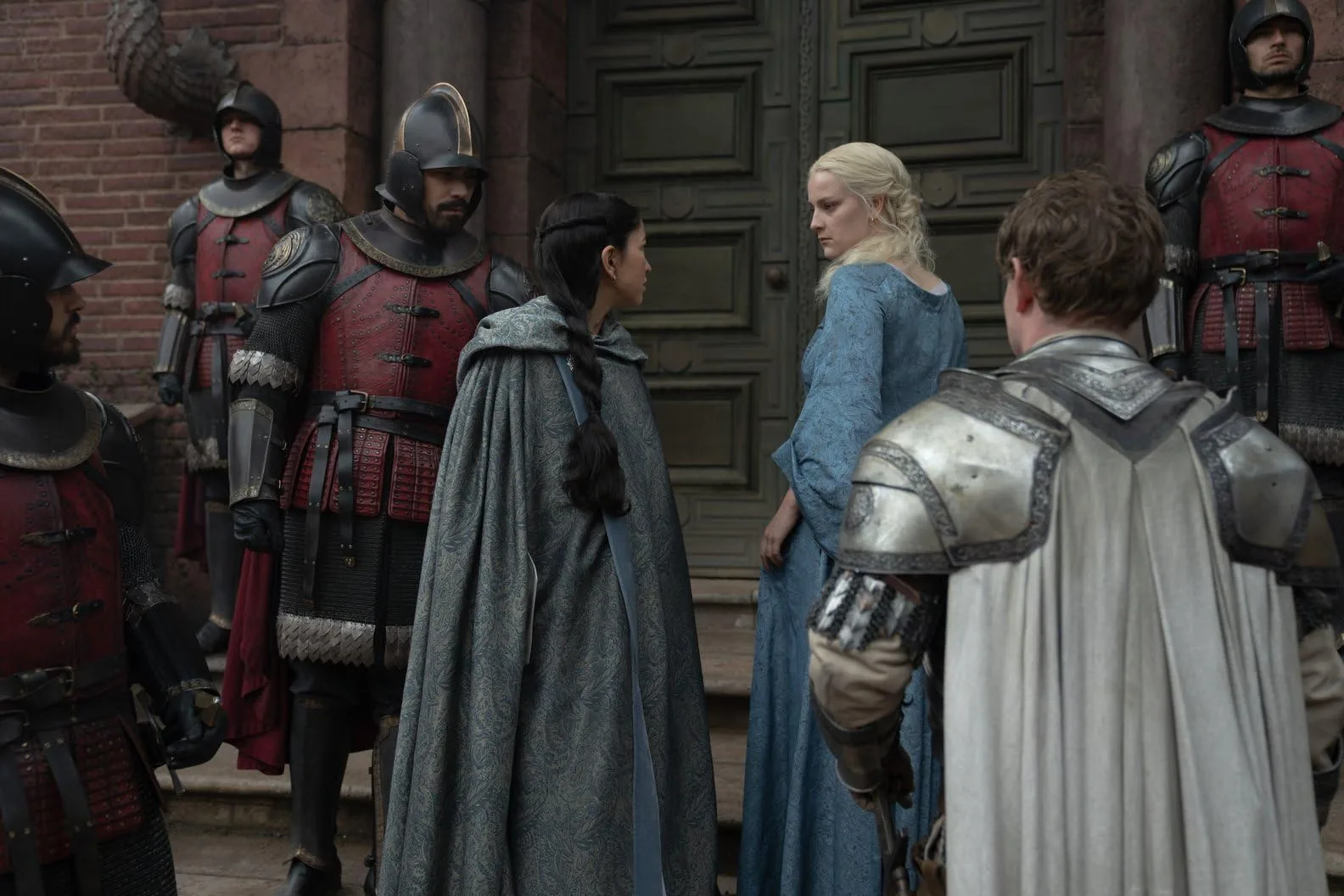
The encounter with the High Septon makes the shift brutally clear. Rhaenyra wants recognition from an institution that refuses to grant it, and refusal becomes treason almost immediately. Alyn is ordered to kill the man after Rhaenyra invokes Valyrian blood and the superiority wrapped around it. The scene matters because her argument has moved past the point where recognition can be withheld without punishment. She believes legitimacy already exists. Anyone rejecting it therefore looks less like an opponent and closer to an obstacle against history itself.
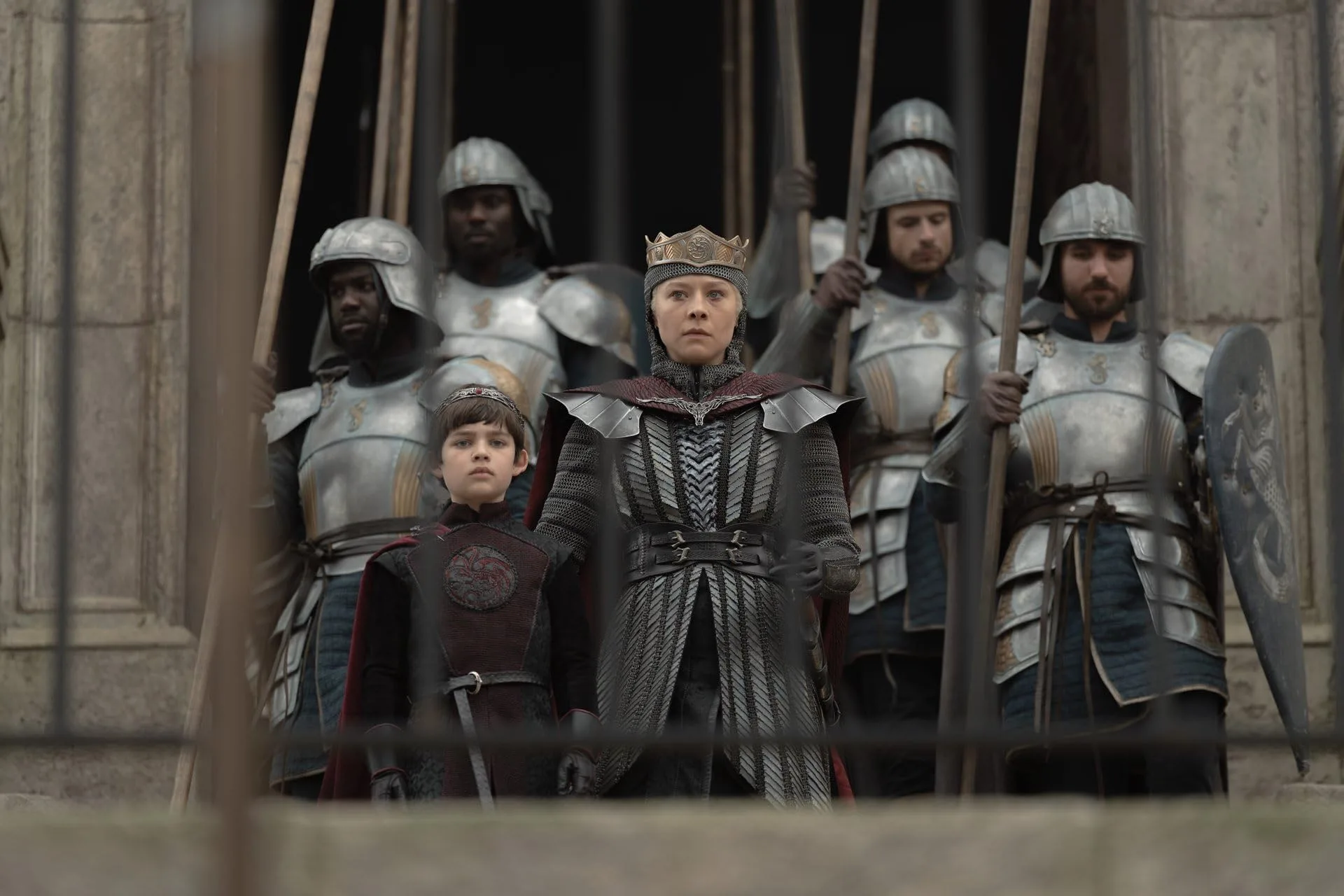
Then she goes before the smallfolk and declares herself the Prince That Was Promised.
The proximity of those acts gives the episode its sharpest political image without requiring a dragon. Religious authority rejects Rhaenyra; Rhaenyra answers with force; soon after, she supplies a sacred language for her own rule. The sequence turns prophecy from inherited knowledge into public authorization. That distinction changes everything.
Prophecy has always been dangerous currency in this family. It can make responsibility feel sacred, which sounds noble until sacred responsibility starts cancelling ordinary moral hesitation. Rhaenyra does have reasons for her severity. This war has punished indecision repeatedly. Her enemies will exploit weakness. People she loves have died. The realm is collapsing under rival claims, and she believes her rule carries an obligation that extends past her own lifetime.
The harder question is what follows from being right.
If Rhaenyra truly is the ruler history requires, does that give her greater responsibility for the means she chooses, or less? The finale keeps placing that question in front of her, usually in the form of another person who refuses to become useful.
Helaena is the clearest example. Rhaenyra needs something from her, and need quietly mutates into entitlement. Helaena’s refusal cannot be solved by a better political argument because the problem is agency. A queen can decide that someone else’s cooperation is necessary. She cannot make that necessity erase the other person’s right to refuse. Helaena’s death later carries too much uncertainty to reduce to a single motive, and the episode is stronger for leaving that uncertainty intact. What matters here is the limit she represents. Rhaenyra can command bodies. She cannot command meaning.
Aegon’s return creates a parallel problem. He survives, regains purpose, and immediately begins constructing his own path back to power. Survival becomes evidence. His reappearance gains almost religious weight among the smallfolk, giving Team Green its own myth at the exact moment Rhaenyra is making prophecy public. One claimant says history chose her. The other can point to the simple, potent fact that history failed to kill him.
In another person, the same logic Rhaenyra uses for prophecy suddenly looks much less divine. An event happens, then a ruler interprets the event as authorization. House Targaryen has built half its political theology on this maneuver, which is convenient if your family owns the dragons.
The finale becomes richer once Rhaenyra stops looking like an isolated case of corruption. Everyone in this world keeps turning circumstance into permission. Aegon reads survival as mandate. Rhaenyra reads prophecy as duty. Daemon has spent years treating violence as a language that becomes legitimate whenever softer methods fail. The disease is bigger than any claimant.
Ulf provides the funniest and ugliest rebuttal to all of them. Rhaenyra’s side gives a man access to one of the most destructive creatures alive and expects political loyalty to remain attached to the gift. Silverwing changes the equation instantly. Ulf’s betrayal is catastrophic, yet the underlying assumption was absurd from the beginning: power granted to an autonomous person remains autonomous. Treating a dragon like a medal pinned to a soldier’s chest is ridiculous. It is a private military catastrophe with wings.
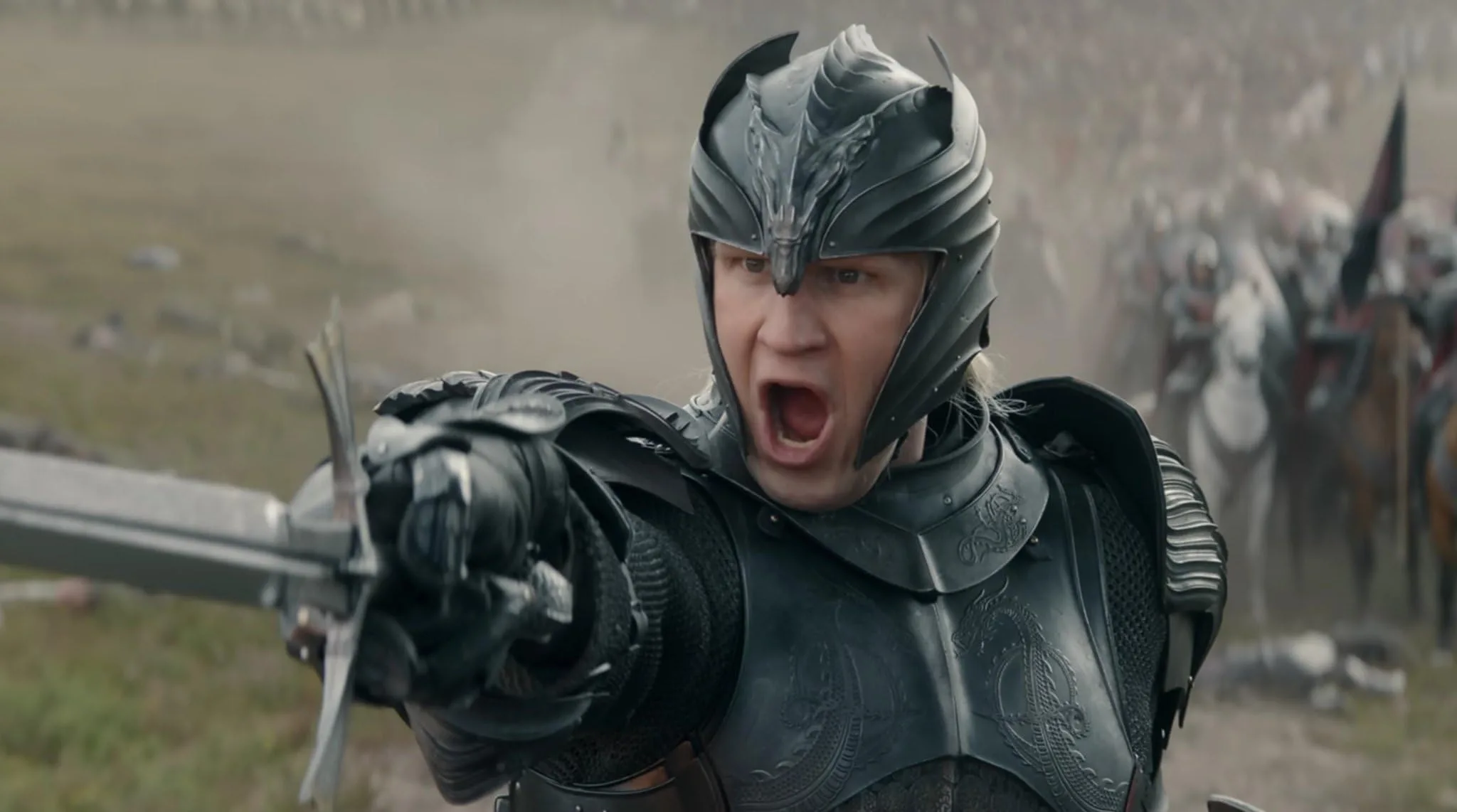
Tumbleton is where the episode removes every comfortable abstraction from this argument. The battle has scale, speed, dragonfire, and the kind of chaos this series can stage with enormous force. Then the town is left burned beneath the ambitions moving above it.
That transition is the finale’s most important choice. Dragon combat is seductive because the camera can make destruction magnificent for a few seconds. Tumbleton then forces the same destruction back into human proportion. Homes burn. Civilians become collateral to a conflict whose participants speak constantly about rightful succession, destiny, revenge, survival, duty, and peace. Every side has vocabulary for necessity. None of that vocabulary can restore what has been destroyed.
Moral distinctions between acts of violence still matter. Civil war makes choices brutally concrete, and refusing to act can carry its own body count. Rhaenyra’s position is difficult precisely because necessity is real.
Her danger appears when necessity starts proving itself.
Once every severe choice can be defended by pointing to the severity of the situation, moral reasoning becomes circular. The ruler acts harshly because the crisis is extreme, and the extremity of the crisis then becomes evidence that the harsh action was required. Call it the sovereign loophole. Every monarch eventually discovers it. Few have dragons available when they do.
Daemon’s final confrontation with Tumbleton gives the episode its answer without turning the moment into a speech. He has spent much of this story treating fire and blood as political grammar. At Tumbleton, grammar becomes debris. The distinction between intention and consequence is suddenly physical.
A ruler can explain why a town had to burn.
The town stays burned.
The Season 3 finale of House of the Dragon, titled “The Treasons at Tumbleton,” premiered on August 9, 2026, and is available to stream on HBO and Max. In this episode, shifting alliances irrevocably reshape the Targaryen civil war as Rhaenyra’s forces converge around Tumbleton while both sides vie for supremacy.
Where to Watch House of the Dragon Season 3 Finale Online






Full Credits
Title: House of the Dragon – Season 3, Episode 8: “The Treasons at Tumbleton”
Distributor: HBO, Max
Release date: August 9, 2026
Rating: TV-MA
Running time: 60 minutes
Director: Andrij Parekh
Writers: Ryan Condal, Ti Mikkel, George R.R. Martin
Producers and Executive Producers: Ryan Condal, George R.R. Martin, Sara Hess, Vince Gerardis, Alan Taylor, Ron Schmidt, Danny Gulliver, Íde O’Rourke
Cast: Matt Smith, Emma D’Arcy, Olivia Cooke, Steve Toussaint, Fabien Frankel, Ewan Mitchell, Tom Glynn-Carney, Phia Saban, Matthew Needham, Sonoya Mizuno, Harry Collett, Bethany Antonia, Jefferson Hall, Abubakar Salim, Clinton Liberty, Phoebe Campbell, Kurt Egyiawan, Freddie Fox, Gayle Rankin, Kieran Bew, Tom Bennett, James Norton
Director of Photography (Cinematographer): Vanja Cernjul
Editors: Adam Bosman
Composer: Ramin Djawadi
The Review
House of the Dragon Season 3 Finale (The Treasons at Tumbleton)
The finale gives Season 3 its clearest moral argument: danger begins when responsibility turns into permission. Rhaenyra's prophetic certainty, Aegon's survival, Ulf's autonomy, and Tumbleton's ruins expose rulers converting circumstance into mandate. Dragon warfare gets its expected scale, then the aftermath becomes the sharper image. The episode's strongest move is refusing to let necessity function as absolution. It is a fierce, intellectually coherent finale that makes power frightening long before anyone finally wins it.
PROS
- Rhaenyra's moral transformation
- Prophecy as political pressure
- Ulf's disruptive autonomy
- Tumbleton's human consequence
- Daemon's final confrontation
CONS
- Rhaenyra's coercive certainty
- Dynastic self-justification
- Tumbleton's civilian devastation