






A Knight of the Seven Kingdoms arrives at a strange moment for television: viewers are wary of franchise spin-offs while still craving stories that remember why the originals resonated. This Game of Thrones prequel, set ninety years before the better-known saga, adapts George R.R. Martin’s “The Hedge Knight” with an intimacy that feels almost perverse against the usual grandeur of its source. Episode 3, “The Squire,” sits at the midpoint of a six-episode first season and delivers what may be the most emotionally coherent work the franchise has produced since its early high points.
The central partnership between Ser Duncan the Tall (Peter Claffey), a hedge knight whose credentials are thin, and his oddly well-informed squire Egg (Dexter Sol Ansell) has been orbiting a revelation familiar to readers of the novella. At the Ashford Meadow tournament, over a single day and in a compact thirty-one minute runtime, that revelation arrives. This Targaryen line resembles little of the dragon-backed might shown in House of the Dragon.
Dragons are gone, civil war hangs like a threat, and public feeling toward the dynasty has curdled into near open contempt. Director Sarah Adina Smith stages the material with a clear sense that decline yields dramatic options that ascendancy cannot supply. The essential question becomes: what does authority mean when its violent instrument has become legend?
Brotherhood and Betrayal: The Architecture of Trust
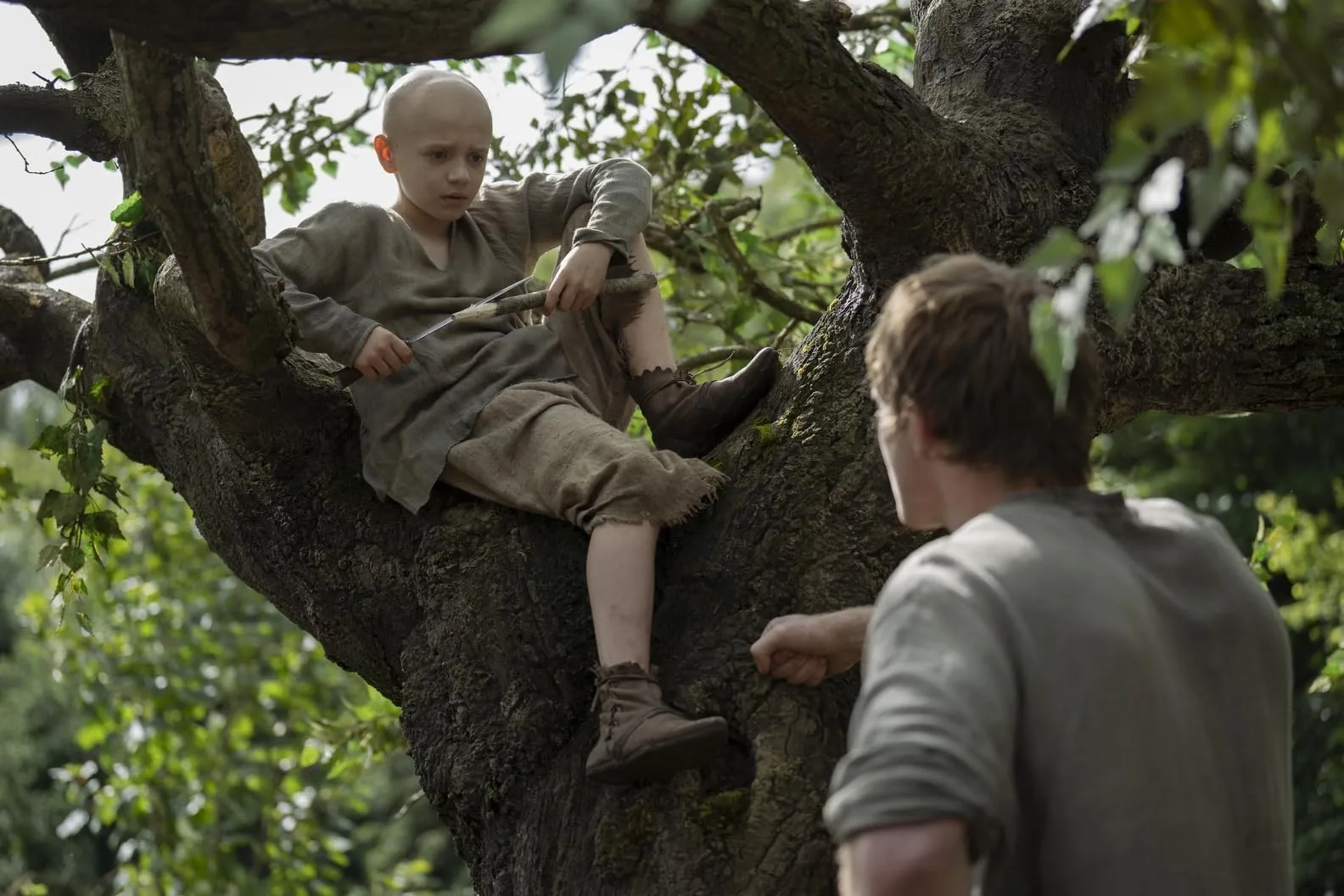
The episode opens on Egg at dawn, running a field with an imaginary lance and barking orders at Thunder, Dunk’s warhorse. He is rehearsing the tournament role he wants to occupy. The sequence carries no plot mechanics. We are watching a child attempting to discover usefulness. This is character work in its most distilled form, patient observation that stands apart from the propulsive plotting so many series prefer.
That opening clarifies Egg’s interior life as separate from Dunk. When the boy reveals his identity to save his master from royal retribution, the act reads as more than loyalty. It protects the private self he has been assembling away from palace confines: the stable-handed youth who dreams of marrying the second-most beautiful daughter and living quietly in the Reach, who imagines worth earned by deeds rather than pedigrees. The prince is performance; the other boy is the reality.
Scenes between Dunk and Egg accumulate into a bond forged by small things rather than theatrical gestures. Meals beneath an elm. Conversations about futures that may or may not arrive. Dunk showing Egg how to sew (a gentle giant passing on practical craft). The goose egg misunderstanding. Ham-fisted attempts to court Tanselle the puppeteer. These moments breathe. They read like the kinds of easy companionship that emerge between people who enjoy one another’s company.
A telling exchange has Egg saying, “I think I could be quite happy in a place like this,” meaning the tournament grounds and their simple pleasures. Dunk replies, “You’re in a place like this.” He misses that Egg seeks a different horizon. The gap between their words exposes the core tension: Dunk inhabits present realities while Egg navigates the life he was born into alongside the life he tries to build.
The fortune teller introduces another strain. She prophesies that Egg will rule and die in fire, with enemies exulting in his death. Dexter Sol Ansell reads the moment without shock and with a resigned terror. He carries an awareness that escape is not simple. Shave the silver hair. Attach yourself to a hedge knight. Learn to work horses. Prophecy in this setting exerts gravitational pull; it bends futures toward itself no matter how swiftly one moves.
When the revelation comes—Egg is Prince Aegon V Targaryen, fourth son of Prince Maekar, future king and great-grandfather to Daenerys—the episode treats the fact with restraint. The information is allowed to remain in the air as credits roll, and the emotional cost is visible rather than explained. Dunk’s face performs the reorganization: betrayal, confusion, the sudden collapse of a private logic. The boy he trained and sheltered is royal; everything between them reconfigures in an instant.
Egg’s decision to cut his hair carries symbolic load. Confronting Aerion, he states, “I cut it off, brother. I didn’t want to look like you.” The line functions as both insult and declaration. In a culture where appearance signals power and Targaryen silver hair carries mystique, Egg renders himself unrecognizable. He wants judgment based on acts rather than inherited signifiers.
Aerion offers the counterpoint. He clings to Targaryen symbolism because outside that costume he becomes a petty, cruel man. Identical blood, opposed values. The episode poses the question of worth: does birth confer it, or does behavior? The answer comes through deeds on screen rather than formal pronouncement.
The Archaeology of Collapsing Empire
At its strongest, the episode performs political archaeology. These Targaryens are not the dragon-wielding conquerors of other spinoff material. Their dynasty shows visible decay. Its structure rests on a weapon that no longer exists.
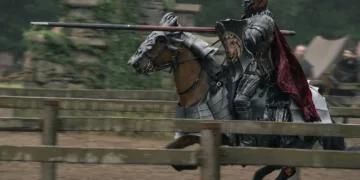
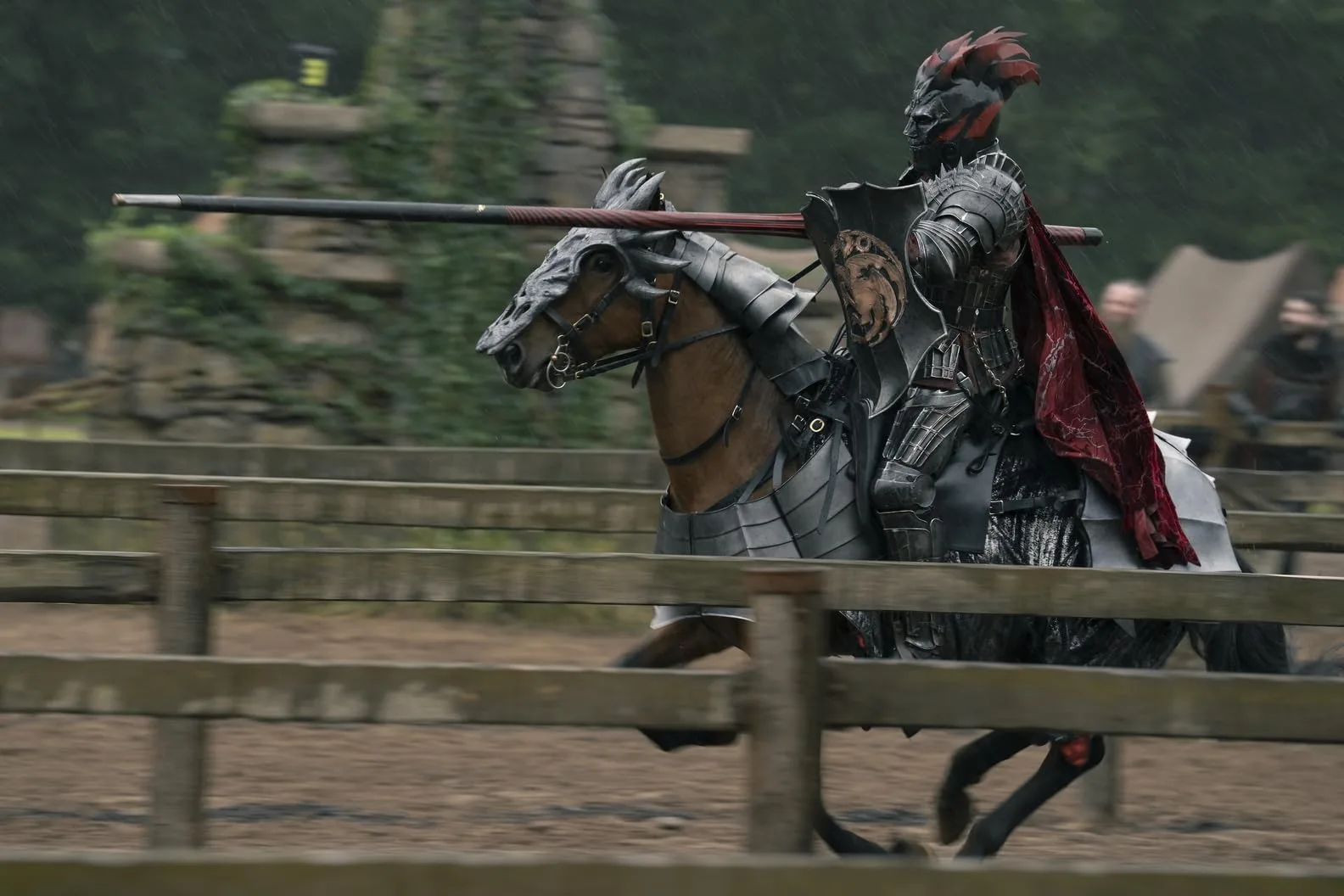
The riot after Aerion’s joust makes the decline explicit. During the match, Prince Aerion stabs Ser Humfrey Hardyng’s horse through the throat. The crowd reacts with much more than disapproval. They riot and throw stones at a prince. Kingsguard must hold back a mob. Such scenes would have been unthinkable when dragons made royal violence absolute (recall a later prince whose murder of his first wife earned mild rebuke). Those were eras when authority could incinerate dissent. Without dragons, memory of power is all that remains. Memories erode.
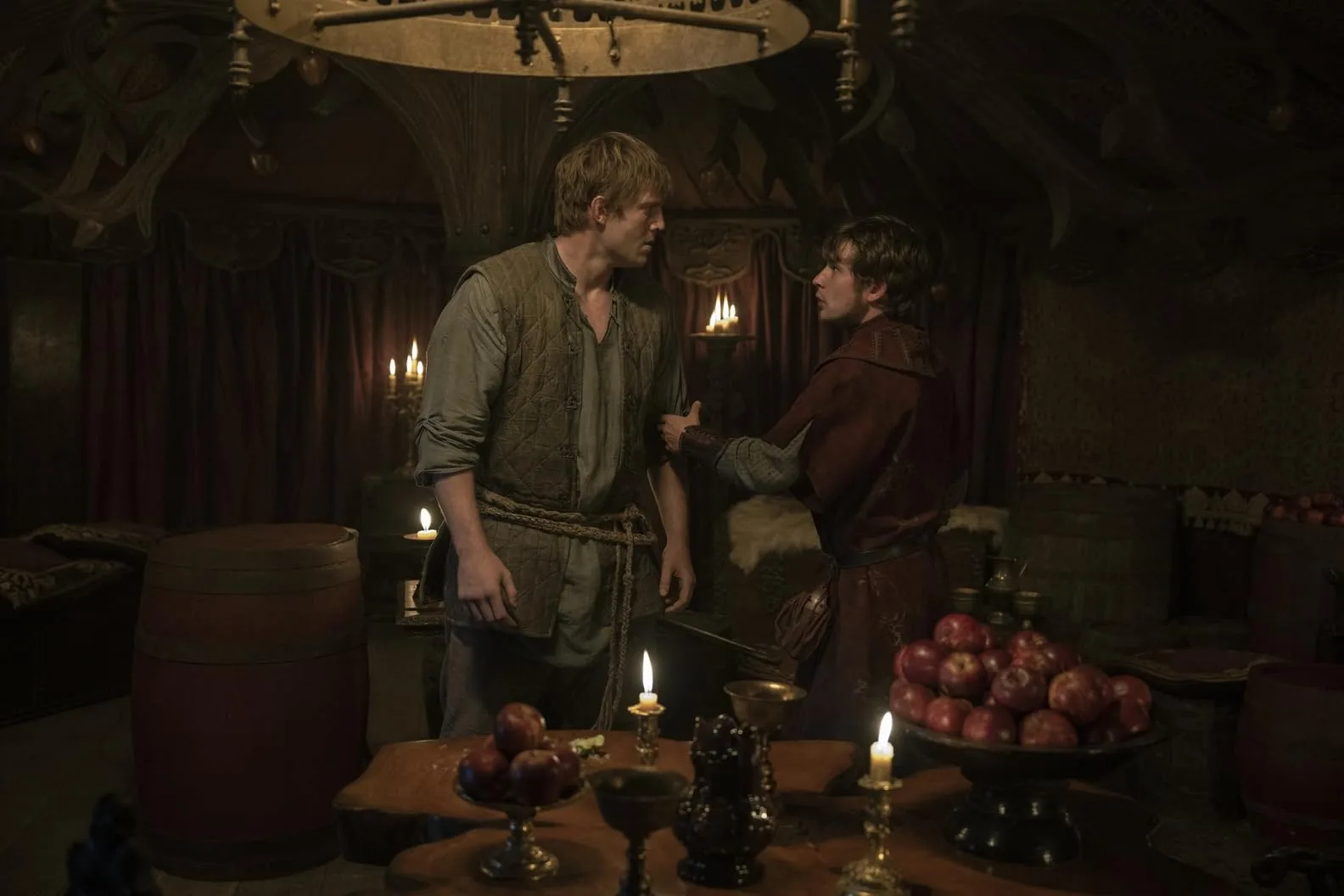
Raymun Fossoway articulates the anti-Targaryen sentiment sharply: “They’re incestuous aliens, Duncan. Blood magickers and tyrants who’ve burned our lands, enslaved our people, and dragged us into their wars without a mote of respect for our history or our customs.” Framed this way, the dynasty reads as colonial occupation in medieval costume. Superior technology enforced rule, and descendants coast on conquest’s afterglow.
The show refuses to soften that history. Baelor may behave decently. Daeron may appear as a harmless drunk. Maekar may show more frustration than outright cruelty. Individual temperament does not erase the structural problem: hereditary monarchy legitimized by violence. Remove the violence and the justification crumbles; what remains is a family convinced of its right to rule because it has always ruled.
Into this failing architecture steps Egg, a Targaryen prince testing whether one can inhabit the line without becoming a tyrant. Can power be reformed from inside? Can someone born to oppression choose otherwise? The episode dramatizes these questions through Egg’s choices rather than resolving them into neat answers.
The tournament operates as microcosm. Dunk is excluded from the first challenge because admission is for “knights of high birth and renown.” The event announces priorities: pedigree outranks skill. Plummer approaches Dunk with a proposal to fix a bout, to rig results so everyone profits; he frames the option as pragmatism. Lord Ashford faces financial ruin, the betting pools show manipulation, and the system displays rot.
Dunk rejects the offer. The series does not present his refusal as naive moralizing. Dunk understands the system’s unfairness; he has been excluded and dismissed repeatedly. Accepting Plummer’s proposal would require him to abandon the ethos Ser Arlan tried to install in him. That ethic, the show implies, matters more than triumph.
The narrative sets up two kinds of mercy. In Episode 2, Baelor procures Dunk entry through a loophole, an act by someone with power. That sort of mercy depends on the choices of the powerful. Plummer offers another remedy: a way to survive inside a crushing system. Dunk declines corruption and bailout; he seeks victory on honest terms.
The series asks whether survival methods shape the person who survives. Does being lifted by power differ morally from lifting oneself through deception? The drama treats the question with nuance. Dunk anticipates that certain choices would change who he is. Personhood outweighs outcome. Such an idea reads as a serious corrective in a franchise often devoted to realpolitik.
Violence as Currency, Honor as Liability
The episode stages three masculine models through its knights, each organized around a relation to violence.
Ser Robyn Rhysling, given the moniker “the maddest knight in the Seven Kingdoms,” appears during Egg’s morning drills. A flashback to an eye-loss in a joust five years earlier signals a man whose identity fused with trauma. His line, “We are a vessel for the warrior. When it is madness bid, it is madness delivered,” depicts violence as vocation that consumes the self.
Aerion uses violence as performance. He kills Humfrey’s horse not to win but to signal dominance. His assault on Tanselle the puppeteer follows the same logic: a puppet show depicting a dragon’s death (the tale of Ser Serwyn outwitting Urrax) threatens a foundational myth. Destroy the representation, and the threatened narrative weakens. Aerion ruins her puppets and breaks her finger, the tool of her craft. The act functions as targeted erasure: censorship enacted through mutilation. It is state violence directed at artists who question the invincibility of power.
Dunk furnishes a third model. He is physically imposing and practices violence for a living, yet he strives toward gentleness. He teaches Egg to sew and frets over the boy’s feelings. When Aerion attacks Tanselle, Dunk responds without calculus. He seizes the prince, throws him down, and strikes his face, acting as if moral clarity, not political calculation, is the operative force. He must accept danger when confronting royalty.
The episode frames this choice as the meaningful play for a knight. Profit and safety lack the moral center of the deed. The alternative—becoming Aerion or Plummer, surrendering to cruelty—would reshuffle values until honor collapses into rhetoric. Dunk’s action argues that proficiency in violence is not the fullest measure of a man; what he embodies matters.
This development deepens Dunk’s estrangement from knighthood’s ideal. He watches cheating go unpunished and faces entreaties to rig contests. The gap between chivalric ideals and reality widens into a chasm. The episode asks what it means to be “good at” violence and whether that metric should define a life. Dunk answers through behavior rather than sermon.
The Costs We Choose to Pay
Structurally, the episode composes itself as a stack of escalating sacrifices, each choice illuminating priorities and valuation.
Dunk turns down the fixed fight, surrendering a pragmatic route to armor and resources. He defends Tanselle at risk to his safety, perhaps his life, against Aerion’s promise of brutal reprisal. Egg steps into the light about his identity to save Dunk, forfeiting anonymity, freedom, and the escape from court that he had been constructing.
Each action registers values in motion. Dunk refuses deception because hollow victory would carry no meaning. He intervenes for Tanselle because indifference to suffering matters more than personal safety. Egg reveals himself because Dunk merits rescue.
The show stakes a claim: the attempt to be good retains significance even in likely defeat. This statement serves as a counterweight to later-season Game of Thrones cynicism, where futility and nihilism took center stage. Here the series argues that striving retains moral residue. Trying can matter.
That stance complicates the fortune teller’s prophecy. If Egg will be king and die by fire, does his revelation alter fate? Does foreknowledge render his choices theatrical or necessary? The episode preserves the question as unresolved, leaving moral weight on every decision.
There is also a commentary about how goodness performs under corrupt structures. Dunk’s honor exposes him to exclusion and danger; pragmatism would be safer. Yet the narrative claims that vulnerability from principle is what secures care from an audience. The presence of a character who opts for kindness despite instrumental cost feels almost revolutionary in a media landscape dominated by calculation.
Craft and Constraint
Sarah Adina Smith orchestrates shifts in tone with precise calibration. The training montage opens as pure study of persons. Comedy of anticipation follows: contestants waiting for disaster while pretending calm, Dunk’s queasy nerves, clumsy flirtation, relaxed banter, all building a fragile sense of “enjoy this while it lasts.”
Violence cuts through the levity: Aerion’s joust, the puppet assault, Dunk’s response. The tonal transition lands without whiplash because the episode nurtures nervous energy throughout; darkness sits beneath the surface.
The thirty-one minute duration produces virtue and limitation. The episode compresses substantial development into a tight container; little feels wasted. At the same time, the abrupt ending—credits arriving as Dunk processes Egg’s identity—reads less as artistic reticence and more as a lack of space. There is no immediate aftermath, no mutual processing, no wrestle with consequences. The revelation remains suspended until the next installment.
A debate follows about that choice. Economy keeps the story lean and resists prestige-television bloat. Conversely, this midseason pivot might warrant breathing room. Should we watch Dunk wrestle with the new reality? Should Egg explain? The series opts for efficiency; the judgment about that call is ambiguous.
Performances remain the episode’s motor. Peter Claffey and Dexter Sol Ansell supply chemistry that animates every scene between them. When Dunk shows Egg sewing or when Egg explains the philosophy behind a bawdy song, the intimacy feels earned. The conviction that these two genuinely enjoy one another undergirds the entire episode.
Ansell merits close notice. He layers roles: the innocent youth, the concealed prince, the boy who fears a foretold fate, the loyal squire prepared to sacrifice all. His face during the fortune teller scene is not shocked; it registers recognition. During the final confrontation, his step forward reads as terror merged with resolve.
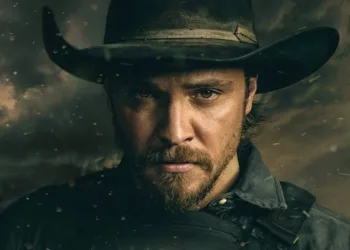
Claffey balances physical presence with vulnerability. He is large and careful, naive while adhering to principle. That combination renders him attractive in ways sheer competence could not. His expression at the episode’s close—betrayal and confusion—conveys the revelation more effectively than exposition could.
The supporting cast feels thin, which creates structural friction. Tanselle exists as talented, attractive, and victimized; we receive little access to her interior life. Raymun Fossoway offers one electric political outburst and then recedes. Aerion functions largely as a cluster of malicious traits rather than a fully textured adversary. Finn Bennett gives menace, but the script affords him limited depth.
Those limitations trace to the novella’s single-POV frame. George R.R. Martin writes through Dunk’s perspective, so other figures remain visible only through his awareness. The adaptation preserves this focus and with it reveals constraints: three episodes in, the world feels centered on the central pair at the expense of other interiorities. At some point, secondary characters will require inner life or they risk remaining props for Dunk and Egg’s arc.
A counter reading insists that this compression reflects intentional perspective. If the story filters through Dunk, peripheral characters should appear as background noise, people who seem to know more than he does. Keeping viewers locked to his viewpoint reproduces his isolation.
Both logics carry force. I find the structure defensible but occasionally frustrating.
Dan Romer’s score supports intimate beats without domination. The puppet-dragon demonstrates craftsmanship, serving as practical object and symbolic device. Jousting scenes stage the action credibly inside budgetary limits. The bloody flashback of Ser Robyn’s lost eye lands with gut impact. The cinematography privileges faces at pivotal moments, trusting performers to supply emotional heft.
Humor functions as ballast. Thunder’s digestive troubles. The goose egg embarrassment. The exchange, “What’s wrong with your hair?” “What’s wrong with your eye?” Egg’s bawdy song about the Blackfyre Rebellion reads as political commentary by other means. These moments humanize characters; banter earns affection that broad declarations could not.
What emerges is an episode that grasps a simple rule: drama registers value through cost. The revelation that Egg holds royal blood matters, but the sacrifices that lead to that point matter more. Jousts and street violence supply spectacle, but the choices they impose reveal character. The series trusts that viewers care about people more than plot mechanics, and in this episode that trust pays off.
This may stand as the most emotionally coherent story the Game of Thrones franchise has offered in years. It remembers that striving for goodness can retain importance even under oppressive systems. That position reads as a serious challenge to franchise cynicism and it helps explain why A Knight of the Seven Kingdoms feels necessary at this moment.
A Knight of the Seven Kingdoms is the latest television expansion of George R. R. Martin’s A Song of Ice and Fire universe, serving as a prequel set roughly a century before Game of Thrones. The third episode of the first season, “The Squire,” premiered in the United States on Sunday, February 1, 2026, and became available internationally today, February 2, 2026. The series focuses on the bond between the wandering knight Ser Duncan the Tall and his young squire, Egg, as they navigate the political and social landscape of Westeros. You can watch the series on the HBO cable channel or stream it via Max in the U.S., Crave in Canada, and Sky Atlantic or NOW in the United Kingdom and Europe.
Full Credits
Title: A Knight of the Seven Kingdoms: The Squire
Distributor: HBO, Max, Sky Atlantic
Release date: February 1, 2026
Rating: TV-MA
Running time: 45 minutes
Director: Owen Harris
Writers: Hiram Martinez, Ira Parker, Annie Julia Wyman
Producers and Executive Producers: Sarah Bradshaw, Lisa Byrne, Owen Harris
Cast: Peter Claffey, Dexter Sol Ansell, Tanzyn Crawford, Tom Vaughan-Lawlor, William Houston, Donal O’Hanlon, Paul Hunter, Oscar Morgan, Ross Anderson, Cara Harris, Daniel Monks, Russell Simpson, Jenna Boyd, Edward Ashley, Henry Ashton, Finn Bennett, Bertie Carvel, Daniel Ings, Sam Spruell, Shaun Thomas
Director of Photography (Cinematographer): Federico Cesca
Editors: Paulo Pandolpho
Composer: Dan Romer
The Review
A Knight of the Seven Kingdoms Episode 3 (The Squire)
"The Squire" demonstrates that intimacy can carry as much weight as spectacle. Through patient character work and moral clarity largely absent from recent franchise entries, the episode transforms a telegraphed revelation into genuine emotional impact. The thirty-one minute runtime proves both asset and limitation, delivering economical storytelling that occasionally feels stingy with aftermath. Peter Claffey and Dexter Sol Ansell's chemistry elevates thin supporting material, while the political critique of collapsing empire resonates beyond medieval fantasy. This is storytelling that trusts people matter more than plot.
PROS
- Exceptional chemistry between lead actors
- Sophisticated political and thematic analysis
- Patient, character-driven storytelling
- Moral clarity without sacrificing complexity
- Effective tonal shifts from comedy to darkness
- Strong performances, particularly from Dexter Sol Ansell
CONS
- Abrupt ending leaves no room for emotional aftermath
- Supporting characters remain underdeveloped
- Short runtime limits breathing room for key moments
- Single-POV structure may justify but doesn't fully excuse thin ensemble