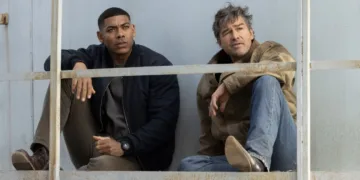




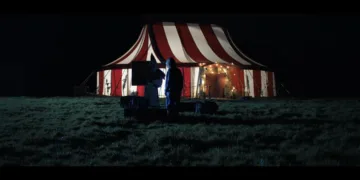

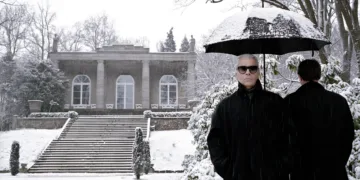






In the Name of the Mother arrives as the penultimate hour of A Knight of the Seven Kingdoms’s first season, carrying the accumulated pressure of five episodes toward a single set piece: the Trial of Seven. This is the judgement Ser Duncan the Tall (Ser Duncan the Tall, played by Peter Claffey) faces after what amounts to high treason in Westeros: he struck Prince Aerion Targaryen (Prince Aerion Targaryen, as portrayed by Finn Bennett). The episode meets that promised confrontation with mud, grit, and blunt force.
It also takes a risk: it halts the combat early and devotes a long stretch to excavating Dunk’s childhood in the slums. Prince Baelor (Prince Baelor, played by Bertie Carvel) becomes Dunk’s most powerful ally. Young Egg (Egg, played by Dexter Sol Ansell) watches at the edge. The trial moves from spectacle to moral microscope. Medieval combat, here, is unglamorous, exhausting, and stubbornly human. By the end of the fighting someone dies who, by any reasonable moral accounting, should not.
The Mud and the Mace: Medieval Combat as Survival Exercise
The sequence opens like a lesson in positional logic. Baelor briefs his contingent: remain mounted, hold formation, he will take on the Kingsguard. The plan exploits a feudal loophole: the Kingsguard cannot strike a prince during trial by combat. Baelor intends to be a moving shield.
The horn blows. Lances fly. Dunk hesitates. Egg yells and the horse moves. What follows is chaos captured from inside the helmet. Sound collapses into thuds and wind. A lance rakes Dunk’s gut. A mace connects with his face. He goes down.
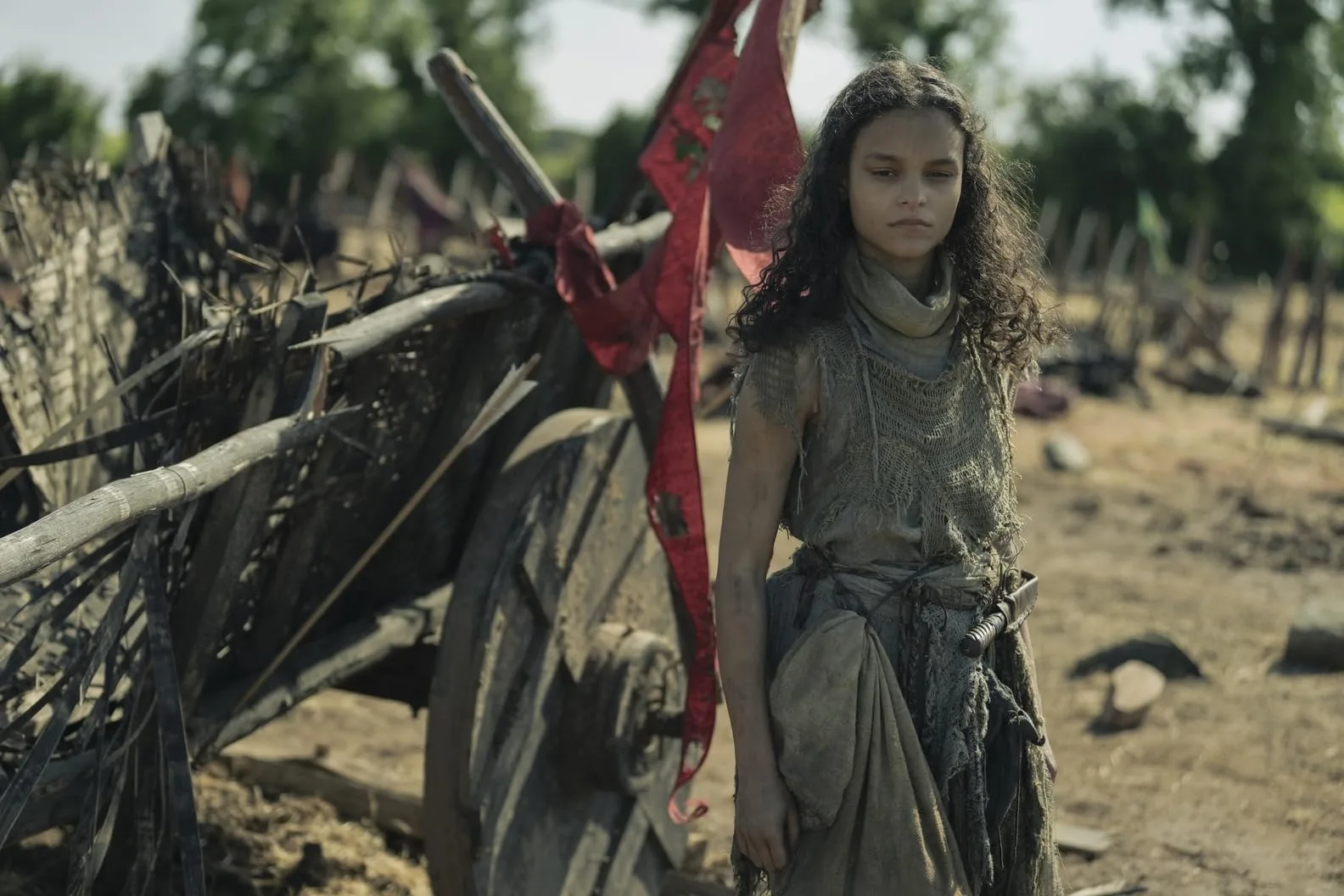
At the height of that momentum the episode stops. For nineteen minutes it leaves the trial and follows young Dunk scavenging a battlefield outside King’s Landing. The child (played by Bamber Todd) and Rafe (played by Chloe Lea) pick over corpses after the Blackfyre conflict. Their plan: leave. Their reality: Flea Bottom, where rats outnumber options.
That structural choice invites a film-historical comparison: war cinema often elevates trauma into myth. Here the flashback refuses sanctification. It shows the material conditions that shaped Dunk’s moral code. He defends the powerless because he was powerless. When a City Watch guard named Alester murders Rafe for stealing a knife, the scene presents intervention as messy and imperfect. Ser Arlan (played by Danny Webb) staggers into the frames, drunk and foul-mouthed, but capable of violence that ends two guardsmen.
This is Dunk’s origin as observation, not destiny. Arlan does not enroll him immediately. The old knight wanders off and the boy follows. Time passes. Dunk’s leg infection worsens until Arlan returns with water and two words: “Get up.”
Those words return in the present. When Dunk lies out cold, Arlan’s bark plays back in memory. Present violence unlocks past violence and supplies the psychological torque to rise again. The mechanism is layered; some viewers will call it elegant, others manipulative. Both responses are defensible.
When the narrative re-enters the field, fog has crept in. Dunk stands and faces Aerion. What follows is twenty minutes of two men trying to erase one another in mud. The fight refuses classical beauty. Dunk takes a blade through his hand. A stab finds the old leg wound. Aerion hammers him down. Dunk rips his helmet away to see, trading protection for sight. The choreography privileges fatigue over form. These are not graceful duelists.
Dunk falls. The herald nears the end. Egg screams for time. Arlan’s voice resurfaces. Dunk pushes himself up, pins Aerion, slugs the prince until the fight ends. Dunk walks away. Victory. Cost uncertain.
Flea Bottom’s Pedagogy: How Poverty Teaches Combat
The flashback occupies roughly half the episode and exists outside the pages of George R. R. Martin’s source material. The show’s writers invented these scenes to answer what made Dunk before Ser Arlan noticed him.
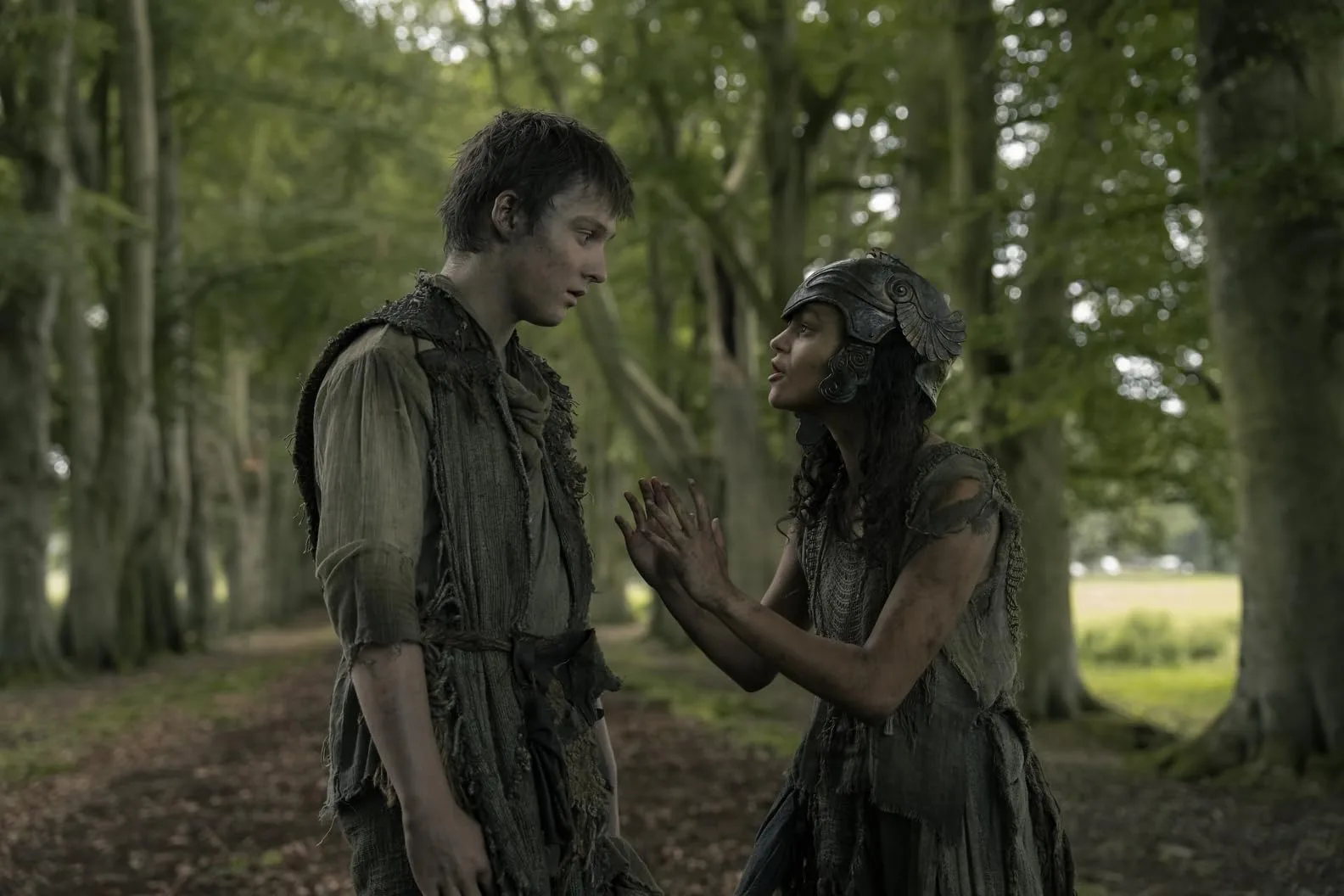
Young Dunk grows up in Flea Bottom during the war’s aftermath. The battlefield he sifts may be the Redgrass Field (a place strewn with ten thousand dead). The dealer who buys scavenged goods refuses anything tied to Blackfyre. Those marks brand you as suspect.
This is materialist worldbuilding. The camera shows the economic fallout of elite conflict: nobles fight, smallfolk sift. Dunk mentions a missing mother and fears she will not find him if they flee. Rafe wants out. Dunk wants a roof.
Arlan’s mentorship has no polish. He is drunk much of the time, muttering to trees, ignoring the boy until infection brings him back. The romantic script would have him recognize talent immediately. The episode gives neglect first, grudging care second.
That dynamic is its strength. Dunk’s moral education arrives through observation: Arlan intervenes despite being imperfect. The lesson is about presence. Show up when help is needed, even if you are barely functioning yourself.
The flashback also reads as class analysis. Fantasy often treats poverty as an aesthetic. Here poverty is causal. It explains why Dunk treats scavenging as ordinary work and why Rafe’s murder ruptures everything. The murder crystallizes systemic violence: Alester kills her for stealing a knife he himself had taken from them. Each act follows the internal logic of scarcity and entitlement. When Ser Arlan kills Alester, he performs counter-violence that aids Dunk but does not restore justice in any clean sense.
Dunk’s commitment to defend servants traces to this mechanism. When he sees Aerion burn a peasant girl, he experiences the Alester moment repeating in new clothes. Same power dynamic. Different uniforms.
The flashback’s length will split the audience. Penultimate episodes usually accelerate. This episode deliberately decelerates. Some viewers will label this a diversion. Others will call it essential context. The show wants unease. That mirrors Dunk’s own experience: knocked senseless amid noise, forced to revisit his worst memories before returning to the fight.
The Dragon Falls: When Prophecy and Politics Collide
Dunk wins. Aerion yields. For a breath it looks like relief. Then Baelor gestures for someone to lift his visor. The helmet does not come off cleanly.
The visor is removed and the back of Baelor’s skull gives way. His brother Maekar’s mace has crushed him during the melee. The helmet had been holding fragments together. Baelor collapses into Dunk’s arms. The heir falls in a hedge knight’s grasp after defending that knight’s honor against his own kin.
Baelor’s death reads as the episode’s moral proposition. Honor produces consequences. Often those consequences fall hardest on the honorable. Cynics survive. The decent can die. That lesson lands because Baelor is presented as something uncommon in Targaryen histories: a prince with the temperament for rule. Those qualities get you killed here.
The death also echoes prophecy. Prince Daeron described a falling dragon that spares Dunk. Baelor’s sigil evokes a dragon. He dies atop Dunk and, in doing so, crushes the man with a symbolic burden. Fate in this universe has weight.
The episode’s staging doubles as a lesson in how trauma arrives after apparent safety. The trial ends, survivors breathe, then the reveal detonates the calm. Dunk survives and alters succession. Baelor was a buffer between his father’s pragmatism and his siblings’ instability. With him gone, political balance erodes.
Carvel’s performance rests on small measures. Baelor does not declaim. He stumbles, mumbles, fades. The horror is physical. The camera refrains from spectacle and lets the viewer imagine the rest.
Performances Under Pressure: Acting as Physical and Emotional Labor
Peter Claffey’s physicality defines his Dunk. He moves as a large animal unaccustomed to its own mass. The swings are committed, the recoveries hard-won. Claffey makes exhaustion visible; every ascent from the mud reads like labor.
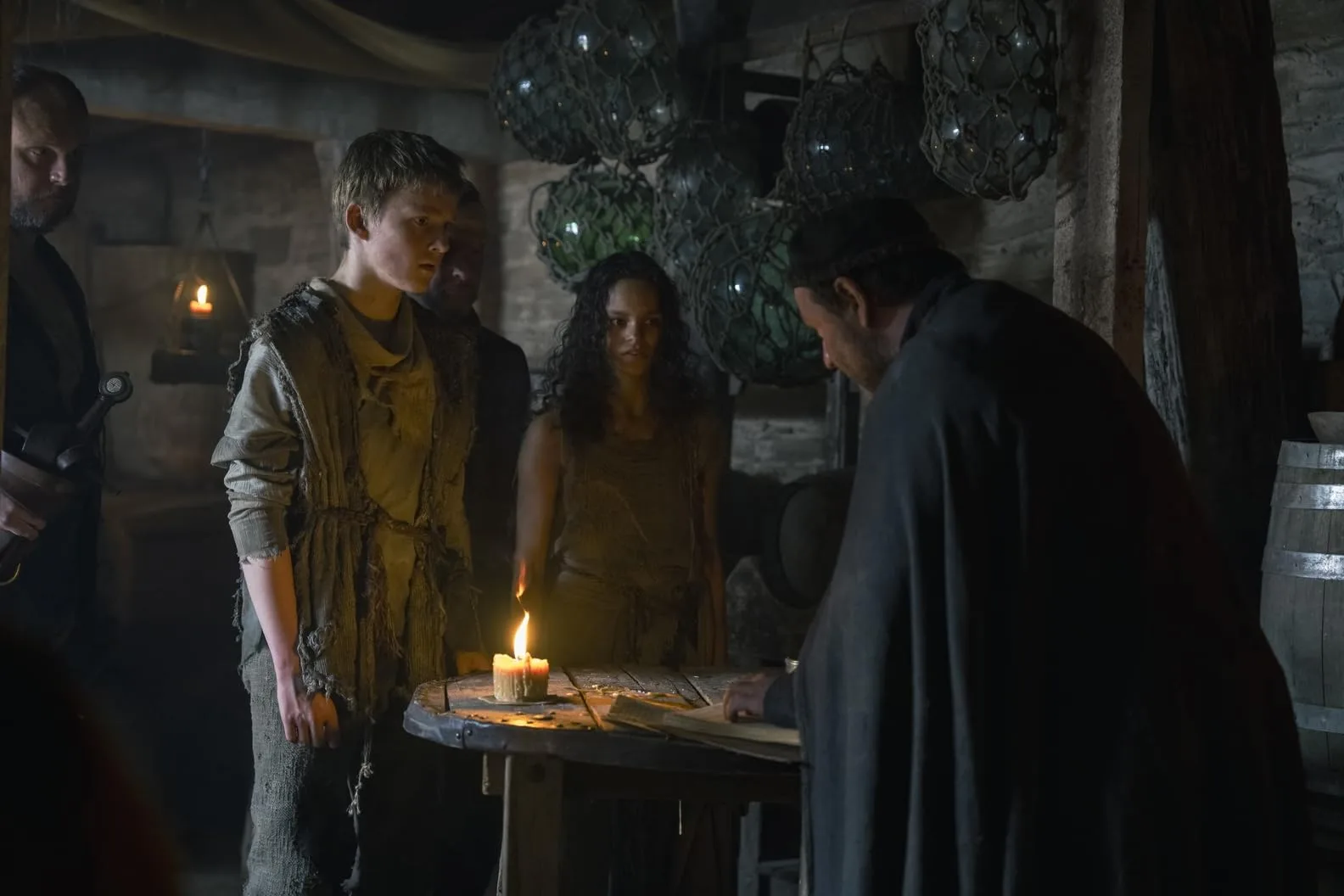
Bamber Todd studied Claffey’s posture. The hunched shoulders translate across ages. Todd conveys trauma without theatrics. When young Dunk trails Ser Arlan through the wild, the same stubborn loyalty appears in miniature.
Dexter Sol Ansell as Egg functions as the episode’s emotional fulcrum. His helplessness shows in small behaviors: gripping the lance too tight, crying out. His voice breaks in a manner that reads authentic. The pre-battle exchange succeeds because the actors underplay it.
Finn Bennett makes Aerion repellant. Entitlement hardens into cruelty. Bennett finds a pitiful edge in the prince’s arrogance, which makes Aerion dangerous because he has never been denied.
Bertie Carvel’s Baelor operates as the show’s moral lodestar. Carvel keeps speeches aside and instead collapses into silence as the wound takes him. The restraint intensifies the scene.
Medieval Mirrors: What Feudalism Teaches About Power and Choice
The episode functions as a meditation on feudalism’s claim and its deception. The claim insists hierarchy brings order and that justice flows downward. The deception is that the system primarily serves those atop it.
Aerion immolates a peasant for amusement. Dunk intervenes, slaps a prince, and faces execution for touching royalty. The trial becomes necessary because the system cannot categorize a lowborn who strikes a highborn. That logic fails.
Baelor’s role complicates the frame. He is royalty defending a commoner against his family. For a moment the system functions. Then the result proves its bankruptcy. Baelor dies. Aerion lives. The just man falls while the unjust persists.
The flashback provides historical grounding. Young Dunk grows up after the Blackfyre conflict, a war over succession that cost many lives so nobles could settle lineage disputes. The field he scavenges is the material residue of elite fights. Those corpses are the economy that sustains street children.
Rafe’s murder crystallizes the chain of causation. Alester kills her after stealing from them. The sequence reads as logic made grotesque. When Ser Arlan kills Alester it is not restoration; it is reciprocal violence that benefits Dunk.
Dunk keeps acting. He wins his contest and thereby proves honor exists. Baelor’s death proves honor can destroy you. Both truths hold in parallel. Dunk will continue to defend the weak because the habit of intervention became his formation. He learned this by watching an imperfect man intervene. That lesson may break him. He will try anyway.
“In the Name of the Mother” is the penultimate episode of the first season of A Knight of the Seven Kingdoms, which premiered on HBO and Max on February 15, 2026. This highly anticipated episode serves as a prequel to the Game of Thrones series, set roughly a century before the original show’s events. It centers on the brutal “Trial of Seven,” where Ser Duncan the Tall must defend his honor against Prince Aerion Targaryen. The episode has gained significant acclaim for its grounded, gritty depiction of Westerosi history and its emotional stakes, and it is currently available for streaming on Max and through HBO’s global partners.
Where to Watch A Knight of the Seven Kingdoms Episode 5 Online






Full Credits
Title: A Knight of the Seven Kingdoms: Season 1, Episode 5 – “In the Name of the Mother”
Distributor: HBO, Max
Release date: February 15, 2026
Rating: TV-MA
Running time: 42 minutes
Director: Owen Harris
Writers: Ira Parker, Hiram Martinez, Ti Mikkel, George R. R. Martin
Producers and Executive Producers: Ira Parker, George R. R. Martin, Ryan Condal, Sarah Bradshaw, Owen Harris, Vince Gerardis, Lisa Byrne
Cast: Peter Claffey, Dexter Sol Ansell, Finn Bennett, Bertie Carvel, Daniel Ings, Sam Spruell, Tanzyn Crawford, Shaun Thomas, Edward Ashley, Henry Ashton, Tom Vaughan-Lawlor, Daniel Monks, Youssef Kerkour
Director of Photography (Cinematographer): Gustav Danielsson
Editors: Simon Brasse
Composer: Dan Romer
The Review
A Knight of the Seven Kingdoms Episode 5 (In the Name of the Mother)
"In the Name of the Mother" succeeds through audacity, interrupting its climactic battle to excavate the trauma that fuels it. The nineteen-minute flashback will frustrate some viewers, yet it transforms spectacle into character study. Dunk's victory rings hollow against Baelor's death, proving once again that Westeros devours its decent. The episode rejects fantasy heroism for something harder: survival stripped of glory. When honor kills the honorable, what remains? Stubborn men rising from mud, compelled to defend the powerless despite costs they cannot afford. Brutal, melancholy, and strangely hopeful.
PROS
- Brutal, unglamorous combat choreography grounded in medieval reality
- Bamber Todd's exceptional performance as young Dunk
- Baelor's death delivers genuine emotional devastation
- Flashback provides materialist class analysis rarely seen in fantasy
- Peter Claffey's physical commitment sells Dunk's exhaustion
CONS
- Flashback timing disrupts momentum at crucial moment
- Fog-heavy cinematography occasionally obscures action
- Limited scope misses opportunities with fourteen-combatant trial
- Dunk's survival strains credibility given wounds sustained