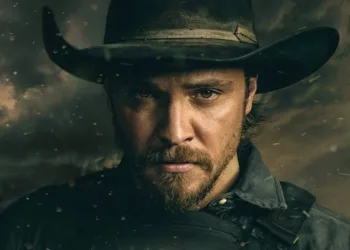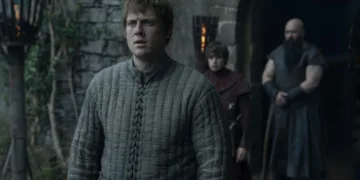












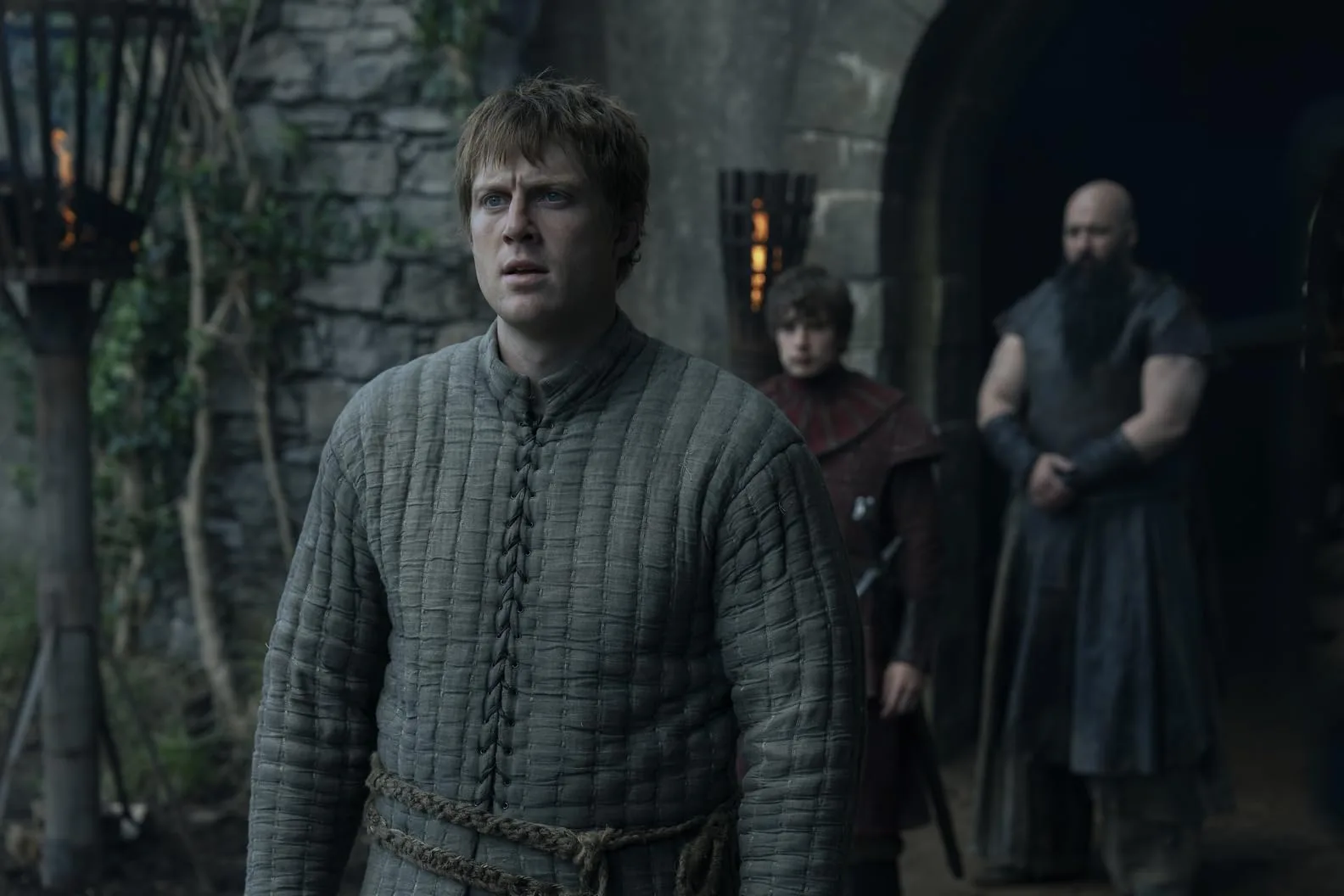

“Seven” arrives as a reckoning. The first three episodes of A Knight of the Seven Kingdoms moved like a sunlit ramble tournaments, squire banter, easy smiles. This fourth hour removes that comfort with surgical calm. What remains aligns more closely with the older Game of Thrones tone: righteousness in this world brings a cell for reward.
The episode confronts the fallout from Dunk’s assault on Prince Aerion Targaryen. Dunk struck to defend a puppeteer from royal cruelty; the state answers with a trial by seven, an archaic bloodsport dressed up as divine judgment. Egg’s identity as Aegon Targaryen emerges, recasting every small scene he shared with Dunk. As the penultimate setup before the season’s final push, “Seven” functions as that classic turning point where the protagonist sits at his lowest and the institutions press in with near-total force.
The central question animating the hour is simple and quietly brutal: what happens when moral clarity meets hereditary power? The episode shows the answer through mud, rain, and a palette drained of warmth: bloodline privilege tends to ignore righteousness. The trial of seven becomes the apparatus that tests this idea.
The Architecture of Injustice
Prince Baelor Targaryen stands for something rare in Westeros: authority applied with restraint. Bertie Carvel’s work here rewards close attention because his choices are minimal and radical for that economy. Baelor feels neither soft nor sentimental. He understands power at a granular level and deliberately tempers it with compassion.
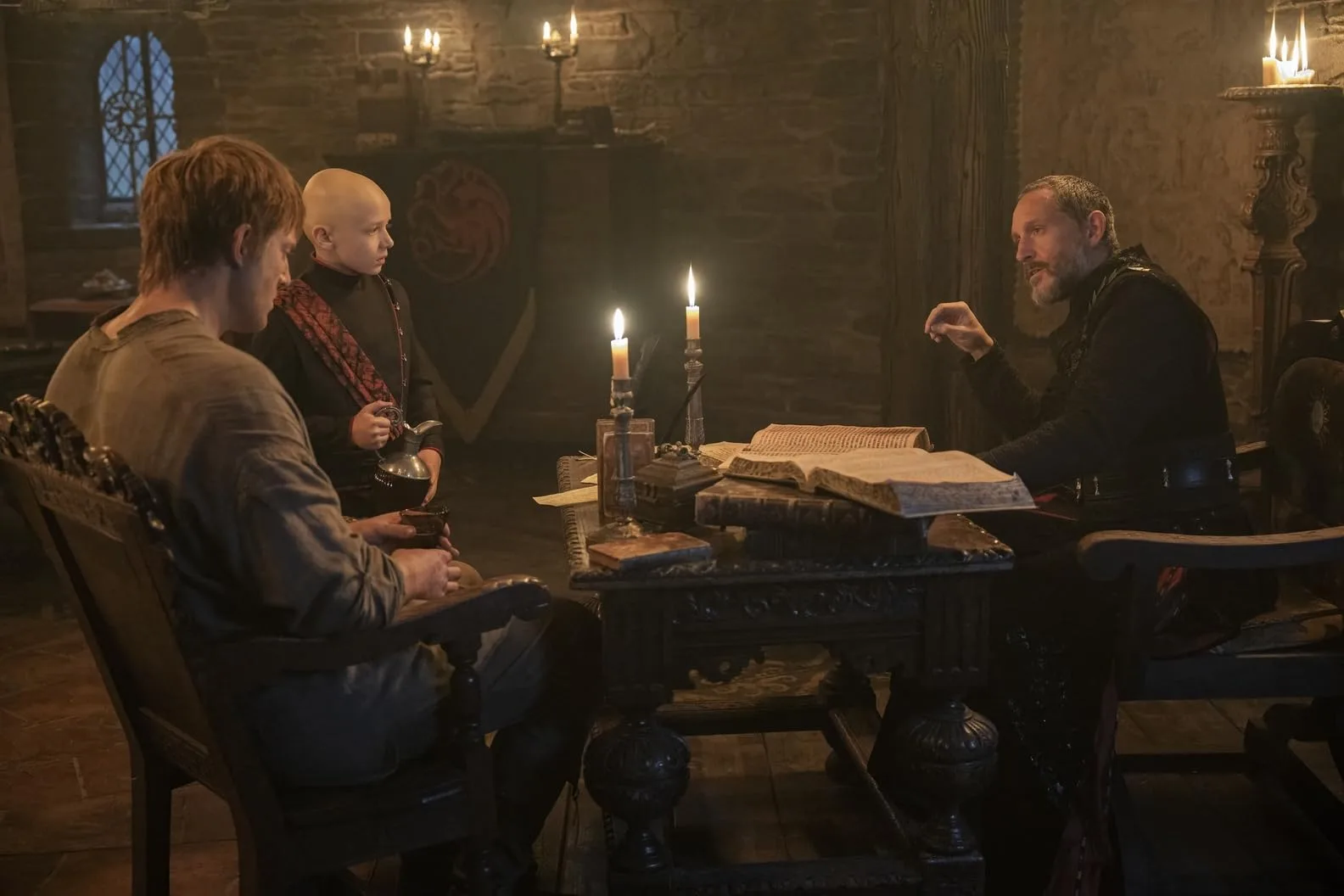
His exchange with Dunk about knightly oaths (“Don’t all knights make the same oath? To protect the innocent?”) could have slipped into sanctimony; instead it reads as a genuine ethical question. Baelor spares Dunk immediate execution while insisting on accountability, occupying the uncomfortable role of sympathetic enforcer. He recognizes precedent as a force, even when precedent skews wrong.
Aerion occupies an opposite moral posture: aristocratic cowardice wrapped in ritual. The trial of seven operates as procedural evasiveness, a means of avoiding a direct reckoning with Dunk by invoking obscurer custom. Prince Maekar registers this; his impatience shows when Aerion invokes gods and old rites. The system shields Aerion because of blood. The false kidnapping accusation, Daeron drunk and claiming Dunk stole Egg, adds casual cruelty. The exposition of Aerion’s past threat to castrate Egg in order to secure a “sister” to marry remains unsoftened by the series, and the narrative keeps it stark.
Maekar offers a pragmatic counterpoint. He treats the trial of seven as quaint historical pageantry and his relation with Aerion reads as exasperation married to obligation. He will defend family while conceding their faults, a position familiar to many who have sat at fraught holiday tables. Then there is Daeron: a beautiful, messy presence. The drunk from episode one reappears as Egg’s unreliable older brother.
His prophetic visions carry an unsettling clarity—Dunk over a slain dragon, the knight alive while the dragon lies dead—images the show resists overexplaining. Daeron’s self-aware cowardice and caustic humor (“I’ll fall over at the first blow”) place him among Westeros’s surviving, complicated souls who rely on cunning and low expectations. Henry Ashton finds the right balance of pathos so that prophecy and alcoholism coexist believably.
The Bonds That Survive Deception
The opening scene between Dunk and Egg demonstrates how pain and care can live in the same frame. Egg arrives in full Targaryen dress with food and apologies. Dunk’s anger reads parental: betrayed trust rather than spiteful vengeance. Peter Claffey and Dexter Sol Ansell carry this quietly. Egg’s tears feel earned; his remorse registers as sincere. He did not set out to ruin anyone. He wanted the simple dignity of being a proper squire while his brother lay face-down in a tavern.
This moment reframes the season. Tiny kindnesses, lessons, casual camaraderie accumulate new weight once Egg’s identity is known. He was not playing dress-up. He was tasting freedom outside his family’s orbit. The tragedy is that that taste put another person at real risk. Names in Westeros carry lethal force; Egg only realizes this fully as he watches Dunk sit in a cell.
Their reconciliation unfolds in layers. Dunk reproves Egg privately and then defends him before Prince Baelor. The protective instinct overrides hurt. When Egg returns to squire tasks, Dunk’s visible relief says more than a speech could. The bond between them survives the lie; it serves as the episode’s emotional nucleus without relying on melodrama.
There is a particular cruelty in watching a youth learn the real stakes of his games. Egg assumed a temporary departure from station would cost nothing, that he could return home with stories. Instead, a good man may die because Egg wanted a tournament. The fortune teller’s prophecy about Egg’s future gains new resonance now. Power is measured in other people’s blood.
The Desperate Arithmetic of Finding Six Good Men
Dunk’s mission appears simple on paper and impossible in practice: recruit six knights willing to risk honor and safety by siding with a hedge knight against Targaryen princes. The distinction matters. These men do not have to imagine Dunk winning; they must accept that he is right. That gap between predicted outcome and moral conviction is where honor either remains intact or collapses.
Steffon Fossoway’s early promise supplies false hope, which makes his later betrayal sharper. When he volunteers with the pledge to bring allies like Lyonel Baratheon, it momentarily suggests the world might reward decency. His cousin Raymun brings a brief, human brightness amid dread. The sequence is staged to show how words often substitute for deeds among the noble. Steffon’s honor proves purchasable; Aerion discovers the price.
The dawn arrival of champions contains an ironic pivot: knights come because of Egg, not because of Steffon. Lyonel Baratheon’s blunt reaction (“Who the fuck is Ser Steffon?”) signals the ruse. Egg spent the night knocking on doors, asking men to risk themselves for his hedge knight friend. Some respond from hatred of the Targaryens. Others respond for the rare thrill of participating in a trial of seven; Lyonel nearly vibrates with eagerness at the historical strangeness. None arrive with Steffon’s imprimatur.
Steffon’s decision to ride out for Aerion after a promised lordship wounds the moral fabric on screen. Honor becomes a transaction. Raymun’s swift repudiation and his offer to take Steffon’s place provide a necessary catharsis. Lyonel knights Raymun immediately, the ceremony cutting against the image of Dunk riding toward potential death. Still, there remains one man short; the arithmetic fails to resolve.
Dunk’s speech to the crowd is his last wager. Peter Claffey gives the season’s most urgent performance here—sincere, furious, desperate. “Are there no true knights among you?” The camera holds on Maekar and Egg as Dunk speaks of setting examples for sons. One large man rises as if to volunteer and then farts. The crowd laughs. The scene lands as cruel public humiliation in a culture built on spectacle and shame. For a moment, Dunk’s idealism looks hopelessly naive.
Mud, Mice, and the Absence of Color
Visually, “Seven” signals its thematic shift through deliberate desaturation. Earlier episodes offered sunlit palettes and romantic medieval trappings. This hour strips those tones away. Mud replaces grass. Rain replaces sun. Dunk in a dank cell opens the episode with a bleak proclamation: the world’s face is grimy.
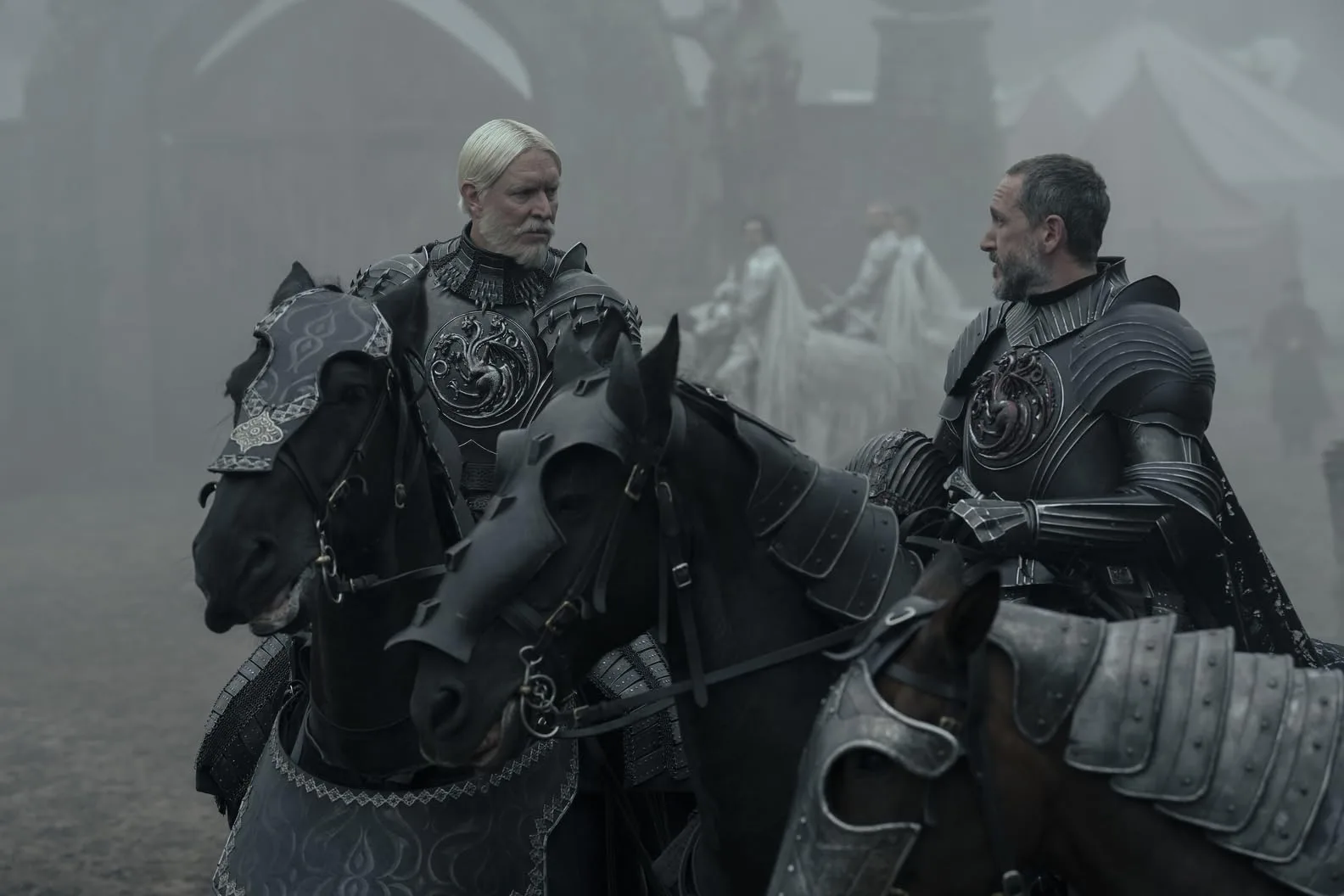
The aesthetics match the moral geography. Everything on screen feels compromised and hard to traverse. Rain-drenched sequences intensify the bleakness. Even the tourney field loses festival veneer and becomes an arena for ritualized power.
Smaller, human moments ground the episode’s empathy. Dunk petting a mouse through his cell window, speaking to his horses with quiet tenderness, the absurd suggestion of Ser Arlan shrugging as if offering no counsel—these touches prevent the hour from becoming purely doctrinal. Dunk’s strength derives less from his blade than from his capacity to deem others worthy of protection.
Production design registers throughout. The painted shield Tanselle left behind, with its elm tree, shooting star, and sunset, accrues visual importance, handled meticulously down to Steely Pate’s repairs. Armor and heraldry read as miniature biographies; individual designs reveal houses and temperament more clearly than in earlier franchise entries. There is careful pageantry in costume and props, whether for royalty or smallfolk.
Ramin Djawadi’s Game of Thrones theme is used sparingly and then fully at the climax. Hearing it in full this season feels earned through restraint. The music connects the episode to the wider universe yet preserves this series’ identity. The score frames anticipation for moral collision rather than straightforward battle spectacle.
When the Heir Chooses Justice Over Blood
The gates open and Prince Baelor rides in Targaryen armor. The moment avoids triumphalism and reads as solemn decision. Baelor understands the personal cost: he defies his brother Maekar, stands against his nephew Aerion, and opts to uphold a hedge knight’s defense over family convenience. His declaration is plain: Dunk defended the innocent, as true knights must.
This offers a fleeting rarity in Westeros, a Targaryen granted a cleanly heroic moment. Baelor’s entrance refuses vengeance and personal gain; the act functions as a deliberate appeal to justice. The scene carries force because earlier episodes established restraint and deliberation in Baelor’s character. His choice registers as thought-through rather than performative.
The question the hour has pursued receives a provisional answer here: can an individual uphold goodness inside a rigged system? The episode proposes a conditional yes, contingent on a person’s willingness to surrender rank. Baelor’s intervention compels the scene to acknowledge values that exceed mere bloodline during a ritual supposedly overseen by gods.
The trial edges away from brute combat and toward ethical accounting. The hour closes with the Game of Thrones theme swelling and an aftertaste of dread. Westeros punishes honor with regularity. Occasionally, however, honor manages a return punch.
“Seven” is the fourth episode of the first season of A Knight of the Seven Kingdoms, a prequel series to Game of Thrones. The episode was released early on the streaming platform Max on Friday, February 6, 2026, to avoid conflicting with the Super Bowl broadcast, though its linear premiere on the HBO channel remains scheduled for Sunday, February 8, 2026. The plot centers on the climactic Trial of Seven, an ancient form of trial by combat where Ser Duncan the Tall must find six other knights to fight alongside him against Prince Aerion Targaryen and his champions to prove his innocence.
Full Credits
Title: A Knight of the Seven Kingdoms: Seven
Distributor: HBO, Max
Release date: February 6, 2026
Rating: TV-MA
Running time: 34 minutes
Director: Sarah Adina Smith
Writers: Aziza Barnes, Annie Julia Wyman, Ira Parker
Producers and Executive Producers: George R.R. Martin, Ira Parker, Ryan Condal, Vince Gerardis, Owen Harris, Sarah Adina Smith
Cast: Peter Claffey, Dexter Sol Ansell, Finn Bennett, Bertie Carvel, Daniel Ings, Sam Spruell, Shaun Thomas, Edward Ashley, Ross Anderson, Danny Collins, William Houston, Tanzyn Crawford
Director of Photography (Cinematographer): Federico Cesca
Editors: Simon Brasse, Brenna Rangott, Paulo Pandolpho
Composer: Dan Romer
The Review
A Knight of the Seven Kingdoms Episode 4 (Seven)
"Seven" transforms A Knight of the Seven Kingdoms from charming medieval adventure into something darker and philosophically richer. The episode strips away comfort to examine what happens when moral clarity confronts institutional power. Bertie Carvel's Baelor anchors the hour with quiet authority, while Peter Claffey and Dexter Sol Ansell navigate fractured trust with genuine emotion. The pacing favors conversation over action, which may frustrate some viewers, yet the psychological tension justifies the approach. This is setup done right: deliberate, emotionally resonant, and unafraid to let dread build without release.
PROS
- Exceptional performances from Carvel, Claffey, and Ansell
- Rich thematic exploration of honor versus power
- Stunning visual shift in palette and atmosphere
- Strategic use of the Game of Thrones theme
- Dunk and Egg's relationship deepened through conflict
- Production design and costuming excel
CONS
- Minimal action may disappoint viewers expecting combat
- Some supporting knights lack individual characterization
- Pacing deliberately slow as penultimate setup episode