












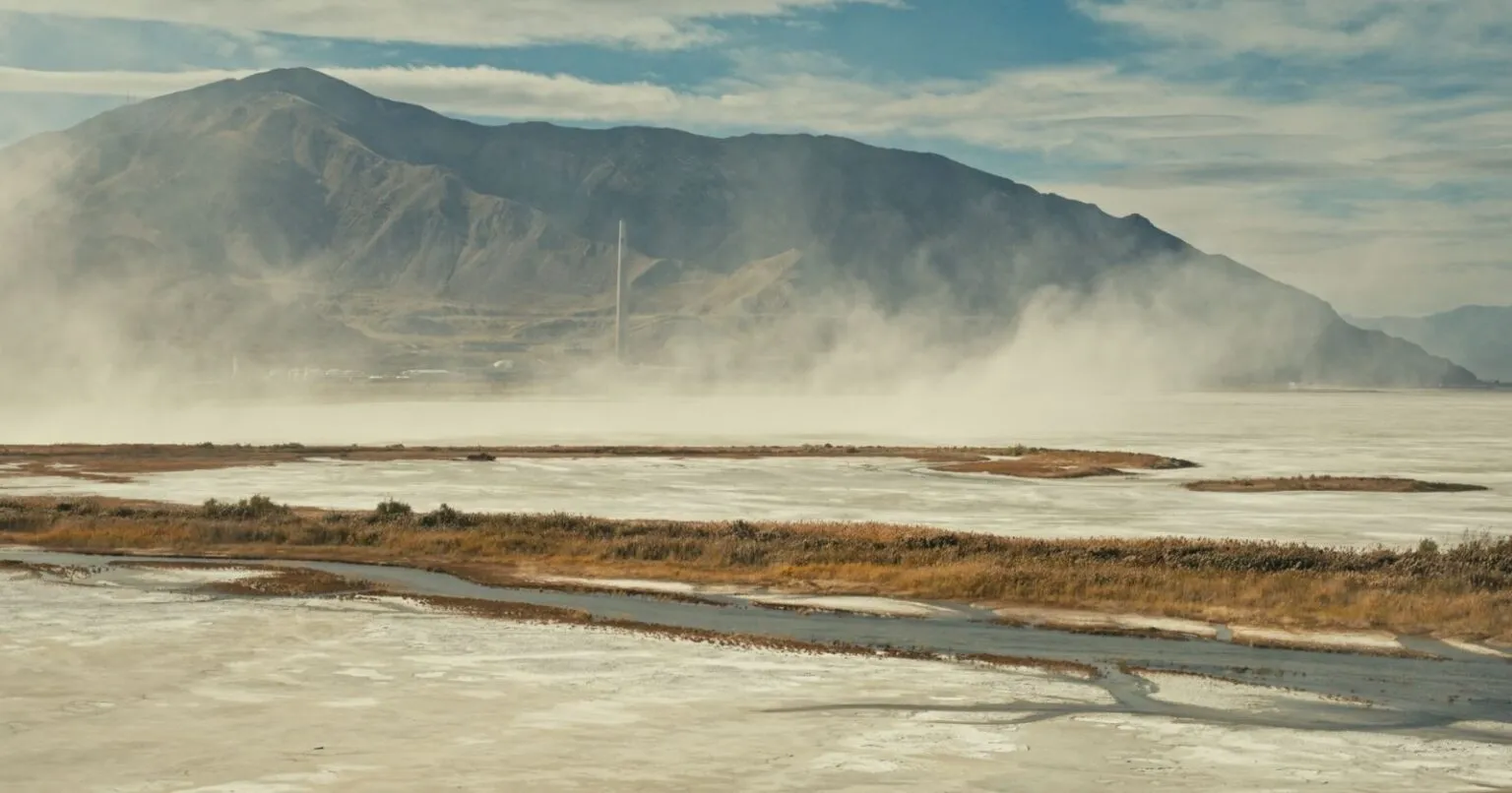

Abby Ellis offers a stark account of the Great Salt Lake’s environmental decay in her documentary, The Lake. The film stays in Utah, where the state’s primary water body keeps receding under an immediate threat. This shift reads as present tense, not a far-off worry.
It registers as a public health emergency for millions of residents. As the water pulls back, a dry lake bed remains, laced with toxic elements such as arsenic. Windstorms can lift that material into the air, turning dust into a lung-level hazard for communities downwind. Ellis frames the unfolding disaster as a ticking clock and gives the lake five years before total collapse.
She sets partisan bickering aside and fixes her attention on the physical reality of what is happening. The stakes feel high without leaning on flashy special effects. The weight comes through quiet observation of a landscape changing shape. The documentary presses for attention to a regional crisis with global implications.
The Stewardship of Ghosts and Dust
The people in this vanishing world carry the weight of an approaching silence. Ecologist Ben Abbott works through the crisis by joining his Mormon faith to scientific rigor. He treats protection of the earth as a divine mandate and as a religious duty that rises above secular political noise. In Abbott’s view, the environment stands as a sacred trust. That conviction reaches toward a community that can meet data with suspicion, and it gives his arguments a moral vocabulary that travels further than charts alone.
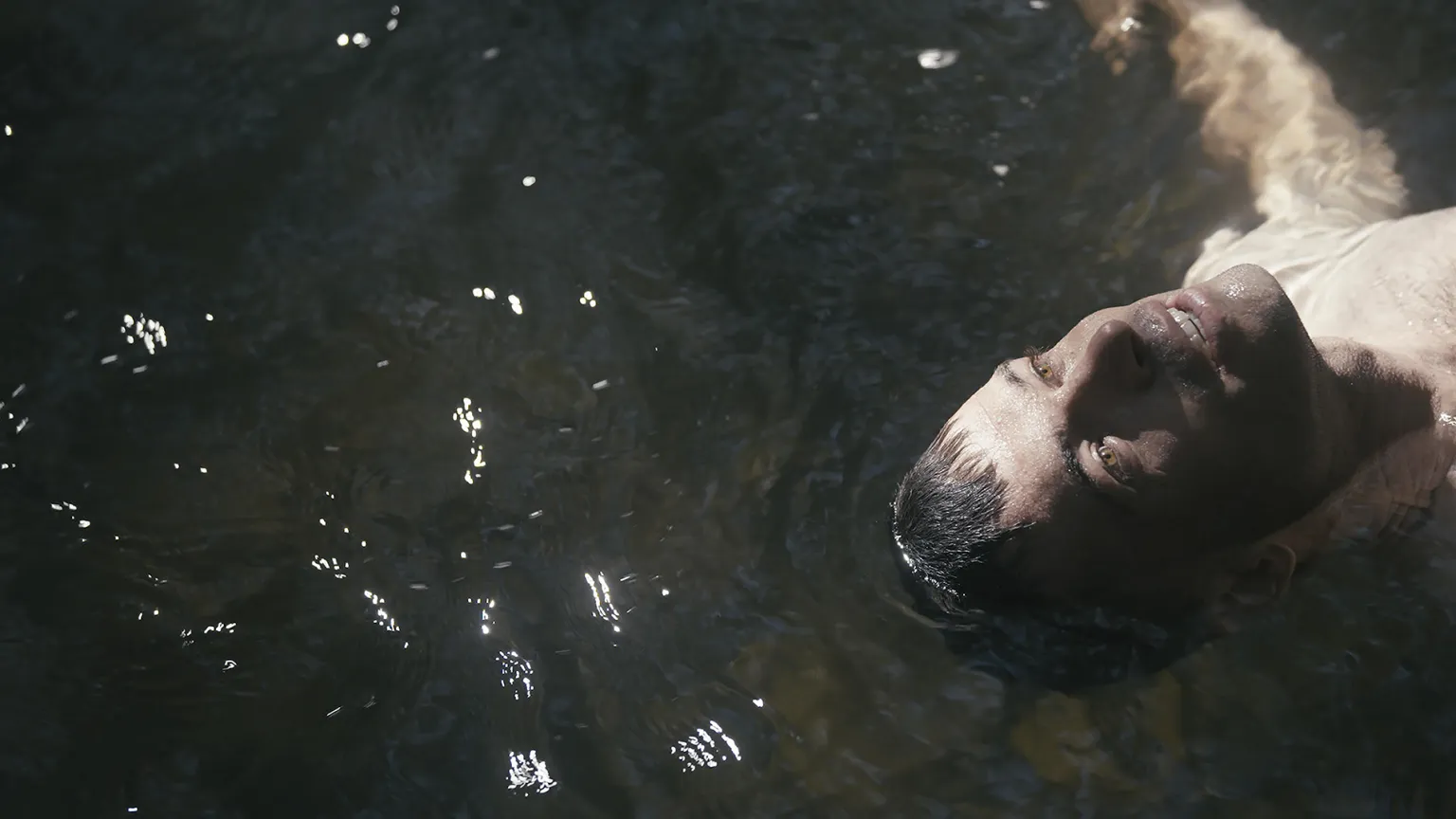
Biologist Bonnie Baxter shows the physical cost of a dying lake. Her research on the exposed lake bed has left her with respiratory ailments, a cruel irony in which the subject of her life’s work now erodes her health. She crosses the salt flats with the bearing of someone paying for knowledge in breath. Nearby, Brian Steed works inside the friction of the machine.
As a commissioner, he faces accelerating data and the slow pace of legislative hallways. He tries to hold a conversation in which one side speaks in years and the other speaks in election cycles. These figures act without precedent to lean on. No historical map exists for this recovery. No saline lake of this magnitude has returned from the brink, so the work becomes invention carried out under the shadow of a localized apocalypse.
The Quiet Violence of Empty Spaces
The conflict in Utah exposes friction between immediate survival and long-term existence. Local farmers present a harsh ultimatum that forces a choice between water used for the food supply and the preservation of the lake. The standoff points to a human failing: a thin capacity to value a future that remains out of sight. Government posture settles into comfortable skepticism.
Scientists predict total collapse within five years. Political leaders respond with gestures that feel empty. Scenes of the governor suggesting prayer or staging public celebrations play like an attempt to keep eyes turned away from a blinding fact, the kind of refusal that treats daylight as something a person can bargain with.
Denial gained fresh energy through the heavy rainfalls of late 2025. Politicians used that anomaly to dismiss years of drought data, treating a brief reprieve as lasting cure. The moment lands as an illustration of slow violence. Many people recognize disaster when it arrives with noise and spectacle.
A meteor or an explosion seizes the senses. The steady evaporation of a lake becomes a catastrophe of stillness. It unfolds in plain view under bright sun, yet it stays unseen by those committed to a story that contains no sudden climax. The violence accumulates by degrees, a gradual poisoning of air that turns a cradle of life into a source of toxicity.
A Cartography of the Aftermath
The film’s visual language captures a world already mourning itself. Cinematographer Alex Takats photographs the dry lake bed as a lunar expanse, cratered and skeletal, the remains of a wetland. The images suggest a planet that has already moved past human life.
The camera holds on pelican carcasses at Gunnison Island, quiet witnesses to a collapsing ecosystem. The fight to list the Wilson’s phalarope as an endangered species becomes an attempt to raise law as a shield over biology failing in real time.
Ellis uses a handheld camera style that removes distance between viewer and crisis. The immersive approach pulls the audience into the claustrophobia of backroom political negotiations and into the harsh, stinging winds of the field. Aesthetic comfort has no place here.
The film keeps away from the familiar arc of triumphant resolution and chooses haunting clarity. It rejects the sedative of false hope. What remains is an unsettling proposition: an environmental battle won slowly still carries the taste of defeat. The credits roll over a landscape that keeps drying, and the audience sits with the weight of a clock still ticking toward zero.
Abby Ellis’s urgent documentary The Lake premiered at the Sundance Film Festival on January 22, 2026, where it received the Special Jury Award for Impact for Change. The film chronicles the critical environmental collapse of Utah’s Great Salt Lake and the race against time to prevent a regional ecological disaster. While the film was available for on-demand streaming through the Sundance platform during the festival (ending February 1, 2026), it is currently seeking wider distribution for a broader theatrical or streaming release later this year.
Full Credits
Title: The Lake
Distributor: Sandbox Films, Ibis Films, Little Monster Films, Cranium Productions, Adok Films
Release date: January 22, 2026
Running time: 88 minutes
Director: Abby Ellis
Writers: Fletcher Keyes, Abby Ellis
Producers and Executive Producers: Fletcher Keyes, Abby Ellis, Leonardo DiCaprio, Jennifer Davisson, Phillip Watson, Jessica Harrop, Caitlin Mae Burke, Chai Vasarhelyi, Anna Barnes, Jimmy Chin, Geralyn Dreyfous, Heather Kahlert, Rachel Crane
Cast: Bonnie Baxter, Ben Abbott, Brian Steed, Spencer Cox, Kevin Perry, Andy
Director of Photography (Cinematographer): Alex Takats
Editors: Abby Ellis, Emelie Mahdavian
Composer: Natalia Tsupryk
The Review
The Lake
The Lake is a haunting portrait of an unfolding catastrophe that avoids the hollow comfort of traditional environmental narratives. Abby Ellis captures a world where the sacred and the scientific collide against a backdrop of legislative apathy. By focusing on the physical toll of a vanishing landscape, the film forces an encounter with the terrifying stillness of ecological collapse. It is a vital, somber meditation on our tendency to ignore the sirens until the air itself becomes a threat.
PROS
- Visually arresting cinematography of the "lunar" lake bed.
- Avoids partisan tropes by focusing on faith and shared duty.
- Exceptional use of handheld camera work to create urgency.
CONS
- Character development occasionally feels secondary to the data.
- The pacing may feel relentless for those seeking a hopeful arc.
- Certain scientific complexities are simplified for the narrative.