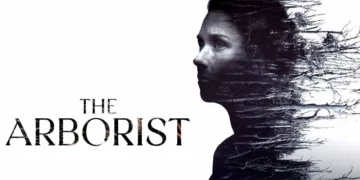
















The Arborist follows Ellie, a tree specialist living under the weight of a sudden loss. A year after her infant daughter dies, she drifts through days, fighting to keep any real connection with her teenage son, Wyatt. A reclusive landowner, Arthur Randolph, offers her a well-paid contract on his isolated estate, and Ellie takes it.
The job carries an odd instruction: she is expected to cut down healthy trees across a sprawling, wooded park. Once mother and son move into the property, the stillness starts to feel charged. Wyatt begins noticing shapes in the dark. He becomes convinced the woods can explain what happened to their family.
The film builds a moody world where psychological strain and supernatural menace sit close together. The physical work of clearing land reflects the harder work of facing memory. The story leans into the heaviness of what refuses to loosen its grip, framed by old trees and secrets that keep pressing to the surface.
The Fractured Family Bond
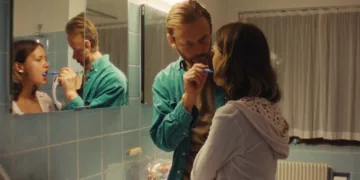
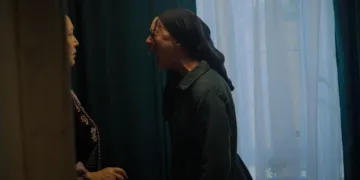
The story’s emotional force comes from Ellie and Wyatt’s unstable relationship. Their grief pulls them in opposite directions, turning their home life into long stretches of silence punctuated by sudden eruptions. Lucy Walters plays Ellie with a steady, lived-in realism, a mother hovering near collapse while trying to look functional. She keeps up a professional mask and quietly dilutes liquor with water to conceal a growing dependency.
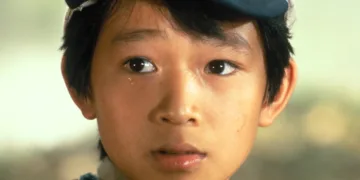
That small, specific action makes her need to numb the pain feel immediate. Hudson West plays Wyatt as a teenager defined by vulnerability and sharp unpredictability. He believes a supernatural presence caused his sister’s death, and that conviction collides with Ellie’s reliance on logic and labor as a way to keep moving.
Their conflict powers the drama, reflecting cultural unease about how different generations carry trauma and speak about it. Will Lyman arrives as Arthur Randolph, the estate’s recluse, with an imposing presence and a gravelly, unnerving voice. He fits the property like a fixture, as if the land shaped him, and he carries a heaviness that points toward what waits ahead. Taken together, these performances push the film toward character study territory, tracking how unspoken sorrow corrodes the people forced to live beside it.
A Visual Language of Dread
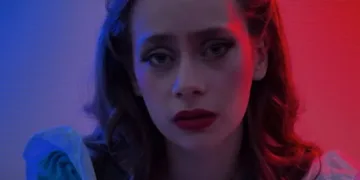
Cinematographer Dan Kennedy gives the film a look that anchors its identity. Murky lake water and dense, dark woods create a feeling of isolation that keeps tightening. Brightly lit pools at night add an uncanny, dreamlike edge to the setting. The style draws from folk horror, and it starts with a cold open built to lodge in your memory: an orb of branches and a raven-man figure that hits like a warning you cannot shake.

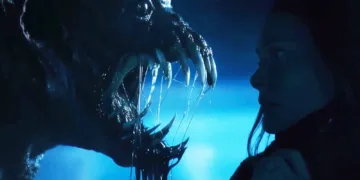
The estate operates like a character, a liminal pocket where the everyday world feels far away. Details such as a children’s theater hidden deep in the woods hint at a past shaped by performance and artifice. The pacing stays in slow-burn mode, letting dread accumulate as the main engine of tension. I appreciated the commitment to practical horror elements over digital effects.
Those tangible threats feel close enough to touch, which keeps the supernatural pressure grounded. It reminds me of early independent cinema, where location and texture carried huge portions of the storytelling. The sound design works in lockstep with the imagery, using the forest’s creaks and small stresses to sharpen the suspense.
The Inheritance of Sorrow
The estate’s history reflects the family’s private tragedy, and the film uses that parallel to argue that guilt can function like inheritance. The haunting stands in for the sins and grief of earlier generations, pain left unresolved and passed forward. As the plot advances, the reason healthy trees are being cut down comes into focus.
That act links to the idea of rot hidden inside something that looks fine from the outside, and to the need to clear away buried secrets before healing can begin. The final reveals connect the property’s past to the death of the infant, Rachel, bringing a harsh clarity to Ellie and Wyatt’s situation. The resolution suggests the past remains present, and the shape of the future depends on how that weight gets carried.
The film also takes a firm position on loyalty, framing commitment as a necessity even when trauma changes someone into a stranger. That thematic seriousness reframes familiar horror beats through the lens of family obligation and emotional paralysis, with the silence people keep for self-protection emerging as the most damaging force in the story.
The Arborist is a supernatural horror film that explores the heavy themes of grief and generational guilt. Directed by Andrew Mudge, it centers on a mother and son who are hired by a mysterious recluse to fell trees on a remote estate, only to uncover a dark haunting tied to their own past. Following successful screenings at the 2025 Independent Film Festival Boston and FrightFest, the movie was officially released for digital streaming and VOD on February 6, 2026.
Full Credits
Title: The Arborist
Distributor: Dark Sky Films, MPI Media Group
Release Date: February 6, 2026
Running Time: 1 hour 40 minutes
Director: Andrew Mackenzie Mudge
Writers: Andrew Mackenzie Mudge
Producers and Executive Producers: Andrew Mackenzie Mudge, Krista Minto, Don Schechter, Ross Saxon, Nicholas Payne-Santos, Michael Bowes
Cast: Lucy Walters, Hudson West, Will Lyman, Bill Thorpe, Chloe Trejo, Hudson West, Will Lyman
Director of Photography (Cinematographer): Dan Kennedy
Editors: Mark Grassia
Composer: Information not found
The Review
The Arborist
The Arborist succeeds as a meditation on the heavy weight of memory. While the pacing occasionally falters in the middle, the atmospheric tension and grounded performances keep the narrative upright. It uses folk horror elements to explore the messy reality of a family in crisis. This film offers a thoughtful look at how we process loss through the lens of a supernatural mystery. It is a solid choice for viewers who prefer psychological depth over cheap thrills.
PROS
- Strong, vulnerable performances by Lucy Walters and Hudson West.
- Striking cinematography that uses the natural landscape to build dread.
- Effective use of practical effects instead of digital alternatives.
- Deep thematic exploration of generational trauma and guilt.
CONS
- Uneven pacing that slows down significantly in the middle sections.
- Narrative structure feels a bit cluttered with multiple connecting stories.
- Some character interactions feel repetitive during the first half.