





The sound of a shovel biting into frozen earth sets the first beat. Ser Duncan the Tall stands over a shallow grave, huge hands clamped around a tarnished sword taken from a dead man. A lone giant burying his only mentor pulls the story away from the familiar pageantry of the Iron Throne and into something pared down and intimate.
Set ninety years before the rise of the dragons, the series settles into the quieter edges of a kingdom at peace, tracking a lowborn orphan who clings to the worn ideals of knighthood. Duncan carries the armor of Ser Arlan of Pennytree, the man who gave him a name and a purpose before dying in the cold, and he heads for the jousting tournament at Ashford Meadow in search of the gold he needs to survive.
The air feels thick with damp wood and horse leather. The drama stays close to the survival of one soul, not the fate of empires. Westeros feels small enough to touch, free of sorcery and dragon heat, grounded in the dirt under a knight’s boots and the stubborn heft of steel in his hand.
Physicality and the Weight of the Name
Peter Claffey gives Duncan a physical presence that shapes the series’ identity. A rugby past shows in every measured step: a six-foot-seven body built for force, moving with power held in check by hesitation. Duncan often seems to fold inward, shoulders rounding as though his height brands him as a target in a world quick to treat him as a simpleton. That bashfulness makes his decency feel hard-won and credible.
He reads as a lunk with a deep moral core, carrying a kindness that would seem out of place in the brutal slums of Flea Bottom. Integrity becomes the narrative’s steady pulse. Glory holds little interest as ornament. Worth matters, the kind earned through conduct, through living up to the shield he carries. Claffey expresses that pressure through quiet adjustments in posture and a gaze that stays alert, always measuring the room.
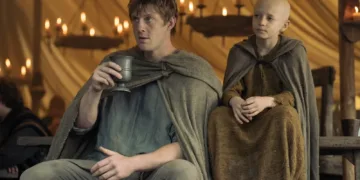
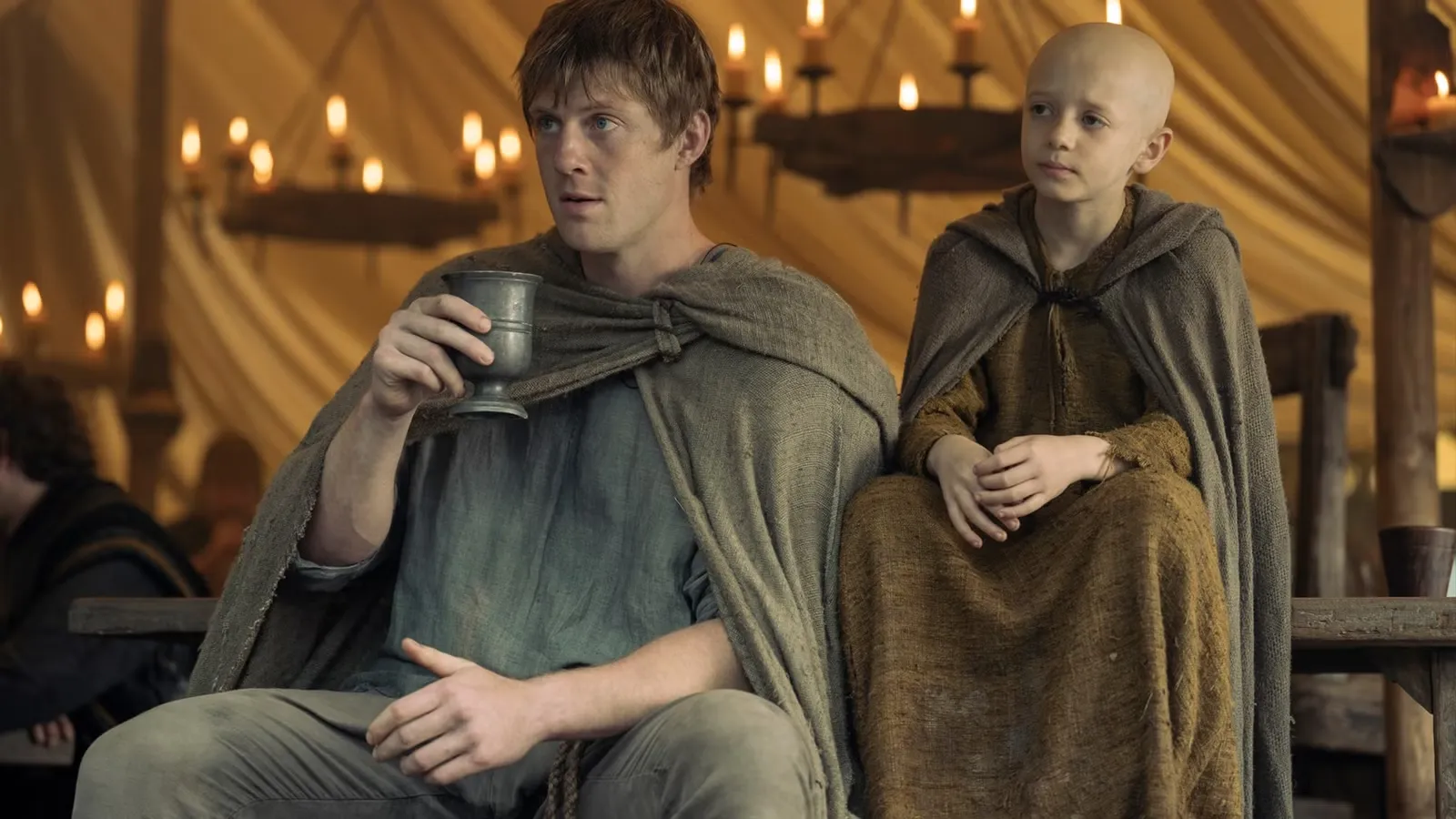
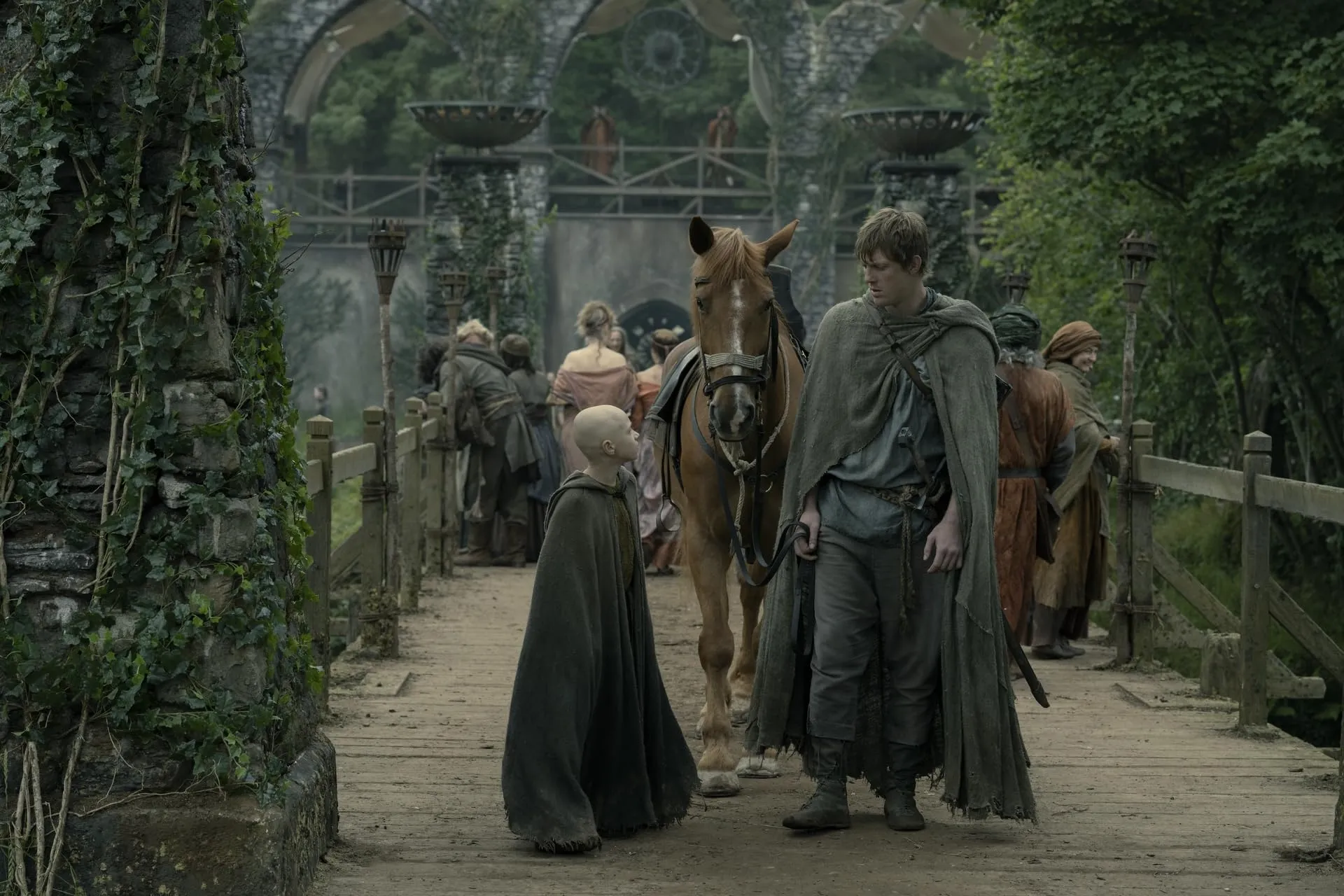
At his side is Egg, a bald boy with a sharp tongue and eyes that suggest too much has already been seen. Dexter Sol Ansell sidesteps the familiar pitfalls of child performances, playing a kid who is smart, prickly, and unmistakably young. Egg never feels like a miniature adult. He carries hidden depth, and a sadness that rises in brief pauses under the stars. Cynicism comes naturally to him, in ways Duncan cannot imitate.
Their partnership takes on a lone wolf and cub shape, built through necessity: traded barbs, thin soup shared on the road, trust assembled piece by piece through hard miles. Egg supplies the worldly sense Duncan lacks. Duncan supplies the protection a child needs out in the wild. Over time, their differences settle into a working rhythm.
Around them, the Ashford tournament fills with a sharp lineup of personalities. Daniel Ings brings bright, infectious energy to Lyonel Baratheon, “The Laughing Storm,” a man who treats combat like high art performed for the pleasure of the crowd and himself. Ings tears through scenes with charisma that lands quickly.
Finn Bennett plays Prince Aerion Targaryen with a controlled madness kept beneath a polished surface, aristocratic beauty worn like a mask. Aerion embodies a cruelty rooted in a family convinced its blood carries divinity. Sam Spruell completes the royal weight as Prince Maekar, stern and heavy, carrying lineage like an extra layer of armor. His face holds the look of someone who has forgotten how to smile. Together, these performances create a hierarchy that feels lived-in, volatile, and ready to turn dangerous.
The Lean Architecture of the Hedge Knight
The production commits to intimacy as a design choice. Six episodes run about thirty minutes each, keeping attention trained on the central duo and avoiding the sprawl that can drag epic fantasy into a fog of names. The storytelling moves with urgency and restraint, closer to medieval drama than spectacle-driven mythmaking. Magic is absent. The air stays clear of sorcery.
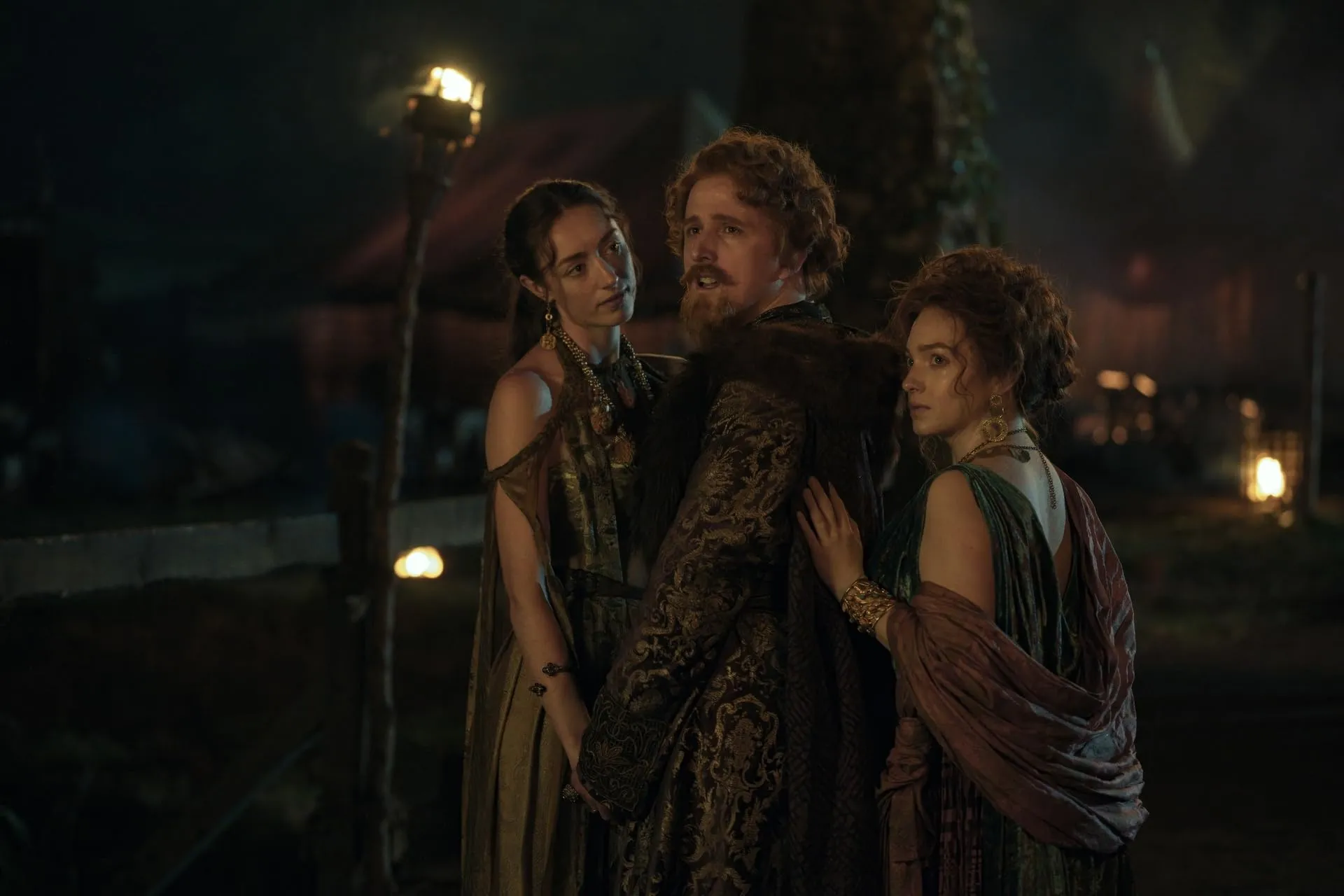
The narrative relies on friction between people, not divine intervention. That simplicity gives the human details room: the difficulty of securing a meal, the punishing cost of plate armor, the small calculations that decide who eats and who goes hungry. The stakes stay tied to the body and the wallet, to hard weather and harder social rules.
The script’s humor leans raunchy and earthy, setting the baseline for how this world works. An early fixation on a character’s bowel movement serves as a blunt declaration of intent: this is a place of bodies, mess, and mortality. The writers use scatological beats to capture the truth of hardscrabble living.
The choice separates the series from the polished grandiosity associated with earlier stories in this universe. It keeps faith with the spirit of the novellas while speaking in a voice that belongs to this smaller canvas. The tone can drift from whimsy to base reality, and it allows hope to surface in a franchise known for brutality. Characters steal moments of levity with death nearby, and the writing keeps a steady distance from the genre’s habitual cynicism.
Pacing stays brisk. The story moves through the tournament days with purpose, each episode shaped like a complete chapter of a larger book, never like a film chopped into smaller pieces. Pressure accumulates in patient increments as the contest simmers.
The heat of the sun and the smell of mud feel present, textured, unavoidable. Spectacle takes a back seat, and the trade-off pays off by pushing attention toward the people inside the armor. Drama rises from an inn conversation, a silence by a campfire, a look held too long. Westeros feels reachable here, a place where a man can still picture a better life with nothing to his name.
The Visceral Texture of Ashford Meadow
The visual approach shifts as the story moves forward. Owen Harris handles the early chapters with a lighter touch, capturing countryside beauty and the pageantry of opening jousts. Sarah Adina Smith takes over later, bringing a darker atmosphere as hints of violence begin to creep into the edges. The jousting sequences rank among the most visceral the franchise has offered.
Visor shots put the audience inside the helmet, staring out through a narrow steel slit. The sound design lands with brutal clarity, including the deafening crack of a lance splintering on impact. Editing leans into chaotic motion, capturing the panic of a horse charging at full speed and the raw danger of bodies colliding in armor. The combat feels earned, physical, and frightening.
Production design builds Ashford Meadow as a place of mud and worn leather. Tents carry rain stains. Armor bears the scuffs of previous battles. Class divisions read instantly through clothing: royals in silk and polished steel, hedge knights in rags and boiled leather.
The visual separation tells the story of inequality without speeches. Sets have the grit of places where people work and sleep, where food gets spilled and gear gets patched. Puppet shows and rowdy taverns add lived texture to the tourney grounds. Cold nights feel sharp. Dirt feels ground into the skin. The production value stays high within the smaller scale.
A single weakness appears in the handling of momentum. Flashbacks to Duncan’s time with Ser Arlan arrive when present-day tension is already high, and the timing undercuts the forward drive. A nail-biting scene loses its bite when the screen fades into memory.
These passages add context to Duncan’s character, yet they function like a speed bump in the road. A more direct placement of that history would keep the pressure intact. Outside those interruptions, execution stays sharp, with visual language committed to weight, texture, and the tangible presence of objects.
The Chivalry of the Dispossessed
Life as a hedge knight operates like a social cage. Duncan carries a title many refuse to grant him, and mockery from the highborn meets him at every turn. Poverty registers as guilt in their eyes, a mark that cancels worth before he even speaks. The tournament becomes a microcosm of feudal life, a maze of caste barriers that demands constant calculation.
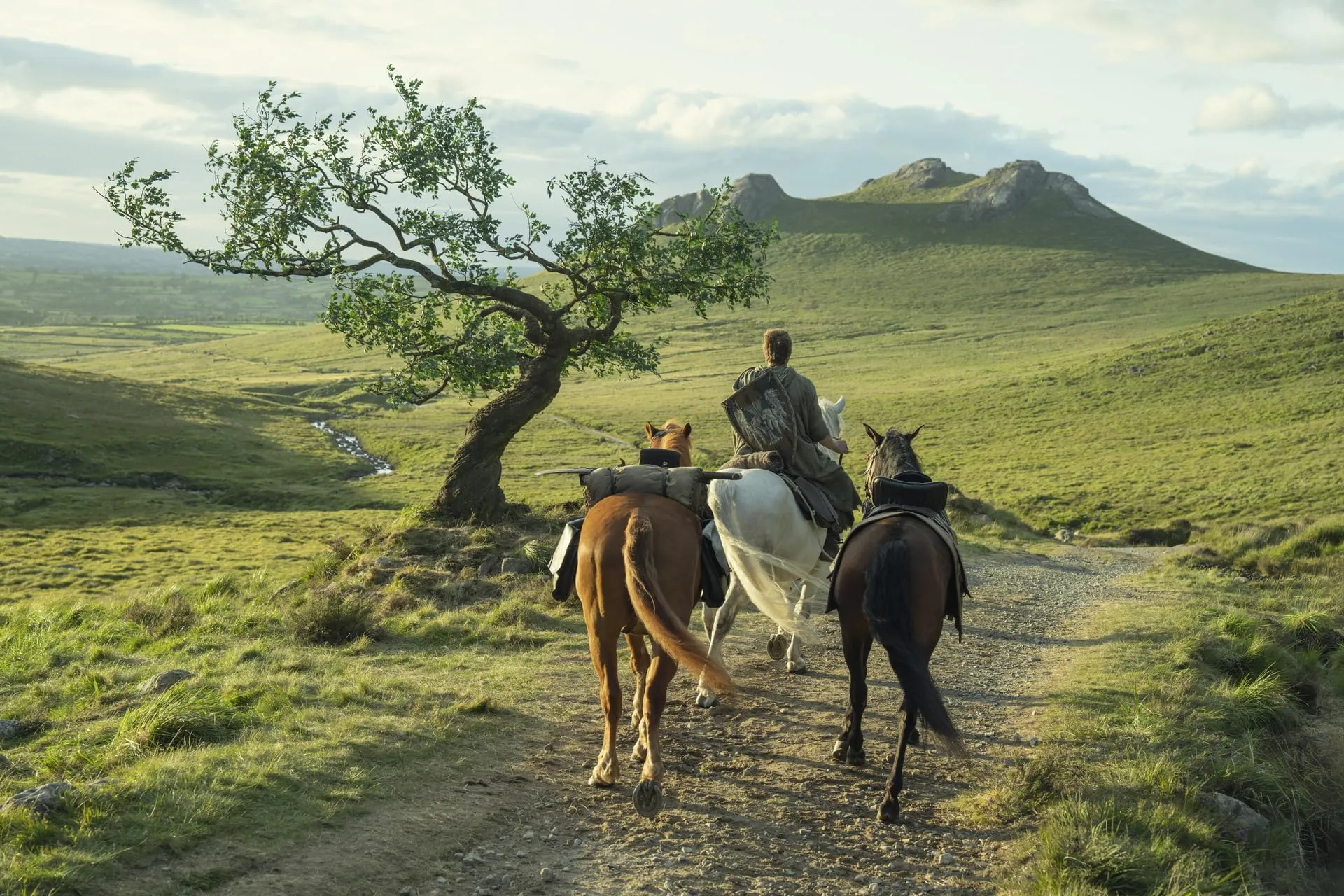
Duncan has to move through this system without surrendering his soul. Schemes and subterfuge enter his life as practical threats, and allies must be found in a setting eager to watch him fail. His struggle reflects the strain of anyone trying to rise above a station assigned at birth, and the show builds that social critique into the story’s bones.
Chivalry takes shape through actions, not bloodlines. Duncan carries genuine honor and protects the weak because it is right. Princes around him treat power as permission, feeding bloodlust and entitlement. The series studies the meaning of knighthood in a world that has allowed the word to thin out and lose its substance.
Honor becomes a daily decision, chosen repeatedly, never granted as a ceremonial gift from a king. Duncan’s commitment to his creed drives the emotional engine of the story. Kindness survives in him even when the world around him looks merciless, offering a quiet, steady form of heroism.
Hope runs through the series as a clear statement. Goodness still has a place in history’s darkest corners. The friendship between giant and boy plays like a balm, rooted in shared hardship and mutual protection. They watch out for each other when nobody else will.
This corner of Westeros becomes a shelter for the human spirit, a softer tempo inside a franchise built on cruelty. Kindness reads as strength here, and the story argues that a simple man can change the world by refusing to look away from suffering. The final note carries possibility, leaving the door open for the next chapter of their life together.
A Knight of the Seven Kingdoms premiered on HBO and HBO Max on January 18, 2026. This highly anticipated Game of Thrones prequel is available for streaming on Max, with new episodes releasing weekly every Sunday. The series brings a more intimate and character-focused perspective to the world of Westeros, exploring the early adventures of Ser Duncan the Tall and his squire, Egg.
Full Credits
Title: A Knight of the Seven Kingdoms
Distributor: HBO, HBO Max
Release date: January 18, 2026
Rating: TV-MA
Running time: 30–45 minutes
Director: Owen Harris, Sarah Adina Smith
Writers: George R.R. Martin, Ira Parker, Aziza Barnes, Hiram Martinez, Annie Julia Wyman, Ti Mikkel
Producers and Executive Producers: George R.R. Martin, Ira Parker, Ryan Condal, Vince Gerardis, Sarah Bradshaw, Owen Harris
Cast: Peter Claffey, Dexter Sol Ansell, Finn Bennett, Bertie Carvel, Tanzyn Crawford, Daniel Ings, Sam Spruell, Danny Webb, Henry Ashton, Edward Ashley, Youssef Kerkour, Daniel Monks, Shaun Thomas
Director of Photography (Cinematographer): Gustav Danielsson
Composer: Dan Romer
The Review
A Knight of the Seven Kingdoms
This production succeeds by looking downward at the dirt rather than upward at the dragons. It replaces the exhausting machinery of global politics with a tender, grounded story about a giant and a boy. While the flashback structure occasionally stumbles, the genuine chemistry between Claffey and Ansell creates the most human entry in this franchise to date. It is a rare, hopeful stroll through a world often defined by its cruelty.
PROS
- Peter Claffey’s nuanced, physical performance.
- Intimate, half-hour episodes with a tight focus.
- Authentic, "lived-in" production and set design.
- A refreshing, hopeful tone in a grim setting.
CONS
- Intrusive flashbacks that stall narrative momentum.
- Limited scope might feel small to epic fantasy fans.
- Early reliance on coarse humor may be jarring.
- Supporting characters occasionally relegated to tropes.