






















![Kingdom Hearts Collection [I-III] Review](https://gazettely.com/wp-content/uploads/2026/10/Kingdom-Hearts-Collection-I-III-1-360x180.webp "Kingdom Hearts Collection [I-III] Review: KHII Holds Steady as Newer Entries Fluctuate 37")



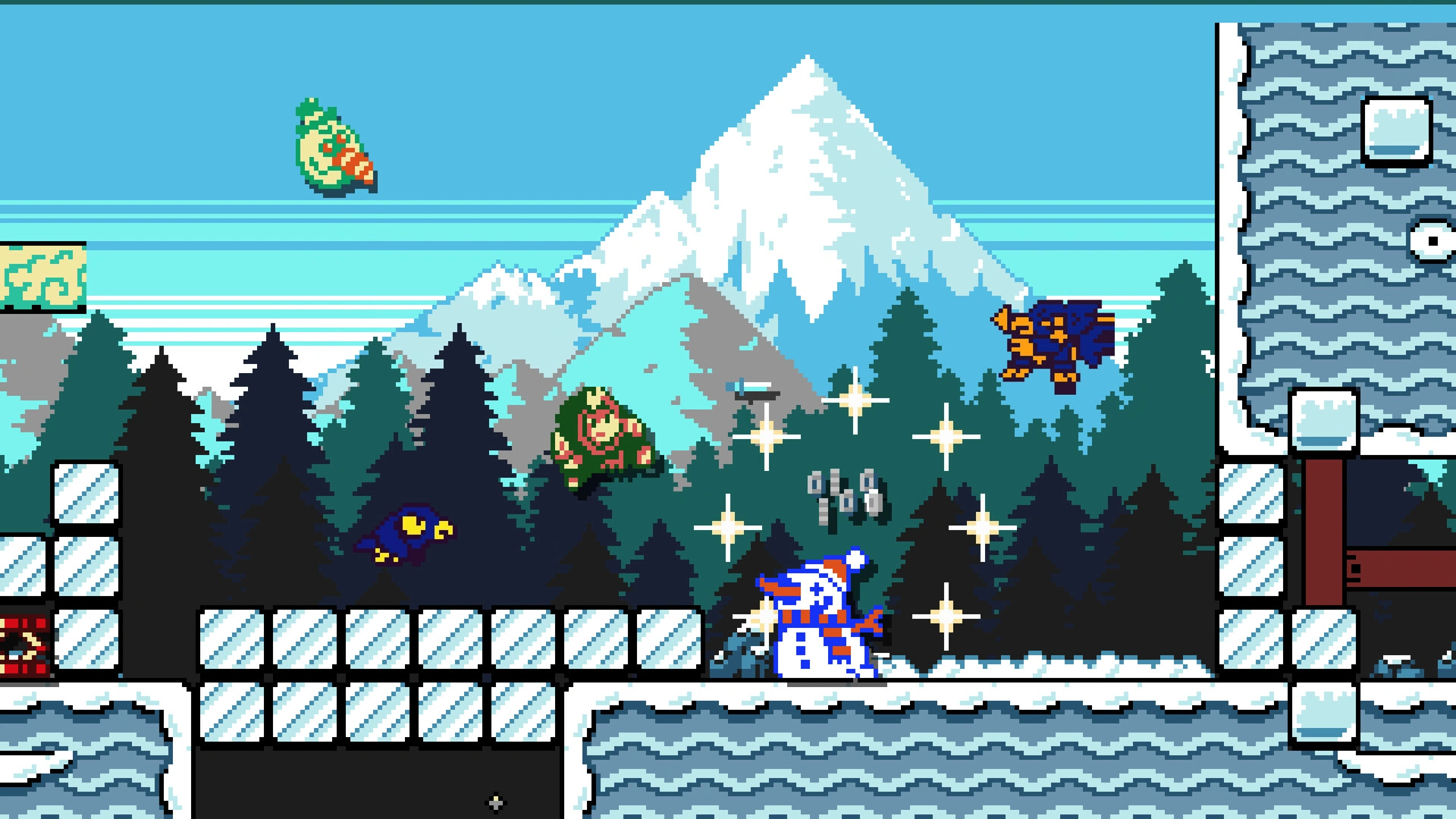

A missed jump in an auto-scroller should leave a clean little sting. In Dark Scrolls, it often leaves a mess of questions: did the player mistime the leap, did the character’s special double move misfire, or did the screen’s constant push turn a small mistake into a run-ending shove?
Doinksoft’s Dark Scrolls has a pitch that sounds instantly appealing on paper. It is a side-scrolling rogue-lite action platformer dressed in 8-bit clothes, drawing from Ghosts ’N Goblins, Gauntlet, The Legend of Zelda, and old arcade shooters.
A group of resurrected heroes chases the dark scrolls after a mysterious knight betrays them following a dragon battle. You start with three characters: Grizz the barbarian, Pigeon the thief, and Emerys the mage. Later, the roster expands to include stranger faces such as a dog, a chef, Cupid, and an alien. That roster gives the game its liveliest spark. The run itself is where the charm starts to wobble.
The Run Wants Urgency, Then Repeats It Too Often
The screen is always moving right, which means Dark Scrolls immediately understands one old arcade truth: hesitation can be deadly. You jump between platforms, grab chests, shoot enemies, avoid traps, and try not to get trapped between the environment and the edge of the screen. The scroll pauses for gauntlet rooms, shops, mid-bosses, and bosses, then pushes you forward again.
For a while, that pressure works. A timed gauntlet about a third into each level can open a cannon shortcut if you clear the enemies fast enough, and that small reward feels smart. It gives risk a clear shape. Fight cleanly, save time, preserve health.
The problem is the structure around that idea. Solo play gives you one life, so one bad landing after a long run can throw you back to the village. Branching routes ask you to earn scrolls or key-like rewards, then begin again so a new path opens. That could have created a satisfying sense of return, but the procedural stage segments rarely feel surprising. The same enemy patterns, straight corridors, and familiar hazards start to feel reheated rather than remixed.
Coins and gems add a second layer of repetition. Coins buy temporary perks from shopkeepers inside a run, while gems earned from score fund hub upgrades and new characters. A failed run may give only a few gems, making a 100-gem character feel far away. A rogue-lite can survive repetition when every attempt teaches you something meaningful. Here, too many attempts feel like payment plans.
Character Variety Can’t Rescue the Movement
The controls are simple: jump on one button, attack on another, super move on a third once the star meter fills. Attacking enemies builds that meter. When full, each hero gets a distinct special. Emerys creates rotating orbs that block projectiles and damage nearby enemies. Pigeon can turn invisible. Cupid’s co-op healing gives her a clear support role.
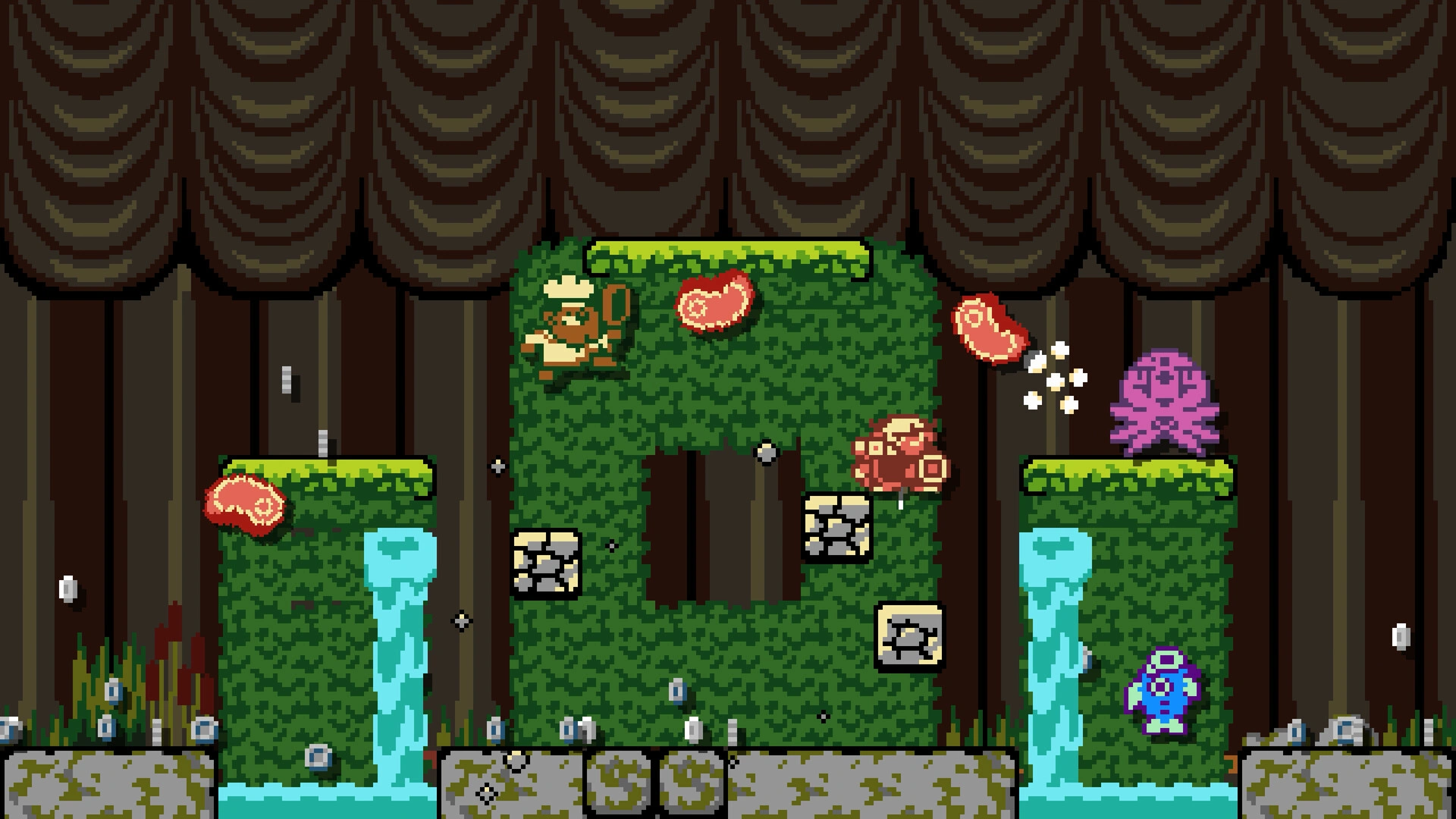
This is the part of Dark Scrolls that nearly works. Grizz throws axes in a damaging arc and can slam downward. Emerys fires bouncing magic orbs and can blast upward or diagonally. Pigeon throws knives and gains height through a delayed move. Each character feels different enough to invite experimentation, and the dog unlock adds a welcome bit of silliness.
The trouble is that movement never feels as crisp as the game needs it to be. Shooting locks you into a stiff forward-and-back motion while your attack keeps facing one way. Emerys can dash upward at speed, but hitting the top of the screen can shove the character sideways. Pigeon’s delayed lift can feel awkward under pressure. Grizz’s stomp can become so dominant that it bends the game around him, especially when its invulnerability turns frantic rooms into button-mashing survival.
An auto-scroller built around jump pads, enemy swarms, and narrow timing needs trust. The player has to believe that a death came from their own decision. Too often, Dark Scrolls creates the opposite feeling. It asks for precision, then hands you tools that feel slippery, delayed, or weirdly overpowered.
Cute Pixels, Tiring Noise
The 8-bit presentation is readable, which matters. Enemies do not blur into backgrounds, projectiles are usually clear, and the small character sprites have enough personality to sell the game’s goofy undead fantasy. Some later bosses look genuinely fun, especially when the screen fills with patterns and the pixel art leans into spectacle.
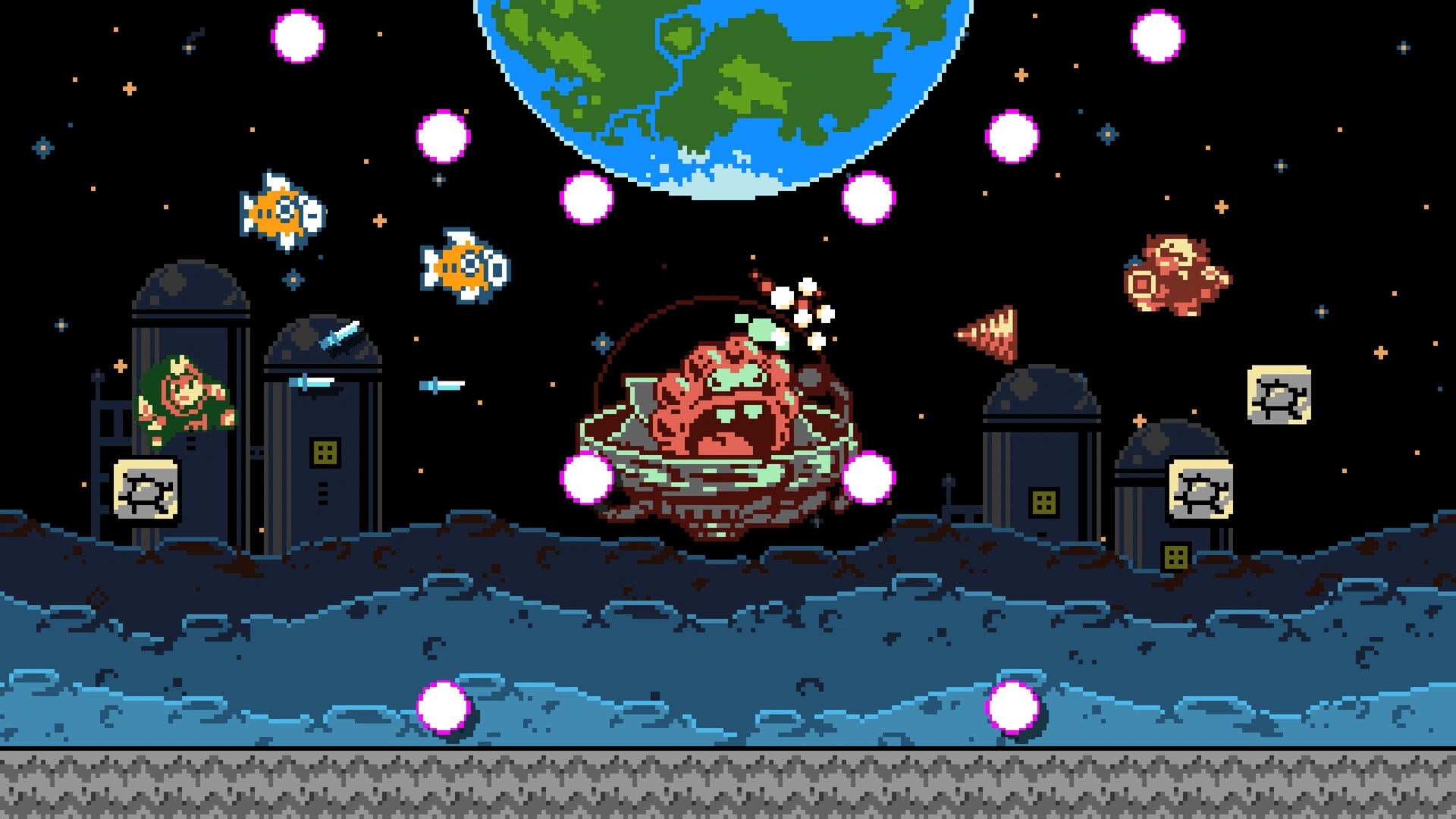
The environments have less character. Too many levels rely on plain corridors and short platforming stretches, so the world starts to feel like a delivery system for hazards rather than a place worth remembering. The retro look is pleasant, but it rarely creates a strong mood beyond “old game, fast pace.”
The audio lands with a harsher thud. The first stage music has a catchy little hook, and the soundtrack fits the NES throwback idea, but repeated early runs make the same tunes wear thin. Some sound effects have a tinny sharpness that can grate after long sessions. In a game designed for frequent failure and restart, audio fatigue becomes part of the difficulty.
Co-op Finds the Game’s Friendlier Shape
Local and online co-op make Dark Scrolls easier to like. Pairing different heroes gives combat a livelier rhythm, and the ability to revive a partner softens the punishment that solo play applies so harshly. Cupid’s healing super matters much more with another player beside you. Grizz can handle crowds while a ranged character peppers enemies from safer angles.
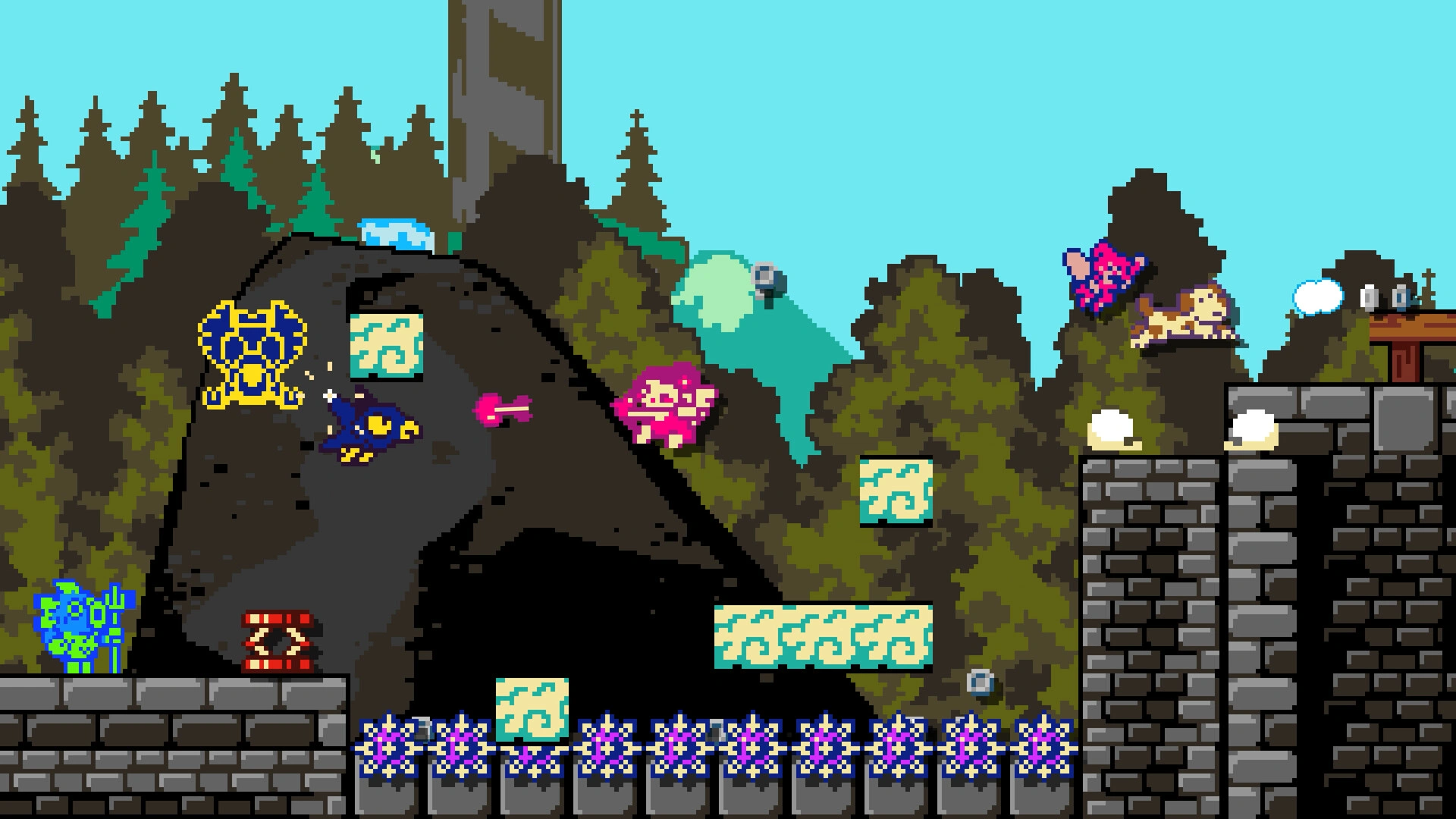
That balance also reveals a design issue. Solo play often feels brittle because small mistakes carry huge costs, while co-op has enough forgiveness to let the chaos breathe. The game seems happier with two players laughing through the mess than with one player trying to parse every upgrade, route, achievement, and shop effect alone.
A built-in manual could have helped. The game leaves too much unclear: which upgrades persist, what enters the shop pool, how character-specific achievements unlock new options, and what each run actually earned. For a retro-styled game, an in-game manual would have fit the aesthetic perfectly and made the learning curve feel playful instead of foggy.
Dark Scrolls has good ingredients: readable pixel art, a broad roster, co-op support, branching paths, and a few clever risk-reward beats. Its best moments arrive when the screen fills with enemies, a super move clears space, and a partner scrapes through with one heart left. Those moments show the game it wants to be. The rest keeps getting caught between nostalgia and friction, chasing the feeling of old arcade danger without the clean handling that made danger feel fair.
The Review
Dark Scrolls
Dark Scrolls has the bones of a scrappy retro favorite, especially with co-op, character variety, and readable 8-bit art. The problem is feel. An auto-scrolling rogue-lite needs movement the player can trust, and this one too often turns jumps, attacks, and deaths into arguments with the controls. Its best moments flash by when two players survive a chaotic room together, but solo runs grind down the charm too quickly.
PROS
- Distinct character roster
- Fun co-op potential
- Readable pixel art
- Smart cannon shortcut reward
- Some lively boss moments
CONS
- Imprecise movement
- Repetitive solo runs
- Slow gem progression
- Thin level variety
- Harsh audio fatigue