


























Mortal Kombat made an early, unmistakable mark on gaming. The series turned digitized actors into violent icons, prompted congressional scrutiny, and paired sensational content with a surprisingly deep competitive core. Digital Eclipse treats that history as material to preserve and explain.
Their Legacy Kollection gathers 23 titles that span the series’ formative decade, from the 1992 arcade origin through the awkward early experiments with 3D. The package preserves playable builds and assembles documentary context that traces the creative chaos behind the franchise. Digital Eclipse applies the same archival toolbox it used for previous documentary collections, combining source artifacts with interactive timelines.
These entries arrive without being remastered. They play like the originals, quirks and all. The collection’s strength rests in the context it provides, which clarifies why these games matter even when modern players experience them as historical artifacts rather than contemporary fighters.
The Complete Roster: Games Across Generations
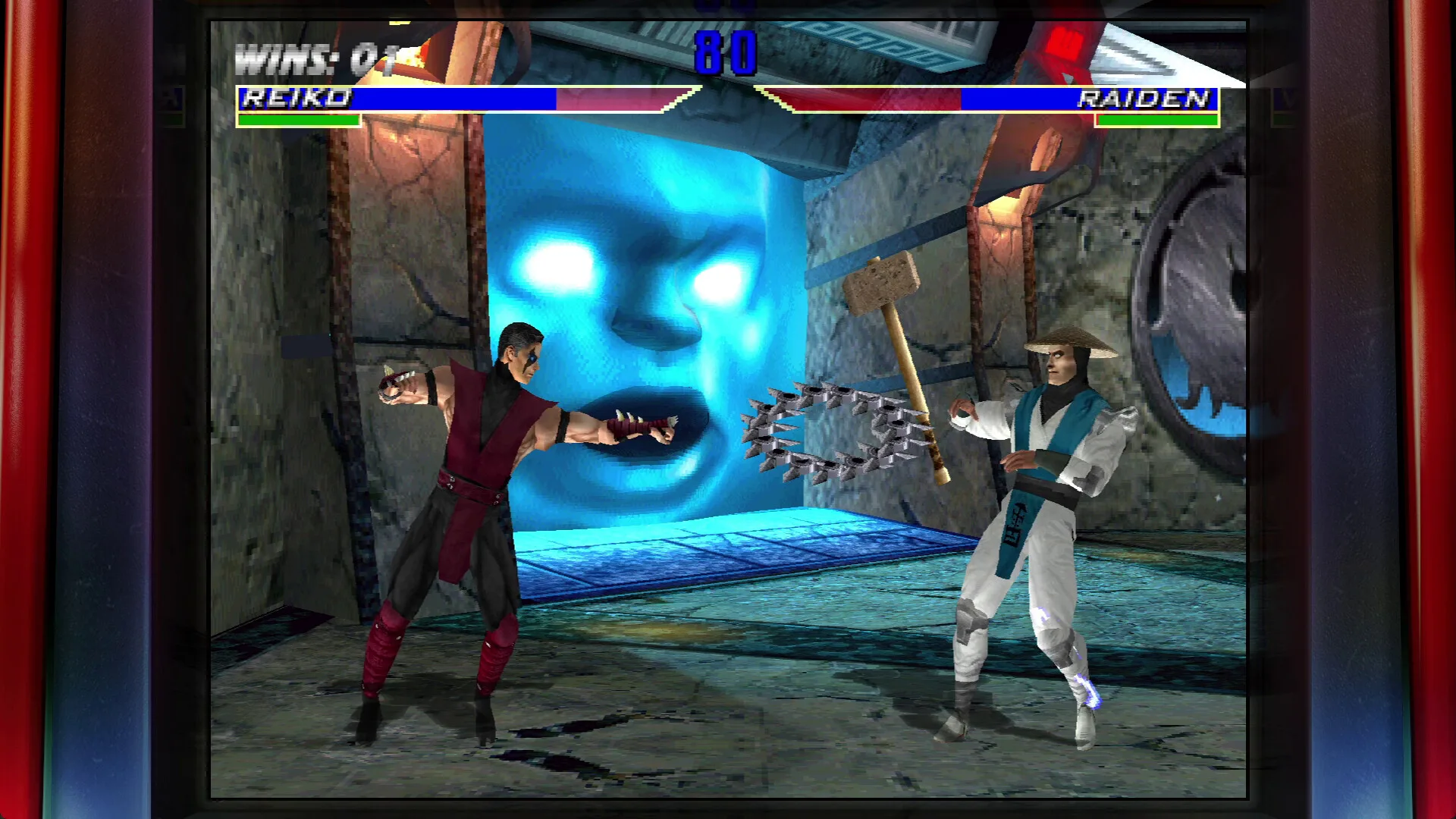
The set focuses on four mainline arcade releases that mark clear evolutionary steps. The first Mortal Kombat set the template: digitized fighters, graphic violence, and a compact roster that players could memorize quickly. The sequel smoothed animations, expanded character choices, and loosened rigid combat. Mortal Kombat 3 introduced the controversial run button, a mechanic that sped matches and altered defensive options. Ultimate Mortal Kombat 3 restored missing characters and adjusted balance. Mortal Kombat 4 records the series’ early move into polygons, replacing sprites with 3D arenas and adding weapon stances that never fully gelled.
Those arcade builds demonstrate rapid iteration. The shift from MK1’s stiff movement to MK2’s more fluid combos happened in slightly over a year. The games read as wild experimentation from a team making design decisions in public view, trying systems that either became fixtures or vanished.
Home ports tell a parallel story shaped by hardware differences. Genesis releases emphasized the blood code that fueled parental alarm, while Super Nintendo editions included voice samples the Genesis could not reproduce. These differences reflect technical tradeoffs and platform politics. MK2 on Genesis runs noticeably faster than the SNES version, which pauses at round starts to stream character data. The Sega 32X port occupies a middle ground between arcade fidelity and console practicality.
Also Read






Those variations matter for players who first knew Mortal Kombat at home. The scratchy Genesis take on the Dead Pool theme carries nostalgia even if it falls short of arcade audio. The collection includes multiple versions of many entries to honor how people originally encountered these fighters and to acknowledge that a single “definitive” build does not exist.
Handheld ports push the idea of playability. Game Boy and Game Gear editions, scaled up for modern displays, become sluggish and disorienting. The collection does not include options to shrink those screens to more forgiving sizes. These handheld builds function as historical curiosities rather than competitive alternatives, proof that the franchise stretched to platforms that struggled to handle it.
The PlayStation release of Mortal Kombat Trilogy stands as the collection’s technical centerpiece. That compilation assembled characters and stages from the first three arcade games into one vast roster, including boss characters such as Goro and Shao Kahn as playable options. The original PlayStation discs suffered long load times, especially when Shang Tsung morphed. Digital Eclipse removed those delays, producing what may be the best way to play this specific compilation. Making every character available without load interruptions converts Trilogy from an archival oddity into a genuinely enjoyable compilation.
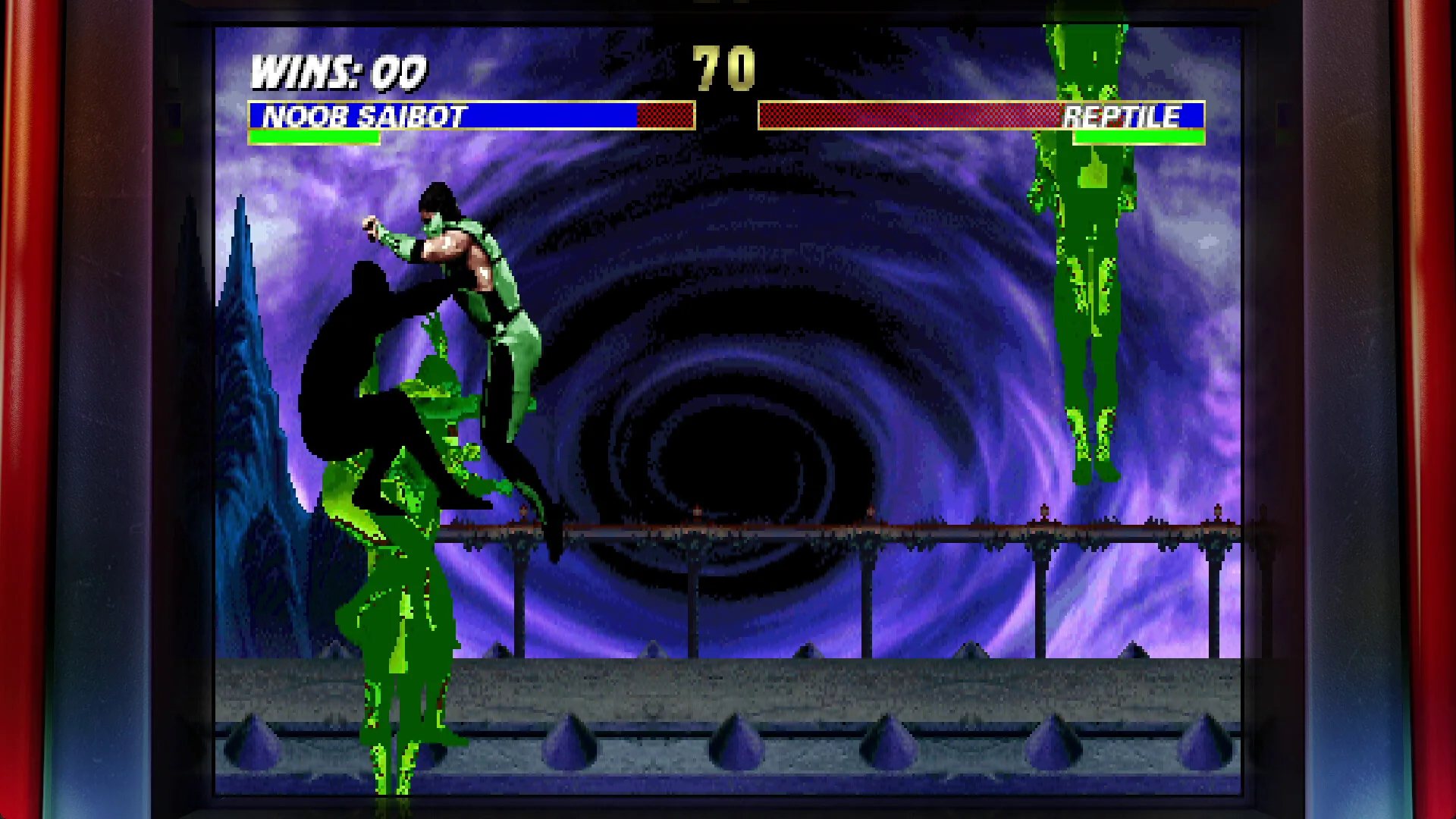
WaveNet Ultimate MK3 is a clear preservation win. Those specialized arcade cabinets appeared only in Chicago and San Francisco during the late 1990s and experimented with early online connectivity. The WaveNet build added Noob Saibot and attempted to link distant cabinets through nascent internet infrastructure. Trying to contact WaveNet servers today yields error messages that serve as a reminder of how much online play has advanced. Including this rare variant elevates the set’s historical value.
Game Boy Advance entries complete the portable selection. Mortal Kombat Advance and handheld takes on Deadly Alliance and Tournament Edition primarily serve collectors. These 2D fighters on GBA hardware feel choppy and lack the precision for serious competitive play. Their presence underscores the collection’s documentary aim rather than a focus on selective curation.
Mortal Kombat Mythologies: Sub-Zero tried to rework fighting controls for platforming. The experiment fails in practice. Precise jumps degrade into guesswork because character movement retains fighting-game physics. Combat encounters stack frustration as enemies exploit imprecise inputs. The title does contribute lore through FMV cutscenes that establish backstory later entries would use. The included PlayStation build benefits from reduced loading, which makes the experience somewhat less onerous.
Mortal Kombat: Special Forces places Jax in a top-down action format that reads as bland even for late 1990s standards. Combat lacks impact, level design follows familiar patterns, and the presentation signals tight budgets. These entries have not aged well because they were not particularly strong at launch. Their inclusion still matters because they show the series trying different genres and failing forward, moves that set the stage for later spin-offs.
The collection’s scope stops with uneven boundaries. The N64 Mortal Kombat Trilogy had a distinct 3v3 mode missing from the PlayStation compilation; that absence removes a direct point of comparison for hardware-specific approaches to the same compilation. Mortal Kombat 4 appears here in its arcade shape only, so the Dreamcast port and the expanded Gold edition are not present. Home releases of Deadly Alliance would have offered better documentary closure than the choppy GBA ports. These omissions create narrative gaps the package never fully addresses.
Modern Conveniences for Classic Challenges
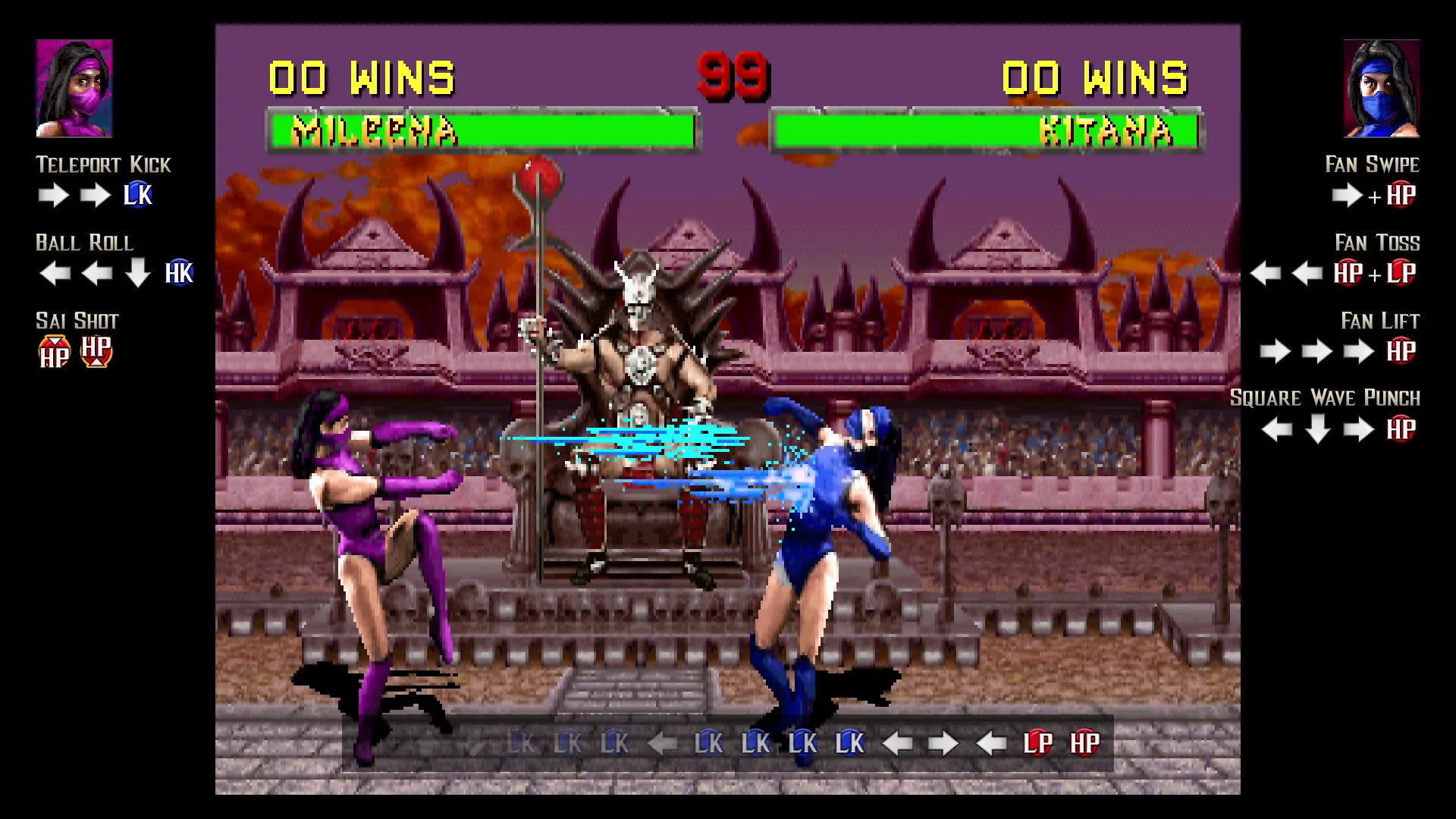
Digital Eclipse added training modes across many entries, features the originals lacked. Those modes let players probe movesets, practice timing, and test combo strings without burning through continues. A Fatality training option addresses the long-standing issue of performing finishers under pressure. On-screen move lists replicate the arcade habit of taped notes, now displayed cleanly beside the action.
Difficulty options now sit in main menus, granting players control over formerly fixed challenge levels. Secret fights that once required obscure conditions can now be toggled on so players can face Reptile, Smoke, Jade, and Noob Saibot without memorizing hidden triggers. The Game Boy build even unlocks Goro as a playable character, a hidden feature most players missed. These changes remove artificial hurdles while retaining the choice to play authentic builds.
The rewind tool lets players roll back 30 seconds, a useful aid against the collection’s most notorious obstacle: the AI. It functions well for practicing sequences or recovering from mistakes. Issues arise during matches. Rewinding mid-fight sometimes provokes aggressive AI reactions that feel outsize compared to the situation. The opponent can respond with heavy throws or special moves that create death loops where repeated rewinds compound the problem. The feature leans helpful overall, though its odd side effects stop it from being a flawless solution to brutal difficulty.
Infinite Fatality timers eliminate the pressure of executing finishers inside tiny windows. Classic Mortal Kombat gave players seconds to enter complex sequences, often producing missed opportunities. Removing that constraint lets players concentrate on input accuracy instead of racing an invisible clock. Cheats and developer options expand the room for experimentation with tools that were hidden or absent in original releases.
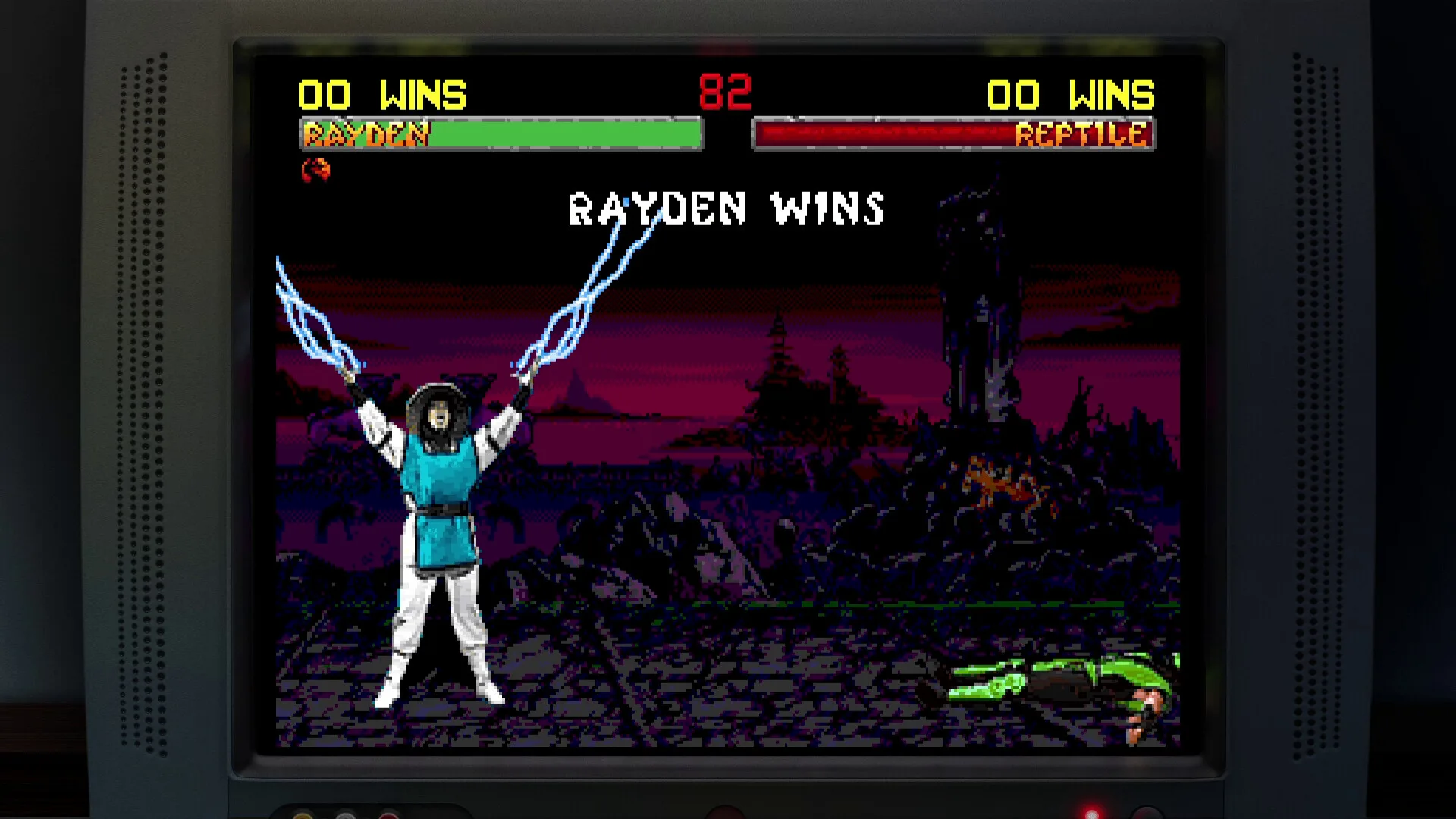
The collection includes visual filters and border frames meant to recreate historical viewing. CRT filters add scanlines and screen curvature for players who want retro presentation. Border art frames games with period-appropriate designs. Those settings require per-game configuration rather than a single global preference, a tedious step for players who prefer consistent presentation. The inability to save universal visual choices stands out as a recurring annoyance.
Modern displays present arcade and console builds with clarity that earlier hardware could not match. Handheld entries suffer the reverse problem. Upscaling Game Boy and Game Gear screens to fill modern panels produces stretched pixels and jagged motion. The set lacks windowed scaling options for those builds. They remain playable in a technical sense, but the presentation works against enjoyment. These versions exist for documentation rather than as primary play options.
The PlayStation Mortal Kombat Trilogy received the bulk of technical polish. Removing load times transforms Shang Tsung from a liability into a viable pick because his morphing no longer interrupts matches for several seconds. Mortal Kombat Mythologies: Sub-Zero benefits from similar load optimizations, though fixes cannot cure its core design issues.
Technical upgrades appear uneven. Some titles received significant attention while others remain nearly untouched. That inconsistency raises questions about which builds deserved optimization and why others stayed as-is. The preservation stance favors authentic presentation, and that stance sometimes conflicts with modern expectations for smoother performance. Balancing historical accuracy and playability proves imperfect.
Stepping Back Into the Arcade
Playing these games now requires adjusted expectations. Measured against modern fighters with tight timing windows and deep combo systems, classic Mortal Kombat often feels slow and constrained. Movement lacks the fluidity contemporary players expect. Special moves include visible startup animations. The pace rewards patient, defensive approaches rather than relentless rush tactics. Those design choices reflect deliberate decisions that helped shape the series’ identity.
Core systems work well enough for local multiplayer. Two players side by side can enjoy the read-and-space dynamics that emerge from relatively compact move sets. Matches become less about extreme execution and more about anticipating opponents, managing distance, and punishing mistakes. That accessibility let Mortal Kombat appeal to casual players while retaining depth for competitive groups.
Console ports carry distinct quirks. The SNES version of MK2 stutters at round starts as it streams character data, a timing hiccup that affects rhythm. Genesis builds run faster than SNES counterparts, producing different feels for the same rules. Those differences matter when memory meets current play; the version players recall may not match the one they encounter now, producing subtle friction between nostalgia and reality.
The collection preserves one of Mortal Kombat’s most infamous design elements: input-reading AI. Computer opponents in MK2 and MK3 react to player inputs with inhuman speed, countering moves before their animations finish. Even at the lowest settings, arcade ladder modes can remain relentless. That design choice served a business need. Arcade cabinets required difficulty to keep quarters moving.
Seeing that AI behavior decades later clarifies what arcade players faced. Difficulty that felt insurmountable in youth still feels oppressive now. The rewind tool offers relief but its unpredictable side effects complicate its usefulness. Players must decide if they want strict authenticity or prefer modern aids. The collection preserves both options and does not force a single approach.
Game Boy and Game Gear builds present poor visuals on large screens. Sluggish frame rates and stretched pixels create disorienting experiences that approach unplayability. These versions document Mortal Kombat’s reach to every available platform, regardless of quality. Their historical importance outweighs playability, though that fact does not make them pleasant to engage with.
Mortal Kombat 4 appears in a rough state. Visual bugs crop up regularly. Stage geometry sometimes pops into view or obscures action. Training mode shows characters clipping through bounds and getting trapped in geometry. The collection presents MK4 as it existed, which means offering a build that shipped before all issues were resolved. That fidelity helps documentation while making MK4 the weakest playable entry in the set. The absence of the Gold edition or console ports leaves players with the rawest form of the series’ early 3D transition.
Across the package, arcade versions stand as the intended baseline. They represent the experiences before hardware compromises and port-specific changes altered balance and presentation. PlayStation Trilogy benefits so heavily from load removal that it becomes the recommended way to play that compilation. Ultimate MK3 provides the collection’s sharpest 2D combat, and multiple versions let players pick arcade, console, or the rare WaveNet variant.
Some ports retain nostalgic appeal despite objective shortcomings. Genesis editions lack arcade fidelity but supply distinct audio and brisker pacing that defined many home experiences. Those builds function best as supplements rather than primary ways to play, and their inclusion acknowledges the variety of first encounters players had with the series.
Connecting Fighters Across Time
The collection adds online play with rollback netcode for many entries. That implementation lets arcade, Genesis, and SNES builds face opponents across the internet, a possibility that seemed impossible at launch. Netcode features include connection strength indicators, cross-region matchmaking toggles, and input lag adjustments. A Kombat Kard system logs stats and saves match replays for later review.
Ultimate MK3 exposes arcade multiplayer modes home ports could not reproduce. The four-player 2v2 mode and eight-player tournament bracket existed only in arcades with multiple cabinets. Bringing those modes online preserves features that were geographically and economically limited. Few players could access them originally; now anyone with internet can participate.
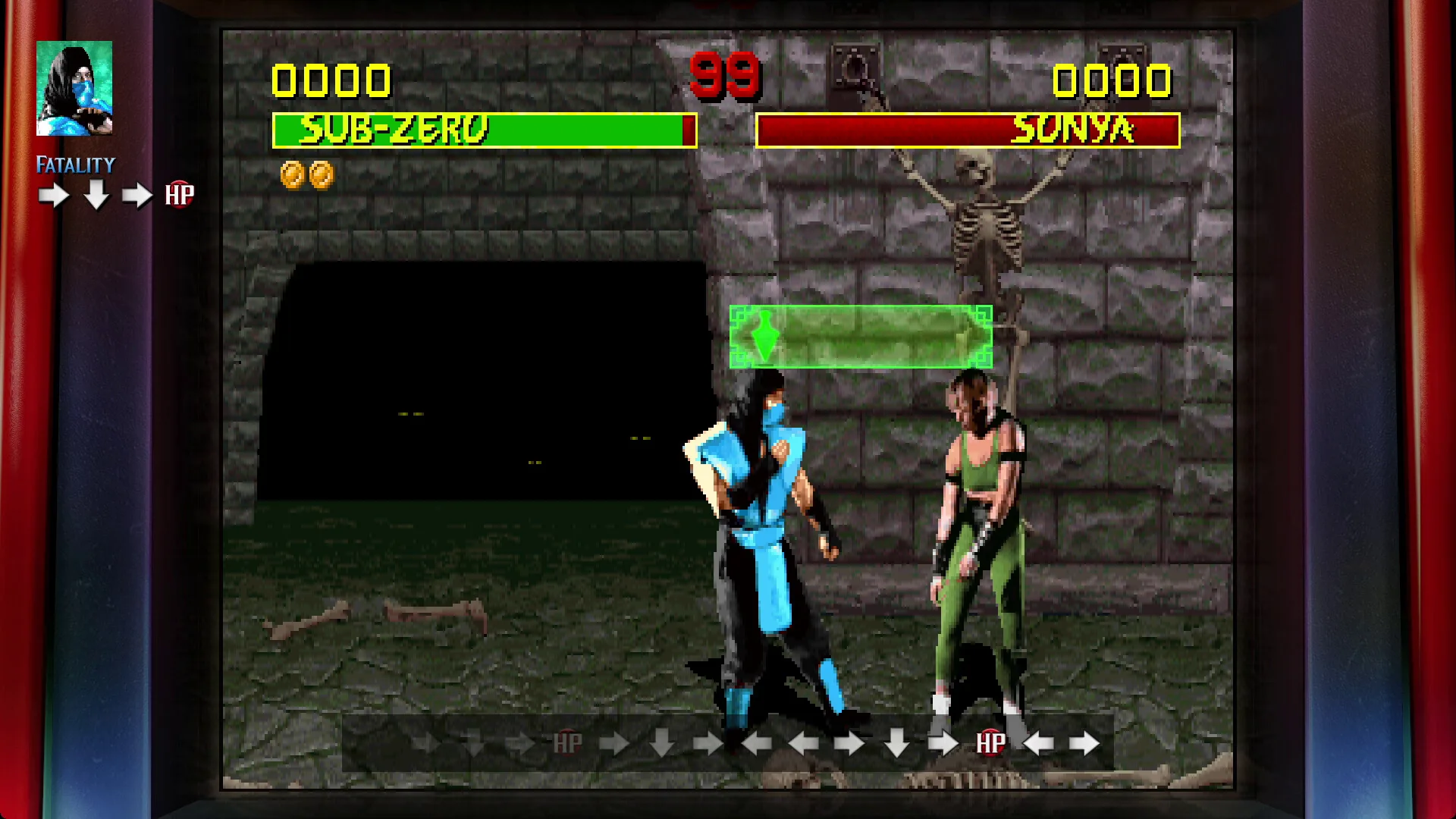
WaveNet cabinet connection attempts return error messages, a deliberate acknowledgment that its servers have vanished. That inclusion serves historical documentation rather than functional matchmaking. Server stability during the review period went largely untested due to low player population. The infrastructure appears sound, but actual performance will depend on wider adoption.
Online features raise the collection’s usefulness for longtime players. The chance to test skill against human opponents in original builds creates opportunities unavailable even when these games dominated arcades. Modern conveniences extend preservation without erasing authenticity.
Chronicling the Kombat Legacy
Digital Eclipse’s interactive timeline divides into five parts, each built from short videos five to ten minutes long. The whole documentary requires about six hours to explore. It demands active engagement. The timeline invites jumping between clips, text entries, and playable builds. Players can launch any included title from related timeline points for immediate context and hands-on comparison.
The presentation mirrors the studio’s earlier documentary projects. Archival footage sits beside new interviews. Documents appear as explorable artifacts. The structure privileges discovery over strict linearity, though the timeline moves chronologically across the series’ first decade.
The documentary traces the creators’ roots to work on pinball machines at Williams Bally/Midway. Ed Boon, John Tobias, John Vogel, and Dan Forden introduce themselves in a video that intentionally echoes The Beatles by presenting them as a creative unit. Their arcade backgrounds shaped choices that emphasized spectacle and instant payoff rather than protracted skill curves.
Jean-Claude Van Damme’s indirect influence shows up as a notable footnote. Early attempts to sign the action star fell through, which led the team to digitize their own fighters. The documentary lays out early character names that did not survive to release. Shang Tsung began life as “Shang Lao.” Johnny Cage started as “Michael Grimm.” Those details document creative iterations and testing.
Pitch documents and development footage reveal how the team sold their violent fighting concept to management. Archival materials make clear that the franchise’s shock value was planned from the start as a way to draw attention.
The documentary situates Mortal Kombat in 1990s popular culture. Press releases, television commercials, magazine clippings, and event footage reconstruct a franchise that dominated public discussion. The collection operates as a time capsule, preserving games and the cultural moment around them. Mortal Kombat became a defining touchstone for a generation.
Coverage of controversy receives broad attention. Congressional hearings about video game violence, media backlash from concerned parents, and the creation of the ESRB all trace back to Mortal Kombat’s graphic content. The documentary presents those episodes with context, showing why reactions arose and how they read from hindsight. Many households banned the games, which increased the titles’ forbidden appeal among young players.
Developers reflect on being at the center of a moral panic. Their statements show surprise at the intensity of reactions and pride in having created something culturally significant. The documentary treats the period as pivotal for Mortal Kombat and for gaming reaching mainstream audiences.
Honesty becomes most apparent in later sections. The documentary avoids celebratory mythology and confronts the series’ missteps. The Mortal Kombat 3 run button split the fanbase; some players embraced the faster matches while others felt the change undermined methodical combat. The team discusses that controversy without pretending all choices were correct.
MK4’s move to 3D involved risk during a time of shrinking arcade culture. Developers speak candidly about uncertainty in leaving sprites for polygonal models. The transition represented technical progress and a departure from signature series elements. MK4 became a turning point for many fans, and the documentary accepts that reality.
The late 1990s appear as a turbulent era. The documentary examines post-MK3 releases as earnest experiments that did not always succeed. That balanced framing avoids triumphal or revisionist extremes.
As the timeline reaches the 2000s, coverage thins. Later games receive brief text summaries instead of video segments or developer commentary. That shift creates an abrupt move from thorough documentation to short acknowledgments. Including those later entries with minimal material feels incongruous alongside the depth of earlier sections. Ending the documentary at MK4 might have offered a clearer sense of closure. The omission of console versions of Deadly Alliance and later 3D titles from the playable set reinforces that uneven scope.
A final video revisits many original developers and checks in on their later work. That segment supplies emotional closure and humanizes what could otherwise read as purely archival material.
Beyond the Fights
The Kombatants area functions as a detailed character database. Each fighter has a page that shows appearances across included games, compiles official bios and ending cinematics, and provides a way to trace changes in portrayal. Tracking Johnny Cage’s shifting representation or spotting fighters who vanish after single appearances offers insight into the series’ narrative evolution.
A jukebox collects full soundtracks from every included title. Players can play individual tracks or entire OSTs in the background. Audio quality varies by source hardware, but central access to these soundtracks delivers value beyond pure game preservation. Music helped define atmosphere as much as violence did.
Viewable instruction manuals, arcade control diagrams, and print ads fill out the archives. Those materials support research into how the games were marketed and explained to audiences. The advertisements capture the aggressive, controversy-seeking tone that shaped Mortal Kombat’s public image.
Save and load functions work as expected, enabling progress preservation or return to key moments. Menu navigation relies on holding the touchpad to access options, which can feel awkward when quickly checking move lists. The inability to store universal settings across all titles requires repeated adjustments to borders, filters, and other visual choices. Those small frictions add up without severely diminishing the set’s usefulness.
This package stands as a major preservation accomplishment. Digital Eclipse gathered scattered artifacts, returned aging builds to working condition, and organized the material in an interface that rewards exploration. The collection provides playable history and the documentary context needed to understand why these games mattered and how they shaped a popular genre.
Mortal Kombat: Legacy Kollection is a comprehensive retro game compilation and interactive documentary that chronicles the history of the legendary Mortal Kombat fighting game franchise from its earliest years. Developed by Digital Eclipse, a studio specializing in game preservation, it is more than a simple re-release, combining over 20 iconic arcade, home console, and handheld versions of games released between 1992 and 2003 with hours of new, deep-dive documentary footage. The collection features all essential early titles, including the original arcade versions of Mortal Kombat through Mortal Kombat 4, complete with modern quality-of-life features like rollback netcode for online play, a fatality trainer, and archival bonus content. The game was digitally released on October 30, 2025, and is available for play on PC (via Steam), PlayStation 4, PlayStation 5, Xbox One, Xbox Series X/S, and Nintendo Switch platforms.
Full Credits
Director (Creative/Game Director): Mike Mika, Chris Kohler
Writers (Lead Writer/Narrative Designer): Dan Amrich, Chris Kohler
Producers/Studio Leadership (Producers, Executive Producers, and Key Studio Heads): Stephen Frost, Steven Johnson, Mike Mika
Composer/Sound Director: Dan Forden (Original Composer and interviewee)
Developer, Publisher: Digital Eclipse, Digital Eclipse, Atari
Release Date: October 30, 2025 (Digital)
The Review
Mortal Kombat: Legacy Kollection
Mortal Kombat: Legacy Kollection succeeds as comprehensive preservation and historical document. Digital Eclipse curates 23 games with care, balancing authenticity against modern convenience. The interactive documentary provides essential context that transforms aging fighters into cultural artifacts worth studying. Technical inconsistencies and notable omissions prevent this from being definitive, while brutal AI and MK4's bugs remind us these games haven't aged gracefully. For longtime fans and preservation advocates, the collection delivers tremendous value. Casual players may find the history more engaging than the actual gameplay.
PROS
- Comprehensive game selection spanning arcade, console, and handheld versions
- Excellent interactive documentary with honest developer commentary
- PS1 Trilogy optimizations eliminate loading issues
- Robust online play with rollback netcode
- WaveNet UMK3 inclusion preserves lost media
CONS
- Input-reading AI remains brutally unfair
- Rewind feature can trigger aggressive AI behavior
- MK4 arrives in unpolished state with visual bugs
- Settings require individual configuration per game