



























A dead child appearing alive in the background of a photograph is the sort of plot device streaming television understands instantly: grief becomes a thumbnail, and the thumbnail demands another episode. I Will Find You, Robert Hull’s eight-part Netflix adaptation of Harlan Coben’s 2023 novel, arrives with that brutal little miracle tucked inside its first act.
David Burroughs, played by Sam Worthington, is five years into a life sentence in a Maine prison for killing his 3-year-old son, Matthew. He says he did not do it. The court, armed with DNA evidence and an eyewitness, decided otherwise.
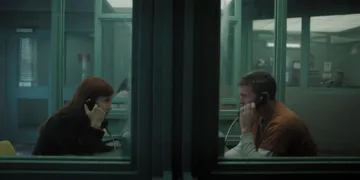
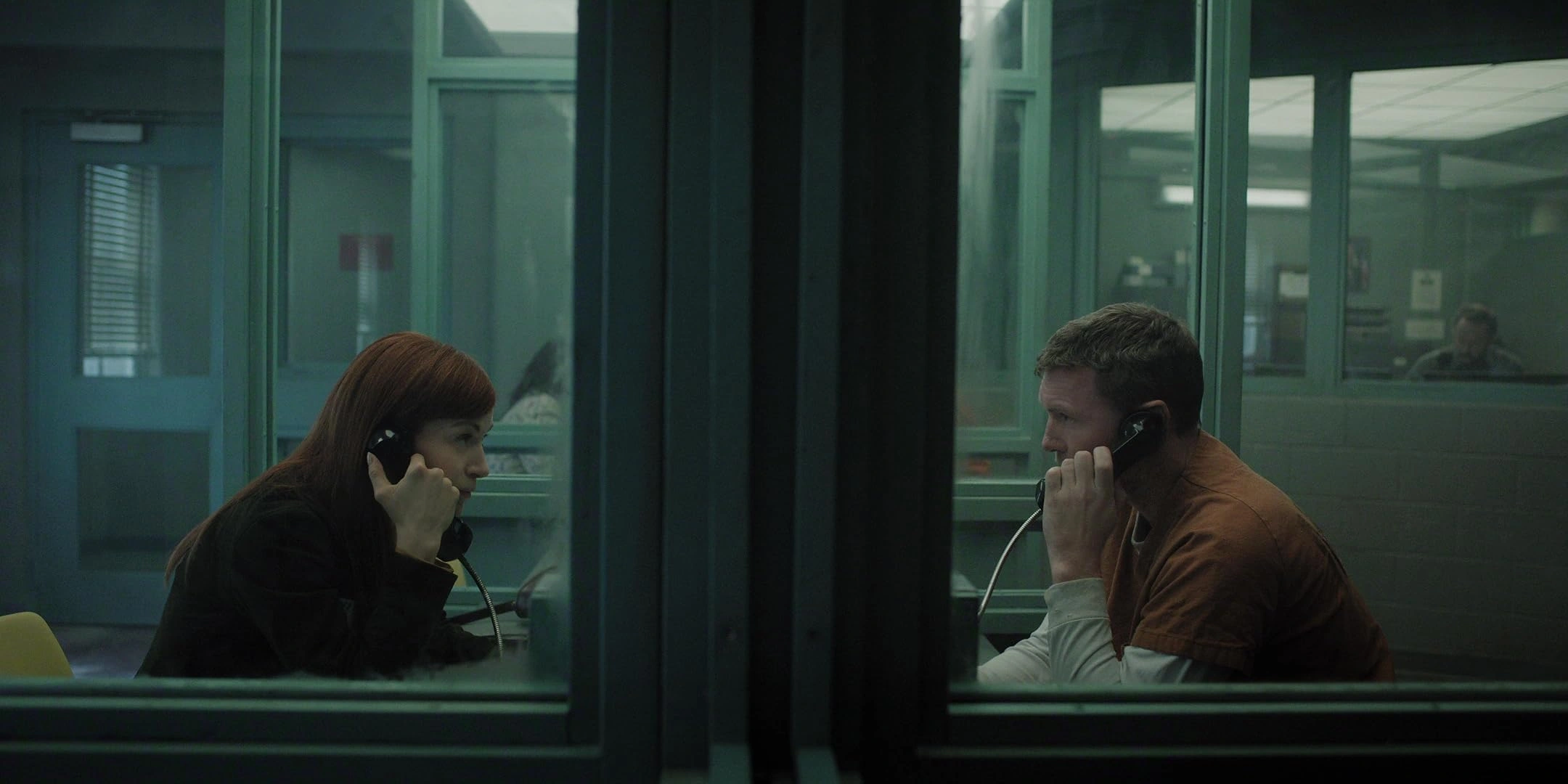
Then Rachel Mills, his former sister-in-law, appears in the visiting room with a social media photo. In the background is a boy who looks like Matthew would look now. He has the same birthmark. That detail gives the series its charge: a grieving father can no longer stay buried inside his own punishment.
Grief in the Algorithm
Netflix’s Harlan Coben adaptations have become a useful test case for what the streaming thriller now values. The moral wound must be legible in seconds. The hook must be absurd enough to sell, plain enough to follow while dinner is reheated, and sharp enough to keep the next episode from feeling optional.
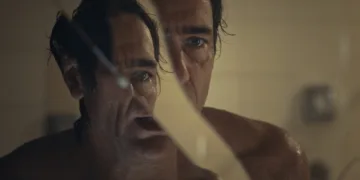
The show is strongest when it lets that vow feel ugly. David has refused visitors for years, turning his cell into a waiting room for a life that already ended. Worthington plays him with a flattened physicality: shoulders low, voice held in the chest, eyes trained on whatever wall will ask the fewest questions. When Rachel shows him the photograph, the shift is small. He does not transform into a hero. He becomes dangerous because he has been given permission to hope.
That is the series’ most honest social idea. The culture around missing children turns private terror into public spectacle at terrifying speed. A boy in the back of a photo becomes evidence, then content, then a manhunt, then a conspiracy. Rachel, a former Boston journalist whose career has collapsed, recognizes the machinery because she once worked inside it.
The show could have made sharper use of that angle. Her old instincts return instantly: contacts, editors, sources, leverage. A woman who has lost professional authority suddenly gets access to the most valuable story imaginable, and the ethical mess of that is richer than the series allows.
The Photograph and the Escape
The early episodes move like a checklist written during a caffeine crisis. David learns Matthew may be alive, survives threats from a rogue corrections officer, then breaks out of prison with help from conveniently placed allies. Philip Mackenzie, the warden, once worked with David’s father, Lenny. Adam Mackenzie, David’s prison friend, has his own role in pushing the escape into motion. Each connection greases the plot.
This is where I Will Find You is both efficient and faintly ridiculous. The show has no patience for procedural friction. A clue appears, someone knows a guy, a door opens, a gun comes out, an SUV speeds away. There is pleasure in that kind of blunt engineering.
David’s escape should feel like a major moral rupture, yet the series treats it mainly as a genre requirement. Wrongly convicted men in thrillers do not file appeals. They crawl through tunnels, dodge guards, and head for Boston.
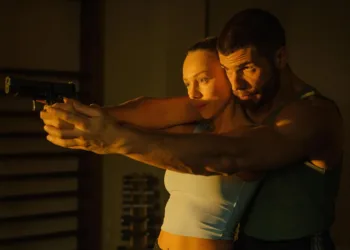
The fugitive material gives the show its best engine. David and Rachel run toward Matthew while the FBI runs toward them. Special Agents Max Williams and Sarah Greer, played by Chi McBride and Logan Browning, give the pursuit scenes a welcome human rhythm.
Max’s gravelly irritation and Sarah’s clipped focus create a partnership that has history before the script fully explains it. Their rooftop confrontation with David has the familiar architecture of a fugitive thriller: the law on one side, the desperate father on the other, the city below waiting to swallow both.
At the midpoint, a caption sends the story to Geneva five years earlier, and the show widens its frame. Suddenly the mystery reaches beyond the family home and prison yard into wealth, medical power, organized crime, and international secrecy. The expansion keeps the puzzle alive at the exact moment a weaker version would begin repeating itself.
The People Running Behind the Plot
The cast is better than the character writing. Worthington’s restraint fits the prison scenes, where David’s grief has turned into a kind of emotional weather. Once the chase begins, that restraint sometimes works against him. A father who believes his murdered child may still be alive should carry a terrifying voltage. Worthington gives the pain. Momentum goes missing.
Britt Lower fares better because Rachel is allowed to be visibly unstable in useful ways. Her fidgety intelligence, quick speech, and guarded tenderness make her feel like someone who has spent years rehearsing arguments with people who stopped listening.
Lower gives Rachel the nervous charge of a reporter who knows facts can save lives and destroy them. The script, sadly, keeps turning her into a skeleton key. Need a media contact? Rachel has one. Need a former editor at the Boston Globe? Rachel calls Jim Doherty. Need a path into a wealthy circle? Enter Hayden Payne.
Milo Ventimiglia’s Hayden is charming enough to make that convenience go down smoothly, which may be the priciest kind of narrative sugar. He gives Rachel and David shelter, money, weapons, and information. His penthouse becomes less a location than a cheat code. Still, Ventimiglia and Lower sell the residue of an old romance. Their scenes carry glances that last a beat too long, irritation that lands like habit, affection both characters pretend is logistical.
The FBI pair deserves a richer show around them. McBride can overplay Max’s no-nonsense bark, yet his timing gives the task-force scenes bite. Browning brings Sarah a guarded sharpness that suggests a daughter, agent, and wounded adult occupying the same body.
Their father-daughter history gives I Will Find You its cleanest mirror to David and Matthew. Here, parenthood comes through as missed calls, old resentments, work limits, and the awkward fact that love can arrive disguised as command.
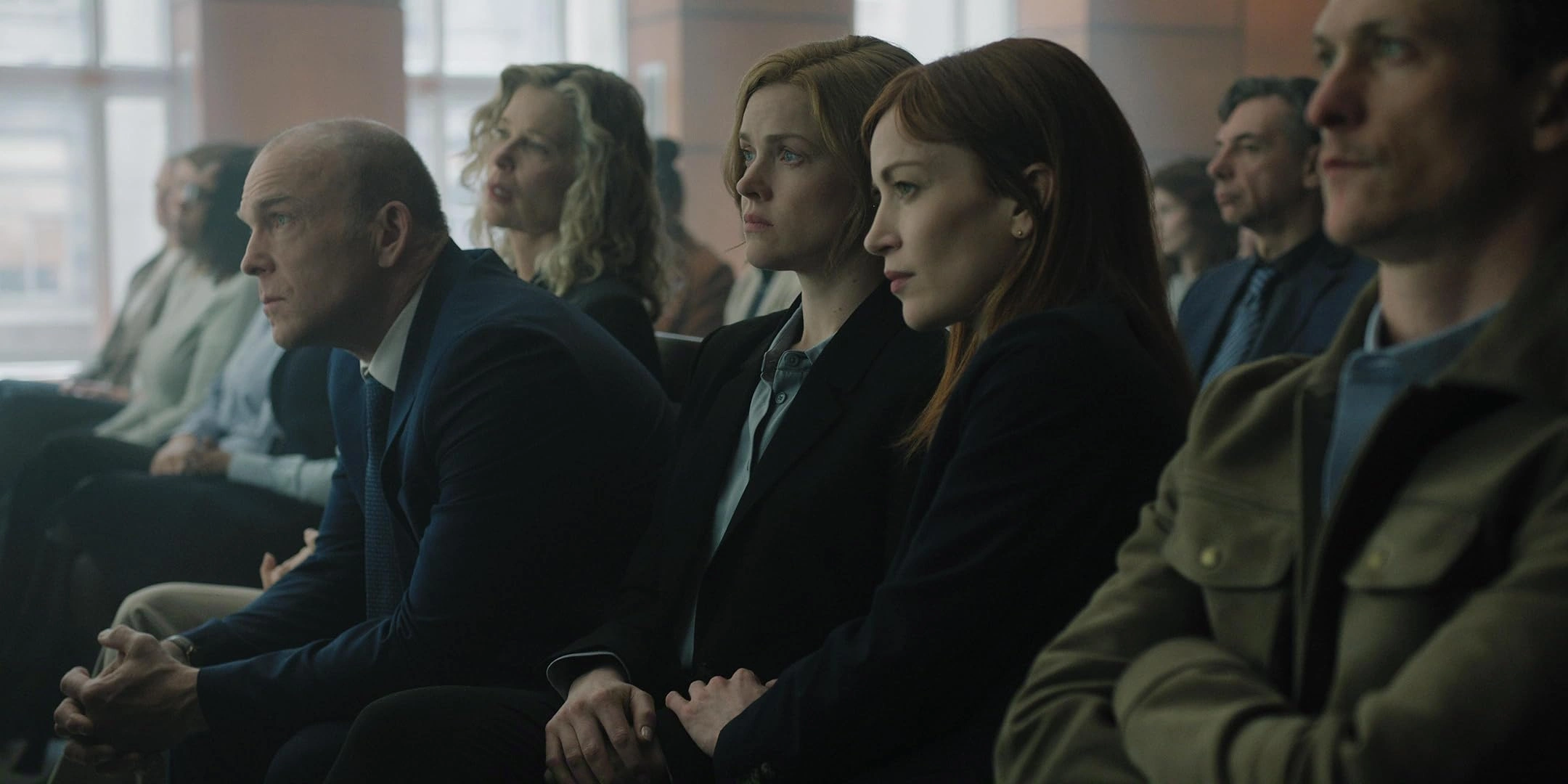
Around them, Madeleine Stowe’s Gertrude Payne, Clancy Brown’s Nicky Fisher, Erin Richards’ Cheryl, Aaron Ashmore’s Ronald, and Greg Bryk’s Stavros supply suspicion on demand. Gertrude has the icy polish of dynastic wealth. Nicky brings old-school criminal menace. Cheryl, David’s ex-wife and Matthew’s mother, carries the show’s rawest potential because her grief has been shaped by belief in David’s guilt. The series needs her emotional reality, then too often treats her as another locked cabinet in the plot room.
The Binge Machine Keeps Spinning
I Will Find You has pacing problems, but boredom is rarely one of them. The first half repeats key facts too often: David was convicted, Matthew may be alive, Rachel found the photo, the evidence did not add up. Streaming thrillers often repeat themselves because they assume divided attention, and this one sometimes behaves as if the viewer is folding laundry during every third scene.
The second half moves with greater confidence. Allegiances shift. Family connections get redrawn. A suspect becomes a helper, then a problem, then a possible victim. The show uses parentage reveals with the zeal of someone discovering soap opera for the first time, and there are moments where the machinery clanks loudly enough to wake the neighbors. Still, the pace has a crude effectiveness. Every episode offers a fresh pressure point: a near capture, a hidden alliance, a dead body, a clue that reframes the last clue.
That design explains why the series can survive its own silliness. It rarely asks a twist to sit unsupported for long. The next scene is already running. The danger is that emotional consequences keep getting postponed. David’s possible reunion with Matthew should haunt every action sequence, yet the show often prefers the mechanics of the chase to the terror of recognition.
What does it mean for a father to find a child who has lived years under another life? What does it mean for Cheryl to process the possibility that the man she believed killed her son was framed? I Will Find You touches those questions, then hurries back to the conspiracy board.
Plain Images, Loud Themes
The series benefits from real locations. Prison corridors have a worn, institutional coldness that soundstage grit rarely achieves. Boston streets, safe houses, offices, and the flashes of New York give the chase a physical map.
The direction rarely matches the moral dirt of the premise. The prison break, rooftop standoff, shootouts, car chases, and hostage beats are staged clearly, with little visual signature. The camera records danger rather than interpreting it. Color palettes stay muted in the standard way crime dramas have settled on: gray walls, blue shadows, expensive rooms lit as if money has no temperature. A story about grief, surveillance, and corrupted parenthood calls for sharper images.
That absence matters because I Will Find You is trying, under all the cliffhangers, to talk about love as possession. David’s love is desperate, Rachel’s loyalty is tangled with guilt and professional hunger, Cheryl’s pain has been reorganized by false certainty, and the powerful figures circling Matthew treat family as something to acquire, protect, or rewrite. Its best idea is that devotion can become authoritarian once it decides the world has no right to refuse it.
A sharper version would press harder on that terror. This one settles for velocity, star power, and the dependable pleasure of watching a mystery box empty itself at high speed. There are worse sins in television. There are also better ambitions.
The eight-part American crime thriller miniseries I Will Find You premiered today, June 18, 2026, dropping all episodes simultaneously for home audiences. Viewers can watch the entire season streaming exclusively on Netflix. Developed by showrunner Robert Hull and adapted from the 2023 bestselling suspense novel by Harlan Coben, the narrative follows David Burroughs, a devastated father wrongfully imprisoned for life for the murder of his young son, who plans a daring prison escape after receiving a shocking photograph suggesting his boy is actually still alive.
Where to Watch I Will Find You Online


Full Credits
Title: I Will Find You
Distributor: Netflix
Release date: June 18, 2026
Rating: TV-MA
Running time: 45 minutes per episode
Director: Adam Davidson, Maggie Kiley, Maja Vrvilo, Brad Anderson
Writers: Robert Hull, Harlan Coben, Steven Lilien, Bryan Wynbrandt, Heather Mitchell
Producers and Executive Producers: Robert Hull, Harlan Coben, Bryan Wynbrandt, Steven Lilien, John Weber
Cast: Sam Worthington, Britt Lower, Milo Ventimiglia, Erin Richards, Logan Browning, Jonathan Tucker, Chi McBride, Madeleine Stowe, Clancy Brown
Director of Photography (Cinematographer): TBA
Editors: TBA
Composer: Danny Bensi, Saunder Jurriaans
The Review
I Will Find You
I Will Find You is slick, frantic, and easy to binge, with a sharp hook and a cast that keeps the machine moving. Its best moments come from Rachel’s nervous intelligence, Max and Sarah’s charged partnership, and the ugly idea that parental love can curdle into control. The weakness is in the thin character work, plain direction, and twists that sprint past the emotional damage they create. Netflix gets another watchable Coben thriller, though rarely a memorable one.
PROS
- Strong central hook
- Fast episode pacing
- Britt Lower’s anxious energy
- Max and Sarah’s dynamic
- Effective midseason expansion
CONS
- Thin character writing
- Plain visual style
- Too many conveniences
- Emotional fallout feels rushed
- Hayden functions like a plot shortcut