

























![Kingdom Hearts Collection [I-III] Review](https://gazettely.com/wp-content/uploads/2026/10/Kingdom-Hearts-Collection-I-III-1-360x180.webp "Kingdom Hearts Collection [I-III] Review: KHII Holds Steady as Newer Entries Fluctuate 37")



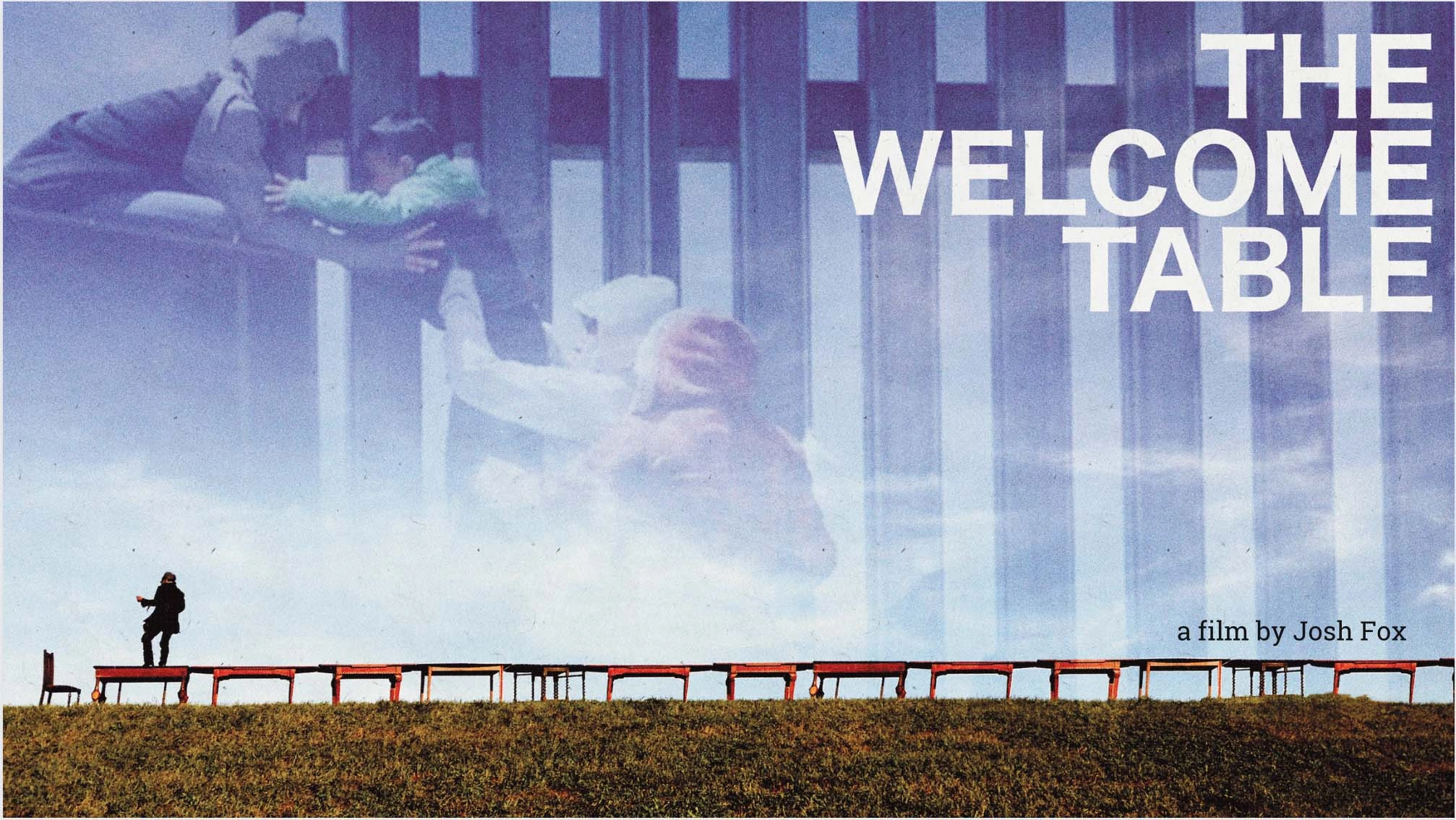

A thousand-foot table on a New Orleans levee is a blunt image, which is exactly why it works. Josh Fox’s HBO documentary The Welcome Table places climate displacement inside a ritual of hospitality, then asks why the same world that can build such a table keeps spending its wealth on walls, raids, detention centers, and bureaucratic cruelty.
The setting carries its own indictment. New Orleans, marked by Hurricane Katrina and the political abandonment that followed, becomes a gathering point for people uprooted by fire, flood, drought, mudslides, extraction, and rising water.
Fox, returning to environmental filmmaking after Gasland, chooses performance and assembly over the colder grammar of graphs and expert panels. The result is messy, generous, often moving, and sometimes too convinced that its own gesture has solved its formal problem.
Disaster With Faces
The film is strongest when it leaves the table and follows the people who will later sit at it. Survivors of the Paradise, California fires describe fleeing with their baby, being told to seek safety in a parking lot, then watching flames swallow the place that was supposed to protect them.
Their return to the remains of their home gives the documentary one of its sharpest images: burned appliances and mattresses standing where ordinary life used to be. A climate crisis becomes a ruined bedroom, a blackened kitchen, a family memory turned into ash.
Fox finds a similar force in the coastal aftermath of Hurricane Irma, where a piano remains because it was too heavy to be carried away. That object says what several speeches cannot. It is domestic, absurdly stubborn, and useless in the way grief is useless. The Brazil section follows queer activists rebuilding after mudslides and torrential rains, giving the film a brief but vital sense of mutual aid as lived practice rather than slogan.
In the Peruvian Amazon, a guide shows both the wounds left by resource extraction and the forest’s capacity to repair itself. The Australian families who must leave homes that technically survived floods widen the film’s definition of loss: a house can still stand after the world around it has become unlivable.
The Calabria sequence is the most politically charged. In Riace, a nearly emptied town becomes a counterargument to the panic around migration. Empty facilities could house newcomers. Migrants could revive a place hollowed out by earlier departures. Instead, a mayor faces punishment for treating hospitality as policy. The irony is severe: nations built by movement now criminalize movement.
The Wall Against the Table
Fox’s governing metaphor has the virtue of being almost childishly clear. A wall refuses. A table receives. The film returns to that contrast through images of immigration enforcement, anti-migrant politics, and border spectacle, positioning climate displacement as the next great test of political imagination.
The argument is not gentle. Carbon wealth has been accumulated by those least likely to drown first, burn first, starve first, or be told to move along first. The people who created the conditions of displacement are often the same people funding the architecture of exclusion.
That charge gives The Welcome Table its moral heat. It refuses the comforting fantasy that disaster is natural in any pure sense. A hurricane may be weather, but abandonment is policy. A wildfire may begin with wind and flame, but who gets warned, who has a car, who has insurance, who is allowed to rebuild, and who is treated as trespasser after losing a home are questions of power.
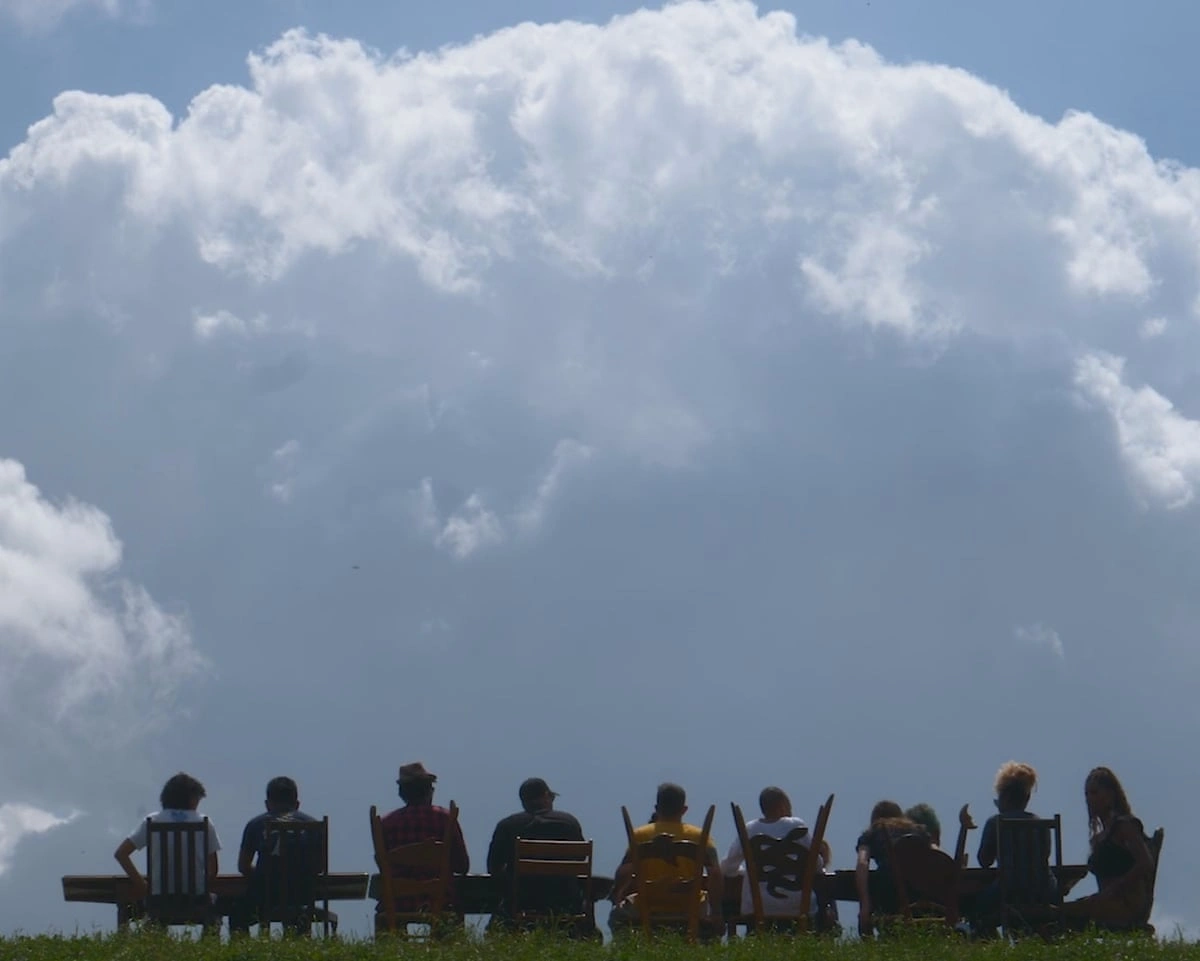
The wide shots of the levee table give this idea its cleanest cinematic form. Bodies stretch across the frame in communion, with clouds massing above them like an argument the sky has not finished making. When New Orleans music enters, especially through John Boutté’s presence, the gathering gains texture. Song here is not decoration. It is a civic language, the sound of people insisting on relation in a culture trained to sort suffering by passport, property value, and accent.
The Host in the Frame
The film’s weakness is also a question of power: who gets to speak, and for how long. Fox clearly wants to honor testimony, but his narration often steps between the audience and the people whose lives hold the film together. The problem is not the presence of a filmmaker. First-person documentary can be an honest form. Here, the voiceover too often explains what a face, a house ruin, a vacant street, or a song has already made plain.
At 130 minutes, the film also wanders through historical and legal frameworks that deserve attention, from colonial violence to the Universal Declaration of Human Rights and the 1951 Refugee Convention. These passages are relevant, yet they flatten the film’s rhythm by turning lived experience into lecture architecture. The people at the table begin to feel like supporting evidence for an argument Fox has already prepared.
The music frequently rescues the film from that imbalance. Jazz, brass, and communal singing let grief breathe without polishing it into inspiration. The best moments allow catastrophe and joy to occupy the same air: a ruined town, a shared meal, a song that does not deny loss. Still, the documentary’s most radical promise is also the one it breaks most visibly. Everyone deserves a seat at the table, but the host keeps reaching for the microphone.
The HBO Original global crisis documentary The Welcome Table premiered across the United States on June 23, 2026, and is available for streaming on Max, Crave, and premium digital platforms. Directed by Oscar-nominated filmmaker Josh Fox, the film charts a six-year journey across six continents to investigate the human toll of climate-driven displacement. It follows survivors of devastating environmental disasters who gather at a massive 1000-foot communal dinner table on a New Orleans levee to share personal histories of loss, policy failures, and mutual aid while building a collective vision for global refugee hospitality.
Where to Watch The Welcome Table (2026) Online


Full Credits
Title: The Welcome Table
Distributor: HBO, Max
Release date: June 23, 2026
Rating: TV-MA / 13+
Running time: 124 minutes
Director: Josh Fox
Writers: Josh Fox
Producers and Executive Producers: Josh Fox, Gabrielle Alicino, Doug Chapman, Molly Gandour, Darren Dean, John Boutté, Nancy Abraham, Lisa Heller, Anna Klein
Cast: Leo Farah, Chris Achilo, Nelton Yankur, Allie Stratta, Chris Obehi, Pauleteh Araújo, John Cameron Mitchell, Sunpie Barnes
Director of Photography (Cinematographer): Josh Fox
Editors: Josh Fox
Composer: John Boutté, Josh Fox, Handmade Moments, Don Vappie, Chris Obehi, Sabine McCalla, Helen Gillet
The Review
The Welcome Table
The Welcome Table reaches its greatest force when people, ruins, music, and policy occupy the same frame. Its levee table is a magnificent civic image, and its stories of fire, flood, extraction, and migration give climate collapse human scale. Fox’s narration and 130-minute sprawl weaken that promise, often placing the filmmaker between the audience and the displaced people he gathered. Still, its central demand for hospitality over exclusion carries real moral pressure.
PROS
- Striking levee-table image
- Powerful climate-displacement stories
- Rich New Orleans music
- Sharp wall-versus-table metaphor
CONS
- Fox’s narration crowds testimony
- Overlong 130-minute structure
- Some theoretical drift
- Several subjects feel underused