




















Thirty-three condemned souls rushing across a divine battlefield should feel impossible to organize, and the best thing about 33 Immortals is that it often does. Thunder Lotus Games takes the raid fantasy usually trapped behind guild calendars, voice chat, build guides, and weekend-length commitment, then squeezes it into a 30-to-60-minute roguelike run where strangers learn to survive through motion, timing, and panic.
That is a huge shift from the studio behind Spiritfarer and Jotun, two games remembered for intimacy, melancholy, and hand-crafted myth. 33 Immortals keeps the visual elegance, then throws away the quiet. You play as a soul condemned by divine judgment, joining Beatrice and 32 other rebels in a fight through Inferno, Purgatorio, and Paradiso. Dante handles perk progression, Virgil keeps the bestiary, Charon deals in cosmetics, and the Dark Woods works as the hub where this afterlife uprising resets between runs.
The Dante framework gives the game a strong shape without slowing it down. Beatrice explains enough to give the rebellion meaning, but the story rarely asks you to stop and listen for long. That restraint fits the design. This is a game about what happens after the gates open and everyone sprints.
A Raid Without the Homework
The run structure is clean. Pick a weapon, drop into a large map, fight mobs, open chests, collect Bones, Dust, and Eternal Shards, then push toward smaller cooperative chambers that hold up to six players. Some chambers ask you to clear enemy waves. Others have you destroy specific targets. Bones pay for healing and keys, Dust boosts Attack, Vitality, or Empathy during the run, and Eternal Shards feed longer-term progression once you return to the hub.
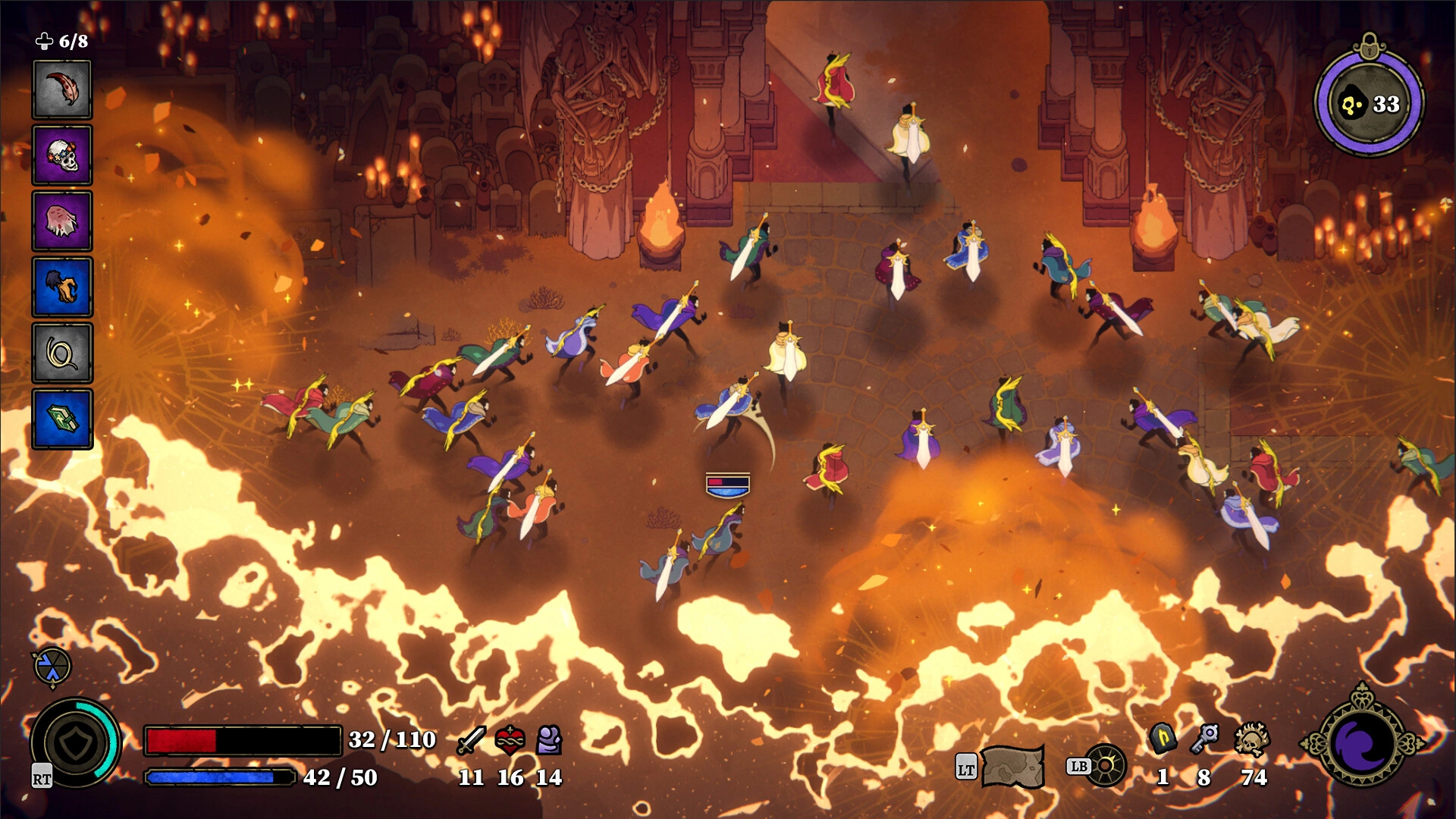
After enough objectives are cleared, the map starts collapsing inward. It borrows the pressure of a battle royale circle without turning other players into enemies. Everyone is being herded toward Ascension, trying to squeeze in one last upgrade, one last revive, one last chest before the boss door opens. Inferno ends with Lucifer. Purgatorio reduces the count to 22 players and points toward Adam and Eve. Paradiso narrows the group to 11 before the Wrath of the Lord.
The best moments come from silent cooperation. Someone goes down near a boss arena, and two players peel away to revive them while the rest of the group keeps pressure on the target. A stack marker appears, and strangers instinctively cluster to share the damage. A player carrying a dangerous area effect drags it away from the group and drops it somewhere safe. Nobody has to give a speech. The game trusts players to read the room, which is funny, since the room is often full of divine projectiles and people named things like “xXReaperDadXx.”
That shared instinct is the emotional hook. 33 Immortals makes strangers feel briefly connected through action. You are not learning each other’s backstories. You are learning who notices a revive icon.
Thin Weapons, Small Miracles
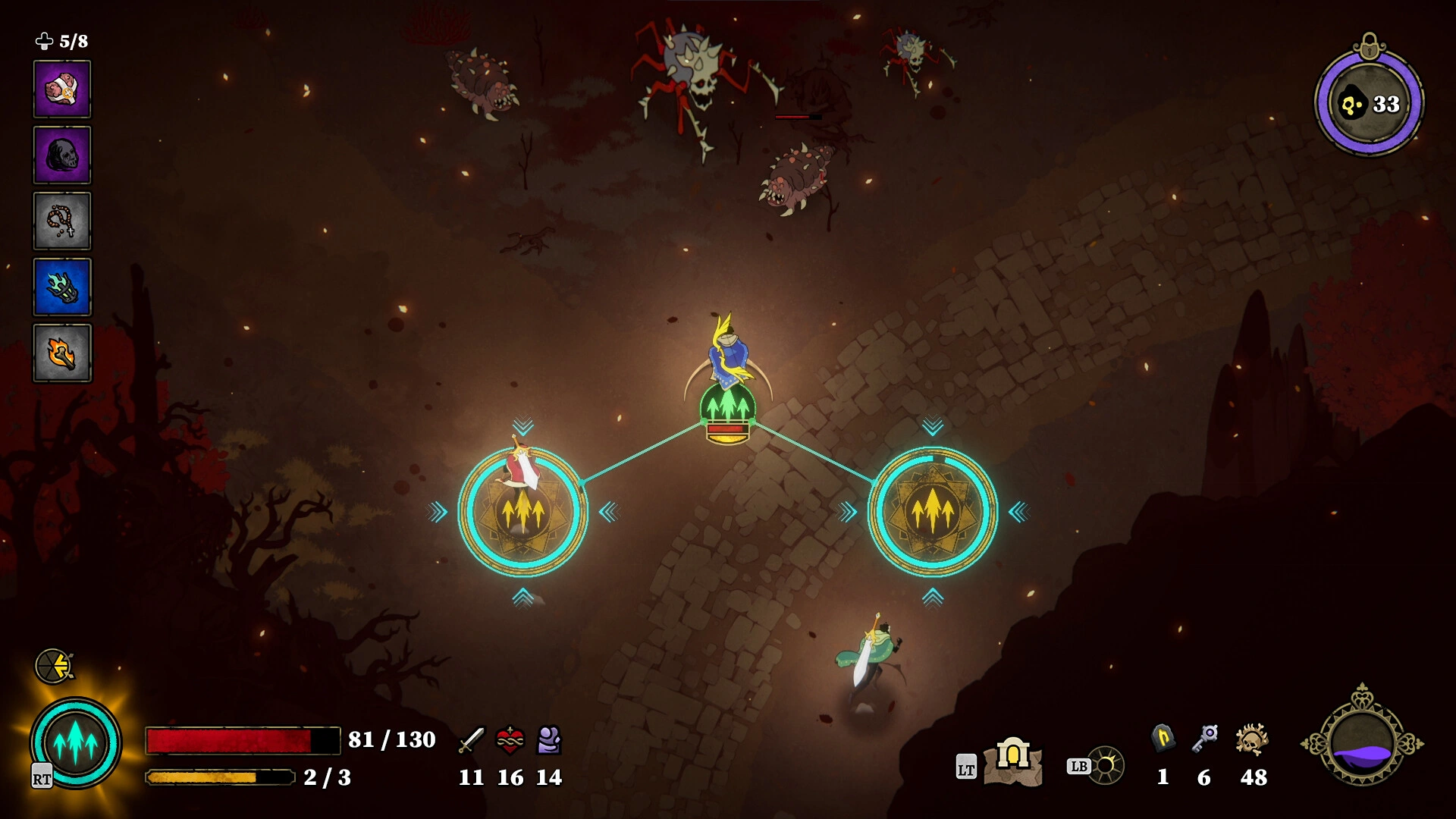
Combat is where the game’s promise starts to rub against its limits. Each weapon has a light attack, heavy attack, and co-op ability. The sword can create protection, the bow fires from range and can trigger group barrages, the staff slows enemies, and faster melee weapons let you cut into crowds with close-range pressure. It is easy to understand, which helps in a 33-player game. It also becomes familiar very quickly.
There is no deep combo language to grow into. After several hours, many encounters settle into the same rhythm: attack, dodge, wait out a cooldown, trigger the co-op tile if nearby players cooperate, repeat until the health bar finally gives up. Bigger enemies and Alpha variants often feel like swollen versions of regular threats rather than fresh problems. They take longer to kill, yet they do not always ask for new behavior.
Movement adds to that friction. Attacks root the character for a brief beat, and the dodge cooldown can feel punishing when the screen fills with enemy patterns. That stiffness gives choices some weight, but it can also make the game feel less responsive than the best action roguelikes. A mistimed swing should feel like your mistake. Here, it can sometimes feel like your character needed to think about it first.
The progression systems try to give combat extra texture. Dante unlocks perks, Feats grant permanent bonuses, and relics create in-run modifiers such as dash effects, crit boosts, healing orbs, and damage stacks. The issue is that many of these upgrades behave like polite bonuses rather than wild transformations. A little attack speed here. A small dash effect there. Useful, yes. Exciting, rarely.
That matters because roguelikes live through the feeling of a run catching fire. 33 Immortals has the scale for that feeling, but its buildcraft often plays safe. A rebellion against God should occasionally make a weapon feel illegal.
The Beauty of Divine Overcrowding
The art direction carries a lot of the experience. Thunder Lotus’ 2.5D style remains instantly recognizable, with elegant character silhouettes and painterly spaces that keep the afterlife from becoming generic fantasy gloom. Inferno and Purgatorio lean into Catholic architecture, humanoid monsters, ritual shapes, and an atmosphere of sacred punishment. Paradiso shifts into stranger geometry, where Heaven feels less like reward and closer to something human minds were never built to process.
That visual shift does real narrative work. The closer the player moves toward God, the less familiar the world becomes. Hell has bodies. Heaven has patterns. It is a smart reversal, and it gives the climb a subtle unease beneath the spectacle.
Readability is better than it has any right to be. With 33 players, enemies, effects, projectiles, and co-op abilities firing across the same battlefield, the game often lets you track your own position and the major danger zones. It does break down during the largest fights, especially when multiple group abilities overlap and the screen becomes a stained-glass accident. Still, the fact that it works as often as it does is impressive.
Max LL’s score gives the game its ceremonial force. The choir and organ textures make each expedition feel like a religious event gone wrong. The music does not sit behind the action; it pushes the raid forward, especially during boss fights where the chaos starts to take on rhythm.
Bosses Show the Game It Could Become
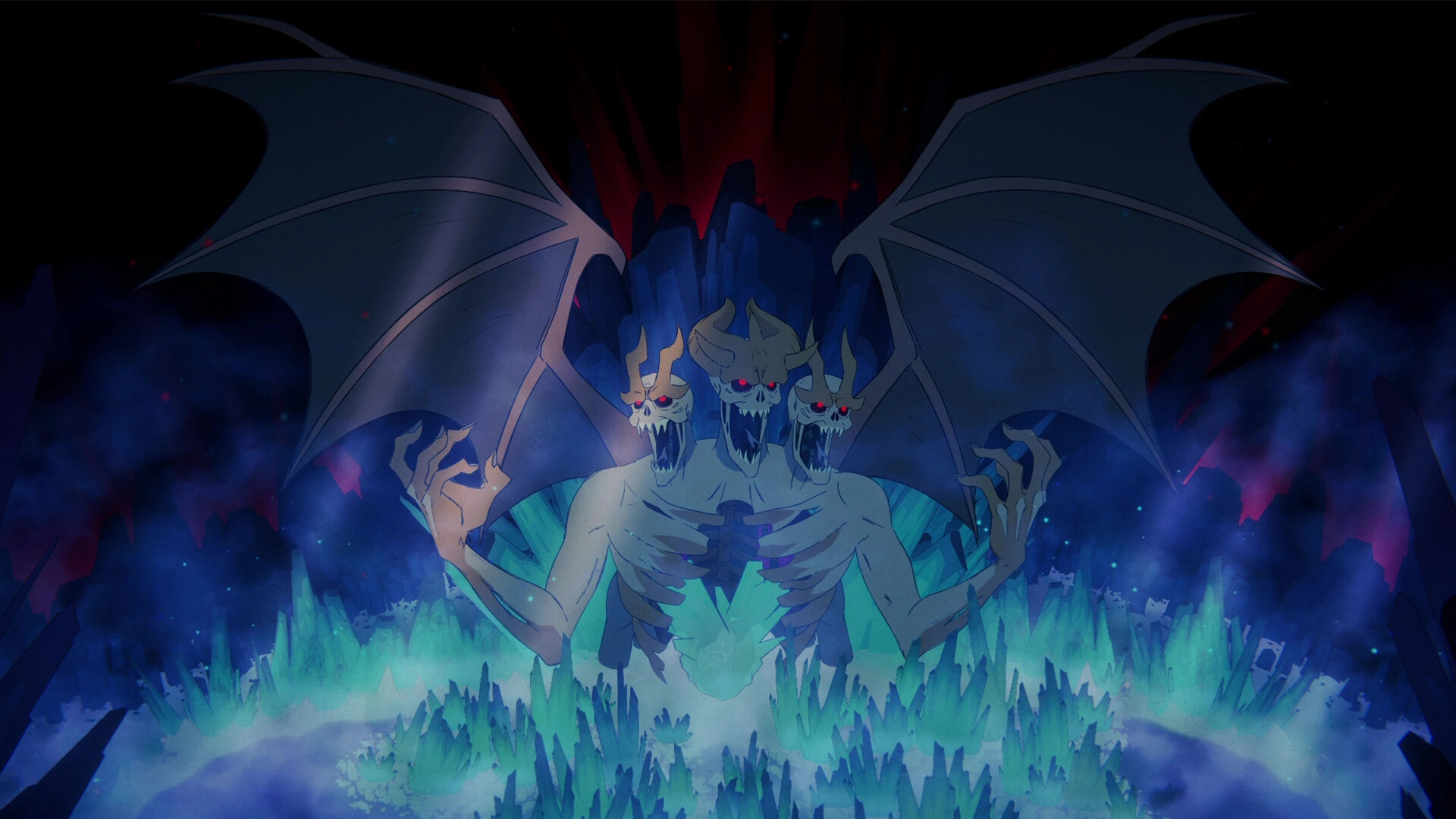
Lucifer is where 33 Immortals comes closest to its ideal form. The fight has phases, announced attacks, crystal mechanics, stack damage, and area effects that force players to move with purpose. When it works, the group stops looking like a mob and starts looking like a choir that learned dodge timing. Adam and Eve push that cooperation further in Purgatorio, while Paradiso’s smaller 11-player structure raises the stakes by making every death feel heavier.
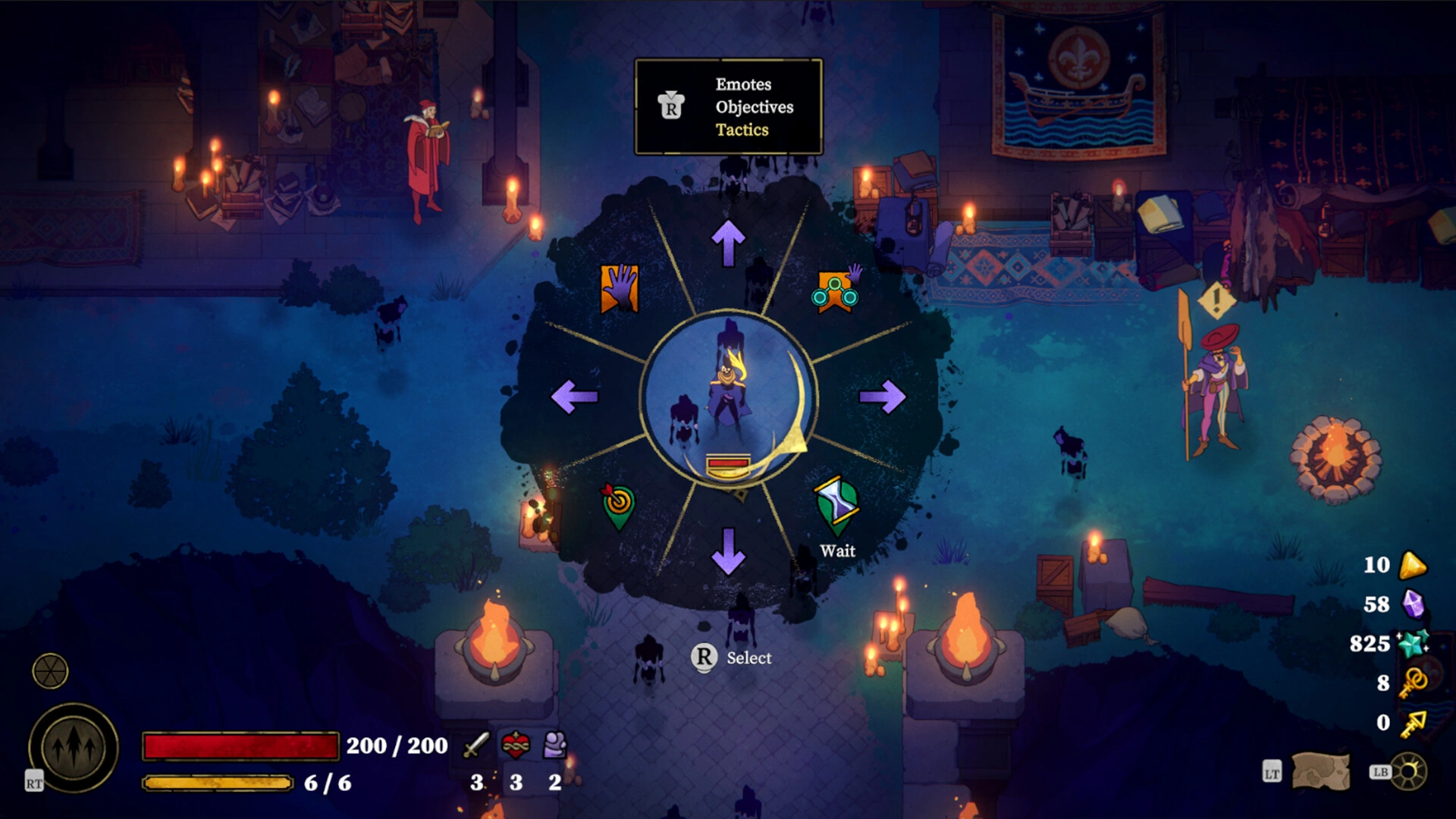
These encounters reveal the version of the game hiding inside the rougher parts. The boss fights give players roles through mechanics, even if the class system rarely does. Someone revives. Someone carries danger away. Someone anchors a stack. Someone keeps damage flowing while half the arena burns. The game suddenly has texture.
That makes the weaker areas clearer. The portal system can leave players waiting while chambers fill. Bosses can drag when too many people leave before the finale. Permanent stat growth creates a visible gap between new players and veterans, making early runs harsher than they need to be. Online population will matter too, especially in the later realms where smaller player counts are built into the design.
33 Immortals deserves attention because its best moments feel hard to get anywhere else: a group of strangers dodging in sync, a doomed run saved by chain revives, a divine boss collapsing after minutes of shared panic. The game needs bolder relics, sharper class identity, smoother movement, and better scaling. The foundation is alive. Now it needs to sin a little.
The Review
33 Immortals
33 Immortals turns large-scale co-op into something immediate, readable, and often thrilling. Its best fights make strangers feel like a real team through revives, stack markers, shared attacks, and last-second saves. The Divine Comedy setting gives the chaos a striking identity, helped by gorgeous art and a choir-heavy score. The problem is that combat stays too thin, upgrades rarely reshape a run, and progression can separate veterans from newcomers. The game has a living pulse. It needs bolder systems to match its divine rebellion.
PROS
- Excellent 33-player raid concept
- Strong Divine Comedy art direction
- Memorable boss mechanics
- Natural co-op teamwork
- Powerful choral soundtrack
CONS
- Repetitive combat loop
- Conservative relic upgrades
- Stiff movement feel
- Uneven player scaling
- Online population concerns