













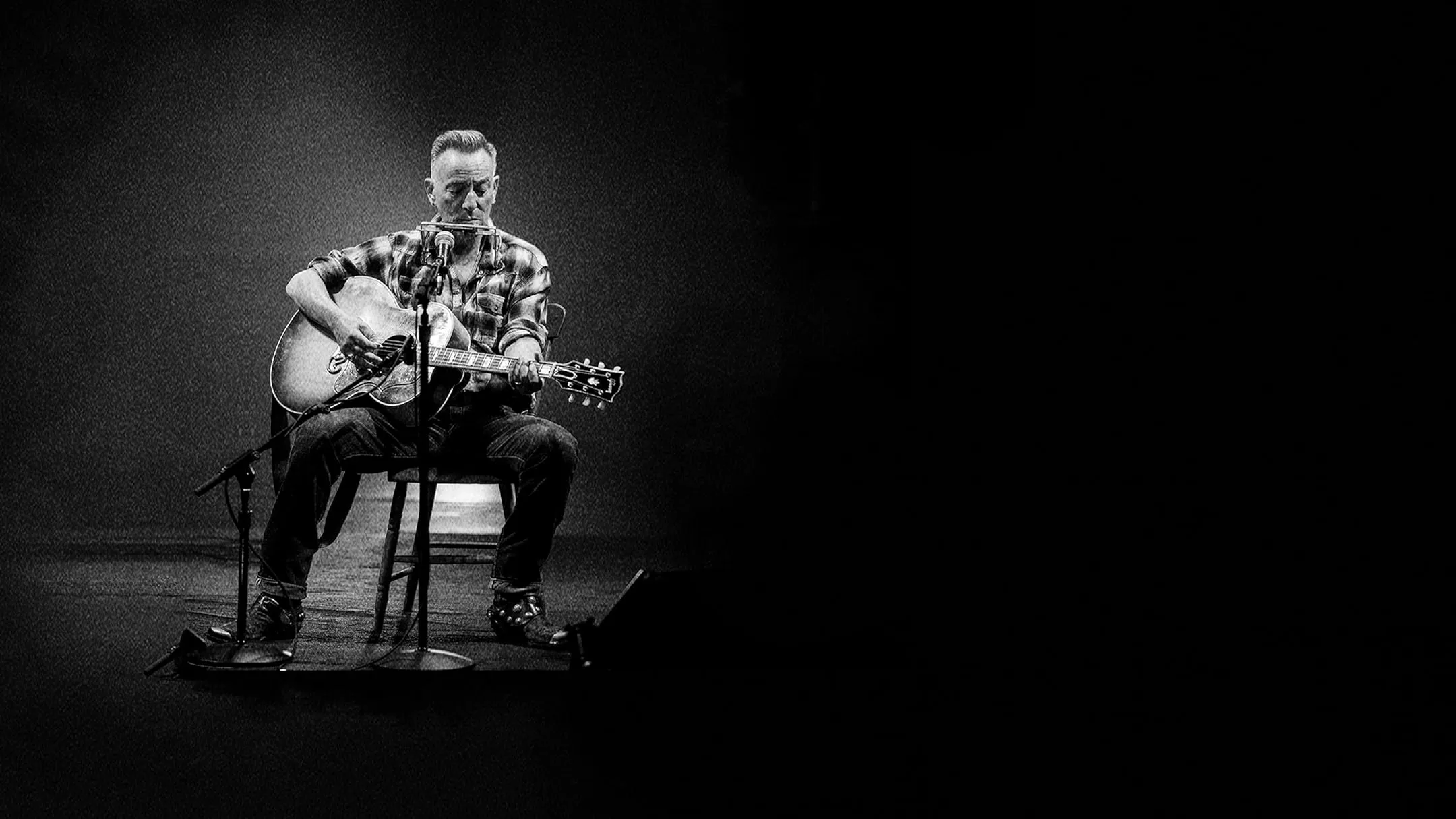

Bruce Springsteen: Nebraska Live stages a stark run through the 1982 album in the quiet confines of Count Basie Center for the Arts. Directed by Thom Zimny, the film arrived as a companion to the 2025 expanded edition of the record. It places Bruce Springsteen alone on a stage in Red Bank, moving through the track list in its original order.
The production drops the stadium-scale spectacle often linked to the singer’s public image. It commits to minimalism that matches the isolation inside these songs. Filmed forty five years after the initial home tapes, it asks how these tales of desperate characters and rural spaces land in the present tense. The frame holds the performer with guitar, harmonica, and a few select musicians who offer subtle support.
There is no audience visible, and the set avoids mid show monologues. The attention stays on the music and the gritty narratives that defined the original 1982 release. In spirit, that restraint recalls Indian parallel cinema, which keeps faith with the raw human condition and keeps ornamentation to a minimum. The stillness Thom Zimny captures lets the American working class experience sit beside global stories of marginalization.
The Aesthetics of Solitude
The visual language leans on high-contrast black-and-white cinematography. The monochrome palette mirrors the bleak reality inside the lyrics, and it carries a timeless quality tied to neorealist traditions in global cinema, where the loss of color pushes texture and environment to the foreground. The empty Count Basie Theatre generates an atmosphere of heavy stillness. With no crowd, the room turns into a cavern of memory.
The stage is nearly bare. A hard-back kitchen chair sits under the light. A small side table holds capos and picks. Two microphones wait for voice and the harmonica rack at his neck. Thom Zimny threads in ambient noise to pin the music to a physical world.
The distant roar of a tractor trailer on a highway reminds the viewer of the vast, indifferent spaces separating these characters from help, comfort, or escape. Each song ends on a slow fade to black, treating each track like its own short film and reinforcing the isolation each character carries. Song titles appear in a specific shade of red, matching the 1982 album cover and cutting sharply through the greyscale frame.
The Resonance of Time
Age registers in the performance. The 2025 vocals carry a gravelly depth that the 1982 recordings did not have, shifting how the songs speak. In his thirties, these lyrics played like observations. In the present performance, they land like lived history. The physical commitment stays intense. His hands hit the guitar with raw force, and the harmonica wails with a sharpness that punctuates the silences.
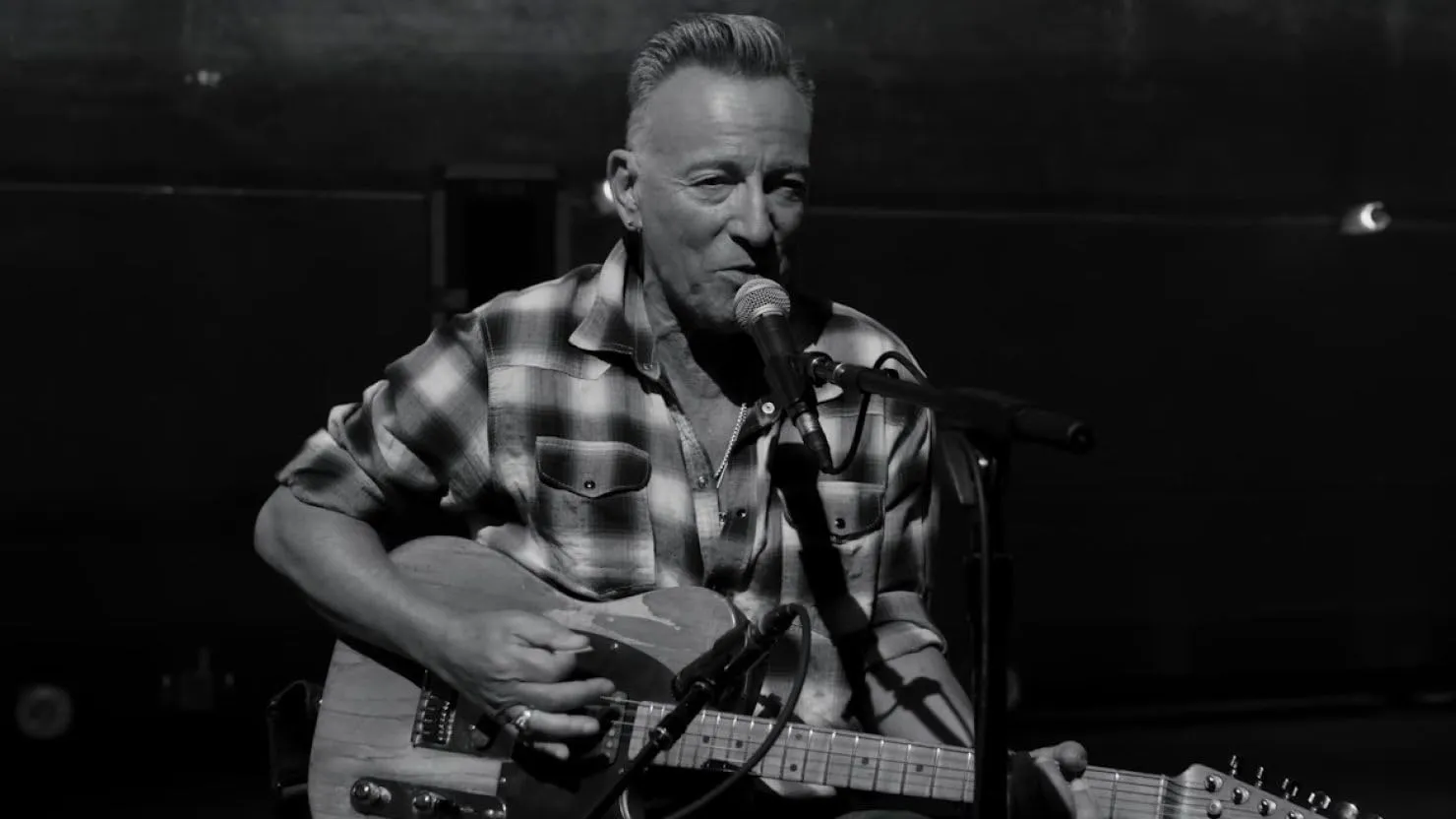
Quiet support comes from Charlie Giordano and Larry Campbell, kept in the shadows of the stage. Their glockenspiel, keyboard, and mandolin appear sparingly, entering only where the original arrangements call for a slight lift. That restraint keeps the central figure fixed in view. A rare flicker of lightness arrives after the energetic performance of Open All Night, when a small grin and a chuckle slip out, briefly letting the human presence peek through the gloom.
The sound also marks distance from the past. The heavy echo of the home tapes is gone, replaced by clarity that lets the audience hear the precise musicality of the chords. The songs stop feeling like ghosts trapped on tape and start feeling immediate and physical.
Landscapes of Despair and Truth
The film studies the “meanness in this world” invoked in the opening title track. These first-person narratives follow people caught in cycles of desperation. The songs trace a geography from the streets of New Jersey to the Wyoming Badlands, and that movement echoes a kind of rural realism associated with Satyajit Ray, where landscape presses on the characters and shapes their fate.
The live setting sharpens key tracks. In Highway Patrolman, Springsteen enunciates each syllable at a deliberate pace, making the story of family loyalty and legal duty easy to follow. The urgency in Atlantic City hits harder with the tape hiss removed. The choice to skip monologues pays off because the lyrics carry their own context. The family tensions in My Father’s House come through the words alone.
The repeated attention to “blood on blood” connections frames a universal struggle for belonging and redemption. Forty five years on, these stories still feel vital, taking on human conflict and the weight of the judicial system in ways that travel beyond their American setting. The film argues, through form and restraint, that great songwriting can reach a global audience with no extra explanation.
Bruce Springsteen: Nebraska Live is a stark and intimate concert film that captures the legendary musician performing his seminal 1982 album, Nebraska, in its entirety for the very first time. Filmed in moody black-and-white at the Count Basie Center for the Arts in Red Bank, New Jersey, the production was directed by longtime collaborator Thom Zimny. Originally released as part of the Nebraska ’82: Expanded Edition box set in late 2025, the film made its standalone streaming debut on Hulu on January 7, 2026, and is also available on Disney+ for international audiences. It serves as a poignant companion piece to the 2025 biopic Deliver Me from Nowhere, offering fans a raw look at the album’s enduring themes of isolation and the human condition.
Full Credits
Title: Bruce Springsteen: Nebraska Live
Distributor: Hulu, Disney+, Sony Music
Release date: January 7, 2026
Rating: TV-14
Running time: 45 minutes
Director: Thom Zimny
Writers: Bruce Springsteen
Producers and Executive Producers: Bruce Springsteen, Jon Landau, Thom Zimny
Cast: Bruce Springsteen, Larry Campbell, Charlie Giordano
Director of Photography (Cinematographer): Thom Zimny
Editors: Thom Zimny
Composer: Bruce Springsteen
The Review
Bruce Springsteen: Nebraska Live
Bruce Springsteen: Nebraska Live captures a veteran artist stripping away his fame to face his darkest creations. By removing the distraction of an audience, the film focuses on the weight of the lyrics and the grit of his aged voice. It serves as a stark, honest look at the American psyche. The minimalist direction and sharp audio clarity provide a fresh perspective on these forty-five-year-old stories. It is a haunting, essential document for those who value storytelling in its purest form.
PROS
- Stripped-back, intimate atmosphere.
- Clear audio highlights lyrical depth.
- Moving, aged vocal performance.
- Striking black-and-white cinematography.
CONS
- Lack of audience might feel cold to some.
- Minimalist style limits visual variety.