

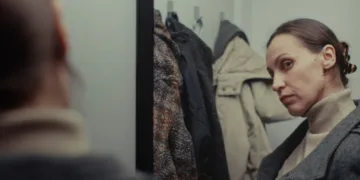
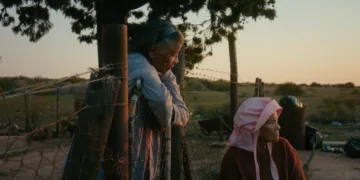




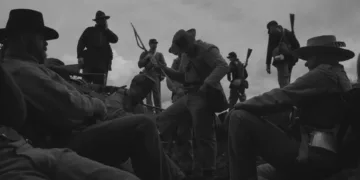















Brittany Shyne presents a reality where time feels folded back on itself. The black-and-white palette clears the frame of modern neon noise and leaves a stark, silver-toned world that reads as ancient and present tense. The images decline to separate the New Deal era from the current year. They hang in suspension, held there by memory and labor. Filmed over nine years across rural Georgia and Mississippi, the camera returns to the earth with the attention of someone listening for breath beneath heavy clay.
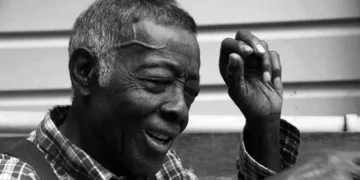
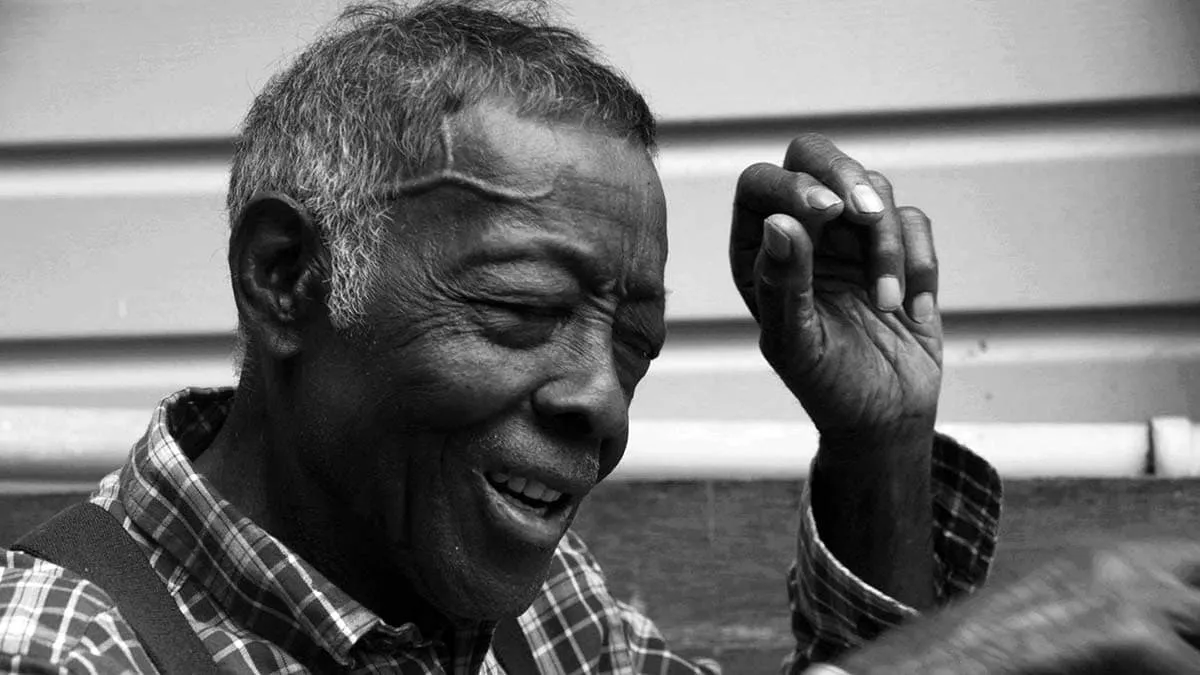
We meet Willie Head Jr., Carlie Williams, and Ben Burkett, men whose identities remain bound to acreage their families have held since the late 1800s. Their presence carries a quiet refusal of disappearance. Shyne works in a vérité mode, trusting still observation and letting the absence of narration speak for itself.
The camera holds on the slow wearing-down of a culture with patient steadiness. It records the daily insistence of people protecting a legacy while a global machine presses toward erasure. The film asks us to watch a way of life poised at the edge, captured with devotion that places the filmmaker close to the land, close to the people, close to the long hum of endurance.
The Temporal Pull of the Furrow
The film moves with the weighty, unhurried cadence of a Sunday afternoon and asks for a patience that modern life has trained us to misplace. Shyne keeps her distance from contemporary frenzy and lets the seasons set the tempo. We watch soil turned over and cotton harvested until the air fills like a localized blizzard, an image that blurs memory with work and makes the past feel tactile. Workers pass through the field in a daisy chain gathering watermelons, their bodies synced by necessity. The repetition carries a meditative charge, like ritual practiced with hands and weather, a kind of communion with the planet that outlasts the language of industry.
The opening funeral sequence sets an elegiac tone that lingers through what follows. A woman sits in a car with her grandniece, talking about heaven while sharing candy. Vulnerability arrives in plain speech, and the passage from life to afterlife is approached with casual, devastating grace. The title points to kernels dropped into the ground and to children who hold genetic and spiritual memory. Shyne finds haunting beauty in domestic moments: an elderly woman washing her hair, the silence inside a shared snack.
The film dwells on the fragility of the human condition, on small tactile pleasures that help a person keep going through a century of toil. Each connection feels like a brief flare against encroaching dark, a spark preserved by cinematography that lingers with empathy. The ordinary takes on the weight of the sacred, and the day’s labor starts to resemble a prayer for continuity. Dust on boots. Light in the eyes of great-grandchildren. Two ends of a long fraying rope, kept together by a stubborn will to remain.
The Cold Geometry of Neglect
Under the film’s lyricism sits an existential struggle with forces that remain unseen while shaping everything. The financial reality surfaces through small details that carry blunt pain and point toward systemic abandonment. Willie Head Jr. bargains for the cheapest eyeglasses because a nine-hundred-dollar social security check must cover the farm’s constant demands. Shyne frames this as a portrait of bureaucratic indifference, a machine that treats these lives as expendable. Phone calls to the Farm Service Agency gather frustration, voices colliding with the hollow architecture of red tape.
Payouts stall while seasons keep moving. Promises made from the highest levels of government stay unresolved, and the delay lands like a personal betrayal, intimate as drought. In the second half, the men travel to the gates of the White House. They stand beneath the shadow of institutional power and demand recognition as American citizens and as keepers of the land. The protest reads as survival work, a refusal to slip quietly into neglect.
A supporter of the administration speaks of betrayal with quiet clarity, words that feel suited to any corridor where power decides who counts. Politics does not sit outside the farm. It blows through it like weather, a cold man-made wind that threatens to freeze roots sunk into a century of inheritance. Shyne catches the bleak absurdity of a man who has worked the earth for eighty years still having to plead with a desk-bound official for the right to keep a tractor running. The soil remains rich. The social contract looks like dust.
An Archive of Dust and Endurance
The statistics arrive like a chill across the spine, a measurement of disappearance turned into acreage. Since 1910, land owned by Black families has fallen from sixteen million acres to a fragment, a geographic erasure that echoes cultural erasure. The documentary becomes a vessel for history sliding toward public amnesia.
The men turn away from computerized efficiency and describe it as incompatible with the spirit of their work. They follow zodiac charts and ancestral wisdom, planting seeds carried forward hand to hand instead of purchased from corporations. The fear of what comes next weighs heavy in the air, as solid as the clay underfoot.
Many in the younger generation have moved north, chasing stability the agrarian South no longer offers. Head watches his granddaughter and hopes she will build a home on the property, and he speaks with dread about the spiritual confinement of an apartment. The land holds the idea of family as lineage, a living thread that resists scattering. Shyne shapes the film as a moving archive, a record of a way of life that may soon survive only in memory and light.
She captures elders’ wisdom before it returns to the earth, calloused hands beside sharp, clear minds, men who have outlasted empires through sheer persistence. The film stands as a reminder of what belonging can mean when the ground itself feels uncertain beneath your feet. It records entrepreneurship and resilience as lived practice, a signal for those who come after. The ending remains an act of witness, a final beautiful record of a community that refuses to vanish in silence.
Seeds is a visually arresting documentary that premiered at the Sundance Film Festival in January 2025 before its theatrical release on January 16, 2026. Directed and photographed by Brittany Shyne, the film uses lush black-and-white cinematography to capture the lives of Black generational farmers in Georgia and Mississippi as they struggle to maintain their ancestral land against systemic economic challenges. As of early 2026, the film is playing in select independent theaters across the United States, including New York’s Film Forum, and is beginning its rollout on specialized documentary streaming platforms.
Full Credits
Title: Seeds
Distributor: Doc Society, Interior Films
Release date: January 16, 2026
Running time: 123 minutes
Director: Brittany Shyne
Writers: Brittany Shyne
Producers and Executive Producers: Danielle Varga, Brittany Shyne, Sabrina Schmidt Gordon, Leslie Fields-Cruz, Maida Lynn, Tessa Thompson
Cast: Willie Head Jr., Carlie Williams, Ben Burkett, Alani, Clara
Director of Photography (Cinematographer): Brittany Shyne
Editors: Malika Zouhali-Worrall
Composer: Robert Aiki Aubrey Lowe
The Review
Seeds
Seeds is a haunting, monochrome meditation on the tenacity of the human spirit against the encroaching silence of history. It does not provide easy answers or political slogans; instead, it offers a visceral connection to the soil and the souls who tend it. By capturing the intersection of ancestral legacy and systemic neglect, Brittany Shyne creates a moving archive of a culture on the precipice of disappearance. It is a work of profound empathy and existential weight, demanding that we witness the grace within the struggle.
PROS
- Stunning, timeless black-and-white cinematography that elevates the everyday to the sacred.
- A patient, "slow cinema" approach that honors the natural rhythms of life and labor.
- Deeply intimate character studies that build empathy without resorting to sentimentality.
- The effective use of personal stories to illuminate broad, systemic injustices.
CONS
- The unhurried pace may challenge viewers accustomed to more traditional, narrative-driven documentaries.
- The hands-off directorial style leaves certain historical or geographical contexts for the viewer to infer.