





























Ancient Farm drops you onto the sun-baked banks of the Nile Valley and immediately sells the place through texture: rough grasses, mineral-rich rock formations, and a wide stretch of land that feels empty in a way that dares you to fill it. You start with very little currency and a barren plot that looks like it has never met a shovel.
The game frames itself as a historical simulation, and it commits to that tone through pacing first. Before real momentum sets in, you go through a tutorial built to match the slow, deliberate rhythm of the setting. It often runs past two hours, and it walks through each mechanical layer step by step until the rules feel internalized.
That slow start matters because the long-term goal is heavy. Your primary objective is constructing a grand temple, which asks for serious wealth and careful resource management. The temple functions as a clear target, but the loop keeps going after it is built, giving you room to keep expanding the homestead and tightening your systems. Progress sits in your hands. You decide how to earn money, what to produce, and which materials to prioritize at each stage of growth. The design rewards patience, especially if you enjoy watching a desert plot shift from raw emptiness into a structured, productive operation built piece by piece.
The Physicality of the Harvest
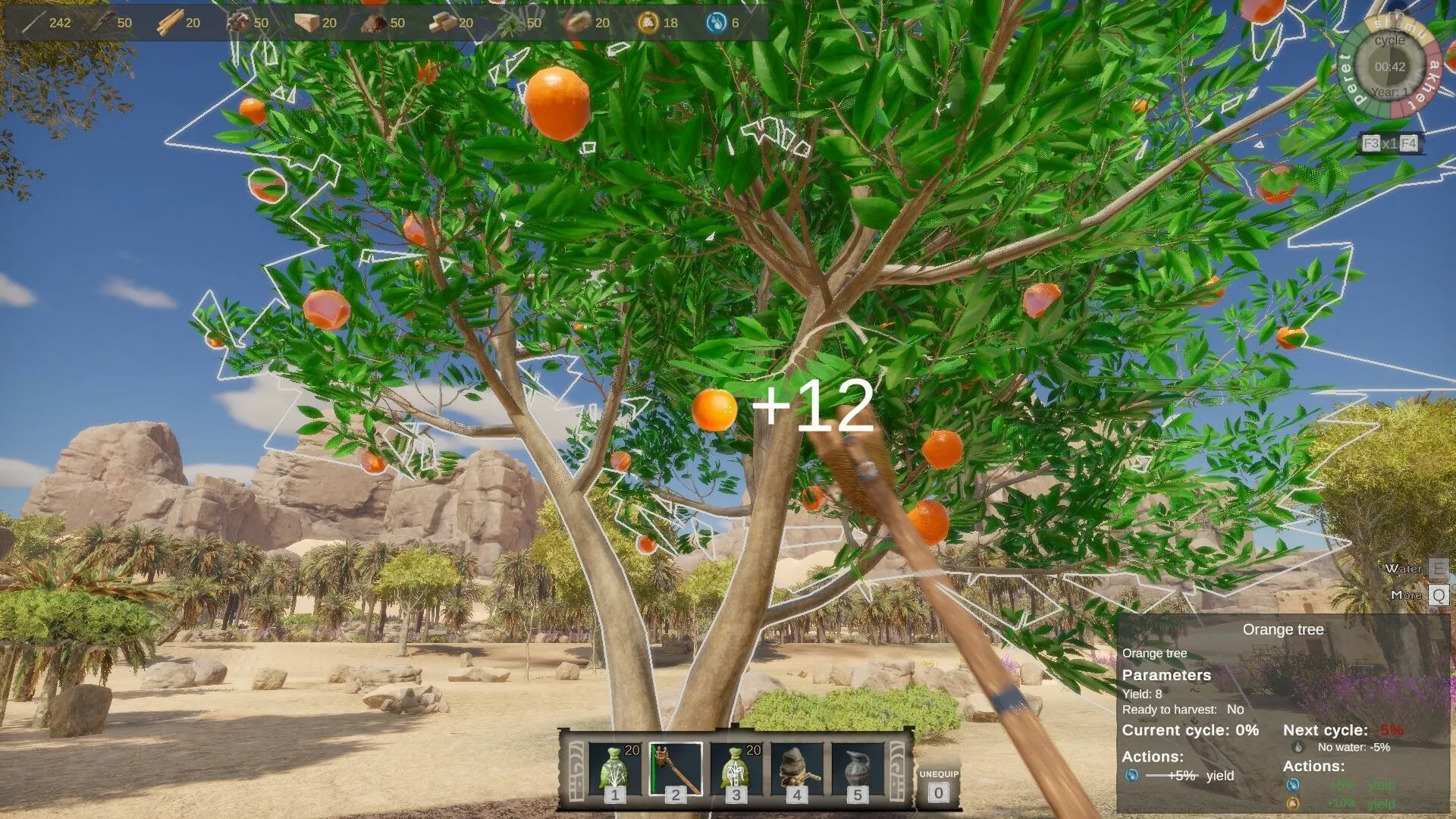
The central loop leans hard into hands-on agriculture, echoing the manual focus you see in Farming Simulator, then translating it into a far more primitive context. Fieldwork runs on a repeated physical sequence: plowing, sowing, watering, fertilizing. Each step asks for attention, and the game keeps your body in motion rather than letting menus carry the burden. Water becomes a constant pressure. You end up making regular trips to the river to fill jugs, and those jugs break with frustrating regularity after heavy use, turning a basic task into a recurring maintenance problem you plan around.
Season structure provides the main strategic spine. The game uses three distinct seasons, and the scorching Shemu season carries the highest risk to your livelihood. Timing matters in a direct, unforgiving way. Plant too late, and crops struggle. Miss the harvest window, and you can lose produce to withering or rot. That risk pushes you to read the calendar, keep track of what is in the ground, and decide how much you can manage at once without letting fields slip past the point of saving.
Crop variety supports both staple planning and specialized scheduling. You can plant basics like barley and wheat, then branch into riverside plants like papyrus and hemp. Fruit trees change the tempo again, since they reward waiting with repeat harvests, giving you a slower but steadier rhythm if you commit the space and keep the farm running long enough for that investment to pay back.
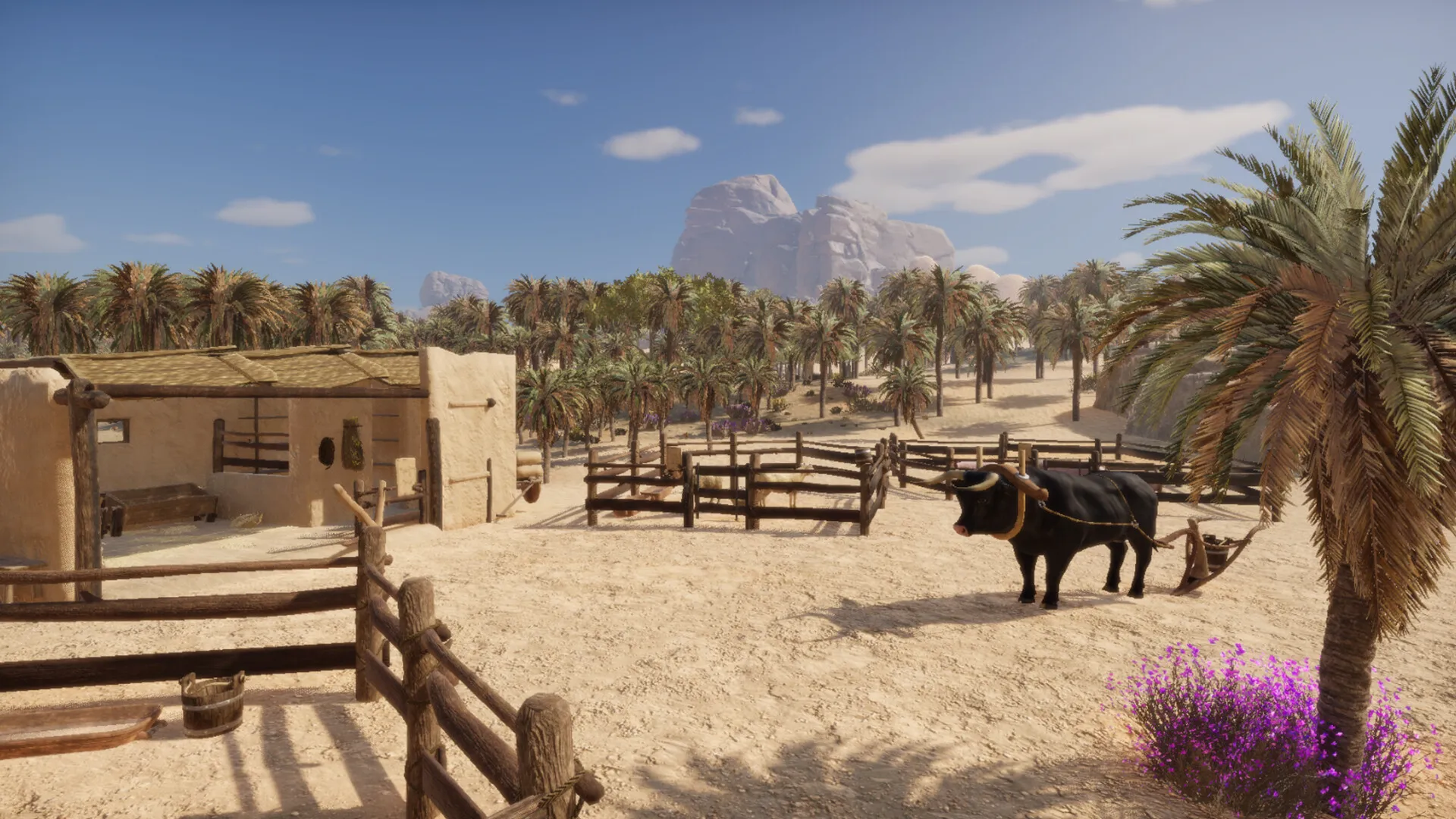
Animals widen the checklist without changing the game’s core philosophy of routine labor. Livestock arrives through ships, and you buy animals as infants, then build pens and keep food and water levels stable. The roster covers cows, pigs, sheep, and hens, with oxen filling a crucial role as working animals that pull heavy equipment. That addition turns the farm into a place with moving parts you cannot ignore, since neglect shows up quickly in dwindling supplies and daily upkeep becoming harder than it needs to be.
As the farm develops, production shifts toward refinement. Specialized buildings like workshops and kitchens let you convert basic harvests into goods with higher value. Turning wheat into bread or olives into oil raises profit margins, but it also asks for more space and tighter logistics. You start thinking about where buildings sit, how far you walk between stations, and how many inputs you can reliably feed into each process. The arc from raw survival into a structured production chain lands well for players who like tuning systems and squeezing better output from the same land.
Trade and the Architecture of Growth
Expansion depends on one recurring event: the merchant ship. In Ancient Farm, that ship is your primary link to the outside world and the single hub for selling goods and unlocking new capabilities. The schedule creates friction that shapes your planning. You cannot dump inventory on demand. You wait for docking periods, then sell in batches, which changes how you store goods and how you time your big harvest pushes.
The economy also pushes you away from single-crop dependence through its price behavior. Prices shift dynamically, and flooding the market with one resource can punish you for a long stretch. The game spells this out through examples like barley: sell huge quantities at once, and its value drops and stays low for an extended duration. That pressure encourages a mixed portfolio, where you rotate outputs and keep income steadier by avoiding the temptation to spam the same item every shipment.
Construction follows the same controlled approach. You cannot simply place any structure whenever you want. Progress is tied to a blueprint system, meaning barns, workshops, and other buildings require purchasing technical plans from the merchant before they become available. That gate keeps the early game focused, and it makes each ship arrival feel like a planning meeting: sell what you can, buy what opens your next layer of efficiency, then return to the land with new options in mind.
Crafting locks in the self-reliant tone. Tools do not arrive as finished purchases. You gather raw materials and forge your own hoes, pickaxes, and scythes. This ties directly into land clearing, which keeps serving two functions at once. Removing stones and felling trees creates room to build, and it also supplies the wood and minerals needed for construction and tool upkeep. That interlocking structure keeps busywork from feeling isolated. Even basic chores feed into expansion, and the game constantly asks you to weigh immediate needs against the pull of a more sophisticated layout you are trying to assemble.
A Stylized Vision of Antiquity
The presentation aims for a sharp, grounded look, using warm earthy tones to evoke ancient Egypt. Animations read smoothly, and the game leans into the simple satisfaction of visual change: the same barren plot you began with gradually fills with crops and sturdy structures, making progress easy to see without a stat screen telling you how far you have come.
Audio stays restrained. The soundtrack leans minimalist and taps into the nostalgic feel of classic strategy games like Age of Empires. The music fits the slow, methodical pace, and it supports the repetitive labor well. The small number of tracks does lead to repetition during long sessions, which can make time feel flatter than the work itself.
That sense of quiet reaches into the world design. The atmosphere feels solitary, which supports the calming rhythm of farming and building, yet it can also make the setting feel static. The absence of a day-night cycle, varied wildlife, or active NPCs leaves you in a beautiful environment that sometimes struggles to suggest a living history beyond your own projects.
From a performance standpoint, the game tends to run stably on high-end hardware, holding comfortable frame rates even when the farm is packed with assets. Pushing to 4K can be demanding, hinting that optimization has room to tighten.
Interface quirks show up in small bursts, including input delays that can take multiple clicks before a purchase or harvest action registers. These hiccups do not appear often enough to derail play, but they stand out as reminders of the game’s smaller scale. Even with those rough edges, the presentation supports the calm, meditative loop of building a life from the silt of the Nile.
The Review
Ancient Farm
Ancient Farm offers a meditative, hands-on journey into antiquity that rewards patience and methodical planning. While the manual labor and seasonal strategy provide a satisfying sense of accomplishment, the solitary world and repetitive audio may test your endurance. The game succeeds as a focused agricultural simulation, though it lacks the dynamic environmental factors found in more robust titles. It remains a solid choice for players seeking a quiet, historical grind without the pressure of survival mechanics.
PROS
- Detailed, manual farming mechanics.
- Strategic seasonal planning.
- Satisfying progression loop from raw land to temple.
- Clean, earthy visual style.
CONS
- Repetitive music and minimalist sound.
- Static world lacking NPCs or day-night cycles.
- Occasional input delays and UI hitches.
- Slow pace may feel monotonous to some.