
























![Kingdom Hearts Collection [I-III] Review](https://gazettely.com/wp-content/uploads/2026/10/Kingdom-Hearts-Collection-I-III-1-360x180.webp "Kingdom Hearts Collection [I-III] Review: KHII Holds Steady as Newer Entries Fluctuate 37")



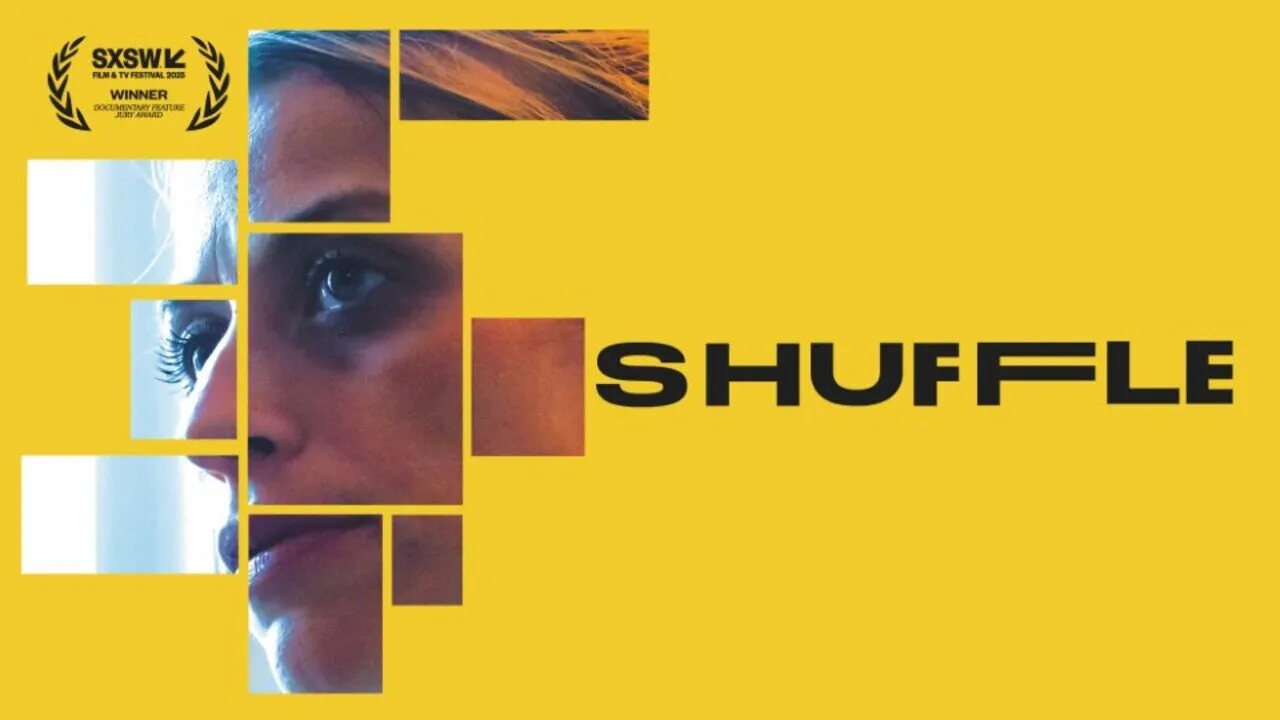

Benjamin Flaherty’s Shuffle peers into the American recovery industry with the strange heat-haze beauty of a sunlit noir. It plants itself in South Florida, a region that brands itself as the rehab capital of the country. Flaherty serves as narrator and Virgil, a guide whose authority comes from biography rather than credential. He leans on his past as a recovering alcoholic to enter rooms the public rarely sees, and that lived access becomes the film’s key instrument: a bridge built from recognition, shame, and hard-earned permission.
What he finds is a system engineered for circulation, where medical facilities and insurance providers lock arms with predatory scouts, all chasing the steady movement of insurance capital. Patient sobriety sits low on the priority list and sometimes blocks the payout.
Flaherty follows three people caught inside this machine and sketches an industry that regards human bodies as policies that can walk and talk. Personhood dissolves into billing. Care turns into extraction. The promise of a fresh start hangs in the air like a sales pitch, and the film keeps asking how many “second chances” a market can sell before it admits it has built a trap.
The Faces of the Florida Cycle
The narrative leans on Cory, Nicole, and Daniel, and their presence keeps the documentary anchored in lived consequence rather than policy talk. Cory has adapted to the rot. He understands the scam’s mechanics and plays his role for quick cash, a figure shaped by the very corrosion he exploits. Nicole carries a different kind of tension. She searches for real help inside a system built to drop her. Daniel points toward the luxury tier of the same racket, left staring at massive bills from a med spa that offered almost no medical supervision.
Flaherty films them with street-level intimacy, acting as camera operator and confidant in the same breath. His status as a recovering addict opens doors and lowers defenses in ways many documentarians never get to witness, and the film uses that access without turning it into spectacle. He stays in rooms and on streets as they move from facility to facility, keeping proximity tight and attention steady.
That closeness restores texture to lives the industry has flattened into data points. They speak with matter-of-fact exhaustion, the kind that suggests a story repeated so often it has worn grooves into the tongue. The camera listens anyway. It grants a dignity the medical centers refuse to offer, and it frames these people as individuals living through a sequence of calculated betrayals. Flaherty keeps sentimentality on a short leash. He sticks to grit, routine, and the deadpan fatigue of survival.
The Architecture of the Scam
The “Florida Shuffle” emerges as perverse engineering, a workflow designed to look like care while behaving like commerce. It starts with brokers hunting for vulnerable people on social media, using self-help hotlines as cover for recruitment. Scouts funnel addicts toward specific centers for a fee, and the incentives are staggering.

Insurance policy shifts after the Affordable Care Act helped turn rehab into a gold mine, and the film shows how facilities respond: expensive, unnecessary tests meant to drain every possible dollar from a policy. One patient can generate nearly a million dollars in billable services for rudimentary care, a figure so grotesque it almost sounds like satire until the film keeps insisting, calmly, that this is the math.
The system’s coldest logic arrives through relapse. Detox is the most profitable phase for a facility, and the documentary describes centers releasing people onto the street with cash in their pockets, a gesture that plays like generosity for about two seconds. The operators know where that money tends to go. Relapse restarts the billing cycle, and the machinery turns again with fresh invoices.
The business model feeds on failure and calls it treatment, a moral inversion delivered with a straight face. Flaherty brings in an Federal Bureau of Investigation informant to underline the criminal character of these operations, and the structure begins to resemble a syndicate more than any recognizable healthcare provider. The film draws a grim parallel to a drug-dealing network: efficient, distributed, and built around supply. The industry commodifies the act of falling down, then invoices the floor.
The Aesthetics of Erasure
Flaherty’s visual strategy echoes the psychological weather of his subjects, and the film’s most striking detours come through the scratchy animations by Tom Sears. Chalk-like figures scrape across dark backgrounds, a simple image that lands with an ugly precision. Isolation becomes literal. Identity looks erasable. Lives appear rewritten by hands that never have to shake when they sign the paperwork.
The documentary cuts in archival clips of lab rats and dairy cows, blunt metaphors that refuse subtlety because the system itself shows so little restraint. These inserts say the quiet part loudly: suffering gets milked for profit, and bodies get handled like inventory. Sound deepens the unease. Matthew Dougherty’s sound design layers tension until the air feels compressed, and the score presses in with a claustrophobic insistence.
Flaherty uses shifting focus and pitch-shifted audio to protect whistleblowers, and that protective distortion doubles as mood. It creates genuine danger, the sense of people speaking from inside hostile territory, where telling the truth carries a price tag that no insurer plans to cover. The film’s noir impulse lives here: paranoia rendered as technique, threat rendered as texture, and the feeling that the room has ears.
Ethics in the Age of Commodities
The documentary draws a clean line between rehab as an idea and rehab as a business apparatus. Recovery remains a humane goal in this framing, and Flaherty makes space to praise facilities that prioritize the person over the policy. The film’s argument is simple and severe: healing needs communal effort, and much of that effort comes from people who give it freely because they care. That reality sits awkwardly beside a marketplace engineered to monetize suffering, and the discomfort feels intentional.
Shuffle functions like a public service announcement delivered in noir lighting, except the light here comes from the Florida sun and it still exposes rot. The warning lands with clarity: lax regulation plus high greed turns health into a commodity, and money poured into a social crisis can create loopholes that reward predators. The film keeps returning to the same bleak punchline, delivered with a straight face: the system calls itself recovery, and it recovers cash with impressive discipline.
Shuffle is a documentary feature that premiered at the South by Southwest (SXSW) Film Festival on March 10, 2025, where it won the Grand Jury Prize for Best Documentary. Directed by Benjamin Flaherty, the film serves as an investigative exposé into the “Florida Shuffle,” a predatory business model within the American addiction recovery industry. Following a limited theatrical run that began on January 16, 2026, the film is primarily available through specialized screenings and can be tracked via the official “Stop the Shuffle” campaign website. It offers a harrowing look at how insurance loopholes have transformed vulnerable individuals into commodities for profit.
Full Credits
Title: Shuffle
Distributor: Abramorama
Release date: January 16, 2026
Running time: 83 minutes
Director: Benjamin Flaherty
Writers: Benjamin Flaherty
Producers and Executive Producers: Benjamin Flaherty, Carra Greenberg, Harris Fishman, Scott Paskoff, Justin Benoliel, Erin Malloy, Jon Paskoff, Susan Raiten, Rostam Zafari, Emma Ratcliffe, Dylan Mulick
Cast: Cory, Nicole, Daniel, Benjamin Flaherty, Matthew Dougherty, Tom Sears
Director of Photography (Cinematographer): Benjamin Flaherty
Editors: Benjamin Flaherty
Composer: Matthew Dougherty
The Review
Shuffle
The film is a sobering autopsy of a system that has traded its soul for a payout. Flaherty avoids the trap of a standard exposé by grounding the data in the lived reality of those being harvested. It is a work of controlled fury and essential public service. While some stock footage choices feel heavy-handed, the emotional weight of the central subjects carries the narrative. It is a vital, if harrowing, look at the high cost of a broken cure.
PROS
- Flaherty’s personal history secures a level of trust and intimacy with subjects that feels rare and earned.
- The film explains complex insurance fraud and the "shuffle" cycle without losing its narrative momentum.
- The use of scratchy blackboard animations effectively communicates the internal isolation of the recovery process.
CONS
- Some archival clips, like the lab rats, feel a bit too obvious for a film this sophisticated.
- The brisk runtime occasionally leaves the viewer wanting deeper investigation into the specific facilities mentioned.







