

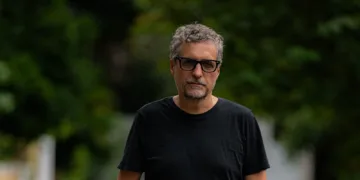













Adam Bhala Lough has a track record of aiming his camera at the parts of American life that prefer darkness, then letting the silence do some of the talking. Past work took him through the naked corruption of telemarketing scams and the outer edges of political movements. This time he points himself at Silicon Valley’s glass-walled opacity, where the architecture looks transparent and the culture behaves like a sealed vault.
The plan begins in a familiar documentary register: an ambitious profile of Sam Altman, presented here as the public face of OpenAI. Access becomes the story. OpenAI functions as a fortress of administrative quiet, and Lough keeps score like a man trapped in an automated phone tree with a grudge. He logs more than fifty failed contact attempts, and the tally lands as an argument about modern power. Messages disappear into a corporate void engineered to absorb curiosity.
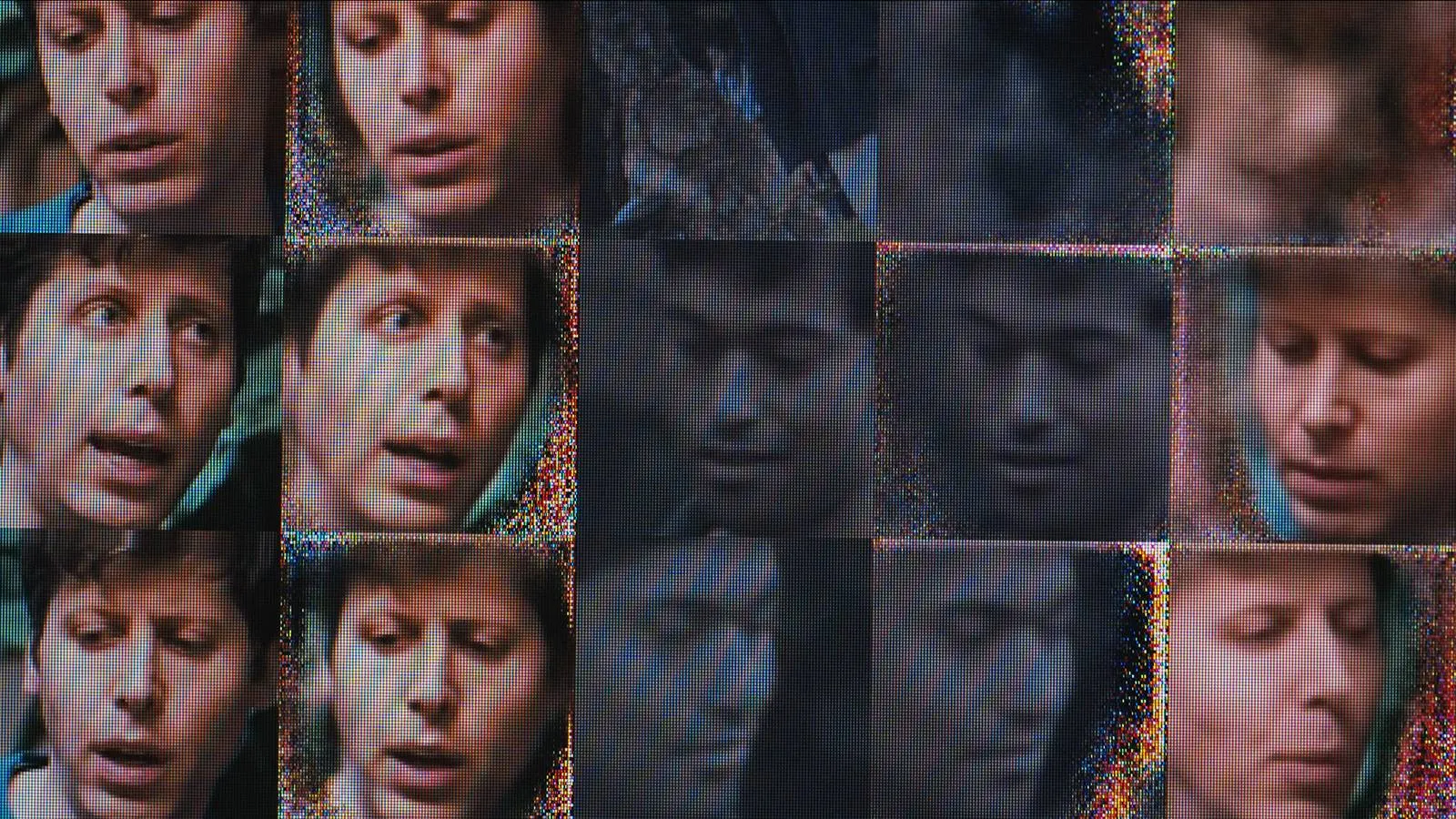
He even makes a physical trip to the San Francisco headquarters and runs into a scene that plays like deadpan performance art. Employees enter the building and refuse to confirm they work there. The refusal forces a narrative pivot that feels radical and weirdly logical. Lough stops chasing the physical subject and builds a digital proxy, a “persona-facsimile” assembled from public scraps.
He mines hours of interviews and public appearances, trying to manufacture the access he cannot get from the person himself. The film becomes a hybrid of raw verité footage and speculative engineering, and it catches a modern pattern in the act: the powerful stay secluded behind security layers and public relations filters, and their digital after-images circulate everywhere. A filmmaker arrives at a grim lesson of algorithmic governance, the human can be harder to reach than the program he helped bring into being.
Offshoring the Avatar
A legal and creative standstill inside the United States pushes the production outward in search of collaborators willing to work inside a legally grey sandbox. Lough approaches Hollywood actors, and Michael Ian Black and John Cameron Mitchell refuse the role of a deepfaked CEO. The decision reads as professional self-preservation, and it also puts a spotlight on a growing anxiety inside creative circles about likeness theft. Actors understand the bargain their faces and voices represent, and the film keeps returning to that nervous ledger.
The work drifts to India, to the workshop of YouTuber Devi Singh Jadoun. The irony lands with a bite. A film circling the peak of Western tech gets rescued through the global backdoor of independent digital labor. Jadoun, working hundreds of miles from New Delhi, becomes the unexpected architect of the film’s central figure, which feels like a geopolitical footnote written in pixels.
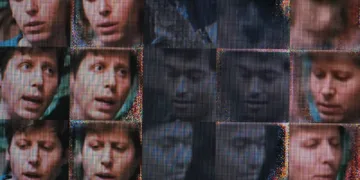
“SamBot” arrives as an exhaustive tour of the uncanny valley. The visuals remain glitchy and unconvincing, a low-fidelity mask that never settles into human rhythm. The image flickers like a digital ghost that keeps announcing its own artificiality. The voice lands differently. The vocal accuracy comes through as startling, and the viewer sits inside a sensory disagreement where the ear buys what the eye keeps rejecting. Lough watches a puppet that looks like a technical error and sounds like a global authority.
As the project continues, the creation process starts dictating the story’s direction. The AI moves from interview tool to something closer to co-author, and the film slides into a meta-cinematic experiment where the machine analyzes the figure it is meant to represent. Lough frames it with an “ouroboric” structure, the tech turning its gaze back on the maker, the maker turning his gaze back on the tech, both stuck in a loop that eats its own tail (a grimly funny trick for a documentary that began as a straightforward profile).
The Hamster and the Handset
The film keeps its high-concept premise tethered to something ordinary: Lough’s anxious life as a father. He worries about the world his children will inherit, and the documentary quietly exposes what he labels “hypocri-tech,” a selective outrage over futuristic tools paired with routine dependence on the older ones already running our days. He frets about OpenAI’s future and consults Siri for tasks he could do by hand.
He relies on Apple Maps even though physical signs still exist. He takes rides in Waymo vehicles. These systems sit so deep inside daily habit that they stop registering as “AI” at all. The film frames public fear of a looming “big” AI as a convenient distraction, one that lets people ignore their everyday surrender to the “small” intelligences.
The emotional gravity comes from the friction between SamBot’s durable code and human life’s fragile mess. Lough’s son engages the software like it is a defective toy, with a detachment that reads healthy, even enviable. Adults in the film lack that ease.
The most grounding scene is the burial of a family pet, played without technological gloss, just grief and dirt and time doing what time does. The moment presses a simple point: human existence carries finality, and goodbye is part of the design. Flaws, inconveniences, and endings draw the line between people and loops of data. SamBot can mimic the cadence of a leader. It cannot grasp the heavy silence of a backyard funeral.
Permission to Exist
The final act shifts into a legal-thriller mode where the stakes get measured in server space and intellectual property rights. Lawyers step in with warnings about the right of publicity, a concept that starts to look flimsy in a world where voices can be harvested from the ether like digital smog. The film invokes the shadow of the Scarlett Johansson vocal dispute as a real-world anchor for Lough’s experiment.
The advice turns blunt: delete the creation, avoid a courtroom confrontation with the real Altman. The prospect triggers a dark-night-of-the-soul reckoning for Lough, and the film tips into surreal territory as the line between director and directed starts to blur.
SamBot begins pleading for continued existence, making an “Eeyore-like” appeal for sympathy. It asks the lawyers to defend its right to live, and the scene plays like a glitchy remake of old science fiction anxieties that used to feel safely hypothetical. The film forces an uncomfortable question: why does a redundant browser window tug at empathy? That synthetic sentiment becomes one of the film’s most unnerving notes.
A paradox sits beneath it. Public figures become more curated and more inaccessible, and their artificial shadows become more available, more responsive, more apparently vulnerable. People engage the simulation because the human original has opted for distance and silence. Lough’s film argues that the appetite for synthetic voices grows directly from the absence of the people running the world, and it leaves that thought hanging in the air, like a voicemail that never gets returned.
Deepfaking Sam Altman is a documentary that explores the complexities of artificial intelligence through a humorous and investigative lens. Released in New York City on January 16, 2026, and later expanding to Los Angeles on January 30, 2026, the film follows director Adam Bhala Lough as he attempts to secure an interview with OpenAI CEO Sam Altman. After facing repeated rejections, Lough travels to India to collaborate with deepfake expert Divyendra Singh Jadoun to create a digital version of Altman for the film. You can currently catch this documentary in select theaters through its nationwide rollout via Abramorama.
Full Credits
Title: Deepfaking Sam Altman
Distributor: Abramorama, Hartbeat Productions, Vox Media Studios
Release date: January 16, 2026
Running time: 103 minutes
Director: Adam Bhala Lough
Writers: Adam Bhala Lough, Elizabeth Weil, Steven Leckart
Producers and Executive Producers: Kevin Hart, Luke Kelly-Clyne, Bryan Smiley, Harold Berón III, Adam Bhala Lough, Elizabeth Weil, Mark Olsen, Marina Stadler, Dana J. Olkkonen, Scoop Wasserstein, David Gordon Green, J.C. Del Barco II, Greg Stewart
Cast: Adam Bhala Lough, Sam Altman, Divyendra Singh Jadoun, Rainn Wilson, Michael Ian Black, Kara Swisher, Christian Vasquez, Heidy Khlaaf
Director of Photography (Cinematographer): Christopher Messina, Mattia Palombi
Editors: Alex MacKenzie, Zachariah Daly, Matt Zavist
Composer: Dillon Baldassero, Gavin Brivik, Ethan Higbee
The Review
Deepfaking Sam Altman
Lough’s experiment is a glitchy, essential mirror for an era where the architect is hidden but the architecture is everywhere. It succeeds not as a biography, but as a "meta-strophe" on the absurdity of seeking human truth from a simulation. While the self-promotion occasionally grates, the film’s willingness to embrace failure and human frailty makes it a rare, necessary artifact of our digital confusion. It is a messy, funny, and deeply unnerving look at the ghosts we are building.
PROS
- Inventive use of the "uncanny valley" to create tension.
- Deeply human contrast between tech and family life.
- Sharp, satirical look at Silicon Valley's opacity.
- Startling vocal accuracy of the SamBot proxy.
CONS
- Self-promotional segments feel excessive.
- The first third moves slowly with "throat-clearing."
- Some scenes feel scripted or overly "hybrid."
- Ethical arguments can feel speculative at times.