























![Kingdom Hearts Collection [I-III] Review](https://gazettely.com/wp-content/uploads/2026/10/Kingdom-Hearts-Collection-I-III-1-360x180.webp "Kingdom Hearts Collection [I-III] Review: KHII Holds Steady as Newer Entries Fluctuate 40")
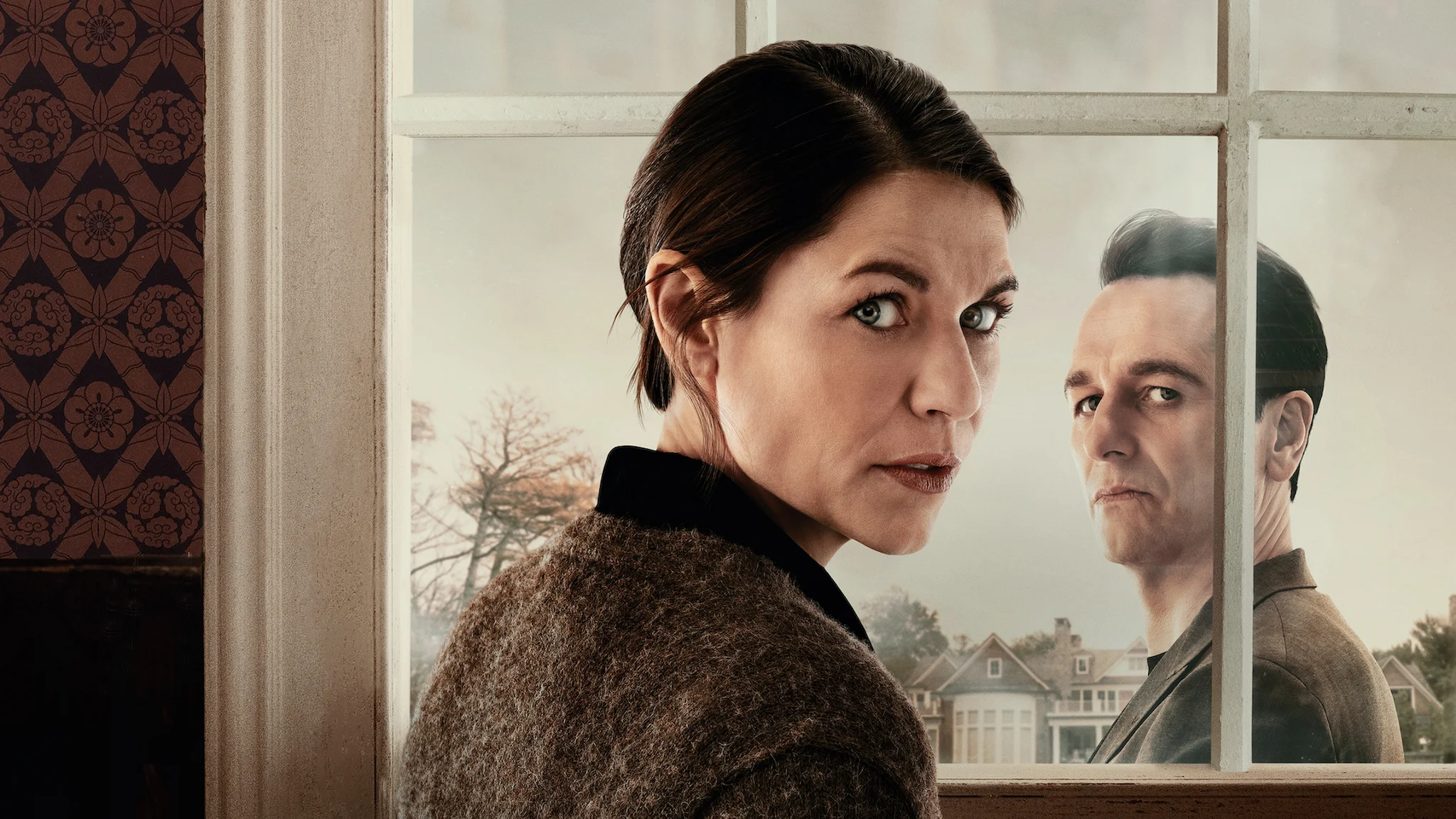

The opening frames of this eight-part psychological thriller arrive with accusation rather than curiosity. The Beast in Me plunges the viewer into a palpable state of emotional wreckage, set inside the gilded cage of affluent Long Island. Status functions as currency here and trauma acts as a corrosive agent that dissolves the foundations of the wealthy. The series introduces Aggie Wiggs (Claire Danes), a writer whose earlier acclaim—a Pulitzer-winning past—exists as a relic. She is entangled in debt, immobilised by a grief that follows the death of her young son, and unable to produce a viable follow-up to her lauded memoir. Her house, a stately pile, shows architectural and hydraulic collapse; raw sewage intrudes into domestic life with literal insistence.
Into this tableau moves Nile Jarvis (Matthew Rhys), a scion of real estate wealth and a man whom public opinion largely repels, widely assumed responsible for the six-year disappearance of his first wife. Nile functions as the archetypal person of interest. The series sets its central proposition when Aggie, searching for material and perhaps a reckoning, agrees to profile Nile. Their resulting relationship is high-stakes and antagonistic. It rests on suspicion, concealed motives, and a shared proximity to profound pain. The show fashions a gothic mystery around these figures, proposing that the horrors here are endemic to the environment and its rulers, not isolated incidents.
The Electric Geometry of Damage
The show’s kinetic force arises from the electrifying antagonism between Aggie and Nile, a sustained cat-and-mouse dynamic that seduces and repels in equal measure. Their encounters move beyond interview form into extended philosophical skirmishes. Each exchange operates as a duel of perception, with language weaponised as characters attempt to author the other’s story. Nile, whose ordinary civility is thin, pares away Aggie’s professional defences with unsettling precision. He dismisses her current book project on Supreme Court justices and asserts that the public seeks gossip and carnage rather than hope. He understands the market for monster narratives and comprehends his own narrative magnetism.
Aggie discovers in Nile a subject suitable for the kind of rage that organizes her days. Her fixation becomes a displacement activity. Her inner landscape is a ruin: professional stasis, acute financial strain, and a trauma that warps decision-making. What begins as a professional necessity transmutes into a personal, accusatory engagement after the disappearance of Teddy, the driver connected to her son’s death. Nile assumes symbolic weight as an embodiment of cosmic injustice. Aggie’s entanglement with him functions as a dangerous diversion from her unresolved life, a plunge into external darkness that distracts from internal vacancy.
The series cultivates intellectual tension through ambiguity about Nile’s true nature. Rhys renders him as a man insulated by privilege, a layer that complicates moral appraisal. He radiates menace and an unsettling charm simultaneously. The narrative pressures the viewer into sustained psychoanalysis: is Nile a misunderstood casualty of society’s appetite for spectacle, a high-functioning sociopath, or a killer whose pathology was nurtured by obscene familial power? The ongoing uncertainty about his identity sustains suspense while focusing ethical inquiry on wealth and suspicion.
These psychological strains gain traction through external pressure points. FBI Agent Brian Abbott arrives as a disgraced investigator whose conscience remains marked by the original case; he introduces formal procedure that Aggie co-opts. Abbott warns Aggie away from Nile, a drunken Cassandra whose interference hardens her resolve. He provides a bureaucratic echo that failed to hold Nile accountable and nudges Aggie toward an extra-legal pursuit of justice.
The most corrosive force, however, emanates from Nile’s bloodline: his domineering father, Martin Jarvis (Jonathan Banks). Martin’s presence invokes the corrosive logic of dynastic wealth. Father and son trade psychological blows with a measured cruelty that suggests familial systems produce predictable outcomes. Martin frets over legacy and a major land deal, treating his son’s notoriety as a public relations liability. The conflict reframes the beast as an inherited condition of unbridled ambition rather than an isolated monster.
The Anatomy of Affliction
Claire Danes supplies the series’ emotional axis in her portrayal of Aggie Wiggs. Her performance is an extended study in sustained intensity. This is grief rendered as chronic physical exhaustion and intellectual abrasion. Danes locates the intersection of ambition and breakdown, giving Aggie a complex register of suspicion and a reluctant fascination for Nile. Every weary look and determined confrontation carries accumulated history. Her work functions as the show’s emotional anchor, compelling the audience to inhabit Aggie’s precarious mission. The viewer experiences her pain with near-tactile clarity.
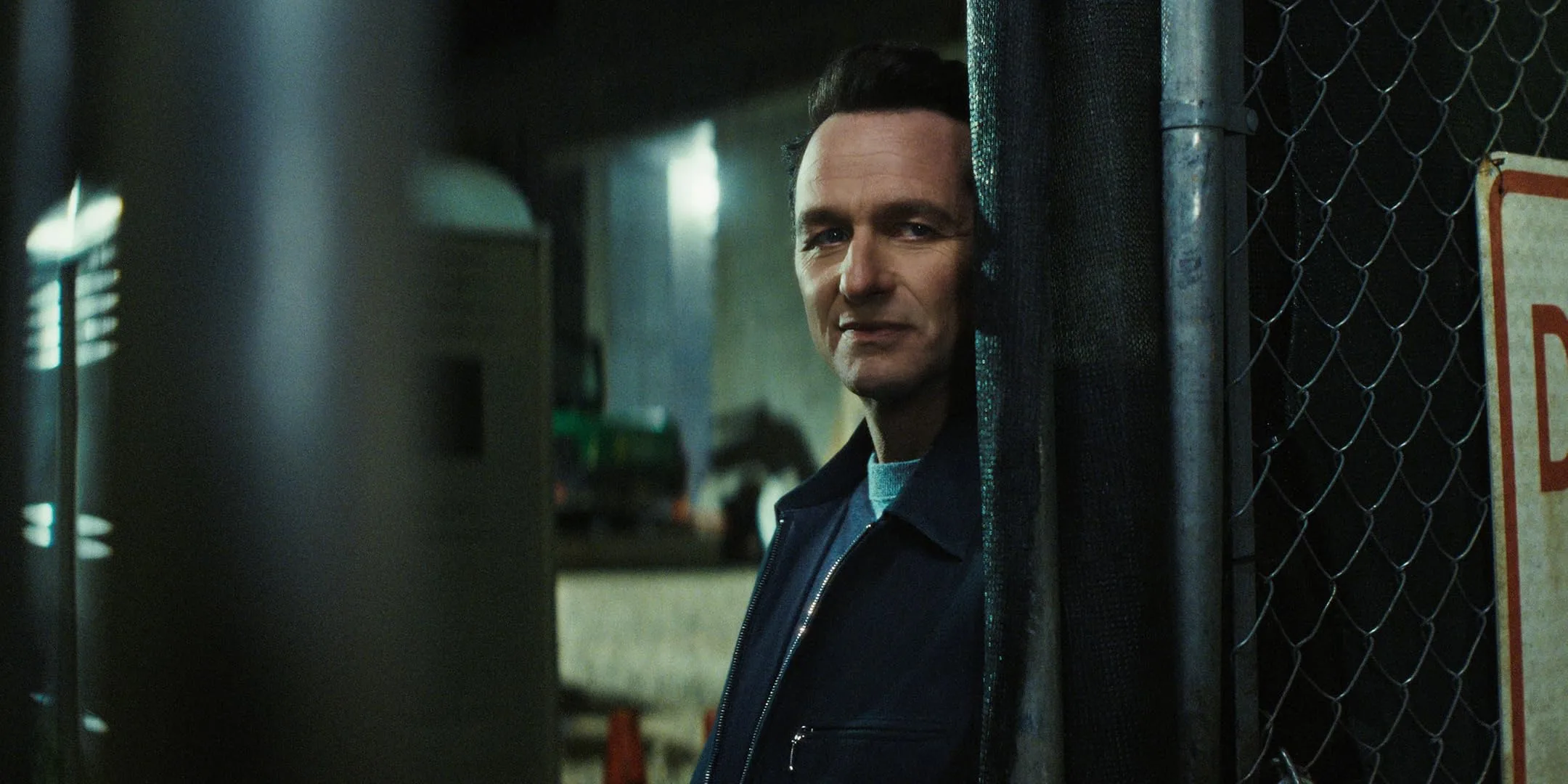
Matthew Rhys’s Nile is the magnetic counterpoint. He offers a controlled composure that conceals an imminent volatility. He embodies entitlement as a behavioural pathology. Nile is a predator in tailored clothes. His calculated moments of vulnerability feel tactical, designed to confuse and draw subjects closer. A notorious sequence of him devouring a rotisserie chicken reads as directorial shorthand for primal brutality—an animal display presented with deliberate ordinariness. Rhys’s ability to be both repellant and charismatic sustains the psychological tension and comments on how power seduces public attention. He performs what the series terms “performative psychopathy.”
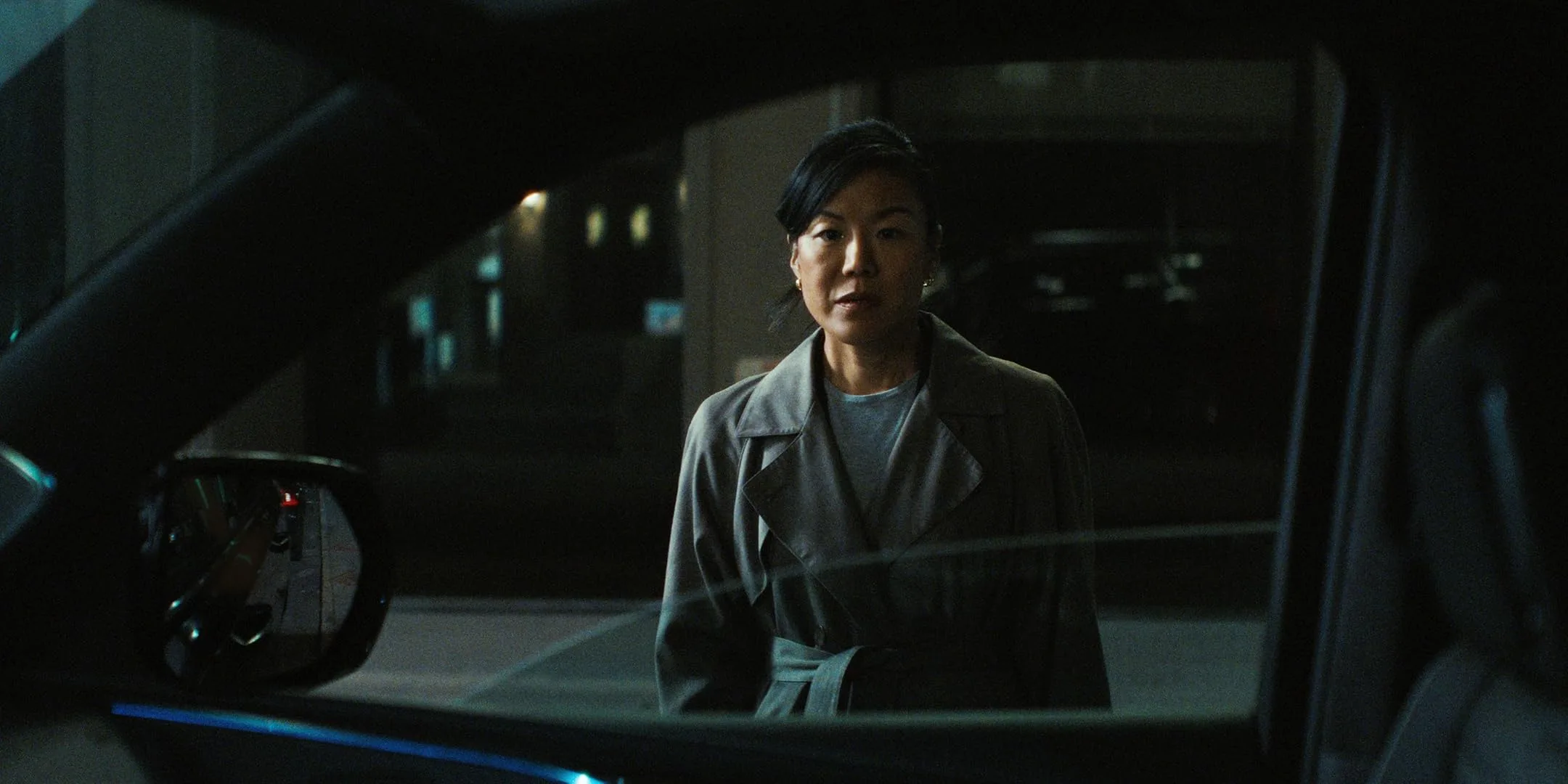
The supporting cast layers moral ambiguity across the world. Jonathan Banks as Martin Jarvis offers a masterclass in contained intimidation. His presence insists that Nile’s cruelty is a logical outcome of environment rather than an anomaly. Brittany Snow as Nina Jarvis opens initially as a cool, compliant figure but accrues complexity that hints at hidden knowledge capable of destabilising Nile.
Natalie Morales’s Shelley, Aggie’s ex-wife, accentuates Aggie’s relational unraveling, a background condition that helps explain her choices. David Lyons’s Brian Abbott provides a parallel, messy investigation; his demons and off-the-books pursuit create a procedural counterpoint to Aggie’s intense focus.
Structure and The Myth of Closure
The series sustains an absorbingly taut pace that practically invites binge consumption. That momentum allows the show to overcome moments when mystery mechanics risk predictability. Tension persists through psychological pressure between the leads rather than through constant plot shocks. The menace implicit in their confrontations frequently proves the show’s primary engine; the revelation itself registers as a secondary event.
A decisive structural choice reshapes the narrative arc: the series reveals Nile’s culpability in Madison Jarvis’s disappearance and in related harms, including Teddy and Agent Abbott’s victims, before the final episodes. This decision converts the story from a classic whodunit into a concentrated study of how a shielded individual might finally face accountability. The narrative shifts emphasis toward the grueling work of achieving justice against a man protected by systems. That pivot privileges themes of reckoning and moral responsibility over tidy puzzle-solving.
Writing and direction deliver numerous richly written two-hand scenes that allow actors to excavate complex interiorities. The script handles sustained emotional weight with a steady hand. Yet the series shows vulnerability to familiar thriller pitfalls. A convenient diary that supplies crucial evidence reads as a tidy solution to an intricate knot. After the major revelations in the third act, momentum attenuates and the final episodes lean toward a procedural cadence, which reduces some of the earlier psychological intensity.
The Aesthetic of Moral Decay
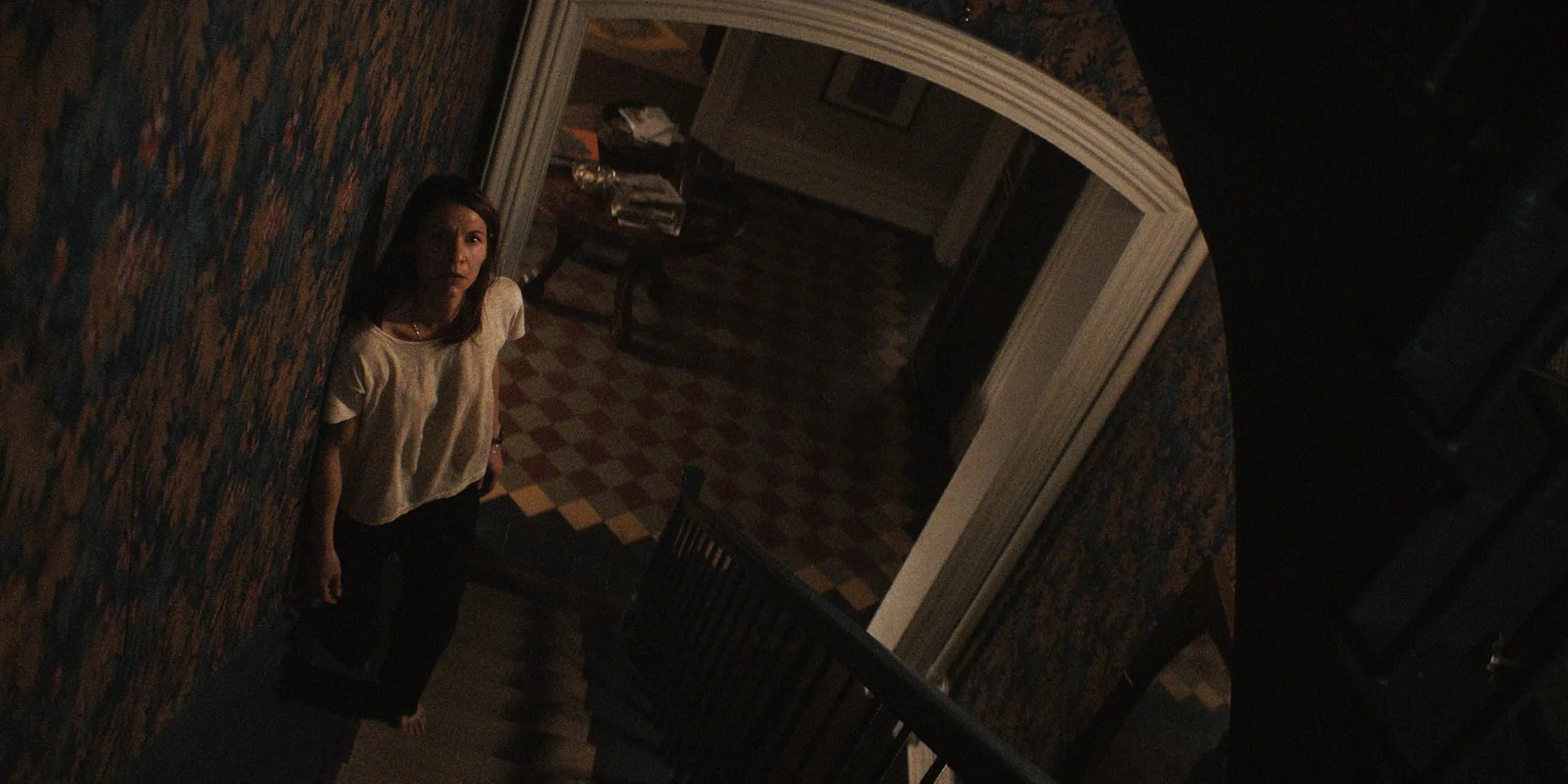
The visual design operates as active thematic material. Setting and atmosphere amplify the central ideas. Aggie’s Long Island home, attractive yet visibly crumbling and suffering plumbing failure, mirrors her fiscal and psychic collapse. Physical rot contrasts with Nile’s immaculate façade and underscores economic disparity in grief and accountability. Direction favors shadowed interiors and stormy exteriors, constructing a pervasive gothic mood that links moral rot to land and established order.
A confident directorial hand and assured production values give the show cinematic weight. The influence of producer Howard Gordon and director Antonio Campos registers in specific visual choices that rise above routine television. For example, a scene lit solely by Christmas lights repurposes an icon of domestic warmth to stage psychological peril, visually corrupting the idea of sanctuary.
The series benefits from committed performances and total immersion in its atmospheric world. It remains a satisfying option for viewers drawn to character-driven thrillers that examine the cost of privilege and pain. Minor late-stage lapses in plot mechanics do not erase the show’s provocation: it forces consideration of the beast that combines rage, entitlement, and darkness and that lives comfortably within privileged corners of the American psyche.
The Beast in Me is an eight-episode psychological thriller miniseries that premiered globally on November 13, 2025. The entire series was released at once, allowing viewers to binge-watch the story of a grieving author who becomes obsessed with her wealthy, mysterious neighbor. The show is available to watch exclusively on Netflix.
Full Credits
Title: The Beast in Me
Distributor: Netflix
Release date: November 13, 2025
Rating: TV-MA
Running time: 41–54 minutes (per episode)
Director: Antonio Campos, Tyne Rafaeli, Lila Neugebauer
Writers: Gabe Rotter, Howard Gordon, Daniel Pearle, Erika Sheffer, C.A. Johnson, Ali Liebegott, Mike Skerrett
Producers and Executive Producers: Howard Gordon, Gabe Rotter, Claire Danes, Jodie Foster, Conan O’Brien, Antonio Campos, Jeff Ross, David Kissinger, Daniel Pearle, Caroline Baron
Cast: Claire Danes, Matthew Rhys, Brittany Snow, Natalie Morales, Jonathan Banks, David Lyons, Tim Guinee, Hettienne Park, Aleyse Shannon, Will Brill, Kate Burton, Bill Irwin, Amir Arison, Julie Ann Emery
The Review
The Beast in Me
The Beast in Me is a compelling, high-voltage psychological thriller, wholly elevated by the powerhouse performances of Claire Danes and Matthew Rhys. It excels in sustained tension and character confrontation, providing a sophisticated study of grief, privilege, and moral corrosion. While the narrative sacrifices the mystery for emotional confrontation, leading to minor structural stumbles later on, the series remains an absorbing and aesthetically rich examination of darkness in affluence. It is essential viewing for fans of intense, character-driven drama.
PROS
- Claire Danes and Matthew Rhys deliver career-defining, intense performances.
- The focus remains on character dynamics and power struggles.
- The production design effectively creates a morally decaying, unnerving Long Island setting.
- Jonathan Banks adds compelling dynastic weight as the patriarch.
- High-quality cinematography and confident visual style.
CONS
- The central mystery is resolved early, sacrificing "whodunit" tension.
- Pacing slows after the third-act plot bombshells.
- Reliance on devices like the diary macguffin feels artistically weak.
- Some secondary investigations or relationships are less refined.