


















Ada Karmi-Melamede speaks about buildings with the confidence of someone who has spent decades deciding where people should stand, what they should see, and how a wall or window might alter their sense of scale. Ask her about motherhood and the geometry becomes less cooperative.
Yael Melamede builds Ada: My Mother the Architect around that contradiction. Her mother is one of Israel’s most significant architects, part of a family whose fingerprints are scattered across the country’s civic landscape. Ada’s father, Dov Karmi, and her brother Ram Karmi also received the Israel Prize for architecture. Ada and Ram designed Jerusalem’s Supreme Court building together, a project that becomes the documentary’s central structure in both the literal and symbolic sense.
The familial premise gives Yael unusual access, yet access does not guarantee disclosure. Ada is remarkably articulate about architecture and markedly harder to read when the conversation turns toward the people who lived around her work.
Light, Stone and Human Scale
The film becomes most persuasive when Ada explains what architecture can do to a body moving through space. Her language is exact without becoming forbidding. She calls herself a “sculptor of light,” and Yael backs that idea with concrete examples rather than leaving it floating as an elegant quotation.
The Supreme Court building provides the clearest one. Ada and Ram resisted the intimidating monumental scale associated with grand judicial buildings. The entrance is deliberately narrow. A visitor is not swallowed by soaring columns or made to feel insignificant before the state. The floor gradually rises toward an expansive window overlooking Jerusalem, shifting the experience from compression to openness.
That sequence contains Ada’s architectural philosophy in miniature. Scale becomes psychological. Light becomes directional. A view becomes an argument about the institution’s relationship to the city around it.
Even the flooring matters. Ada initially resisted polished surfaces, only for her mother to persuade her that they conveyed cleanliness. The finished floor reflects the people crossing it until they appear to be moving across water. It is a small detail, yet it reveals how Ada thinks. Materials are never merely materials. They dictate behavior, mood and hierarchy.
Her discussion of the Pantheon operates along the same lines. She focuses on the geometry of the room and the concentrated beam of sunlight entering through the roof. Yael wisely allows those explanations room to breathe. Ada is easier to understand through a shaft of light than through biography.
The Mother Outside the Frame
That clarity collapses when Yael asks about New York. Ada taught at Columbia University while living there with her husband and children. After being denied tenure, she returned to Israel and continued her career while her family remained in the United States. The documentary does not soften the rupture. Yael asks what leaving meant for the children. Ada tends to answer by describing what work meant for herself.

One exchange cuts deeper than any formal interview technique. Ada tells Yael that she never worried much about her children. Yael’s reaction barely needs commentary. The camera has already done the work.
There is an uncomfortable symmetry here. Ada spent her career considering how strangers would feel entering a room, walking a corridor or confronting a public institution, yet her emotional vocabulary becomes less precise when discussing the people closest to her. That does not make her monstrous. It makes the film harder to settle morally, which is far richer.
Ada speaks with greater visible emotion about arguments with Ram over the Supreme Court project than she does about leaving her children behind. Yael keeps pressing, but familial proximity has limits. Ada sometimes resists, deflects or simply refuses the depth her daughter is seeking. Silence becomes architectural too. It defines the boundaries of the room.
Split Screens and Civic Shadows
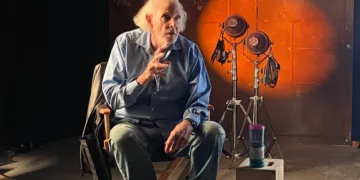
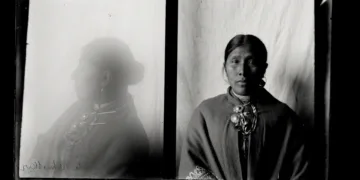
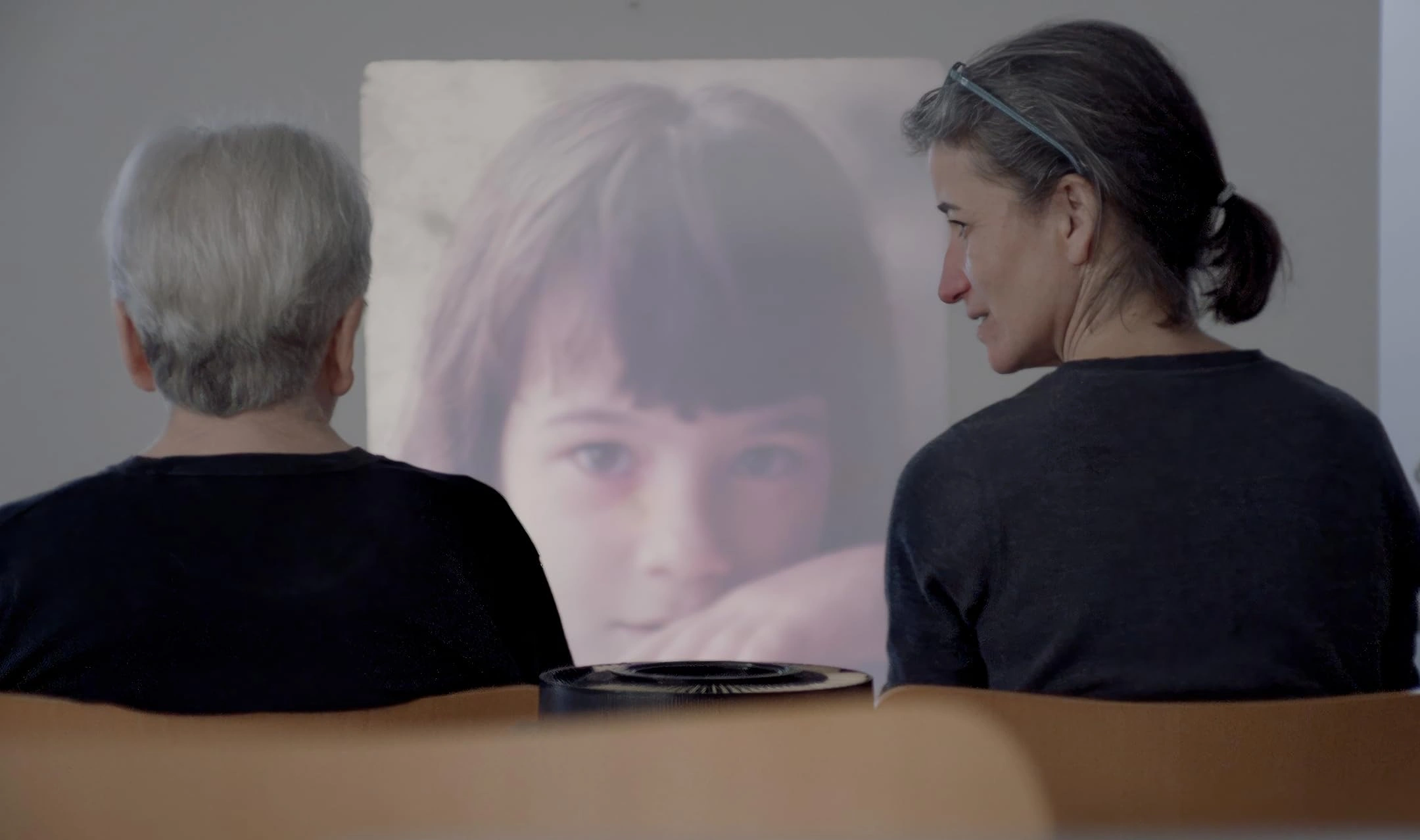
Yael finds an appropriate visual grammar for a subject who resists being reduced to one angle. During several interviews, Ada appears simultaneously in frontal and profile views through split-screen compositions. Elsewhere, Yael is visible behind the camera, then seated opposite her mother, then separated from her by the cold rectangular frame of a video call. The device risks looking decorative, yet it earns its place. Ada is being examined as architect, mother, daughter, sister and public figure, and no single perspective resolves her.
The political material carries the same tension. The Supreme Court building stands at the intersection of architecture and national aspiration, so footage connected to the 2023 protests over proposed changes to Israel’s judiciary cannot feel incidental. Architectural critic Paul Goldberger, who once praised the building as an expression of civic ideals, reflects on how painful those earlier hopes now appear. Yael asks Ada what the crisis means to her as one of the building’s designers. Ada does not give the film the answer it seems to be reaching for.
That refusal exposes the documentary’s principal weakness. At roughly 81 minutes, it touches several volatile subjects and then moves away before they can fully develop. The working relationship with Ram needs greater excavation.
The political meaning attached to the Supreme Court demands sharper pressure. The cost of Ada’s return to Israel remains partly sealed behind her reserve. Yet the film’s most revealing image may be the division Yael cannot remove: one woman shown from two angles, both perfectly visible, neither complete.
ADA: My Mother the Architect premiered on October 1, 2024, offering a personal and reflective look into the life and professional legacy of the filmmaker’s mother, Ada. The documentary examines the career of the titular architect through intimate interviews and archival materials.
Where to Watch ADA: My Mother the Architect (2024) Online
Full Credits
Title: ADA: My Mother the Architect
Release date: October 1, 2024
Running time: 86 minutes
Director: Mathilde Hédou
Writers: Mathilde Hédou
Producers and Executive Producers: Mathilde Hédou
Cast: Ada Hédou
Director of Photography (Cinematographer): Mathilde Hédou
Editors: Mathilde Hédou
The Review
Ada: My Mother the Architect
Ada: My Mother the Architect finds its strongest material where civic space and private distance occupy the same frame. Ada Karmi-Melamede can explain how a narrow entrance, polished floor, or shaft of daylight changes the psychology of a building, yet questions about leaving her children produce far less certainty. Yael Melamede’s split-screen interviews quietly reinforce that division, presenting a woman who can be viewed from several angles without ever becoming fully accessible. The 81-minute runtime leaves some family and political tensions underdeveloped, but the unresolved spaces are often revealing in themselves.
PROS
- Ada’s precise architectural insights
- Strong mother-daughter tension
- Effective split-screen interview design
- Rich Supreme Court material
- Thoughtful use of light and space
CONS
- Family history remains underexplored
- Political material stops short
- Ram Karmi relationship needs depth