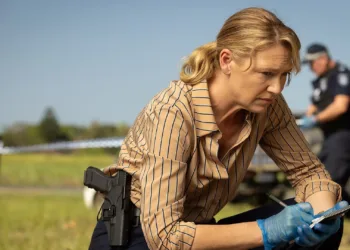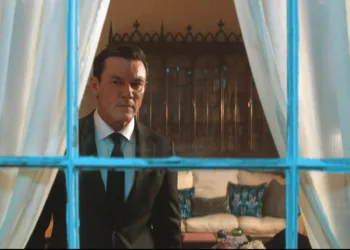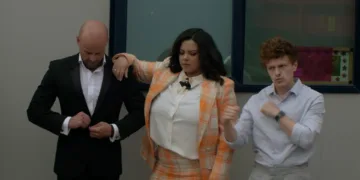
























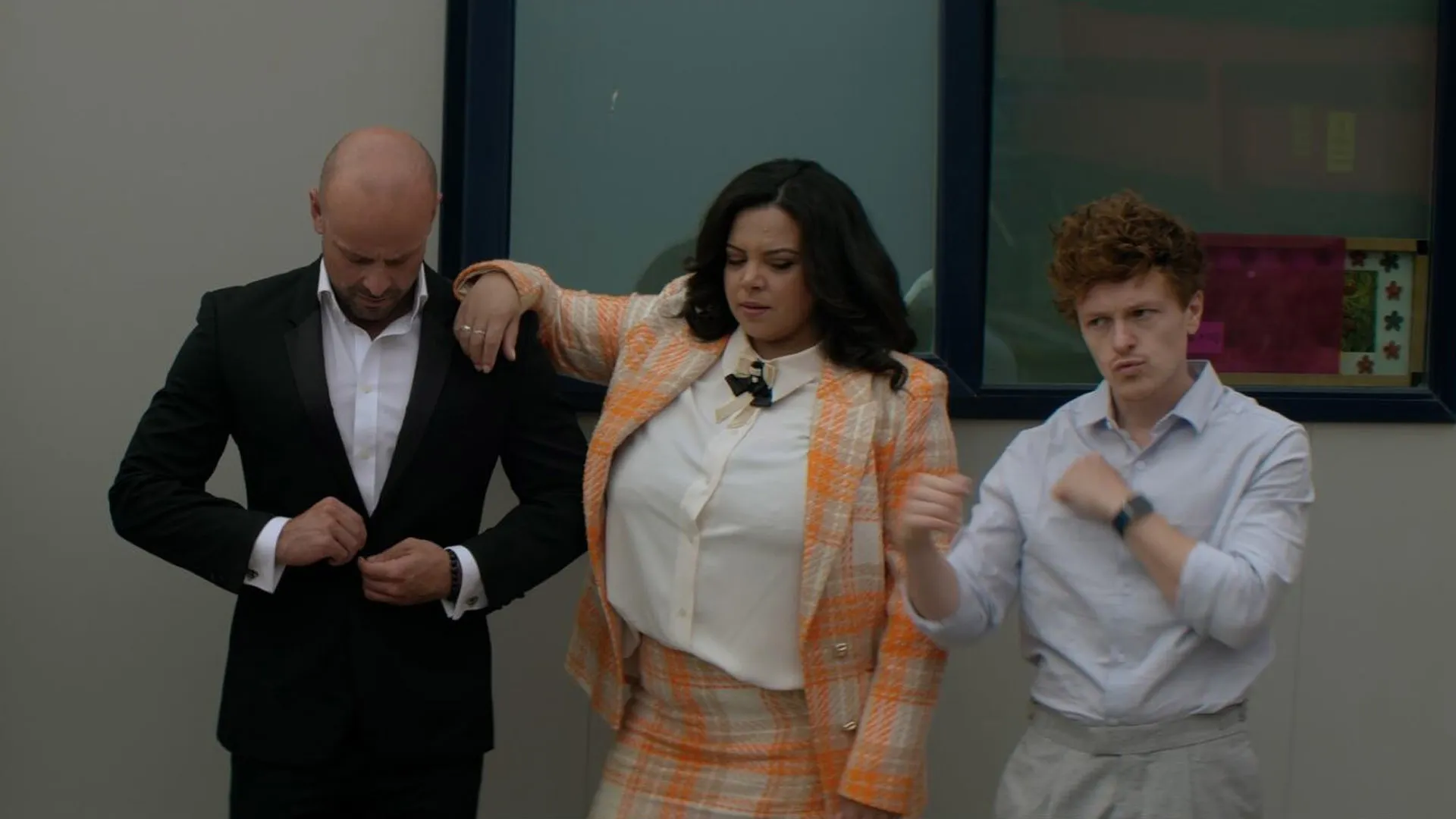

Ant and Dick land in real trouble the moment their digital bank scam collapses. They run a custom software program to siphon funds, and the choice of target turns disastrous. Emery, a high-ranking London crime lord, traces the theft of £100,000 back to them.
He spares their lives and locks them into criminal labor, demanding repayment plus interest. Clarky, his brutal lieutenant, becomes their day-to-day handler and keeps them on a short leash. The jump from street-level hustling to underworld enforcement hits with a blunt immediacy, and the film lets that pressure sit on their shoulders from the start.
London’s gray, rainy streets do a lot of the emotional work here. They frame Ant and Dick’s anxiety as something physical, something they carry into every conversation and corridor. The story gives the pair a simple, sharp motivation: find a way out before the debt, or Emery’s patience, runs out.
Greece hangs in the distance as a lifeline, a place that feels far enough away to mean survival. The opening tension leans on the threat of violence and the plain math of what they owe. In Emery’s world, each decision feels expensive, and the film keeps reminding you that their options have narrowed to a few risky moves inside someone else’s system.
A Partnership Born of Chaos
The film runs on the chemistry between Tony Cook and Jonny Weldon, and it needs that spark to keep the momentum alive. Cook plays Ant as weary and worn down, someone who looks like he has carried the weight of criminal life for years. He leans into a classic British hardman persona, giving the story a steady anchor. Weldon’s Dick arrives with frantic energy, expressive reactions, and a gift for physical comedy that plays well in tight spaces. The humor often circles the name itself, building a steady rhythm of blunt British jokes that the film returns to when the pressure spikes.
What makes their partnership work is how convincingly outmatched they seem. They come across as two people trying to fake competence while the stakes keep climbing. That cluelessness turns their predicament into something oddly relatable, even as the danger stays close. I have a soft spot for double acts that survive on timing and friction, the kind you tend to find in scrappy British independent cinema, where personality does the heavy lifting when resources are limited. Cook and Weldon hit that tradition with an ease that keeps the slower passages from stalling.
Their dynamic also shapes the narrative beat-to-beat. Ant brings grit and a stubborn sense of endurance. Dick brings nervous motion and the kind of panic that can tip a scene into comedy without breaking it. The lighter sequences grow from that push-pull, and the film uses their interactions to keep the audience invested while they stumble through underworld assignments. Their bond becomes the story’s main stabilizer, even as everything around them keeps shifting.
The Architecture of a Criminal Empire
Tomi May gives Emery a chilling presence that settles into the frame the moment he appears. A vertical scar across one eye works as a blunt visual cue of violence in his past, and the film treats it like a warning label. Emery rules through fear, with torture and execution presented as standard tools of the job. He does not need grand speeches to feel dangerous; the structure of his organization does that for him, and the film keeps Ant and Dick trapped inside it.
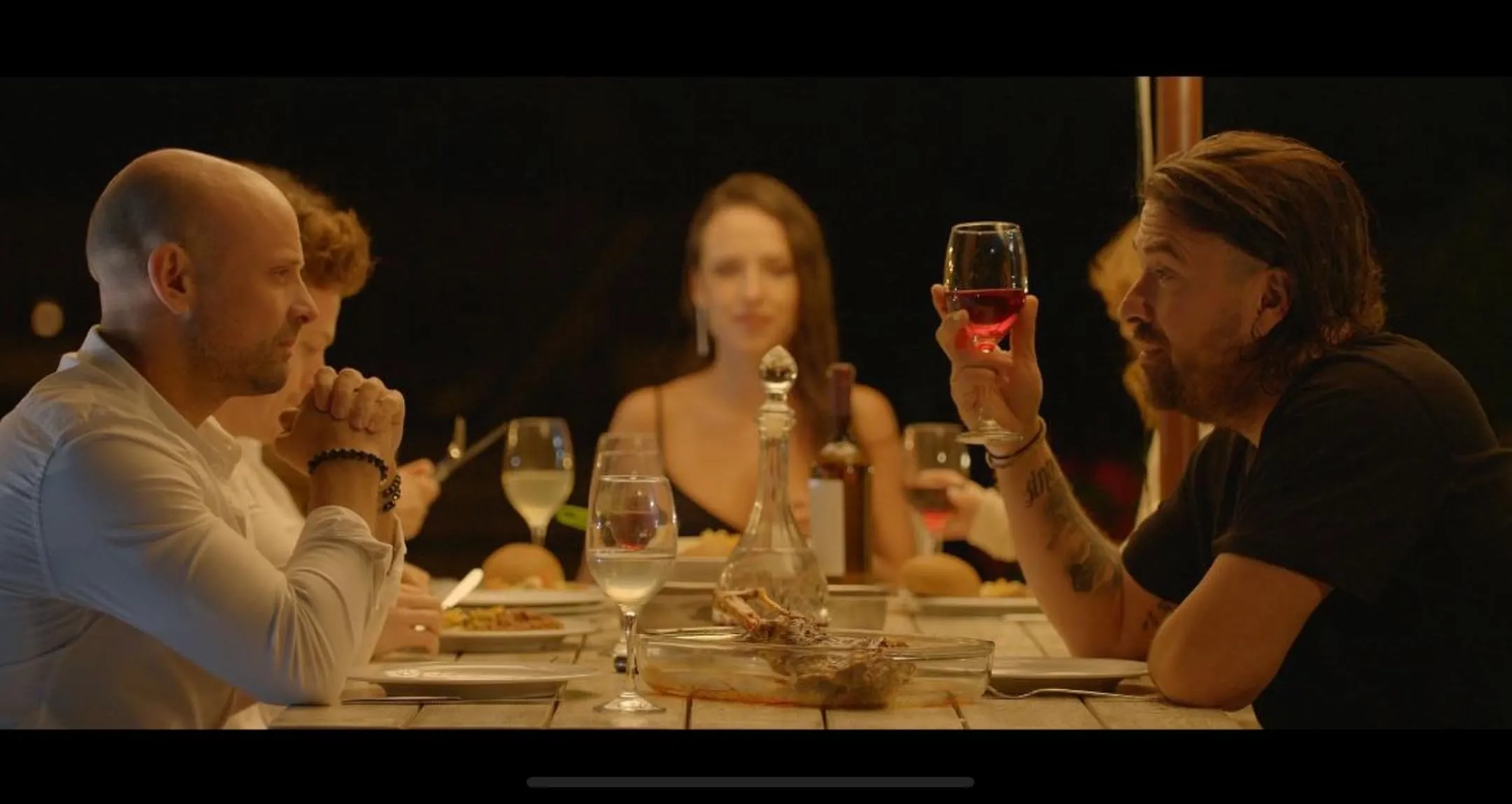
Rina Lipa makes a confident debut as Scarlett, an ambitious figure in the crew who plays the hierarchy with quiet intelligence. She wants a higher standing and carries herself like someone who reads the room before she speaks. Bradley Turner’s Clarky, by comparison, represents the unthinking violence that keeps Emery’s machine running. He manages Ant and Dick’s daily work and serves as a constant threat, present even when he is off-screen because the film has already taught you what he can do.
A power struggle between Scarlett and Clarky creates the narrow opening Ant and Dick need, and the film uses that tension to tighten the plot. Scarlett looks at the duo as useful pieces for her own aims, which further complicates the chain of command. Christina Gkioka appears as Thea, Ant’s partner waiting in Greece, and her presence gives the escape plan an emotional shape.
These figures fit recognizable archetypes in the British gangster mode, and the film keeps their motivations clear enough to drive the story toward an inevitable double-cross. Each character adds weight to the system Ant and Dick are trying to outrun, and the script keeps that system feeling organized, oppressive, and ready to punish mistakes.
From Urban Grit to Mediterranean Peace
Zak Fenning guides the move from London to Greece with a strong sense of visual shift. London plays as dark and cramped, full of enclosed rooms and heavy air. Greece opens outward into expansive, sun-drenched Mediterranean landscapes that change the film’s breathing pattern. The Greek scenes lean on bright lighting and local music to sell a temporary sense of peace, and wide shots place characters clearly in their surroundings. Fenning also frames violence against everyday calm in the background at times, letting the setting stay serene even when the action turns harsh.
That ambition brushes up against the realities of a limited budget. Some sound design choices and visual effects fall short of what the script reaches for, and you can feel the gap between big ideas and the resources on hand. The film’s tone shifts between serious crime drama and light situational comedy, and that movement tracks Ant and Dick’s attempt to leave their past behind while their past keeps tugging them back into danger. The editing and pacing reflect that shift too. The second half slows down in response to the new environment, and the trade-off is a drop in some of the earlier tension.
Even with that unevenness, the craft points to a familiar independent pattern: creators taking on multiple roles to get a specific vision onto the screen. The film puts its faith in atmosphere, location, and performance rhythm, and it asks the audience to ride the change in tempo the same way Ant and Dick do, one uneasy step at a time.
A Gangster’s Life officially premiered in London on January 9, 2026, followed by its wider digital release on January 19, 2026. The film follows two low-level scammers who flee to rural Greece after crossing a ruthless London crime boss, only to find that their past is not so easily left behind. You can currently watch the movie on various UK digital platforms and video-on-demand services, including Apple TV and Fandango at Home, courtesy of Miracle Media.
Full Credits
Title: A Gangster’s Life
Distributor: Miracle Media, Apple TV, Trinity Content Partners
Release date: January 19, 2026
Rating: 18, TV-14
Running time: 93 minutes
Director: Zak Fenning
Writers: Roy Rivett, Zak Fenning
Producers and Executive Producers: Zak Fenning, Tony Cook, Murray Fisher, Giles Alderson
Cast: Tony Cook, Jonny Weldon, Rina Lipa, Tomi May, Christina Gkioka, Bradley Turner, Yannis Aivazis, Sasha Latoya
Director of Photography (Cinematographer): Zak Fenning
Editors: Zak Fenning
Composer: Zak Fenning
The Review
A Gangster’s Life
While the film struggles with technical limitations and tonal shifts, the lead performances provide a solid anchor. It captures the spirit of the British caper genre through a watchable partnership and some creative visual flair. It is a confident debut that prioritizes character energy over polished execution.
PROS
- Strong chemistry between Tony Cook and Jonny Weldon
- Engaging visual contrast between London and Greece
- Rina Lipa provides a stylish and confident debut
- Dark humor often lands due to excellent comic timing
CONS
- Poor sound mixing and inconsistent visual effects
- Tonal shifts make serious moments feel weightless
- Limited budget impacts the realism of the violence
- Pacing slows significantly in the second half