















Some films function less as linear stories and more as diagnostic charts of a human psyche. Arnaud Desplechin’s “Two Pianos” is one such work, a clinical, almost musical, examination of a man whose past has become a recurring, dissonant chord in his present. The film presents the case of Mathias Vogler, a gifted concert pianist whose return to his hometown of Lyon after a long, self-imposed exile triggers a spectacular collapse.
Old relationships with a formidable mentor and a past lover act as the catalysts, forcing a confrontation with an unresolved personal history he has tried to outrun. What follows is an intense and formally restless character study, a deep sounding of the turbulent workings of memory and the way music can give voice to emotions too volatile for language.
Apparitions in the Key of Self
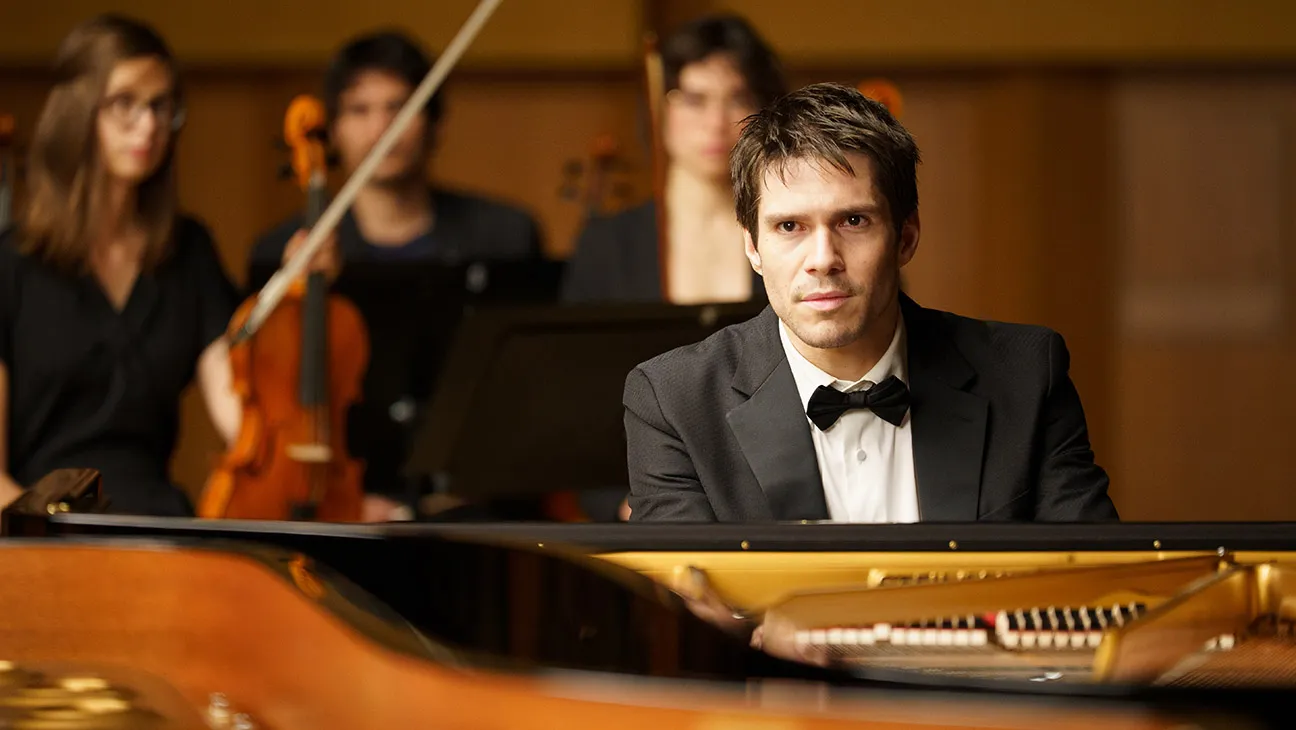
The film establishes its protagonist, Mathias Vogler, as a man whose immense talent is matched only by his profound instability. He is a brilliant musician who has fled a promising solo career to teach in Japan, an exile that reads as an attempt to impose geographic order on a chaotic inner life.
He returns to Lyon not out of desire but obligation, summoned by his mentor, the imposing piano doyenne Elena, who is orchestrating her own retirement from the stage. His reentry is immediately fractured by two events that feel less like plot points and more like psychic projections. The first is a shocking physical reaction to a past trauma; upon the sight of Claude, a former lover, he faints cold, his body literally shutting down.
The second is an unsettling obsession with a young boy in a local park, an uncanny doppelgänger of his childhood self carrying a violin. These incidents are not so much mysteries to be solved as they are symptoms of a profound internal disorder, framing the entire film as an inquiry into a past that refuses to stay past. This is the return of the repressed, made literal and given a soundtrack.
A Constellation of Tormentors
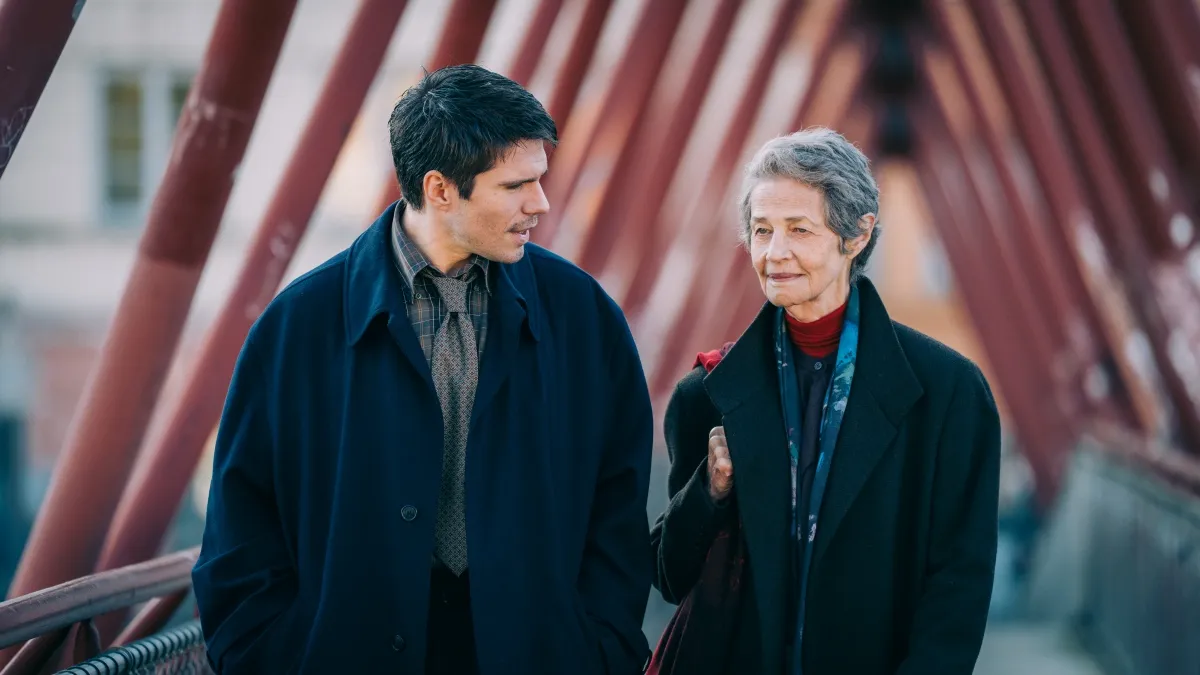
Mathias does not exist in a vacuum; he is the gravitational center of a solar system of psychic satellites, each exerting its own tidal pull. Charlotte Rampling’s Elena is the primary force, a figure of imperious discipline who is part mentor, part monster, and who once told Mathias one must “become a monster in order to become a pianist.”
She embodies the punishing demands of art and is now confronting her own decay, her fading memory a cruel counterpoint to Mathias’s hyper-active, painful recall. Then there is Claude, the mercurial woman from his past who represents an unresolved romantic catastrophe. Her own self-absorption and emotional volatility make her a destructive mirror for Mathias.
Providing a thin tether to reality is his agent, Max (a wonderfully weary Hippolyte Girardot), a Falstaffian figure of grounded practicality whose advice is consistently ignored. Further complicating things is Judith, another entanglement showing his compulsive need for messy emotional connections. This ensemble represents the competing pressures on Mathias’s life (art, love, commerce, history), a network of influence that seems designed to push him completely over the edge.
The Anxious Camera
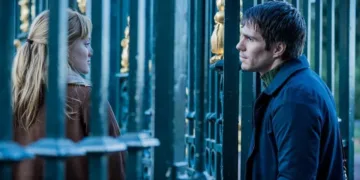
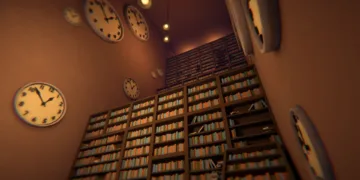
The filmmaking itself becomes a participant in the protagonist’s distress. The cinematography by Paul Guilhaume refuses to settle, employing a free-floating, handheld style that feels as agitated as Mathias’s own mind, saturated in the sepia shadows of Lyon’s historic quarter. The camera peers through ornate ironwork and lurks in doorways, adopting the perspective of a troubled voyeur.
This visual anxiety is matched by the narrative’s structure, which contains what could be called Hitchcockian flashes; it borrows the grammar of a thriller (obsession, shadowy figures, sudden fainting spells) but applies it to an internal, psychological drama. Desplechin throws a multitude of themes into the air—addiction, identity, aging, the burden of talent—and seems uninterested in having them land neatly.
The resulting messiness is a formal choice, a structural reflection of the fragmented nature of memory. The film’s true dialogue is often its music. Selections from Chopin, Bartok, and Bach articulate the raw, hysterical emotions the characters cannot, or will not, put into words, with a spiraling saxophone in the score capturing the vertiginous mood.
Crescendo of Chaos
The film denies Mathias a conventional path to recovery. His trajectory is a downward spiral, a willful sabotage of his own career that seems almost like a perverse form of therapy, a necessary self-immolation to burn away a past he cannot otherwise escape.
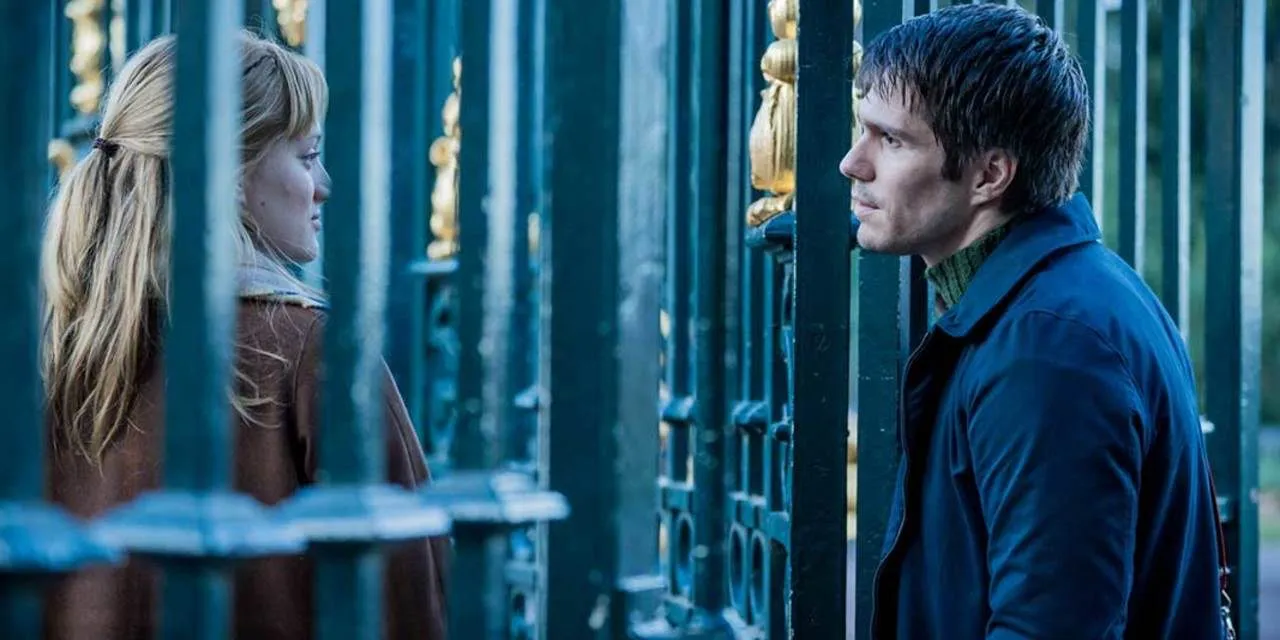
Desplechin leaves many of his narrative threads deliberately frayed, refusing the tidiness of a standard melodrama. The power dynamic between the performers is the film’s anchor: François Civil’s contained agony plays against Nadia Tereszkiewicz’s explosive volatility and Rampling’s magnificent, crumbling authority.
Ultimately, the film suggests that making peace with one’s history is a violent, chaotic business. It presents a world of people who are out of sync with their own lives, like two pianists playing the same piece but in slightly different keys, creating a perpetual, unsettling dissonance.
The film Two Pianos premiered at the Toronto International Film Festival on September 10, 2025. It is set for a theatrical release in France on October 15, 2025, distributed by Le Pacte.
Full Credits
Director: Arnaud Desplechin
Writers: Arnaud Desplechin, Kamen Velkovsky
Producers and Executive Producers: Pascal Caucheteux
Cast: François Civil, Nadia Tereskiewicz, Charlotte Rampling, Hippolyte Girardot, Anne Kessler, Jeremy Lewin
Director of Photography (Cinematographer): Paul Guilhaume
Editors: Laurence Briaud
Composer: Grégoire Hetzel
The Review
Two Pianos
"Two Pianos" is an intellectually demanding and formally ambitious character study that maps the chaotic terrain of a tormented artist’s psyche. Arnaud Desplechin’s direction is intentionally restless, and the strong performances, led by a formidable Charlotte Rampling, give weight to the emotional turmoil. While its deliberately unresolved and messy narrative may alienate some viewers, it is a challenging and unflinching look at the violent intrusion of the past on the present.
PROS
- Intellectually rich with dense psychological themes.
- Strong, committed central performances.
- Expressive cinematography and a powerful use of music.
- An unflinching portrait of artistic and personal crisis.
CONS
- The intentionally messy narrative can feel unfocused.
- Emotionally taxing and may be alienating for some audiences.
- Characters are often difficult and unsympathetic.
- Refuses conventional plot resolution.