
























![Kingdom Hearts Collection [I-III] Review](https://gazettely.com/wp-content/uploads/2026/10/Kingdom-Hearts-Collection-I-III-1-360x180.webp "Kingdom Hearts Collection [I-III] Review: KHII Holds Steady as Newer Entries Fluctuate 37")





Dr. Mia Beaton arrives at the story amid collapse. A Scottish anaesthetist, she confronts professional ruin and a private, escalating opioid dependence. A violent crime lord dies under her care in Glasgow and her addiction intensifies. She departs on a long-scheduled flight to Te Koi Ridge in New Zealand, where her semi-estranged younger sister Cassy plans to marry.
While in the air Mia receives a panicked voice message from Cassy pleading for help. On arrival Mia finds Cassy missing and later discovers her body at the foot of the ridge. Local opinion quickly accepts an accidental explanation. Mia refuses that account and launches an immediate, unrelenting search for the truth inside an insular community.
The Abrasive Engine of Investigation
Mia Beaton functions as the series’ central engine. The writers present her as abrasive and morally complicated, a lead whose tactics force the audience to keep shifting their judgment. She manipulates facts and situations to obtain what she needs, such as information or access to medication. Her life is persistently off-kilter, shaped by long-term trauma and the recent professional collapse that propels her to New Zealand.
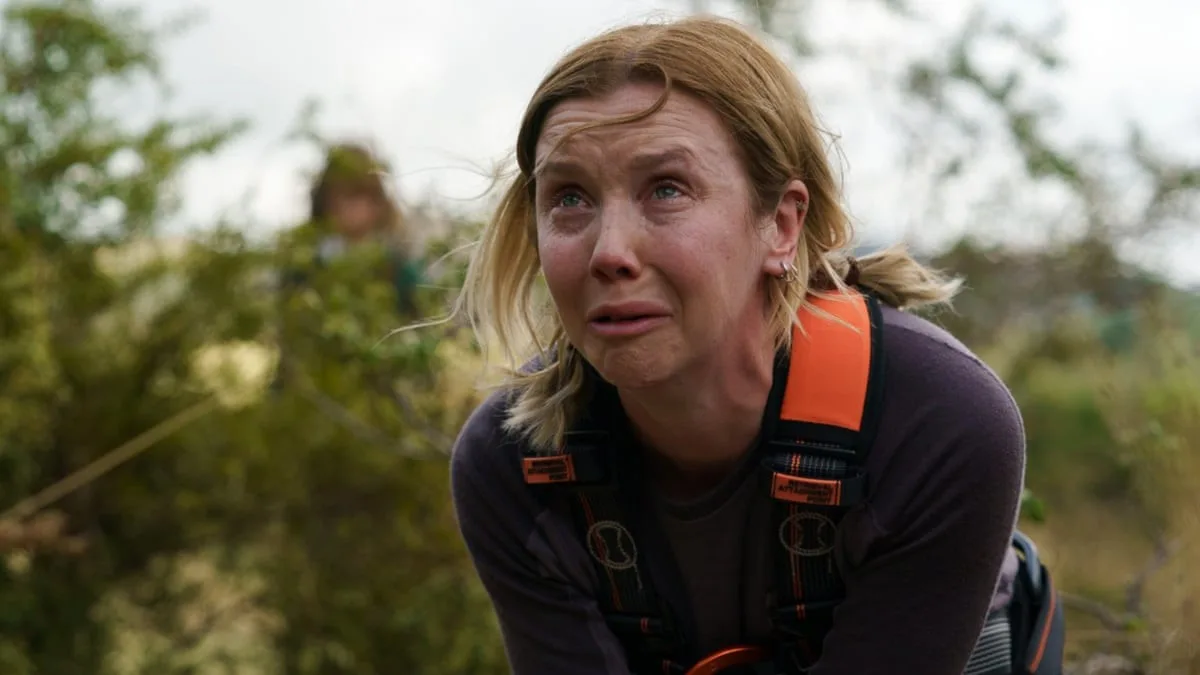
Her opioid dependence operates as a concrete complication for the investigation. Addiction clouds decision making and compels viewers to test each discovery against a compromised perspective. The condition reshapes her priorities, drains her physical resilience, and drives desperate interactions that cut her off from local support. She takes ethically fraught steps, including stealing drugs from her workplace, and that theft introduces an external danger that follows her across borders. The dead gangster’s relatives and an inquiry into the missing drugs create a parallel source of pressure that keeps time against her search.
The script deepens Mia’s psychology through recurrent flashbacks showing a violent, formative childhood shared with Cassy. Those sequences place the sisters under the influence of a cruel mother and provide an emotional rationale for Mia’s refusal to accept a tidy cause of death. Her motive reads as a sustained, unresolved need to protect and to avenge Cassy. The show frames her failings as inseparable from her drive, converting a medical professional into a fierce, if reckless, outsider investigator.
Lauren Lyle supplies the performance that holds the centre together. She renders Mia’s tension, anxiety, and trapped energy in ways that force frequent moral reassessment. Lyle finds unvarnished clarity in quieter grief moments, for example in Mia’s private contact with Cassy’s body in the morgue and in the painful discovery of an unworn wedding dress. Those scenes often outlast the punchier thriller beats and show how a performer can move a story by shifting from hostility to vulnerability while remaining believable.
The script tightens friction through Mia’s ambiguous connection with Ewan Carmichael, Cassy’s handsome, rugged fiancé. That relationship supplies recurring personal complication and potential misdirection. Local authority is embodied by Sergeant Libby Grimes, who is also Ewan’s half-sister. Grimes’ steady, decent policing provides a structural counterpoint to Mia’s disruption and throws the Carmichael family’s generational dominance into sharper relief, clarifying how family power shapes the town’s secrets and its social interconnectedness.
Plot Mechanics and Mystery Layering
The Ridge builds its mystery in accumulating layers. The initial factual hinge, the question of Cassy falling or being pushed, takes on weight because Cassy is an experienced climber. That detail strengthens Mia’s skepticism. The town’s eagerness to label the death an accident, Ewan’s guarded behaviour, and the local authority’s refusal to allow an autopsy register as early signals that institutional interests prefer closure over rigorous inquiry.
The narrative widens quickly by introducing multiple conflict strands that expand the pool of motives. Writing sets up a sharp tension between Cassy’s eco-activist circle and the local farming community, especially the powerful Carmichael family. Concrete images such as burned tractors and threatened livelihoods make the socioeconomic stakes tangible and supply plausible antagonists beyond romantic entanglement or private resentment.
Personal revelations layer the public mystery. A video recovered from Cassy’s phone shows her skinny-dipping with an unknown man, revealing a hidden side that raises the possibility of blackmail or an affair that complicated her relationship with Ewan. Those discoveries sit alongside a persistent external pressure: Mia’s professional crisis back in Scotland. The dead gangster’s family seeking retribution and the probe into stolen drugs create a continuous, parallel threat that raises the stakes for Mia on two fronts.
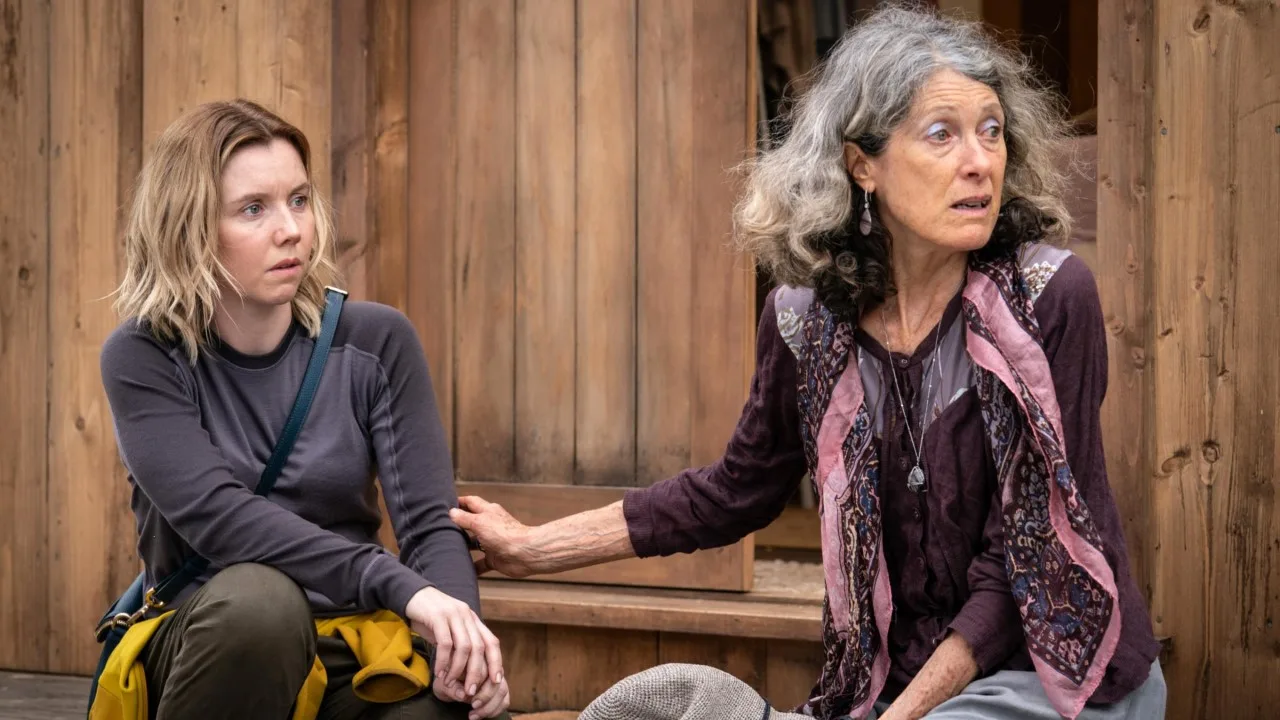
The plotting relies on unreliable witnesses and historical incidents rather than blunt exposition. The writers introduce the older tragedy of Hera’s death fifteen years earlier, an event linked to the same place and families and suggesting a pattern of concealment. Ewan’s mother, who lives with dementia, becomes a fragile yet revealing conduit; her confusion allows fragments of information to surface in lucid moments and in conversations with imagined others, which yields testimony that is ambiguous but narratively useful.
A subplot in which local teenagers use Mia’s opioid supply as leverage provides another pressure point; their transactions function as a pragmatic plot device that highlights Mia’s compromised position and opens routes into younger social networks that the official inquiry does not reach.
Setting, Style, and Tone
The New Zealand environment plays an active role in the series’ storytelling. Te Koi Ridge and the surrounding South Island community are shaped with a particular visual personality. Rugged topography, frequent grey mizzle, and stark, isolated landforms produce an atmosphere of menace that amplifies the town’s concealed resentments. The landscape reinforces the sense that outsiders meet suspicion and that secrets can remain buried in remote places.
Cinematic choices sustain the show’s psychological intent. Early episodes favour immersive, sometimes shaky camerawork that mirrors Mia’s jetlagged, drug-affected, and traumatized state and invites the audience into a fractured viewpoint. Even as the camera work stabilises, a residual unease remains so the world feels ready to shift. The six-episode structure and roughly forty-minute runtimes supply compact forward motion, and the series keeps the narrative tight by minimising filler and treating each scene as a node that recalibrates motive or memory.
Director Douglas Mackinnon’s aesthetic choices and the production identity matter to the overall tone. The series is a co-production between Scotland and New Zealand, and that duality shows in the blend of psychological intensity and grim European noir sensibilities with an Antipodean, insular mystery form. The show resists imitation by anchoring its darkness in Mia’s Scottish backstory, a choice that keeps mood grounded in character rather than in surface stylisation.
The writing balances dark melancholy with mordant humour. Blackly comic lines, such as a grim joke about the deceased patient’s cause of death and remarks about overdone funeral makeup, supply sharp relief that does not undercut narrative stakes. The effort to integrate elements of local indigenous folklore adds cultural texture to the mystery and deepens the setting’s historical stakes. Performance, setting, and plotting interlock to create a densely plotted, character-driven mystery in which social architecture, memory, and personal vice act as mechanisms for both concealment and revelation.
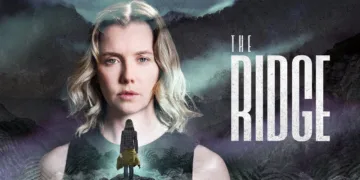
The six-part psychological thriller series, The Ridge, premiered on Tuesday, October 21, 2025, on BBC Scotland and Sky Open in the UK and New Zealand, respectively, with all episodes immediately available for streaming on BBC iPlayer and Neon. BBC Two began airing the series from Thursday, October 23, 2025. The series centers on Mia Beaton, a troubled Scottish anaesthetist struggling with addiction, who travels to a remote part of New Zealand for her estranged sister Cassy’s wedding, only to arrive and find Cassy dead at the base of the titular ridge. Refusing to believe it was an accident, Mia launches her own investigation into the insular, secretive community.
Full Credits
Title: The Ridge
Distributor: BBC Scotland, BBC Two, Sky New Zealand (Sky Open, Neon), Boat Rocker Studios (Global Sales)
Release date: October 21, 2025 (Premiere on BBC Scotland, Sky Open, BBC iPlayer, Neon)
Running time: Approximately 40 minutes per episode (6 episodes total)
Director: Douglas Mackinnon, Robyn Grace
Writers: David Murdoch, Alan Campbell, Kate McDermott, Jess Sayer, Nora Chassler
Producers and Executive Producers: Ivan Schneeberg, David Fortier, Jon Rutherford, Erik Pack (Executive Producers)
Cast: Lauren Lyle, Jay Ryan, Dulcie Smart, Florence Hartigan, Chloe Parker, David Van Horn, Taqi Nazeer, Claire Dargo
The Review
The Ridge
The series expertly blends psychological trauma with classic mystery structure. Mia's abrasive character, powered by a magnificent performance from Lauren Lyle, acts as a volatile guide into the insular New Zealand community. The layering of secrets and socio-economic tension is structurally complex, yet the show maintains a swift, engaging pace. The production successfully uses its remote gothic setting to amplify the atmosphere of suspicion and dread. This is a forceful, character-driven thriller that delivers suspense through its flawed protagonist.
PROS
- Mia Beaton’s complex, abrasive, and fiercely driven characterization.
- Lauren Lyle’s magnetic performance, capturing Mia's profound inner tension.
- Skillful layering of subplots, including eco-tensions and Mia’s professional crisis.
- Propulsive pacing maintained by concise 40-minute episode lengths.
- Effective use of the remote New Zealand setting to create a gothic, menacing atmosphere.
CONS
- Mia's addiction makes her an unreliable force, which may challenge viewer empathy at times.
- The use of the dementia-stricken mother functions primarily as a plot device for revealing clues.
- The initial episodes feature disorienting, shaky camerawork that reflects Mia's state.







