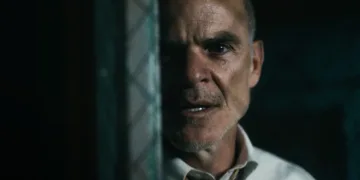


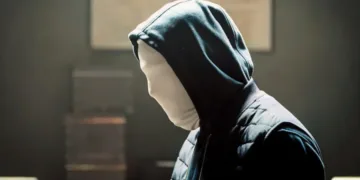




















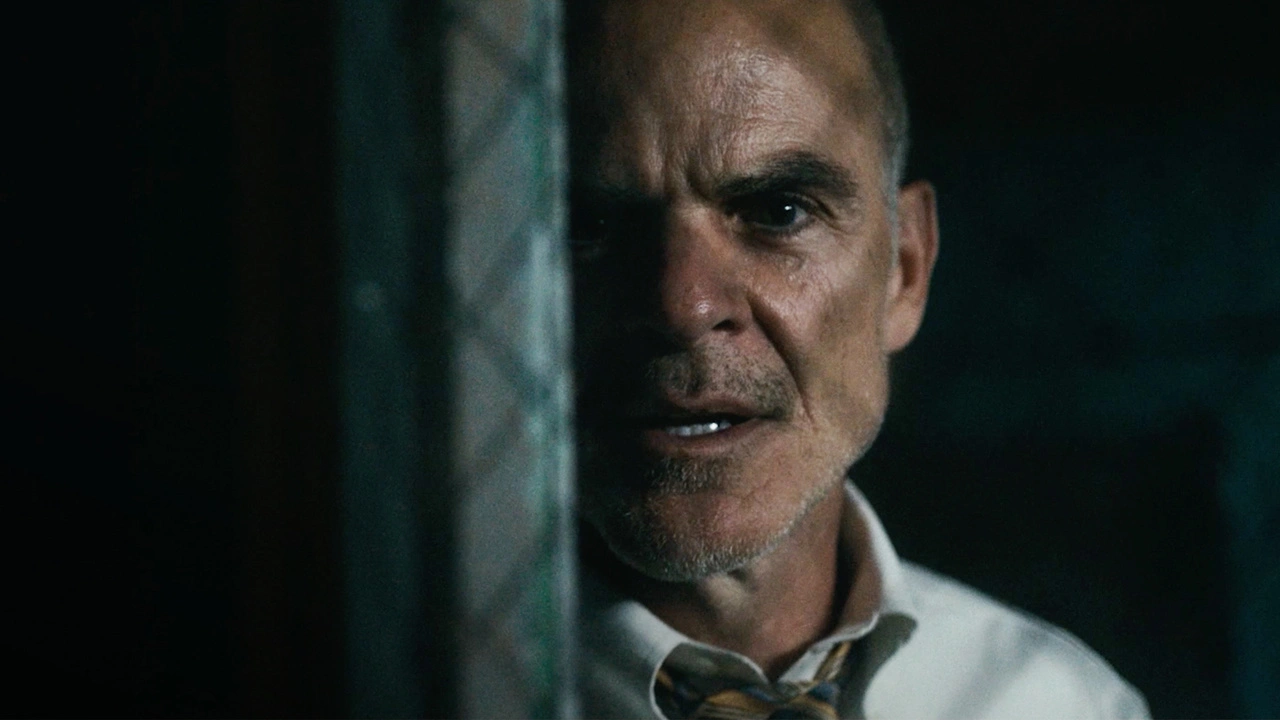

Time of Death has the bones of an old-school mystery thriller, the kind that seems to have been pulled from a late-night cable slot in 1987 and left to gather dust in a damp evidence room. That is a compliment, mostly. Will Wernick’s film avoids the glossy wink of modern retro styling. There are no bright pop cues, no neon nostalgia, no audience-facing jokes about how analog everything used to be. Its period setting is quieter, rooted in paper files, heavy keys, exhausted men, and institutional rot.
Michael Kelly plays Detective Frank Morley, a Bureau of Corrections officer sent to Seneca Ridge Penitentiary after a colleague dies while investigating a missing inmate. The place itself feels sick. It is old, isolated, and heavy with secrets. A haunted investigator, a suspicious warden, a vanished prisoner, old executions, strange visions, and corridors that seem to remember every buried sin give the film a sturdy genre hook.
The result is a flawed yet watchable psychological thriller, carried by atmosphere and Kelly’s tightly wound performance. Its first two acts build a persuasive mood of dread. Its final stretch, less gracefully, tries to explain the nightmare away.
Story, Mystery Structure, and Pacing
The plot sends Frank Morley into Seneca Ridge after the death of Alan, a younger officer who had taken over a prison inspection tied to a missing inmate. Frank arrives with the posture of a man doing a job he would rather finish quickly, yet Seneca Ridge refuses to behave like an ordinary assignment.
The prison was built in the Civil War era, still clings to iron locks and old procedures, and carries scars from a 1974 fire and a botched execution in 1978. Every historical detail feels like a gameplay mechanic in a survival horror title, guiding the player deeper into a map where every locked door carries narrative weight.
That is where Time of Death works best. It understands the pleasure of investigation. The film feeds the audience information through logs, recordings, staff accounts, memories, visions, and scattered institutional records. Frank keeps pulling at one thread, then another, until the original case starts expanding into a larger pattern of suspicious deaths and covered-up abuse. For much of the runtime, that progression has a satisfying rhythm. You can feel the story placing clues on the table, sometimes cleanly, sometimes with a little theatrical fog machine hissing nearby.
The 1987 setting helps the procedural texture. Frank cannot lean on digital shortcuts. He has to read, listen, question, walk, stare, and piece together inconsistencies in a building designed to swallow evidence. The analog details give the mystery a tactile quality, from physical files to old machines and the blunt force of keys scraping through locks. The film’s best sequences treat investigation like exploration, a steady movement through hostile terrain.
The pacing is slow-burn rather than shock-driven. The opening takes a few minutes to settle, yet the mood soon tightens. The prison’s silence becomes part of the suspense. Pipes rattle. Doors clang. People speak in half-truths. Frank’s own perception becomes less reliable, which gives the film a psychological charge.
Then the machinery starts to show. The screenplay introduces a thick web of names, old incidents, inmate histories, and character connections. Some of this density gives the mystery scale, yet it can turn muddy. The final act leans heavily on explanation, as if the movie loses faith in the audience’s ability to connect the dots. Secrets that might have landed with sharper force through implication are spelled out in dialogue.
The last 15 to 20 minutes feel over-engineered, especially once the film tries to make every vision, trauma beat, and prison secret click into one tragic design. Suspense starts to feel like delay when characters withhold information for no strong reason. A mystery can survive confusion. It struggles when silence feels like a screenwriting strategy.
Characters, Performances, and Emotional Conflict
Frank Morley is the emotional center, and Michael Kelly gives him the exact kind of pressure-cooked presence the film needs. Frank is not a clean-cut detective marching into darkness with a badge and a flashlight. He is grieving, alcoholic, medicated, and hollowed out by the deaths of his wife and child. Kelly plays him with a weary restraint that suits the material. His face seems to carry several sleepless nights before the story even starts.
That inner damage matters because the case does not remain external. Seneca Ridge becomes a mirror for Frank’s buried guilt. Each clue he uncovers pushes him closer to the prison’s history and his own private collapse. Kelly understands how to make a man look functional from a distance and ruined up close.
The performance has a tensile quality, like a wire stretched one notch past safety. In the best scenes, Frank’s professional control cracks by degrees. A stare lingers too long. A question comes out too sharply. A vision shakes him, then he tries to carry on as if his mind has not just betrayed him.
Kevin Pollak’s Warden Beau LaRue gives the film its strongest opposing force. Beau is stern, religious, territorial, and deeply tied to Seneca Ridge through family legacy. Pollak makes him unsettling without flattening him into a stock villain. There is a faint theatricality to Beau, a man performing authority because he might fall apart without it. His language of sin, forgiveness, punishment, and absolution turns the prison into a chapel built on bad faith.
The parallel between Frank and Beau is clear. Both are men shaped by loss and guilt. Frank digs toward the truth because he has no peace left to protect. Beau buries the past because the truth would destroy the structure that holds him upright. The film occasionally pushes this mirroring too hard, yet the performances sell the emotional geometry.
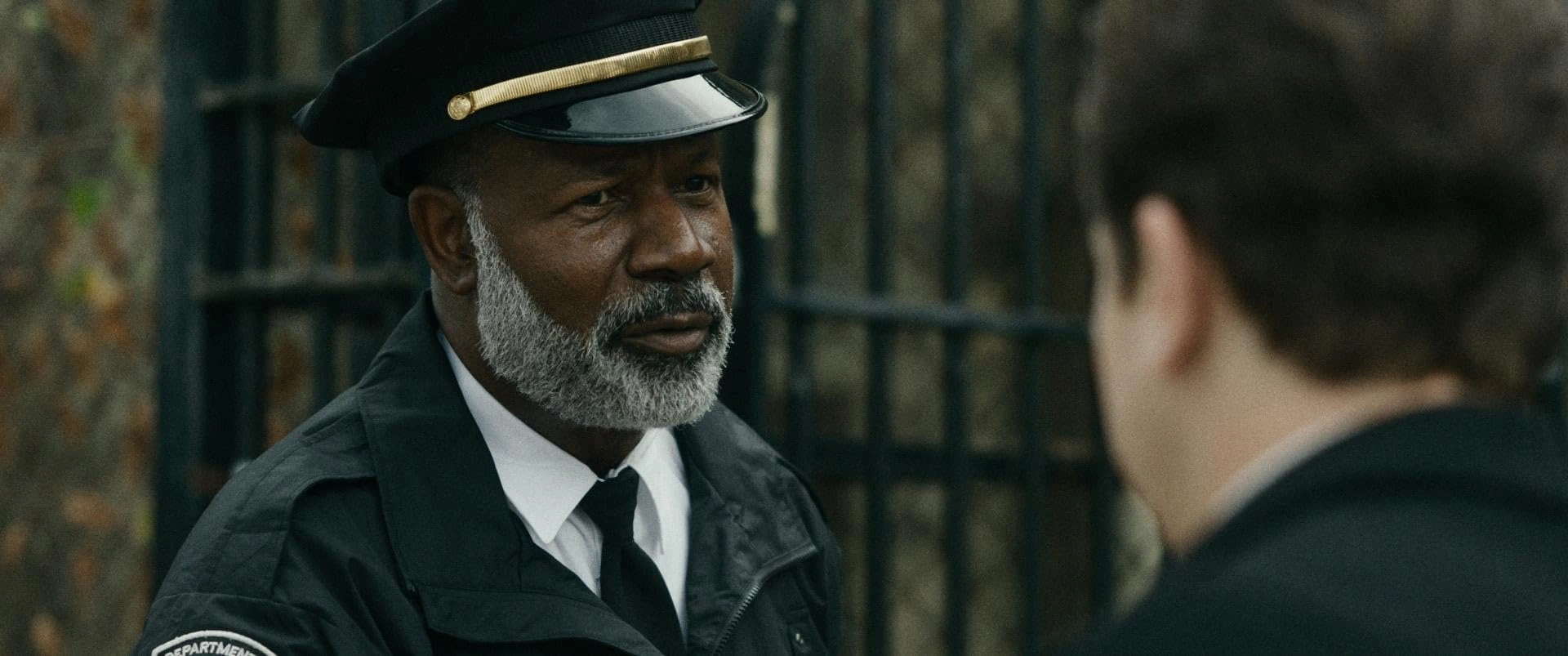
Dennis Haysbert brings warmth and moral steadiness as Dale Aarons, a longtime guard who becomes one of the few figures inside Seneca Ridge who feels human before he feels symbolic. Haysbert’s voice alone can make a hallway sound like a confession booth, and the film benefits from that grounded presence.
Mena Suvari’s Dr. Allison Burrell has a tougher task. She acts as Frank’s colleague, emotional counterweight, and partial tether to reality. Her relationship with Frank has texture, especially in the suggestion of past damage between them, yet the script leaves some of that potential underused. She matters to Frank’s arc, but her own emotional space feels narrower than it should.
Several supporting figures serve mainly as clue delivery devices, including guards, inmates, and characters tied to Seneca Ridge’s past. That is not fatal in a mystery thriller, where function often matters, but the writing sometimes makes people feel like locked doors waiting for Frank to find the right question. The biggest issue arrives late, when Frank’s psychological arc reaches a grim endpoint that risks reducing trauma to a mechanism. The concept is potent. The execution is shakier.
Atmosphere, Direction, Setting, and Genre Identity
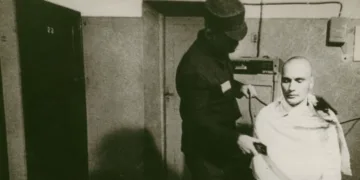
Seneca Ridge Penitentiary is the movie’s finest asset. The location feels dangerous before anyone says a word. Its corridors are narrow, its cells look starved of air, and its walls seem stained by decades of neglect. The use of a real former prison gives the film physical credibility that a polished set might have lacked. You can almost smell the rust, wet concrete, and institutional cleaning fluid losing a battle it never had a chance to win.
Wernick has a clear feel for contained spaces. He stages Frank’s movement through the prison with a sense of slow spatial discovery, letting each corridor and ruined block create new pockets of unease. The film has the shape of a prison thriller and the texture of psychological horror. Its throwback mood works because it does not dress 1987 in costume-party shorthand. The analog world feels practical, grim, and lived-in. Old records, outdated equipment, blunt office lighting, and a Betamax-era detail here and there add to the worn-down identity.
The blood-colored water running through the prison pipes, explained as algae, is one of the movie’s better visual motifs. It is unsubtle, yes, but prison thrillers are allowed a little gothic excess. Seneca Ridge feels diseased, and the water turns that feeling into something visible. It also suits the film’s moral logic: what has been hidden inside the walls is now leaking out through the plumbing.
Sound design carries much of the dread. Pipes knock. Footsteps bounce through empty corridors. Cell doors land with a hard metallic finality. Distant voices and sudden silences suggest a building with its own nervous system. The film resists constant jump scares, choosing instead to build unease through repetition and confinement.
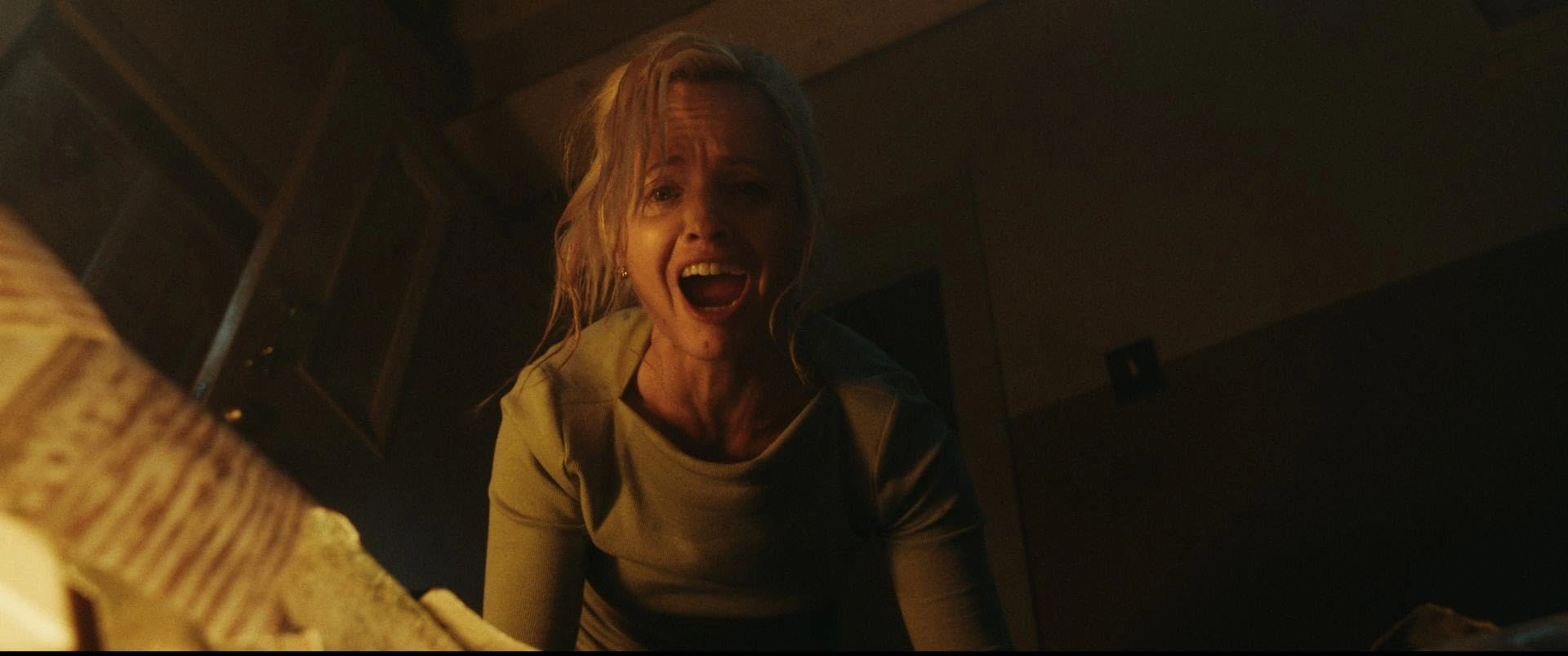
The horror elements are slippery. Frank sees visions, dreams, and fragments of past violence. Some moments suggest a genuine haunting. Others suggest trauma, medication, alcohol, and anxiety folding reality into hallucination. That ambiguity gives the film tension, yet the rules never fully settle. A movie can thrive in uncertainty, but Time of Death weakens itself when it later tries to clarify too much. Its strongest identity is closer to a grim prison procedural with supernatural bruises than a full ghost story.
There are echoes of older prison mysteries and contained psychological thrillers, the kind that turn architecture into fate. The film sits comfortably beside cult-friendly genre pieces that may not have studio polish yet know how to use mood as currency. It is at its best when it trusts the building, the investigation, and the actors. It becomes less confident when it forces symbolic parallels that were already visible through behavior.
Guilt, Denial, and the Problem of Closure
Guilt is the movie’s main engine. Frank enters Seneca Ridge already haunted by family tragedy, which makes him vulnerable to a prison built from denial. Beau carries his own burden, tied to the institution and the family legacy that shaped him. Their conflict gives the story its emotional charge: one man keeps digging because truth is the only tool he has left, and the other keeps burying because confession would leave him with nothing.
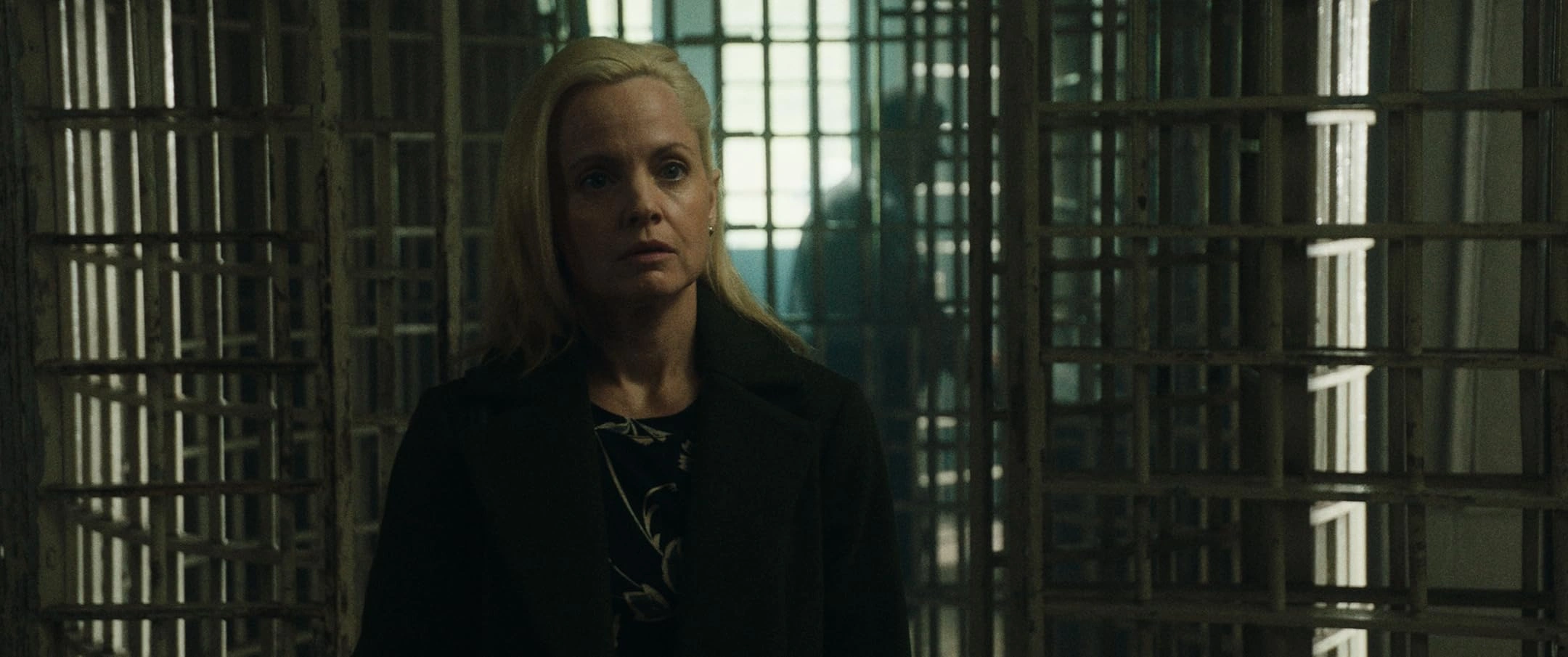
The prison becomes a monument to institutional rot. Records are altered, deaths are softened into paperwork, inmates are treated as disposable, and authority protects itself through silence. Seneca Ridge is nearing closure, and that dying-institution mood gives the film a strong metaphor. The building feels like it is making one last confession before the doors shut for good.
Religious language sharpens that idea. Beau speaks in the vocabulary of sin, prayer, punishment, and forgiveness, yet the film treats faith as unstable ground when confession is missing. Absolution becomes another kind of locked room. The movie is interested in the moral cost of refusing to name harm, and that interest gives its best scenes real weight.
The climax aims for tragic psychological closure, but it lands unevenly. Heavy dialogue drains ambiguity from the visions, dreams, flashbacks, and possible hallucinations that gave the middle section its uneasy power. The film appears determined to connect every thread, which makes the final reveal feel less haunting than calculated. Some viewers may find the ending bleak in a meaningful way. Others may see it as defeatist, especially in how it handles Frank’s trauma.
Still, the ending does not erase the craft that came before it. Time of Death remains a flawed, atmospheric mystery thriller with a terrific setting, a strong Michael Kelly performance, and enough old-prison dread to keep genre fans engaged. Its payoff strains for profundity after building a stronger mood than resolution, but the walk through Seneca Ridge is grimly absorbing while the lights are still flickering.
Time of Death is an American independent psychological horror thriller film that made its debut in select theaters and on premium video-on-demand services via Vertical Entertainment on June 12, 2026. Set during December 1987, the narrative follows a seasoned Bureau of Corrections detective who is dispatched to a decaying, isolated prison on the brink of closure to investigate the inexplicable disappearance of an inmate and the subsequent death of a probation officer. As his routine investigation unfolds, the detective’s unresolved personal traumas begin to blur the boundary between his reality and dangerous delusions, forcing him to confront a malevolent presence hiding deep within the ancient facility walls. Home audiences seeking to view this atmospheric throwback thriller can buy or rent the feature across standard digital platforms such as Apple TV, AMC Theatres On Demand, and Fandango at Home.
Where to Watch Time of Death (2026) Online








Full Credits
Title: Time of Death
Distributor: Vertical Entertainment
Release date: June 12, 2026
Running time: 107 minutes
Director: Will Wernick
Writers: Jason Rosen
Producers and Executive Producers: Jason Rosen, Kelly Delson, Jeff Delson, Will Wernick, Kyle David Crosby, Frank Barwah, Danny R. Carmona, Michael Leon Cassutt
Cast: Michael Kelly, Kevin Pollak, Dennis Haysbert, Mena Suvari, Noel Gugliemi, Trevor Morgan, Jeff Kober, David Ury, Alex Solowitz, Sir Brodie, Keith Machekanyanga, Abdullah Khalil, Randall Bacon
Director of Photography (Cinematographer): David Keninger
Editors: Daniel Gibb
Composer: Genevieve Vincent
The Review
Time of Death
Time of Death is a sturdy, atmospheric prison thriller anchored by Michael Kelly’s haunted lead performance and a setting that practically sweats old sins. Its mystery works best while Frank Morley follows records, visions, and institutional silence through Seneca Ridge’s decaying corridors. The final act over-explains too much and weakens some of the ambiguity, yet the film remains a grimly watchable slow-burn for fans of psychological crime horror.
PROS
- Strong Michael Kelly performance
- Excellent prison atmosphere
- Creeping psychological tension
- Solid supporting cast
- Effective old-school thriller mood
CONS
- Overloaded mystery details
- Heavy-handed final act
- Uneven supernatural logic
- Underused Frank-Allison relationship
- Some characters feel too functional







