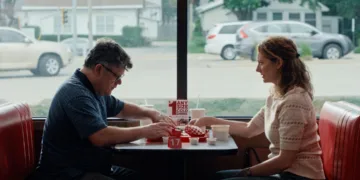


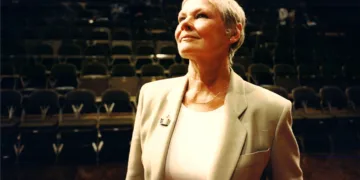


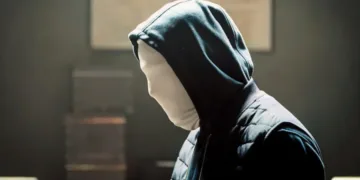






















Jessica Lipki does not discover greed when a severed finger appears in her chili. Greed is already there, living beside college travel costs and the humiliations of working as a divorce attorney for clients who cannot pay. The finger simply gives it paperwork.
That distinction matters in Chili Finger, Edd Benda and Stephen Helstad’s dark crime comedy, because Jessica, played by Judy Greer, behaves like someone tired of being reasonable. After she and her husband Ron send their daughter Kris to college, their house contracts around them. Ron accepts the silence. Jessica seems personally offended by it.
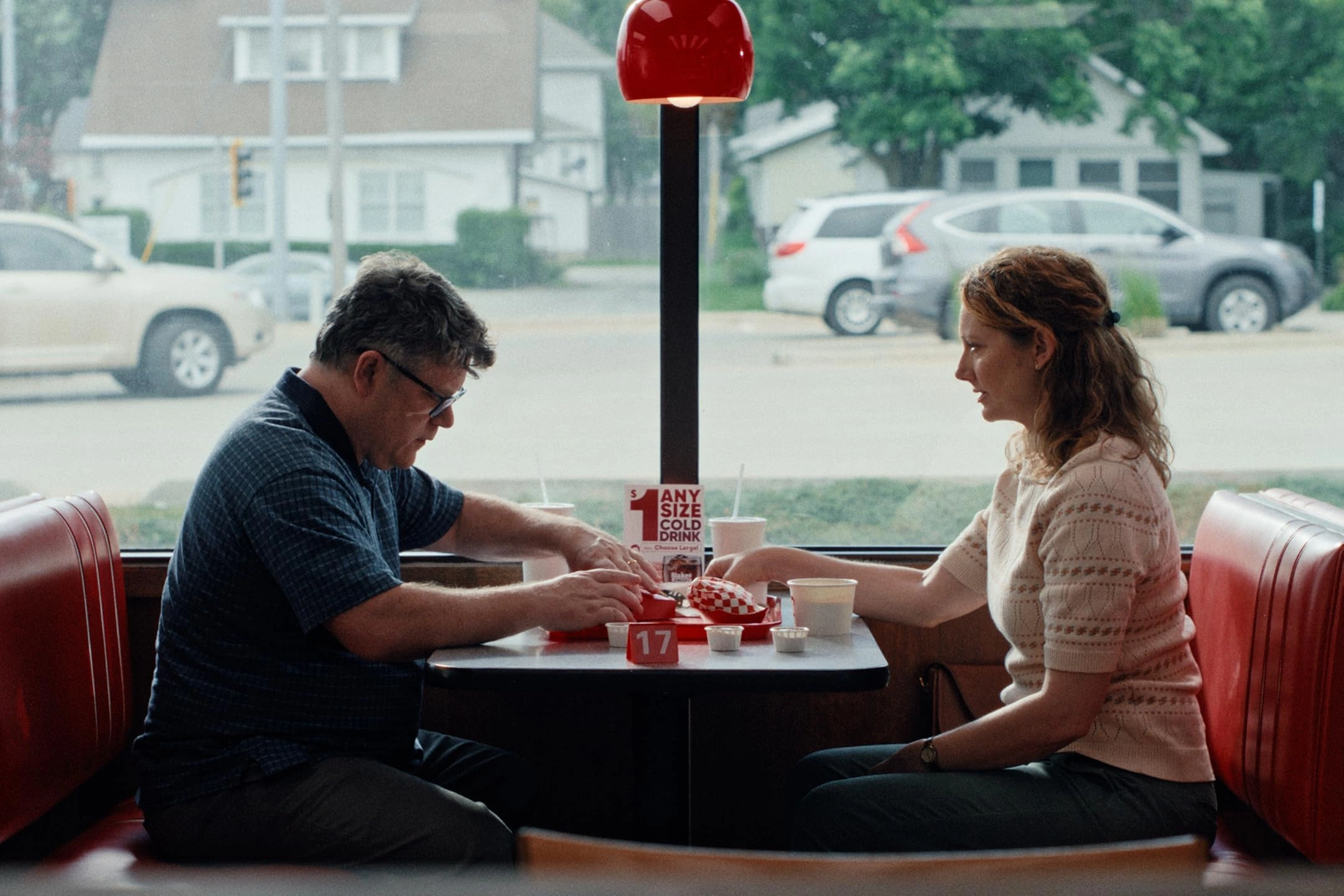
Then comes Blake Junior’s, Ron’s beloved fast-food refuge, and Jessica’s first spoonful of chili. Greer’s scream tears through the restaurant’s sleepy atmosphere. Soon Blake Jr. II is negotiating compensation, Ron is helping push the offer toward $100,000, and Jessica is discovering that corporate panic can be surprisingly liquid. Call it escalation capitalism: every disaster becomes an asset once someone assigns it a price.
The Cost of One More Decision
The film has already shown us where the finger came from. Trevor, a brewery worker, drops his vape near moving machinery and reaches for it. He survives the first stupid attempt. He tries again. This time the machine takes a finger and routine becomes panic. Helstad’s script uses that rhythm repeatedly. A character gets away with one bad choice, then mistakes survival for permission.
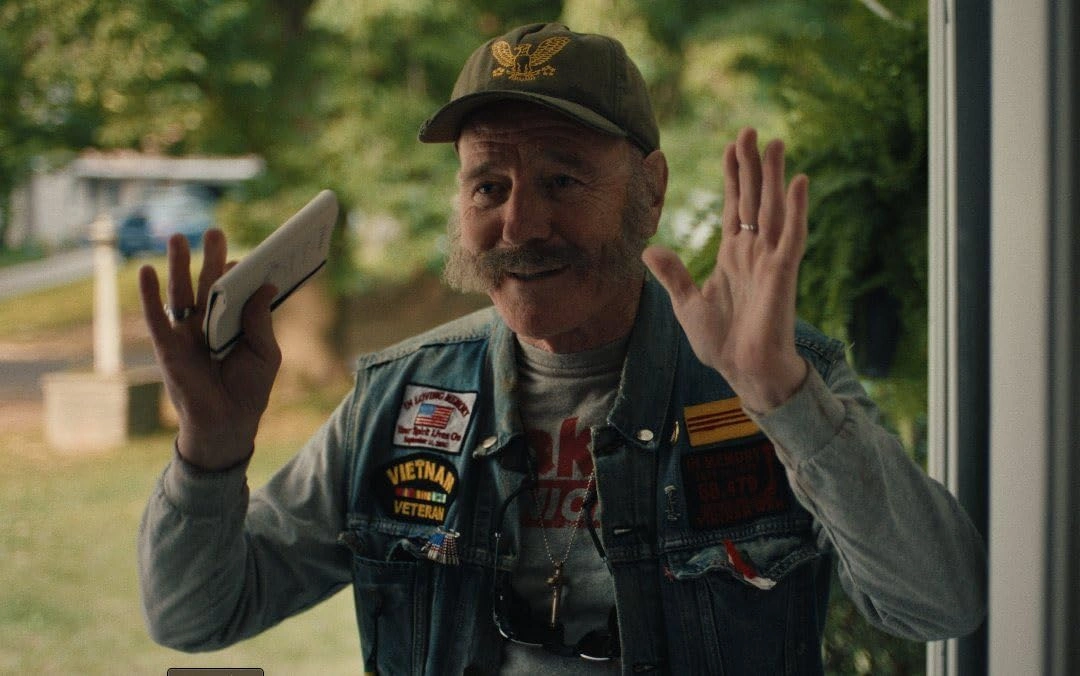
Jessica and Ron could report the incident. Blake Jr. II could let inspectors handle it. Blake Jr. I, played by John Goodman, could accept his daughter’s settlement strategy. Each person chooses one extra step. Blake Jr. I sends his old friend Dave to investigate. Dave, an ex-Marine played by Bryan Cranston, arrives with the calm of a man who considers intimidation a form of due diligence.
Ron creates the film’s strangest moral problem. He is disturbed by the money and deeply upset that the settlement bans him from every Blake Junior’s location. Sean Astin plays this without irony. Ron’s attachment to the restaurant is absurd, yet routine can become identity when life changes too quickly. I laughed at Ron. Then I felt guilty. Then the film repeated the joke enough that the guilt passed.
The later betrayals, gunfire, crashes, and bodies follow the same logic, though the mechanism becomes noisier. Once everyone is protecting a secret, a business, or a share of the money, escalation stops feeling accidental. It becomes administration.
Judy Greer and the Mathematics of Desperation
Greer gives Jessica a private life the screenplay sometimes rushes past. Watch her after Kris leaves, or when clients fail to pay. The irritation rarely explodes. It settles into her face. Jessica keeps calculating.
Her legal intelligence sharpens the scam. She understands liability, leverage, and the language corporations use to make ugly things disappear. During the compensation talks with Blake Jr. II, Jessica applies professional skills to a morally diseased opportunity. Competence can make self-deception very efficient.
The empty-nest story is doing real work. Jessica wants money, yes, but her panic has a parental shape. Visiting Kris is financially difficult. The future she imagined as a mother has been reduced to airline prices and parents’ weekend. She cannot control distance, so she controls the negotiation in front of her. Or maybe I am being too generous to Jessica. The film keeps testing that interpretation.
Astin’s Ron moves in the opposite direction. His sweetness and devotion to Blake Junior’s reveal a man preserving familiar rituals. Jessica sees stasis as suffocation. Ron sees it as shelter. Their marriage gives the crime plot an emotional argument before the guns arrive.
Cranston’s Dave is the sharpest supporting creation because he rarely performs obvious madness. He listens. He reasons. He offers solutions. Violence simply sits among his available tools. Goodman gives Blake Jr. I a wounded patriarch’s suspicion, while Madeline Wise’s Blake Jr. II answers with corporate control. Their conflict repeats Jessica’s anxiety: what happens when your old role no longer belongs to you?
Midwest Nice, American Panic
The Midwestern politeness is the film’s best formal joke. People continue speaking in measured tones while the situation rots beneath them. Corporate meetings, diner conversations, and friendly exchanges keep their manners long after morality has left the room.
Benda and Helstad play most of this straight. Ron sincerely loves the restaurant. Dave sincerely believes loyalty justifies his methods. Jessica sincerely builds a case for her behavior. The actors do not signal the punchline, letting absurdity grow from conviction.
Money links nearly every thread. Jessica and Ron cannot casually absorb college expenses. Trevor’s workplace accident happens where safety already feels fragile. Blake Junior’s treats a human finger as a public-relations cost. Nobody thinks of themselves as greedy. They think they are recovering losses, protecting family, saving a company, or getting what they are owed. That distinction is the joke, and possibly the accusation.
The final act weakens when shootouts, betrayals, and crashes crowd out the quieter psychology Greer has built. I initially blamed the violence. On reflection, the problem is structural. The film becomes fascinated by the machinery of escalation after spending its strongest scenes studying the excuses that feed it.
The missing finger keeps moving like evidence nobody can fully possess. It begins as an accident, becomes leverage, then turns into a claim on other people’s lives. The universe has no hand in this. Everyone does it to themselves.
The dark crime comedy Chili Finger made its world premiere at the South by Southwest (SXSW) Film & TV Festival on March 14, 2026, before screening at multiple international film festivals throughout the spring and summer. Audiences can follow its festival route or access the film through independent video-on-demand platform releases. The story follows a recently empty-nested mother who discovers a severed human finger in her fast-food chili bowl and decides to blackmail the regionally popular restaurant chain for a quick payout, unwittingly triggering a chaotic chain reaction when the company’s founder sends a ruthless fixer to investigate.
Where to Watch Chili Finger (2026) Online
Full Credits
Title: Chili Finger
Distributor: Archstone Entertainment, Beyond the Porch, Darkwell Entertainment
Release date: March 14, 2026
Running time: 100 minutes
Director: Edd Benda, Stephen Helstad
Writers: Stephen Helstad
Producers and Executive Producers: Sam Sandweiss, Jo Henriquez, Tim Chonacas, John Goodman
Cast: Judy Greer, Sean Astin, Bryan Cranston, John Goodman, Madeline Wise, Paul Stanko, Sarah Herrman, Sara Sevigny, Dann Florek, Shaya Harris
Director of Photography (Cinematographer): Cristina Dunlap
Editors: Todd Zelin
Composer: Dan Deacon
The Review
Chili Finger
Chili Finger turns a severed finger into a theory of American desperation: everyone knows the next decision is stupid, yet money, parenthood, pride, and fast-food loyalty keep supplying excuses. Call it escalation capitalism, where every problem becomes an opportunity until the opportunity starts shooting back. Judy Greer gives Jessica's panic and calculation real psychological weight, while Cranston treats menace like customer service. The final stretch grows noisier than its ideas deserve (I may be blaming the blood for a structural problem), but the film's straight-faced absurdity keeps its appetite.
PROS
- Judy Greer's layered lead performance
- Excellent straight-faced dark humor
- Cranston's controlled comic menace
- Sharp economic and parental anxieties
- Strong early escalation
CONS
- Overcrowded final act
- Violence blurs character detail
- Familiar Coen-inspired DNA







