




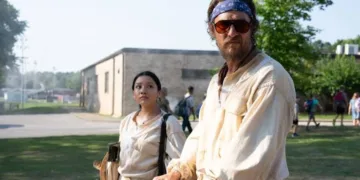















Calling Esther Rosenblum “exotic” at her own engagement party tells us almost everything about the limits of belonging in Little Bird. Esther, played by Darla Contois, has grown up Jewish in Montreal, studies law, and is preparing to marry David, a doctor whose affluent family appears ready to welcome her. Then his mother talks about her as “one of the good ones,” revealing how quickly acceptance can turn into categorisation.
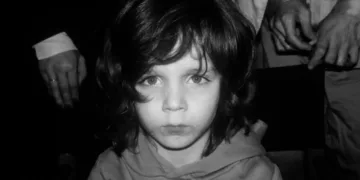
That humiliation sends Esther toward Saskatchewan and toward the identity she was separated from at five years old. A newspaper advertisement from the Adopt Indian and Métis programme contains her childhood photograph and another name: Bezhig Little Bird.
Creators Jennifer Podemski and Hannah Moscovitch build their six episodes around that fracture, moving between Esther’s search in 1985 and Bezhig’s childhood on the Long Pine Reserve in 1968. The structure makes history personal without shrinking its scale. Esther is searching for relatives, but every document she uncovers points toward a government system designed to make those relatives difficult to find.
The Bureaucracy of Removal
The 1968 storyline shows how astonishingly little was required to destroy a family. After a rock thrown near the road strikes a police car, officers follow Bezhig and her brother Nizh home. Child welfare workers inspect the Little Bird house, observe that it lacks electricity and indoor plumbing, and interpret conditions on the reserve as evidence of parental neglect. Patti Little Bird tries to protect her children. Her youngest daughter Dora is hidden. It changes nothing.
The word repeatedly used for taking Indigenous children is “apprehension,” bureaucratic vocabulary performing its oldest trick: turning violence into procedure. One of the series’ most revealing choices comes through veteran welfare worker Jeannie.
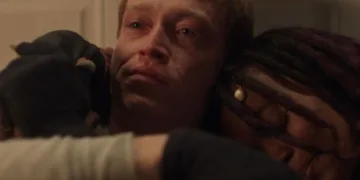
As Patti screams and fights against the officers removing her children, Jeannie leans against a car and smokes. The casual posture matters. The horror is routine to her. Younger worker Adele displays greater discomfort, yet the children still leave in the same vehicle.
Also Read






The show becomes less precise when certain officials drift into obvious villainy. A welfare officer occasionally feels written to personify an entire institution rather than exist as a person within it. The score can make a similar mistake, swelling during scenes where Ellyn Jade’s Patti already communicates enough through panic, exhaustion, and the increasingly desperate rhythm of her attempts to recover her children. Those lapses are striking partly because the quieter material is so much stronger.
Searching Through the Damage
Contois builds Esther around controlled surfaces. At the engagement party, she can move through David’s social world with practiced confidence. Once her trip west begins producing answers, that confidence becomes harder to maintain.
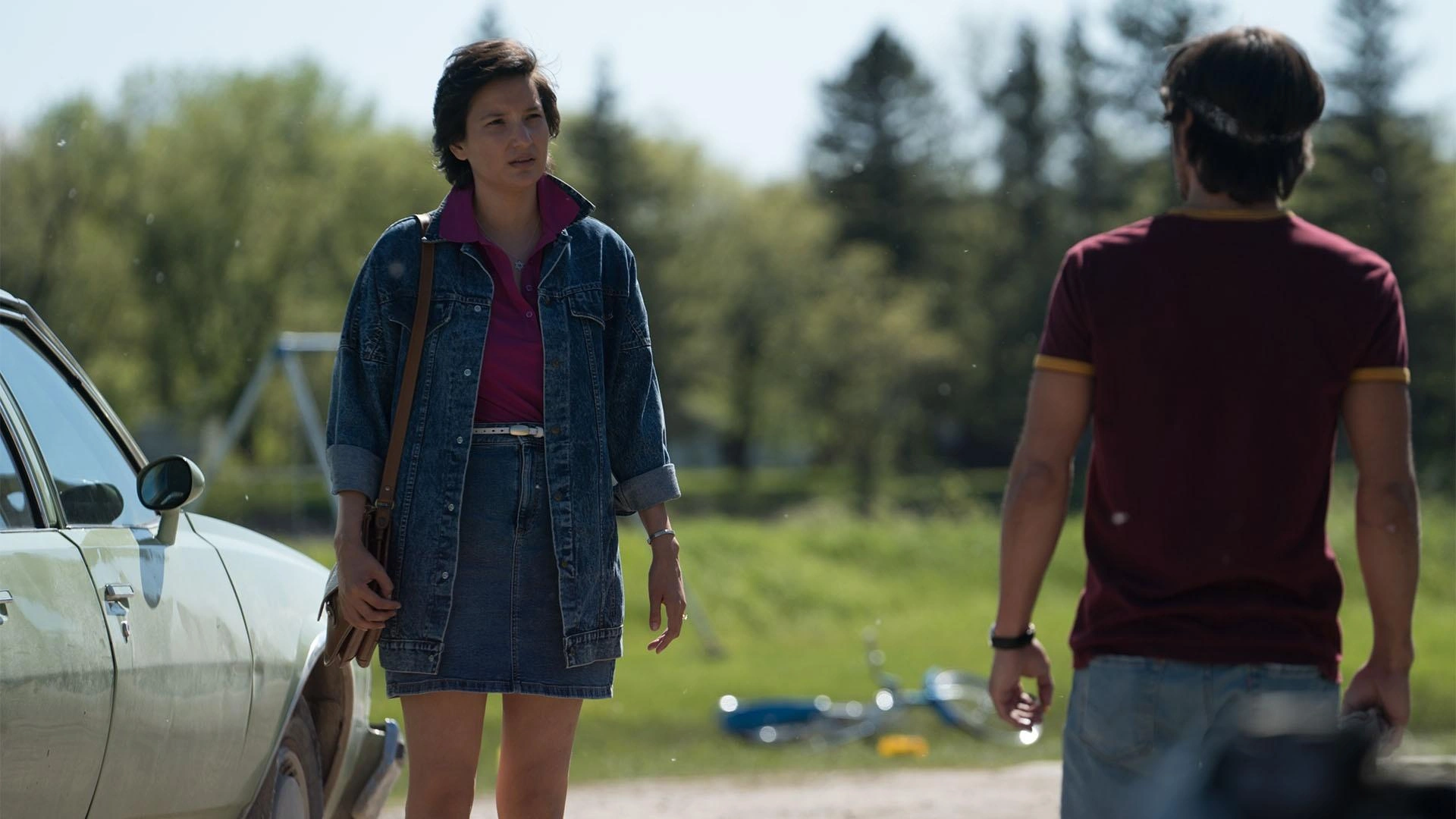
Her strongest scenes often involve very little speech. When Esther encounters information that contradicts the story she has been given about her childhood, Contois grows physically still. Her pauses lengthen. Sentences become harder to complete. A law student trained to process facts discovers that facts cannot neatly organise grief.
The parallel timelines give those moments extra force. Esther may encounter a record in 1985, while the audience has already watched the human event flattened into that record in 1968. Paperwork says children were removed. The earlier scenes show Patti trying to hide Dora and Morris returning to a home emptied by state authority.
The search sometimes stretches across episodes longer than its dramatic momentum can comfortably sustain. Yet the slower rhythm allows awkward reunions and partial recognitions to remain awkward and partial. Nobody hands Esther a clean explanation capable of restoring Bezhig.
Her return to Montreal makes the split sharper. David’s world once represented stability. After Saskatchewan, its expensive parties and casual prejudice expose how much of Esther’s security depended on avoiding questions about where she came from.
Who Gets to Tell the History
Television has spent decades depicting Indigenous people through outsiders, often reducing them to historical scenery, spiritual shorthand, or social problems requiring explanation. Little Bird reverses that gaze. Podemski, who is of First Nations descent, places the Little Bird family’s experience ahead of the institutions claiming authority over them. That shift becomes especially important through the show’s two mothers.
Patti is never presented as an abstract symbol of Indigenous suffering. Her love is established through domestic routines before officials arrive, then through her repeated attempts to find and reclaim the children taken from her. Ellyn Jade gives those attempts a raw physical urgency, especially when Patti is forced to listen to legal explanations from people who will not seriously hear her.
Golda, Esther’s adoptive mother, receives greater complexity than the story strictly needs, which is exactly why she works. Lisa Edelstein first plays her as someone accustomed to avoiding uncomfortable questions about Esther’s adoption. As Esther searches for Bezhig, Golda moves closer to acknowledging what that adoption cost.
The writing also connects Golda’s history as a Holocaust survivor with Indigenous displacement without treating the two histories as interchangeable. Both women understand, through different historical experiences, what institutions can do when they decide certain families, identities, or cultures are disposable.
That connection gives Little Bird its sharpest challenge to television itself. Representation here means far less if it stops at casting. The significant change lies in who controls the framing, whose pain requires explanation, and whose version of history gets treated as the starting point rather than the footnote.
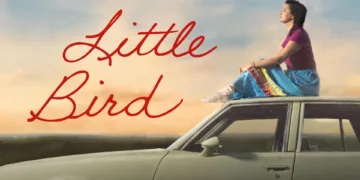
Little Bird premiered on May 26, 2023, on Crave and APTN in Canada, later making its U.S. debut on PBS in October 2023, and remains available to stream on Crave, PBS Passport, and digital video-on-demand platforms. The six-part limited drama series follows Bezhig Little Bird, an Indigenous woman removed from her home during Canada’s Sixties Scoop and adopted into a Montreal Jewish family, who risks everything in her twenties to locate her birth family and reclaim her heritage.
Where to Watch Little Bird Online






Full Credits
Title: Little Bird
Distributor: Crave, APTN, PBS
Release date: May 26, 2023
Rating: TV-MA
Running time: 46 minutes per episode
Director: Elle-Máijá Tailfeathers, Zoe Hopkins
Writers: Jennifer Podemski, Hannah Moscovitch, Zoe Hopkins
Producers and Executive Producers: Christina Fon, Ernest Webb, Catherine Bainbridge, Linda Ludwick, Kim Todd, Nicholas Hirst, Jennifer Podemski, Hannah Moscovitch, Zoe Hopkins, Elle-Máijá Tailfeathers, Jeremy Podeswa, Christian Vesper, Dante Di Loreto, Tanya Brunel, Jessica Dunn, Claire MacKinnon, Philippe Chabot, Lori Lozinski, Ellen Rutter
Cast: Darla Contois, Lisa Edelstein, Ellyn Jade, Osawa Muskwa, Joshua Odjick, Imajyn Cardinal, Braeden Clarke, Eric Schweig, Michelle Thrush
- Composer: Suzanne Kite
The Review
Little Bird
Little Bird turns the Sixties Scoop into intimate television without letting institutional history swallow the people living through it. Jennifer Podemski and Hannah Moscovitch make Esther’s search feel personal, political, and structurally inseparable from the system that stole Bezhig’s childhood. Darla Contois is exceptional when words fail her, while Ellyn Jade and Lisa Edelstein give the two mothers distinct forms of grief and responsibility. A few officials become blunt caricatures, and the score occasionally insists on feelings the performances have already earned, but the series remains a piercing example of whose stories television once ignored and who finally gets to tell them.
PROS
- Darla Contois’ controlled performance
- Powerful dual-timeline structure
- Indigenous perspective behind the camera
- Nuanced treatment of both mothers
- History grounded in individual lives
CONS
- Occasional institutional caricatures
- Overemphatic musical scoring
- Some episodes run long