


























Pacifism changes the temperature of a bullet hell. In Key Fairy, the screen can still fill with knives, spikes, lunging creatures, and panic, yet the goal is never to hurt anything back. You play a tiny woodland sprite in a corrupted forest from Brisbane studio Owl Machine, moving through an interconnected world of locked doors, hidden corners, strange NPCs, and angry creatures who need calming rather than killing. The result feels like an early Zelda structure wandered into a dark storybook and came out holding a grappling thread.
The most surprising thing about Key Fairy is how little it softens the genre after taking violence away. This is still a demanding game. It asks for timing, pattern reading, spatial memory, and a steady hand. The difference is emotional. Every encounter says: survive long enough to help.
Movement as Mercy
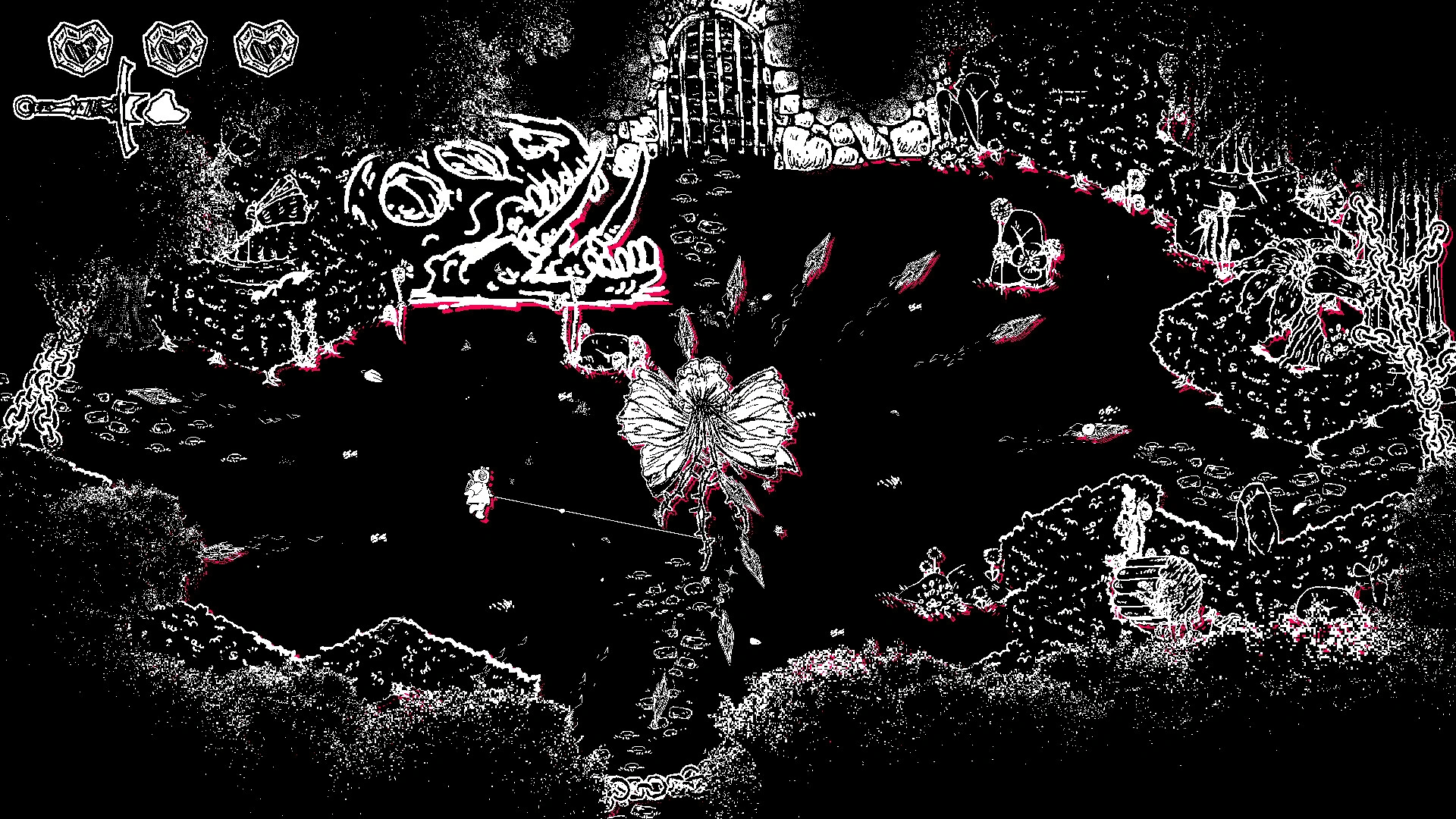
The core loop is beautifully simple. A corrupted creature attacks, stars spill out across the arena, and you collect enough of them to pacify the creature. The fairy has a grappling thread that pulls them toward walls or swings them around enemies, plus a dash that slips through danger. Their basic movement is slow, so the real rhythm comes from chaining those two tools together, snapping across a room, grabbing a star, then dashing away from the next attack.
That would fall apart if the controls lacked trust, and Key Fairy earns that trust quickly. Swinging around a knife-throwing gnome or threading through a knight’s spear pattern has the nervous pleasure of a combat system, but the emotional charge is different because the “enemy” becomes someone you can speak with after the screen calms down. A boss like the floating crown may beat you repeatedly, but the game’s best fights make failure feel like learning a dance step rather than losing a duel.
The rough edges show when the movement’s elegance meets harsh collision behavior. Getting hit can bounce the fairy into thorns, walls, or another creature, draining hearts before recovery feels possible. In cramped rooms with bramble-lined walls or spike traps, that can turn one mistake into a quick death.
Assist Mode matters here. Options for invulnerability, regenerating hearts, infinite dashes, reduced visual noise, and one-handed control layouts do not weaken the game’s identity. They let different players find their version of the rhythm.
The Forest Has No Interest in Handholding
Key Fairy’s world is small enough to memorize and strange enough to resist easy mental filing. Doors need keys. Paths loop through glades, castles, tunnels, waterfalls, and bramble corridors. NPCs give directions through hints, riddles, grunts, and odd little requests. One hidden knight may sit behind a waterfall and treat the fairy like a fish. A blob might ask about “The Beast” before the player knows what that fear means.
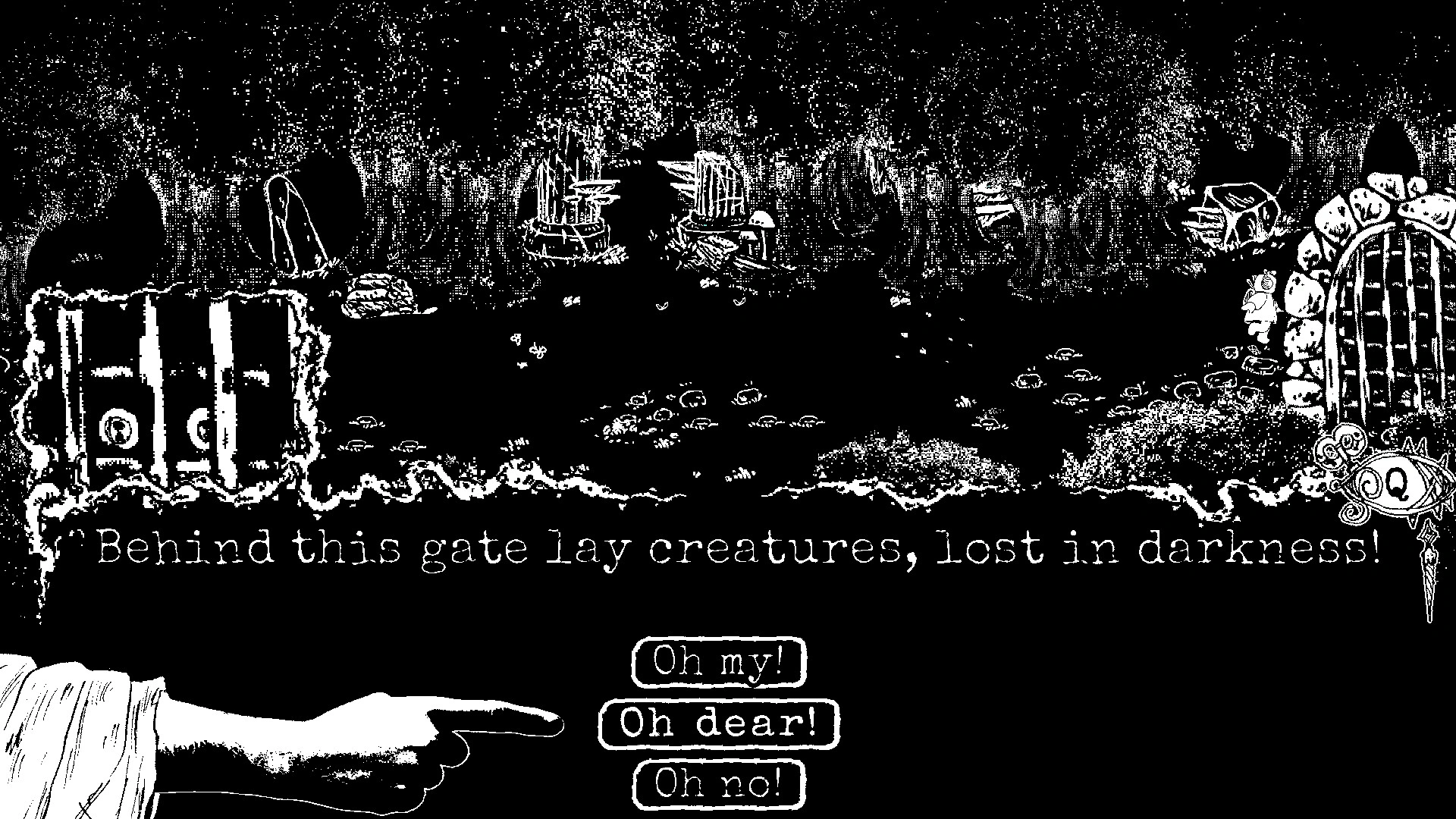
The absence of a map gives exploration a charming pen-and-paper quality. It makes landmarks matter. You remember a locked door because of the creature beside it, or a route because the nearby room had a strange conversation you could not parse yet. That choice fits the hand-drawn world, and it makes backtracking feel personal rather than procedural.
It also creates frustration. Searching for a missing key can turn wonder into circular wandering, especially when progress depends on which doors were opened earlier. A post-credits map or collectible tracker would have helped players return for secrets without sanding away the game’s commitment to memory. Key Fairy is strongest when disorientation feels like folklore. It stumbles when it feels like paperwork done by moonlight.
A Story Told Through Calmed Creatures
The writing works because it treats kindness as an action, not a slogan. After an encounter, the once-hostile creature might apologize, joke, grunt, offer directions, or say something sad enough to change how the room feels. These lines are often brief, but they carry a lot of weight because the player has just earned the quiet.
The story itself stays deliberately vague. There is corruption in the land, a sprite trying to restore peace, and a trail of characters who suggest bravery, change, remorse, and self-discovery without pinning the lore to a corkboard. That restraint helps Key Fairy. The game feels less like a fantasy plot being explained and closer to a folk tale half-remembered from childhood, where a gnome’s nonsense or a whispered warning can matter later because the forest has its own crooked logic.
What sticks is how the mechanics keep feeding the mood. You do not choose mercy from a dialogue menu after winning a fight. Mercy is the fight. Dodging knives, swinging through tiny gaps, collecting stars, and staying alive long enough for a creature to become itself again gives the theme a physical shape. Few games make compassion feel this tense.
Ink, Sound, and Strange Little Souls
The art direction gives Key Fairy its first hook and then keeps earning attention after the novelty settles. Owl Machine’s world is built from hand-drawn, scanned ink textures, usually presented in stark black and white. The forest crawls with tiny motion: frogs leap, leaves fall, vines clutch at paths, eyes watch from the dark, and creatures look like they were scribbled into the margins of an old fairy book.
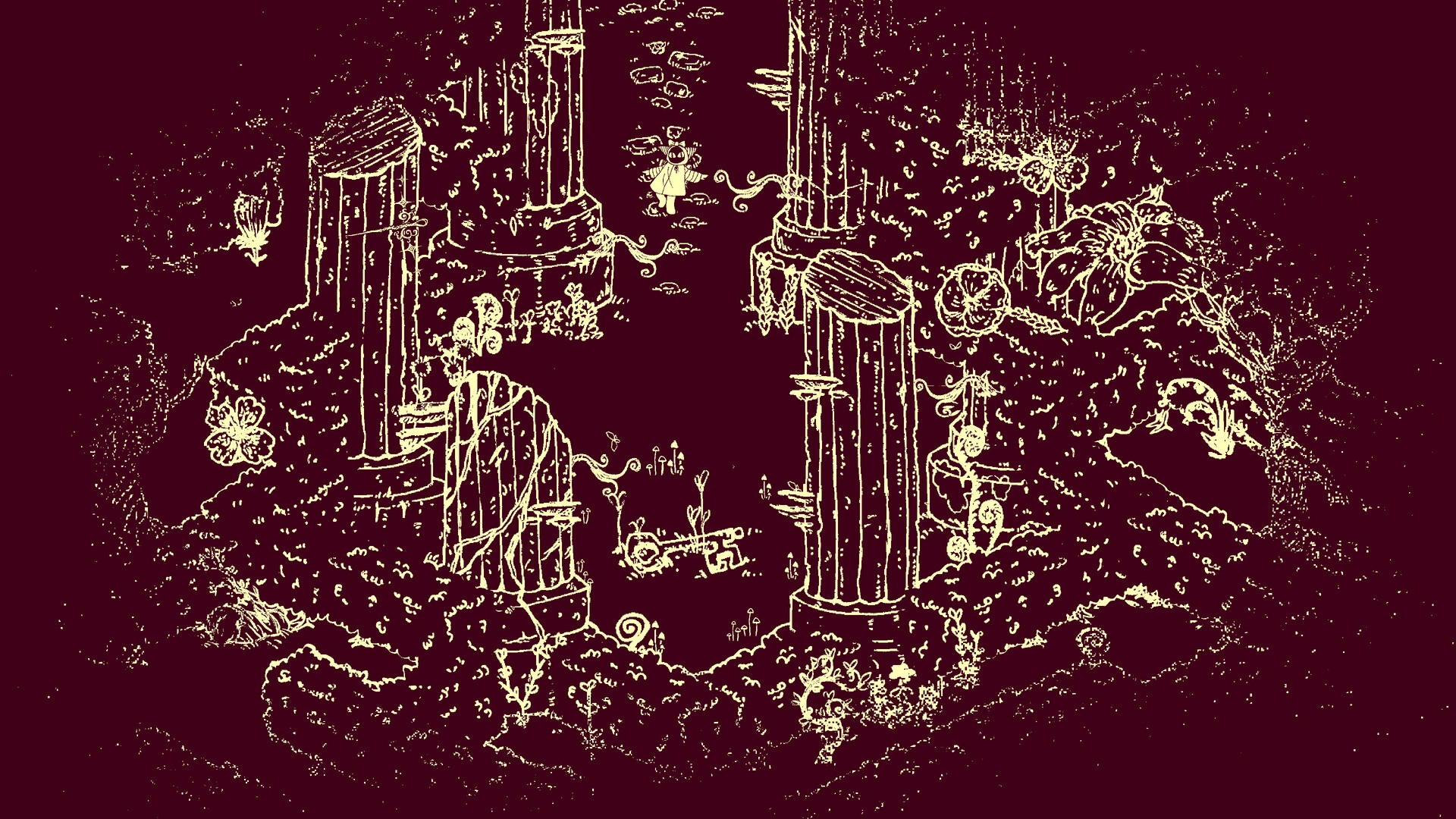
The monochrome style could have made bullet-hell readability a disaster. It mostly does the opposite. Once the player learns which shapes are hazards, grapple points, and projectiles, the screen becomes surprisingly readable. The unlockable color palettes are a mixed pleasure. Some freshen the world or improve clarity. Others strain the eyes so much that they feel like curios rather than rewards.
The sound does just as much work. The grappling thread lands with a plucked, tactile note. Ambient birds, brooks, rustling leaves, low grunts, and distant howls make the forest feel inhabited before anything attacks. During encounters, strings, percussion, woodwinds, and stranger tones push the game toward urgency without breaking its eerie softness.
Key Fairy is short, strange, demanding, and generous. It can bruise the player with a bad damage chain, then immediately win them back with a perfect swing across a room or a creature’s awkward little apology. Its best moments make a familiar genre feel emotionally rearranged. You are still dodging patterns. You are still dying in corners. You are also rescuing the thing that put you there.
The Review
Key Fairy
Key Fairy turns bullet-hell pressure into something tender, asking players to rescue the creatures that would normally be targets. Its grappling thread, dash, star-collecting encounters, and strange woodland conversations make every room feel alive with danger and kindness. Some navigation choices and harsh damage chains can bruise the experience, especially without a map or invincibility frames, but the movement, art, music, and emotional design leave a strong imprint. This is the kind of indie game that feels small until it stays with you.
PROS
- Beautiful pacifist combat loop
- Excellent grapple-and-dash movement
- Striking hand-drawn art
- Memorable eerie woodland atmosphere
- Strong assist options
CONS
- No map can frustrate
- Damage chains feel harsh
- Some palette swaps strain the eyes
- Key progression can confuse