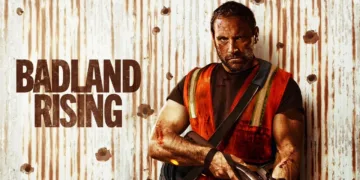



















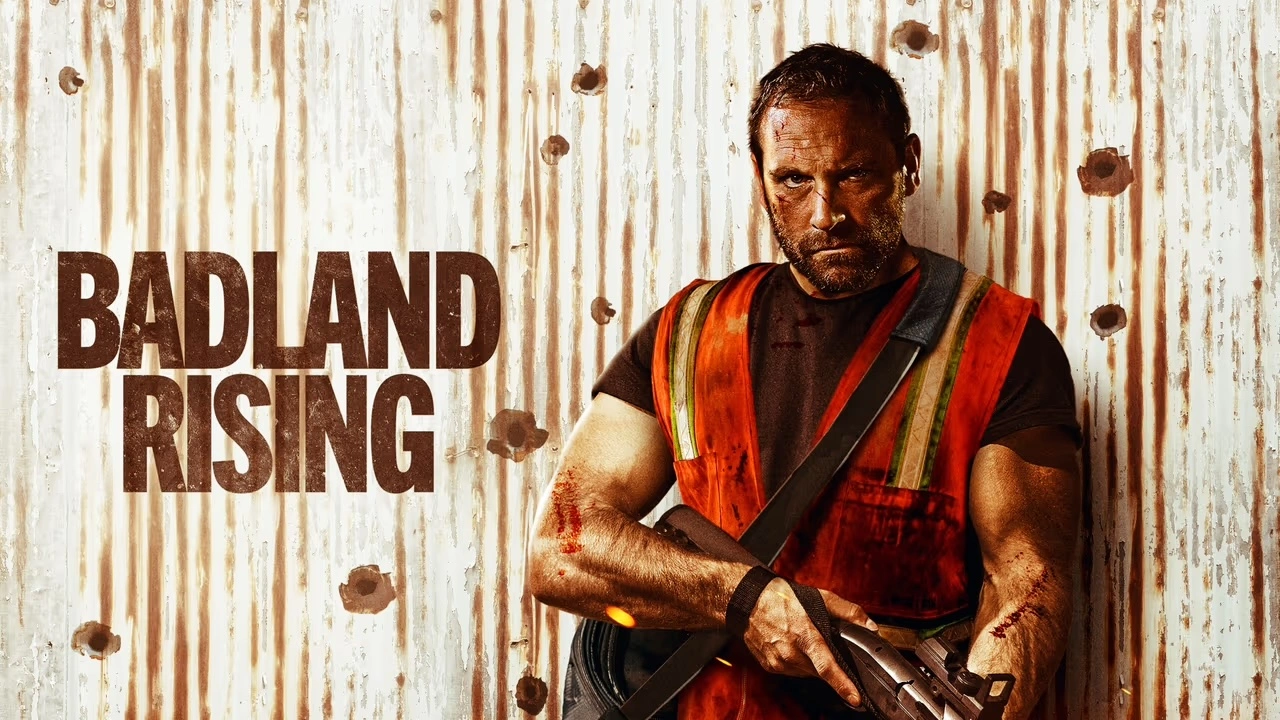

Badland Rising is a lean Australian action thriller with dust on its boots, blood on its knuckles, and a familiar engine under the hood. Dave, played by Jake Ryan, is a former SAS sniper turned construction worker, a man trying to get back to his wife and son while keeping his family’s farm from slipping away.
His 19-hour road trip through Queensland’s sunburnt stretches should be a passage toward home. Instead, it becomes a violent detour into stolen cash, criminal desperation, and the old action-movie curse: the wrong bag in the wrong hands.
The premise is clean enough to fit on a petrol station receipt. A botched robbery erupts nearby, Dave gets caught in the fallout, and soon finds himself hunted by men who view human life as a minor inconvenience. The Gold Coast setting gives the film a rough, practical texture, far removed from glossy metropolitan action cinema. It has the feel of a bruised road map, one marked by cheap motels, dead-eyed bars, and long roads where help always seems five minutes too late.
There is a kind of national symbolism here too. The Australian landscape has long been used as a place where civilization thins out and morality gets sunburned. Badland Rising taps into that tradition, treating the road as a pressure chamber where ordinary survival becomes primitive contest. The film understands motion. It understands impact. Its grasp of story logic is shakier.
Sweat, Bruises, and the Philosophy of the Punch
The strongest element in Badland Rising is its action craft. Jake Ryan’s martial arts background gives the fight scenes a convincing physical grammar. He moves like someone who knows where weight belongs, how balance breaks, and how pain travels through the body after a clean hit. That matters. In many action films, violence has become decorative noise, a spray of edits and sound design arranged to suggest danger. Here, the combat feels legible.
Punches land with blunt force. Grapples have shape. Throws carry the awkward ugliness of bodies colliding with hard surfaces. The camera often stays wide enough to let the viewer read the movement, which gives the brawls a pleasing old-school honesty. There are moments where the film’s budget peeks through the cracks, especially in some effects and rougher production choices, but the stunt work has sweat equity. That currency spends well.
The film’s violence also carries a small philosophical charge. Dave is a man trying to return to domestic life, yet survival keeps dragging him back into trained brutality. The film never articulates this with much sophistication, but the idea is there, rattling around beneath the chase mechanics. Can a person leave violence behind, or does violence simply wait for the right road to reopen? Badland Rising does not answer with poetry. It answers with fists. That may be for the best.
The chases, brawls, and sudden eruptions of danger help the film punch above its indie scale. Rural spaces become arenas. Bars become traps. Cars become temporary shelters, then liabilities. The movie feels most alive when dialogue falls away and the body takes over. For genre fans, these sequences are the main attraction, the part of the film that feels carved from discipline rather than stitched together from borrowed attitude.
The Road Is Fast, the Script Is Loose
The plot of Badland Rising is built for velocity. Dave ends up with money that belongs to dangerous people, and his drive home turns into a prolonged hunt. That structure gives the film a reliable motor. It rarely stalls, and its road-movie shape allows danger to keep changing locations before any one setup wears out its welcome.
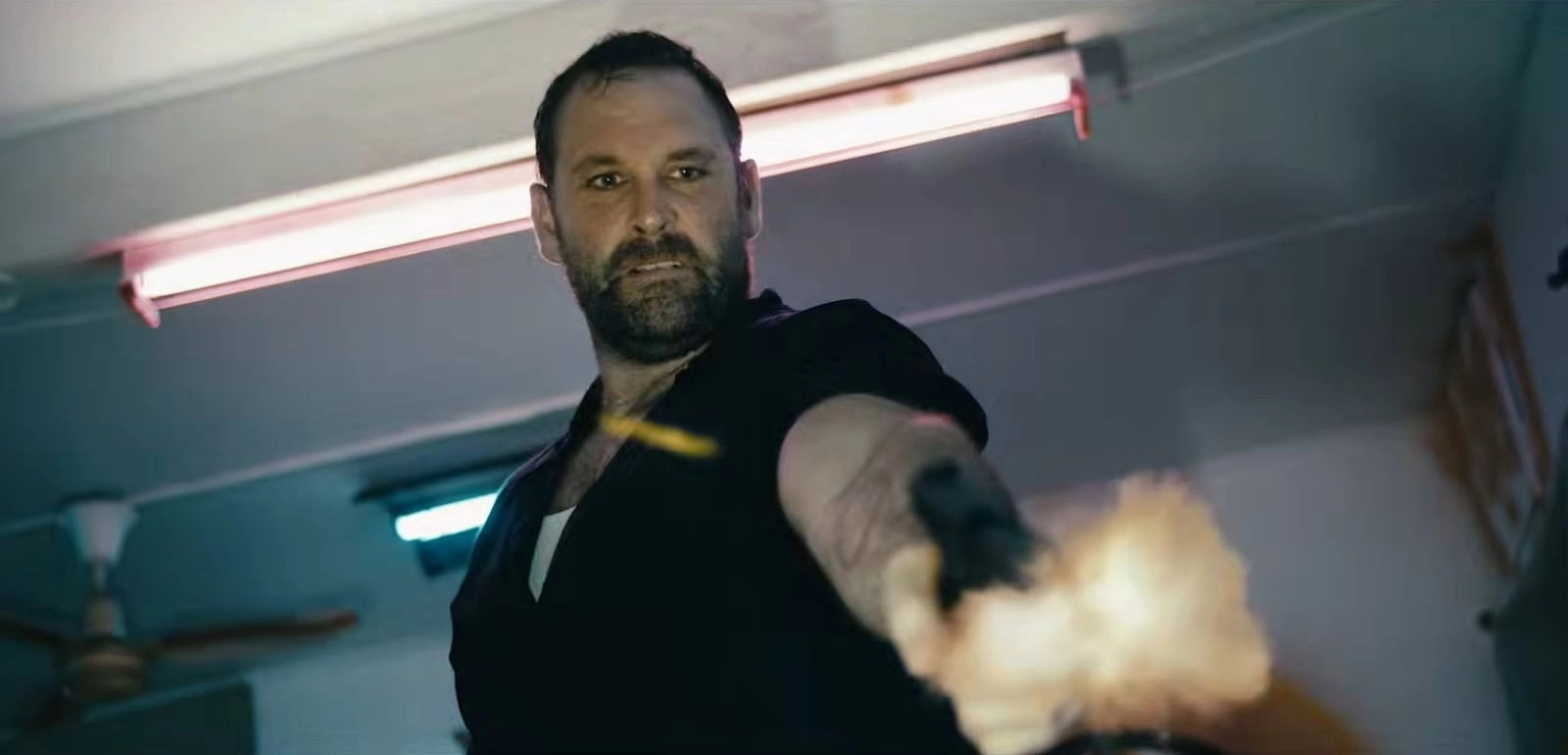
Still, the screenplay has a serious convenience problem. Characters appear where the plot needs them to appear. Objects are lost, found, switched, or discovered with a casualness that makes fate look less like cosmic cruelty and closer to sloppy admin. The villains sometimes seem to track Dave through the mystical power of screenplay telepathy, which is a handy skill, if hard to recommend as dramatic craft.
This matters because thrillers need pressure to feel earned. A chase film can be simple. Simplicity can be elegant. Here, the simplicity often turns into predictability, and predictability turns some tense moments into mechanical checkpoints. Once the first act establishes the pattern, the film struggles to deepen Dave’s predicament beyond immediate danger. His family gives the story stakes, but the emotional foundation is thin. We understand what he stands to lose, yet we do not always feel the full ache of that possible loss.
There is also an accidental social reading to the film’s setup. Dave is a working man under financial and familial pressure, thrown into a criminal economy where cash moves faster than law and violence answers every debt. That idea could have cut deeper. Australia’s rural and outer-suburban anxieties, land ownership, masculine failure, and economic precarity all hover near the edges. The film sees them, perhaps, then chooses another fight scene. Fair enough. The fight scene is probably better written.
Morgan, Dave, and the Fine Art of Looking Unhinged
Jake Ryan is convincing whenever Dave has to move, strike, endure, or react physically. His body sells the backstory better than some of the dialogue does. He has the carriage of a man trained for confrontation, and that presence gives the survival scenes credibility.
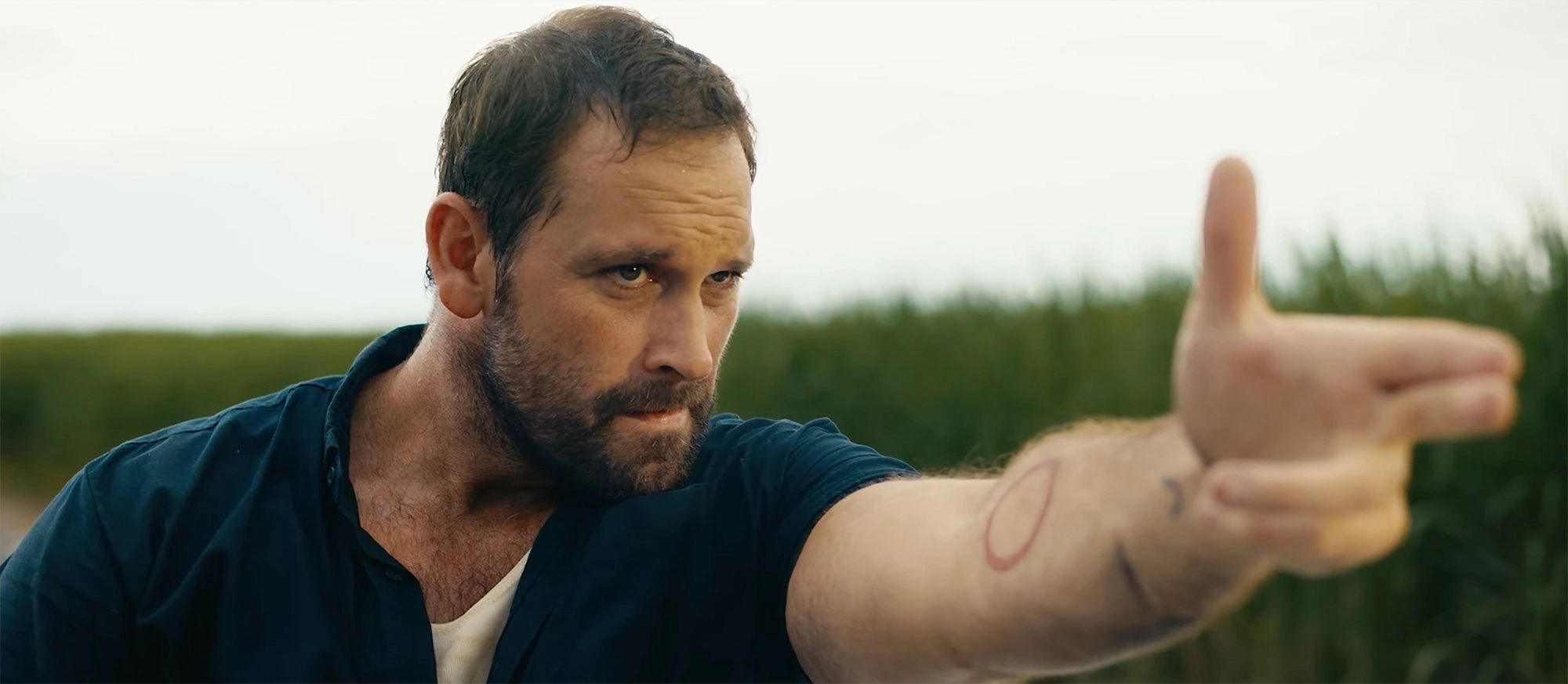
In quieter exchanges, the performance becomes less persuasive. Scenes involving his wife, son, and fear for home need greater emotional variation. Ryan often underplays so heavily that Dave risks seeming less stoic than emotionally password-protected.
Nathan Phillips, by comparison, tears into Morgan with wild energy. He gives the film its strangest spark, helped by a visual style that makes the character look like he lost a bet with a barber and then blamed society. Morgan is dangerous, funny, erratic, and oddly watchable. Phillips understands that a chase thriller needs personality in pursuit, since the hunted man can spend long stretches reacting. His menace has rhythm. His humor has bite. His haircut has its own political program.
The supporting criminal figures serve their purpose. They apply pressure, create chaos, and leave bodies or threats in their wake. Few of them feel deeply developed, but they fit the film’s harsh genre machinery. The criminal world here is less an ecosystem than a collision course.
Badland Rising is entertaining, rough-edged, and frequently exciting. Its best moments come from physical commitment, practical grit, and a lively villain performance that gives the chase some warped comic electricity. Its weaker passages reveal an undercooked script, uneven acting, and plot gaps large enough to drive a getaway car through. The result is a scrappy Aussie thriller that does enough to satisfy action devotees, while leaving the sense that a sharper screenplay could have turned its bruises into scars.
Badland Rising is an Australian action-thriller film that was released on digital and video-on-demand networks by Saban Films on June 12, 2026. The plot follows a construction worker and former soldier who inadvertently obtains a bag of money following a botched mob heist while starting a long drive home, transforming his road trip into a brutal, high-stakes fight for survival against two relentless criminals. Global movie fans can stream the intense independent thriller immediately by renting or purchasing the title on major digital marketplaces such as Apple TV, Prime Video, and Fandango at Home.
Where to Watch Badland Rising (2026) Online









Full Credits
Title: Badland Rising
Distributor: Saban Films
Release date: June 12, 2026
Rating: R
Running time: 93 minutes
Director: Blair Moore
Writers: Dru Brown, Blair Moore
Producers and Executive Producers: Lav Bodnaruk, Dru Brown, Brett Kennedy, Michael Mier, Blair Moore, Steve Morris, Anna Kolenko, Giuseppe Cassin
Cast: Jake Ryan, Nathan Phillips, Steve Mouzakis, Robert Rabiah, Jeremy Lindsay Taylor, Aaron Glenane
Director of Photography (Cinematographer): Timothy Carr
Editors: Steph Liquorish
Composer: Ronnie Minder
The Review
Badland Rising
Badland Rising is a scrappy, bruising Aussie thriller with muscular fight choreography, strong chase momentum, and a scene-stealing Nathan Phillips performance. Jake Ryan sells the physical stakes convincingly, though the quieter emotional beats land with less force. The film’s plot holes and familiar structure keep it from becoming a standout action entry, but its blunt energy and practical grit make it an easy recommendation for genre fans.
PROS
- Strong fight choreography
- Impressive stunt work for an indie production
- Nathan Phillips delivers the standout performance
- Fast pacing keeps the film watchable
- Gritty Gold Coast setting adds texture
CONS
- Thin and predictable story
- Several distracting plot holes
- Uneven acting in emotional scenes
- Some cheap-looking effects
- Supporting villains lack depth