




























Daniel Lombroso has chosen a subject that could collapse into a feature-length dirty joke within minutes. Penile enlargement comes with built-in discomfort, absurdity, and enough visual possibilities to keep a comedy editor employed for years. Manhood refuses the easy version.
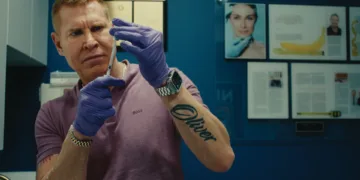
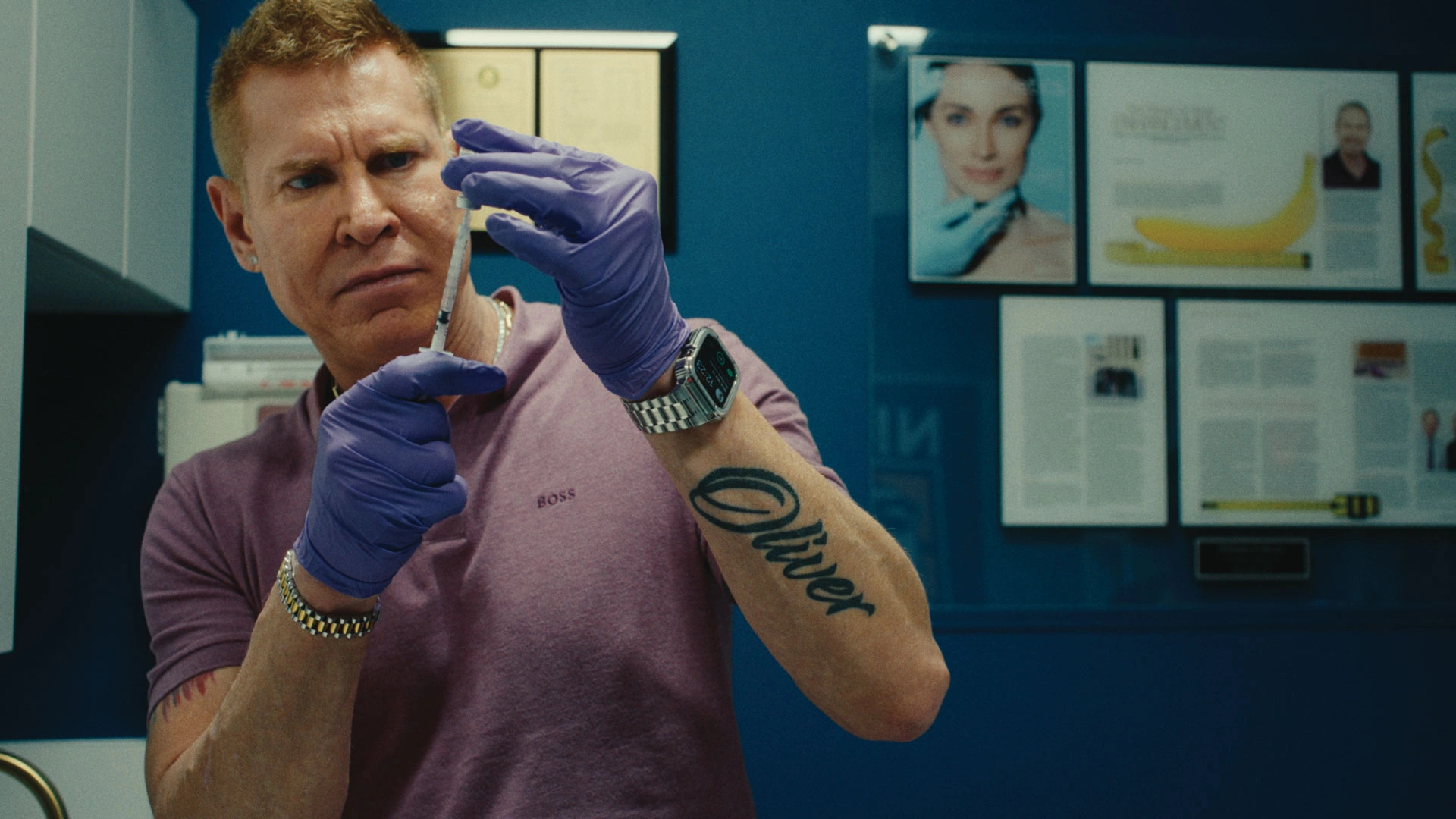
The documentary centers partly on Bill Moore, the entrepreneur behind PhalloFILL, a temporary dermal-filler treatment designed to increase penile girth through repeated injections. Moore wants the procedure discussed with the same casual familiarity as Botox, and his growing network of practices suggests plenty of men are listening.
Two patients make that sales pitch much harder to dismiss or accept cleanly. David Smith, a gay nursing student and former OnlyFans performer, needs reconstructive treatment after a permanent enlargement procedure leaves him with lumps and nodules. Ruben Ramirez, a father of five and struggling stand-up comic, keeps paying for injections while his family finances bend under the cost. Lombroso looks directly at all of this. Sometimes very directly. Needle-phobic viewers have been warned.
Insecurity Has Found a Business Model
Editing is often described as the process of deciding what an audience sees and when they see it. Lombroso and his team use that basic principle well in the opening montage, cutting through bodybuilders, Hollywood bodies, influencers, pornography, and masculine self-improvement imagery. The speed matters. Each image barely has time to register before another ideal replaces it. That rhythm recreates the feed.
Ruben becomes the clearest example of what happens after years inside such a visual and rhetorical environment. He listens repeatedly to The Joe Rogan Experience, absorbing speeches about masculine duty and men providing for their families. Then he spends money his family can scarcely spare on another enlargement session. Lombroso never freezes the frame and announces the contradiction. He trusts viewers to notice it.
I appreciate that restraint because Ruben is already funny, frustrating, and vulnerable without a narrator telling us what box to place him in. His stand-up routine is tired. His confidence is worse. His wife remains supportive while clearly struggling to understand his fixation, and Ruben keeps reading each added bit of girth as proof that he is getting closer to some improved version of himself. Moore offers that improvement for a price.
His own history with body shame prevents him from reading as a cartoon villain. He speaks about confidence and mental health with apparent conviction, and satisfied patients describe feeling happier after treatment. Yet PhalloFILL is structured around repeat visits, larger “sleeves,” and the possibility of continuing. Ruben’s behavior exposes the uncomfortable design question sitting inside Moore’s business: what happens when the customer seeking relief never feels finished?
The film becomes less certain around Moore’s personal relationship with David. Their closeness carries a faint ethical unease, particularly given David’s vulnerability and dependence on Moore’s help. Lombroso observes it, then backs away. His camera is curious here when it should probably be nosier.
The Body After Shame
David’s story changes the temperature of the film. Raised within a conservative Catholic environment where his sexuality was unwelcome, David later found temporary work on OnlyFans. As his audience grew, so did the pressure he felt about his body. The logic is brutally simple: people are looking, therefore the thing being looked at must be improved.
He turns to Dr. Victoria Loria for a permanent enlargement procedure. Permanent is the word that should make every viewer nervous. Silicone treatment leaves David with visible lumps and nodules, and Lombroso shows enough of the damage to remove any comfortable distance between cosmetic marketing and medical consequence.
The camera does something important with David during the reconstructive process. It stays close without treating his body as spectacle. We see marked skin, stretching, injections, and procedures that made me tense every muscle I apparently possess. Yet Lombroso keeps returning to David’s face and voice. Medical imagery shows the injury. David explains the shame attached to it. That distinction matters.
When David finally sees the results of successful corrective surgery, he cries. The scene works because the film has carefully established the strange reversal inside his treatment. His earlier attempt to enlarge his penis came from dissatisfaction with his body. The later operation is meant to recover a body damaged by that pursuit.
A doctor eventually explains that filler can change anatomy but cannot repair the emotional emptiness driving some patients toward it. It sounds like a line designed for a documentary trailer until David’s tears give it physical weight.
Looking Without Sniggering
Lombroso does allow himself jokes. Buildings suddenly look suspiciously phallic. Objects acquire shapes you probably would have ignored in another documentary. Once the visual pattern starts, the entire built environment seems to be participating.
Executive producer Penny Lane’s presence makes sense here. The humor comes from looking carefully at an unusual subject rather than humiliating the people inside it. Ruben can say something ridiculous, yet the edit never treats his insecurity as permission to mock him.
The same care shapes the film’s graphic medical scenes. Lombroso shows needles entering marked penises and damaged tissue undergoing repair because the physical reality is part of the argument. Cosmetic procedures are often sold through clean before-and-after images. Manhood keeps the middle of that process in frame, where blood, pain, anxiety, and expense live.
Its observational approach leaves some frustrating gaps. Moore’s expanding business deserves harder questions, particularly after Ruben starts sacrificing financial stability for repeated treatments. David’s relationship with Moore also sits in an ethical fog that Lombroso never fully examines.
Still, the documentary’s refusal to dictate a response creates an uncomfortable test for the viewer. We are invited to laugh at men terrified by penis size while pornography, advertising, influencers, and podcast celebrities spend every day teaching them to measure masculinity as a visible performance.
David cries after seeing his repaired body. Ruben pays for another session. Moore talks about normalization. Lombroso keeps the camera running, and suddenly the joke has nowhere comfortable to land.
The raw coming-of-age television drama Manhood made its official digital premiere on August 12, 2025, and is streaming exclusively online. Audiences can watch the entire seven-chapter first season by downloading the TysonPlus streaming application on iOS, Apple TV, or Android devices. The series centers on Micah, a young slacker dealing with fractured relationships, trust issues, and severe instability, whose worldview begins to shift when he forms a bond with a local gym owner who challenges him to unlearn traditional societal stereotypes and face hard truths about his path forward.
Where to Watch Manhood (2026) Online
Full Credits
Title: Manhood
Distributor: TysonPlus
Release date: August 12, 2025
Rating: TV-MA
Running time: 45 minutes per episode
Director: Tyson Anthony
Writers: Tyson Anthony
Producers and Executive Producers: Tyson Anthony, McKinzie J. Scott
Cast: McKinzie J. Scott, Owen, Local Gym Personnel, Supporting Urban Ensemble Members
Director of Photography (Cinematographer): Tyson Anthony
Editors: Tyson Anthony
Composer: Tyson Anthony
The Review
Manhood
Manhood takes a subject built for cheap jokes and instead finds the fear, shame, and strange hope underneath it. Daniel Lombroso's camera can linger on a needle entering flesh one minute and David crying over successful reconstructive surgery the next, making the medical procedure legible as an emotional act. The film could question Bill Moore's business and personal relationships with greater force, yet its restraint lets Ruben and David remain people rather than case studies. Funny, queasy, and deeply humane, this is documentary filmmaking with a remarkably steady hand.
PROS
- Compassionate treatment of male insecurity
- David's powerful reconstructive surgery arc
- Sharp observational humor
- Strong visual framing of masculine pressure
- Confident, patient documentary direction
CONS
- Bill Moore receives limited scrutiny
- Some ethical tensions remain underexplored
- Graphic procedures may repel viewers