





























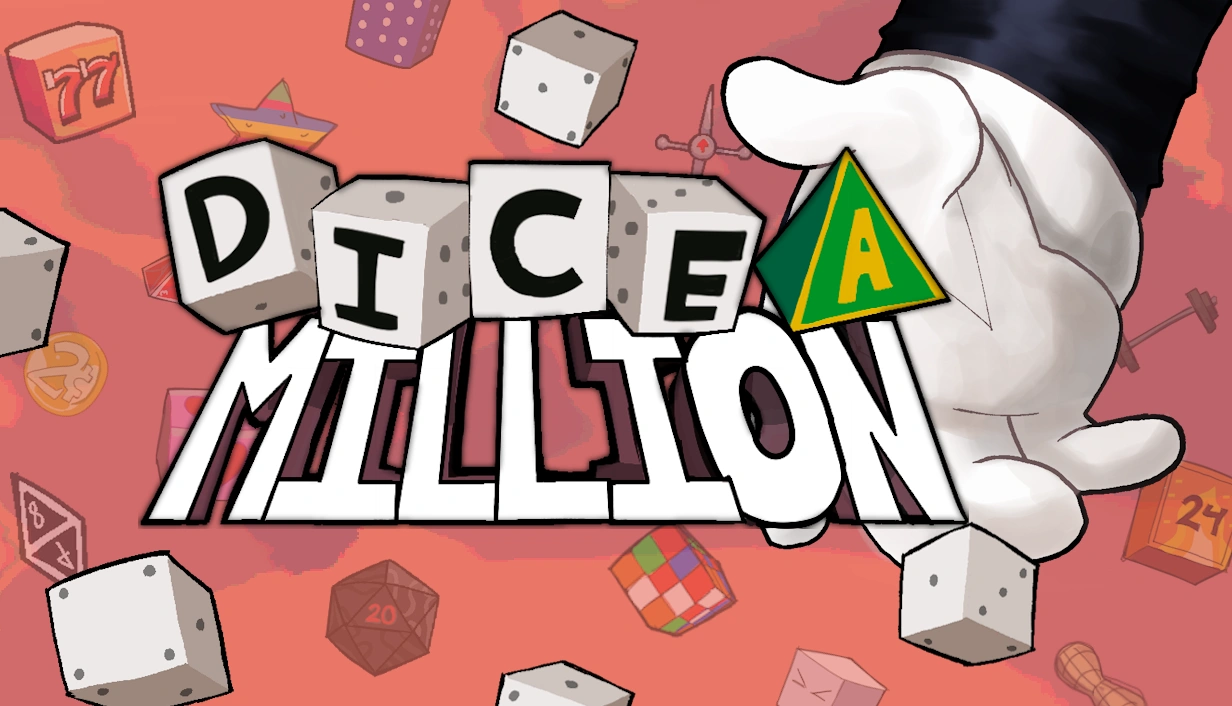

Rolling five dice and adding the numbers together is not much of a game. Dice A Million seems aware of this, which is why it spends its opening rounds almost frantically building machinery around that basic action. Pick a Hand, draw dice from a bag, hit roll, and beat the required score. Simple. Maybe too simple.
The Balatro family resemblance is immediate. Hands serve the function of decks, Rings occupy the passive-modifier space held by Jokers, booster packs spit out randomized upgrades, and Faces impose boss penalties before asking for a much larger score.
The difference is in the inherited foundation. Poker gives Balatro straights, flushes, pairs, and discard decisions before a single Joker enters play. Basic dice addition gives Dice A Million very little. So the opening levels drag. Strategy arrives later, once shopping and bag construction replace the roll itself as the main event.
Building the Bag Is the Real Game
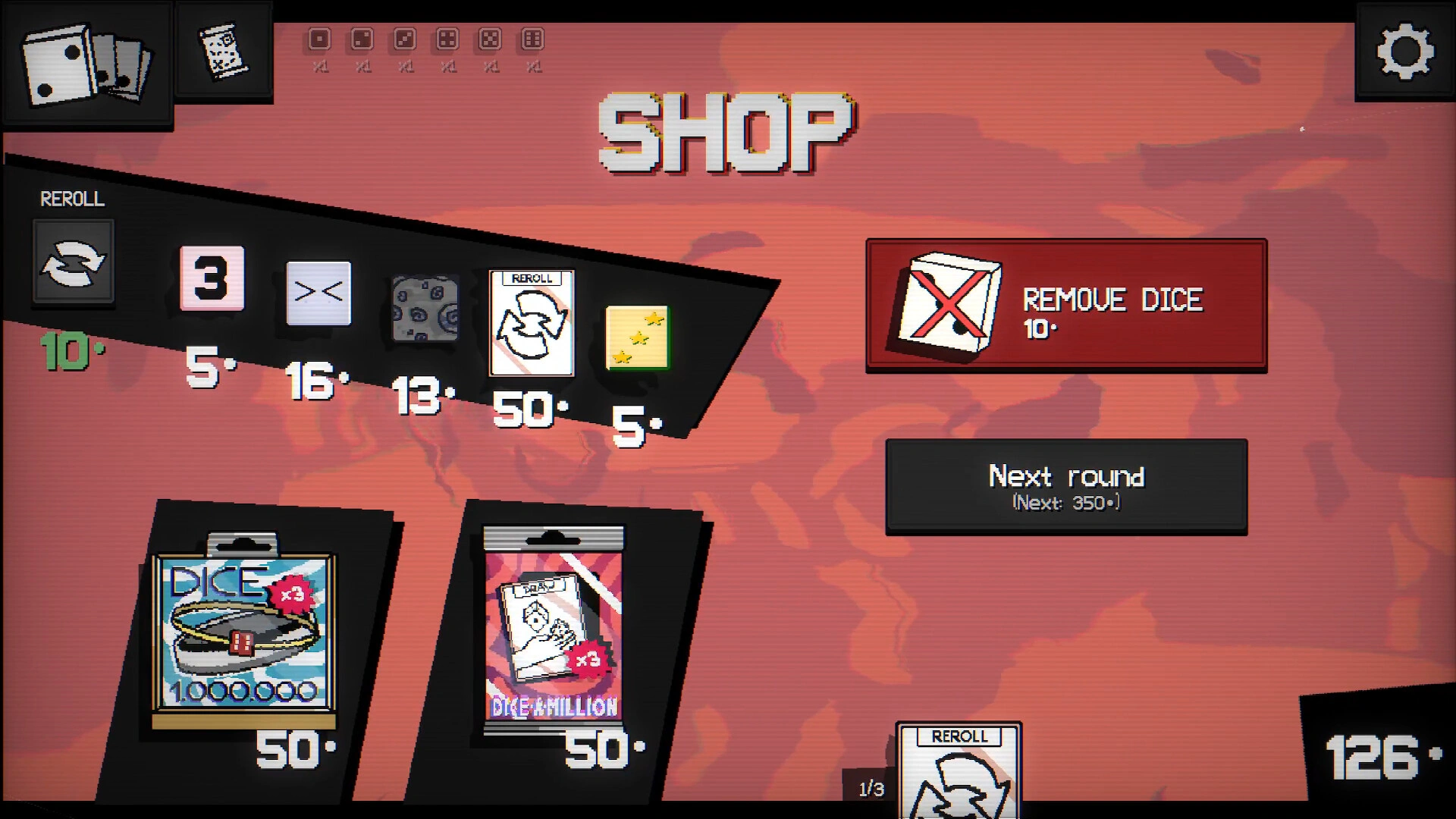
The dice roster quickly reveals where the actual design work went. Some dice split into several smaller pieces after landing. Area dice gain value from nearby objects. Others increase the numbers on neighbouring dice, multiply their own value, or exhaust pieces from the board. Naturally, there are dice rewarded when something gets exhausted.
This is where Dice A Million separates itself from being a simple reskin of its obvious inspiration. A split die feeding several pieces into an area effect creates a spatial relationship between objects that poker cards could never reproduce. One effect raises a nearby value, another multiplies it, then a Ring notices an odd number and applies another modifier. A roll that struggled to reach 50,000 can suddenly spit out 300,000.
The problem is that positioning matters while the player has very little control over it. Dice land inside a square scoring area, and an area-focused build may live or die based on two pieces settling a few pixels apart. One Ring lets you bump a die before the score is calculated. Its usefulness says plenty about how rarely the game otherwise lets you interfere with placement.
Enhancements offer cleaner decisions. Reducing a die’s rolling cost to zero immediately changes how many pieces can enter a round. Other Enhancements preserve value increases between rolls or improve multiplication, allowing one useful die to become the anchor of a build.
Stamps are considerably less exciting. They multiply particular face values in gradual increments, which sounds valuable until several upgrades turn a 1 into a 2 and leave it there. The system lacks the visible escalation found elsewhere. When split dice and Ring combinations are throwing enormous values across the screen, watching another Stamp barely move a low number feels strangely administrative.
Cards can rescue individual rolls with temporary effects, yet permanent bag construction remains the stronger puzzle. The downside is readability. Once several dice and Rings trigger together, the score can explode before the relationship between each effect becomes fully clear. Sometimes the number is huge and you know you did something right. An excellent financial philosophy, perhaps. Less ideal for learning a system.
Rings Rule the Run, Faces Try to Ruin It
Rings are the prizes I started building runs around. The player’s illustrated hand gradually fills with gaudy jewellery, giving the interface a lovely visual joke as each finger accumulates another passive ability.
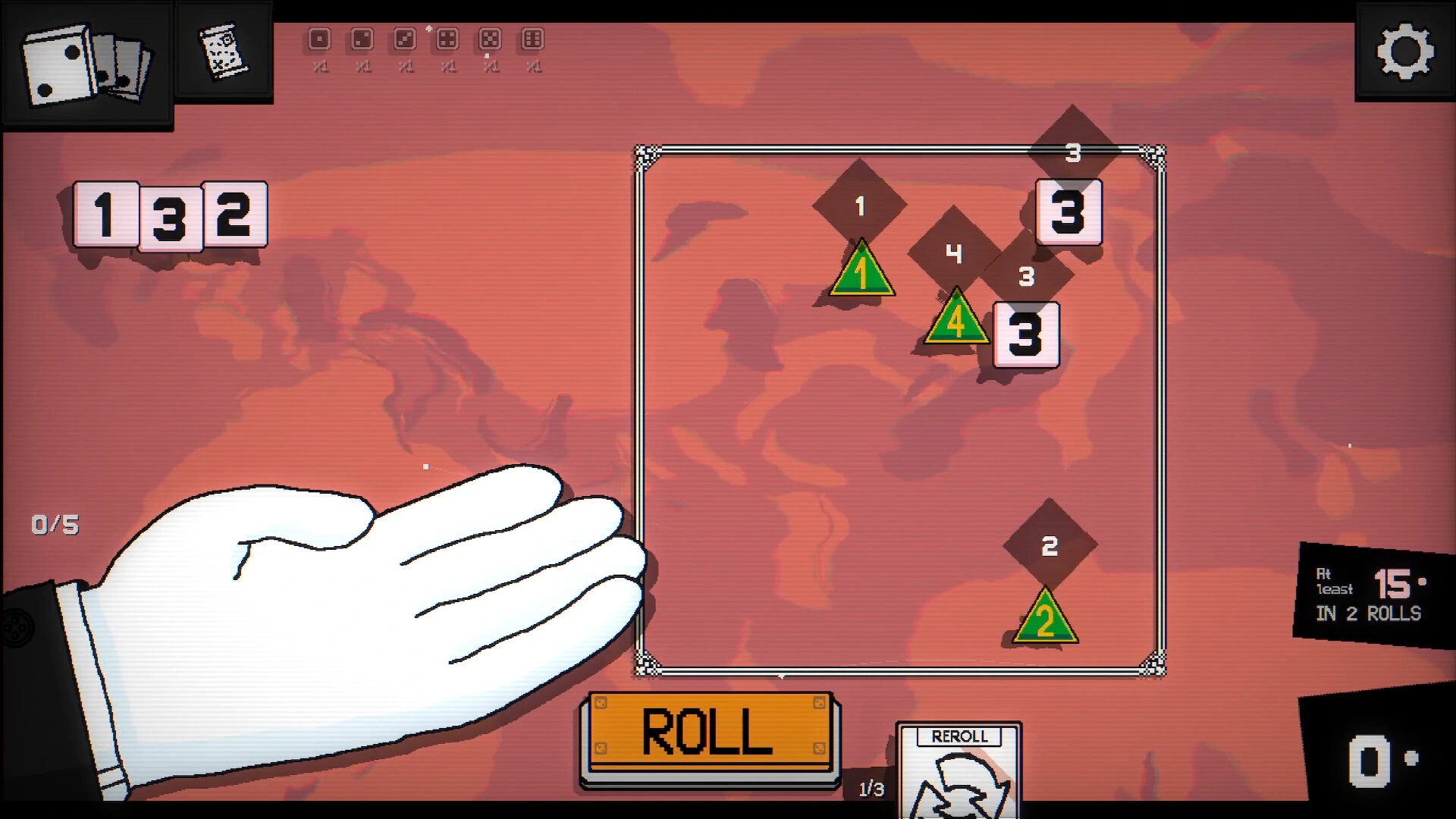
Their effects justify the presentation. One Ring generates Cards each turn. Another multiplies odd or even values. Area radiuses can be expanded, and my favourite effect randomly throws extra dice into a roll. Several Rings improve almost any bag, which makes buying one immediately satisfying. It also exposes a balance issue. Certain dice demand careful synergy before becoming useful. A powerful Ring can simply walk into the same run and begin printing points.
Faces make that imbalance harsher. Boss encounters discard accumulated pips and impose a negative rule before setting another score target. One can disable Rings. Another blacks out dice. Values may be halved. These are legitimate build checks, yet they frequently test a run by removing the system that made it interesting.
Compare that with Slay the Spire, where a boss may punish excessive powers or slow scaling while still allowing the deck to function. Dice A Million can look at a Ring engine and effectively say, no Rings today. Technically difficult. Mechanically rather blunt.
My successful bags were usually small and focused, supported by strong Rings. Stamp-heavy approaches struggled. Charged dice never developed enough momentum. Large bags filled with several unrelated dice diluted the combinations I actually needed. Plenty of self-buffing dice also feel weak because they add value without feeding a wider interaction.
Learning which archetypes survive the Faces becomes its own form of progression. Some discoveries are satisfying. Others feel like finding out the shop sold you decorative cutlery before a sword fight.
Chaos Worth Rolling Again
Balatro, Slay the Spire, and Monster Train earned their reputations partly because experimentation tends to reveal another supported strategy. Dice A Million is rougher. Certain Rings are clearly superior, several dice struggle to justify their place in the bag, and some apparent build paths collapse once the score requirements accelerate.
That roughness creates a different kind of appeal. The game feels less like mastering a polished strategic language and closer to deciphering a large box of strange machinery. Split dice work beautifully with area effects. Zero-cost Enhancements alter the rhythm of a round. A Ring you ignored three runs ago suddenly becomes essential to a new Hand.
The unlock structure keeps feeding that curiosity. New Hands change the initial bag or number of dice available, while boss victories award Stars used to access further Rings and dice. Secret achievements offer another excuse to experiment instead of repeating one reliable setup.
Its hand-drawn presentation fits the instability. Hands, Rings, and interface elements squiggle with constant movement, while crudely illustrated Cards and electronic chirps give the mysterious dice-rolling job a deliberately cheap, odd personality. The funky soundtrack is far less interested in recreating a quiet tabletop evening. It pushes every roll forward with enough energy that clicking the same button hundreds of times rarely feels inert.
Then a bag finally works. Several dice split, area effects catch the new pieces, multipliers trigger, and the total climbs so quickly that the original target begins to look ridiculous. The next run is already forming in your head before the current score has finished counting.
The Review
Dice A Million
Dice A Million knows exactly which branch of the roguelike family tree it comes from, and its debt to Balatro is impossible to miss. The difference is what happens once split dice, area effects, zero-cost Enhancements, and absurdly powerful Rings start colliding. Its weakest strategies feel undercooked and Faces can punish a build by simply switching off its best toys, yet a successful chain reaction still delivers a terrific numerical rush. Messier than its genre benchmarks, certainly. Still dangerously easy to restart.
PROS
- Deep dice synergy system
- Rings can transform entire runs
- Huge score explosions feel fantastic
- Strong unlock and experimentation loop
CONS
- Several builds feel underpowered
- Faces can suppress fun mechanics
- Limited control over dice placement
- Early rounds lack strategic tension