

















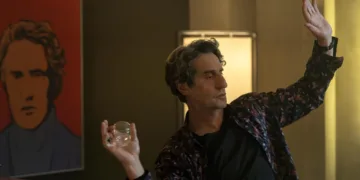










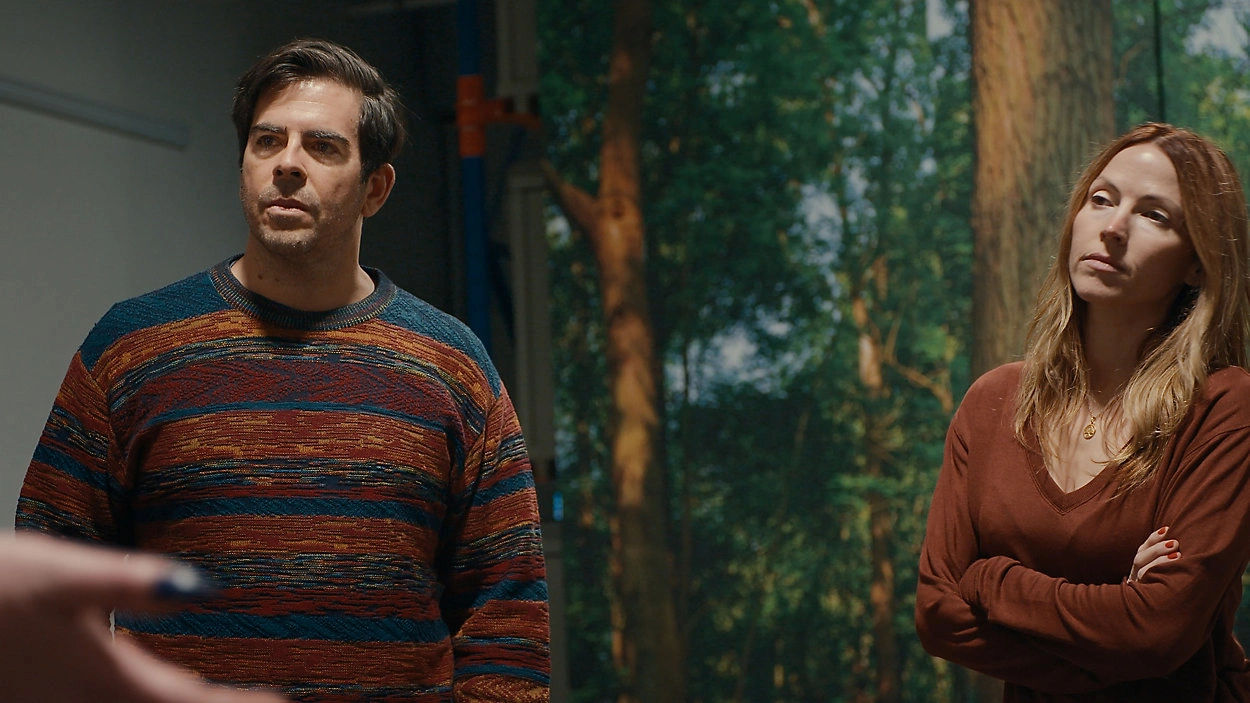

The most revealing cut in Death Boom is from cinematic death to procedural death. Jessica Chandler lets Eli Roth introduce burial and burning through rapid flashes of horror imagery, then moves into mortuaries where bodies are drained, injected, burned, and gathered into containers. Fiction gives us spectacle. The documentary gives us workflow. The difference is colder.
Roughly 76 million Americans were born during the postwar surge, and the film argues that an industry strained during the COVID-19 pandemic is poorly prepared for what follows. Roth’s restraint rarely competes with the bodies on screen. A trocar entering an abdomen does not need help from a punchline.
The Polished Face of Death
Mortician John Astle warns the crew before entering an embalming room. A chair is available for anyone who cannot handle what comes next. Chandler keeps the warning because it changes the room before we enter it. The camera has crossed a threshold.
Fluids are removed. Chemicals are introduced. The body is prepared for an appearance of stillness that the film gradually teaches us to distrust. Chandler’s images do not accuse the workers. Her target is the distance between the ceremony sold upstairs and the process carried out behind closed doors.
The historical account of embalming sharpens that gap. The film traces its American popularity to the Civil War and the transportation of Abraham Lincoln’s corpse, turning a practical solution into something later generations came to read as proper respect. Preservation looks dignified because we have been trained to see it that way.
Cremation receives the same inspection. Furnaces consume fuel, pollutants enter the air, and workers acknowledge that traces from earlier cremations may remain when ashes are collected. Chandler cuts through the symbolism of an urn by showing the industrial sequence that produces it. Romance does poorly under fluorescent light.
The Body as a Market
The film grows sharper when money enters the frame. Burial plots, caskets, embalming, and cremation are placed inside a multibillion-dollar business, with Service Corporation International used as a key example of corporate scale. Chandler treats the funeral industry like a system built around a customer who is grieving and a product who cannot object. Grim little arrangement.
Statistics sometimes stack up too neatly. Formaldehyde, fuel consumption, graveyard space, cremation rates, pollution. The documentary can feel like it is placing evidence on a stainless-steel tray one item at a time. Its baby-boomer thesis suffers here. The demographic surge supplies urgency, yet the richer material concerns practices already embedded in American death care. The film keeps saying a larger wave is coming. Its own images suggest the ethical problem arrived years ago.
This is where the horror lineage becomes useful. Roth’s movie clips exaggerate bodies through fire, rot, and mutilation, while Chandler’s footage reveals something less theatrical: normalization. The embalming room is disturbing because everybody inside knows the routine. The crematorium is disturbing because the machinery works. Horror usually asks what happens when order collapses. Here, order deserves inspection.
Soil, Water, and the Ick Factor
Chandler changes the visual temperature when she reaches natural decomposition, body farms, alkaline hydrolysis, and human composting. Each method forces the camera to look at decay without the cosmetic shield of preservation.
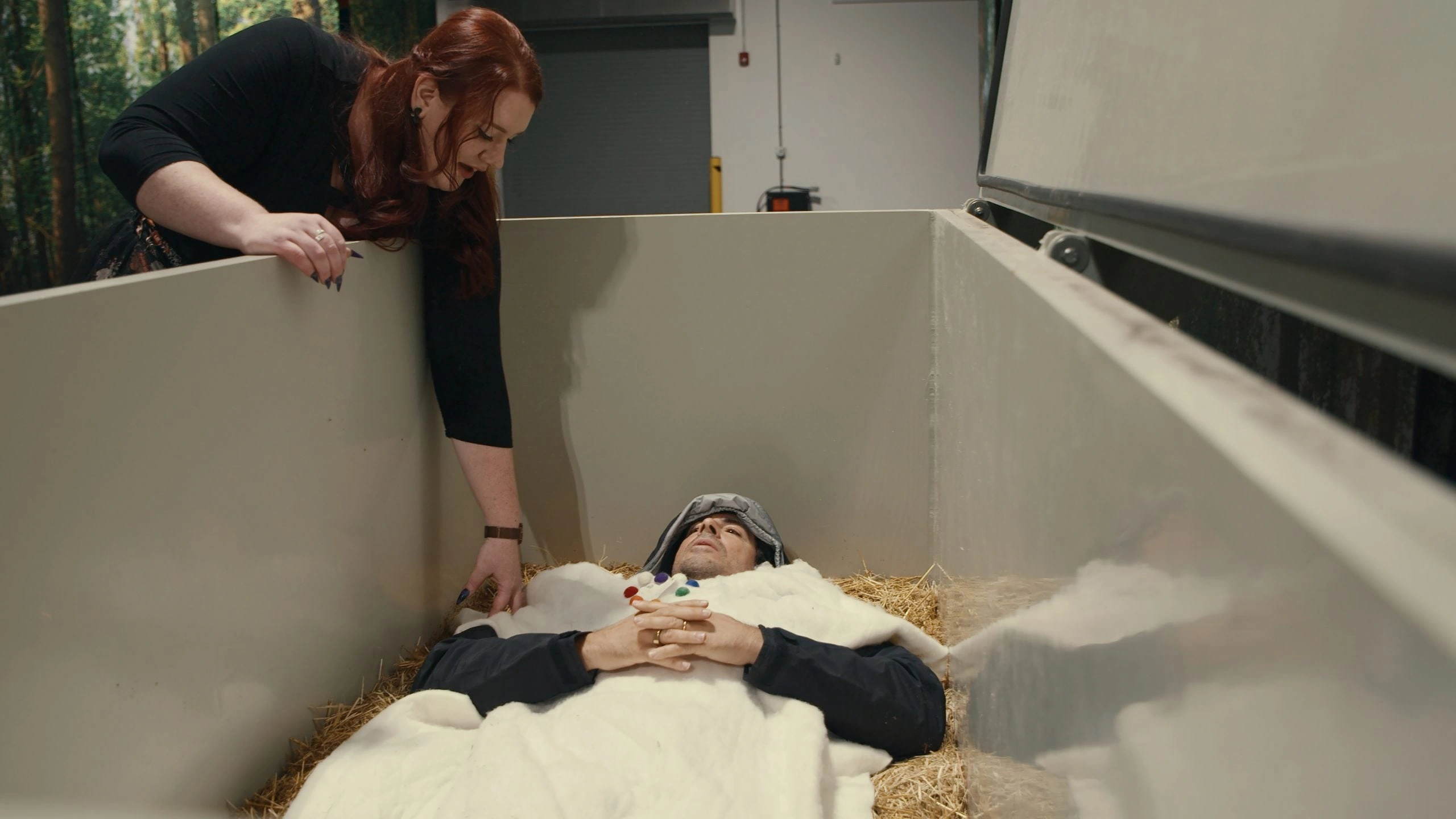
At Return Home, the film gives its strongest sequence to terra-mation. Bodies are placed inside large vessels, and families take part in a “laying in” ceremony, decorating the container with photographs, drawings, flowers, and personal items. The vessel resembles industrial equipment, yet the family ritual alters how it reads. Metal and wood become temporary architecture for grief.
Roth lies inside one vessel, a gesture that could have played as a horror-director gag. Chandler holds the moment long enough for the joke to drain away. Heat, microbes, and decomposition will turn a body into soil over several weeks. By the time Roth says this is how he would prefer to go, the choice feels earned by the sequence rather than planted for personality.
Alkaline hydrolysis creates a similar challenge to instinct. Water and chemicals break down the body, leaving bone material that can be processed and returned to a family. The “ick factor” becomes a battle of images. Liquefaction sounds grotesque because few of us have inherited a comforting picture for it. Flame cremation has familiar visual symbolism. A steel tank does not. Dignity often follows familiar framing.
Who Owns the Last Image?
The late section on political and religious resistance gives the film a harder edge. Attempts to legalize alkaline hydrolysis in Texas are presented alongside opposition from the Catholic Church, while cheaper ecological methods are set against businesses invested in conventional services.
Who gets to decide which image of death is acceptable? A body preserved in a casket has cultural legitimacy. A body returned as soil still triggers suspicion. Laws, theology, and profit help maintain that hierarchy.
The film’s American focus narrows the question. Japan and India appear briefly, yet Death Boom spends little time looking at funeral traditions outside the United States or asking how other societies reconcile land pressure, ritual, and belief. For a documentary interested in alternatives, its map is oddly small.
Chandler knows where to place the camera when her argument matters most: behind the funeral-home door, beside the cremation machinery, inside the composting vessel. Each location removes one layer of euphemism. The body remains. So does the business built around deciding what we are allowed to see.
The eye-opening independent documentary Death Boom made its celebrated world premiere at the Tribeca Film Festival on June 9, 2026. Following its debut in New York City, the feature-length film is currently circulating through international independent film festivals and special eco-conscious screening events, with streaming distribution plans in development. Combining investigative journalism with a healthy dose of dark humor, the narrative exposes the severe environmental, financial, and logistical strains bearing down on the traditional multi-billion dollar funeral industry as it braces for the inevitable passing of 77 million baby boomers, while highlighting alternative, eco-friendly practices such as water cremation and human composting.
Full Credits
Title: Death Boom
Distributor: QC Entertainment, Appian Way Productions, Tribeca Festival
Release date: June 9, 2026 (Tribeca Film Festival Premiere)
Running time: 82 minutes
Director: Jessica Chandler
Writers: Jessica Chandler
Producers and Executive Producers: Eli Roth, Leonardo DiCaprio, Sean McKittrick, Phillip Watson, Jennifer Davisson, Ray Mansfield, Edward H. Hamm Jr.
Cast: Eli Roth, Jessica Chandler, Death Care Industry Experts, Eco-Funeral Activists
Director of Photography (Cinematographer): Production Documentary Team
Editors: Production Editorial Crew
Composer: Documentary Scoring Department
The Review
Death Boom
Death Boom finds its sharpest horror in the embalming room, where sanitized ritual gives way to tubes, chemicals, and a body treated as inventory. Jessica Chandler lets those physical processes carry the argument, while Eli Roth's dry curiosity keeps the film from drowning in morbidity. The baby-boomer thesis sometimes feels bolted onto stronger reporting about funeral economics, cremation pollution, and human composting. Still, few documentaries make death-care bureaucracy this visible or this unsettling. The corpse was never the monster. The system around it deserves a closer look.
PROS
- Graphic, purposeful mortuary access
- Strong death-care reporting
- Roth's measured narration
- Fascinating composting material
- Sharp environmental argument
CONS
- Baby-boomer hook feels overstated
- Limited international perspective
- Statistics can become checklist-like