























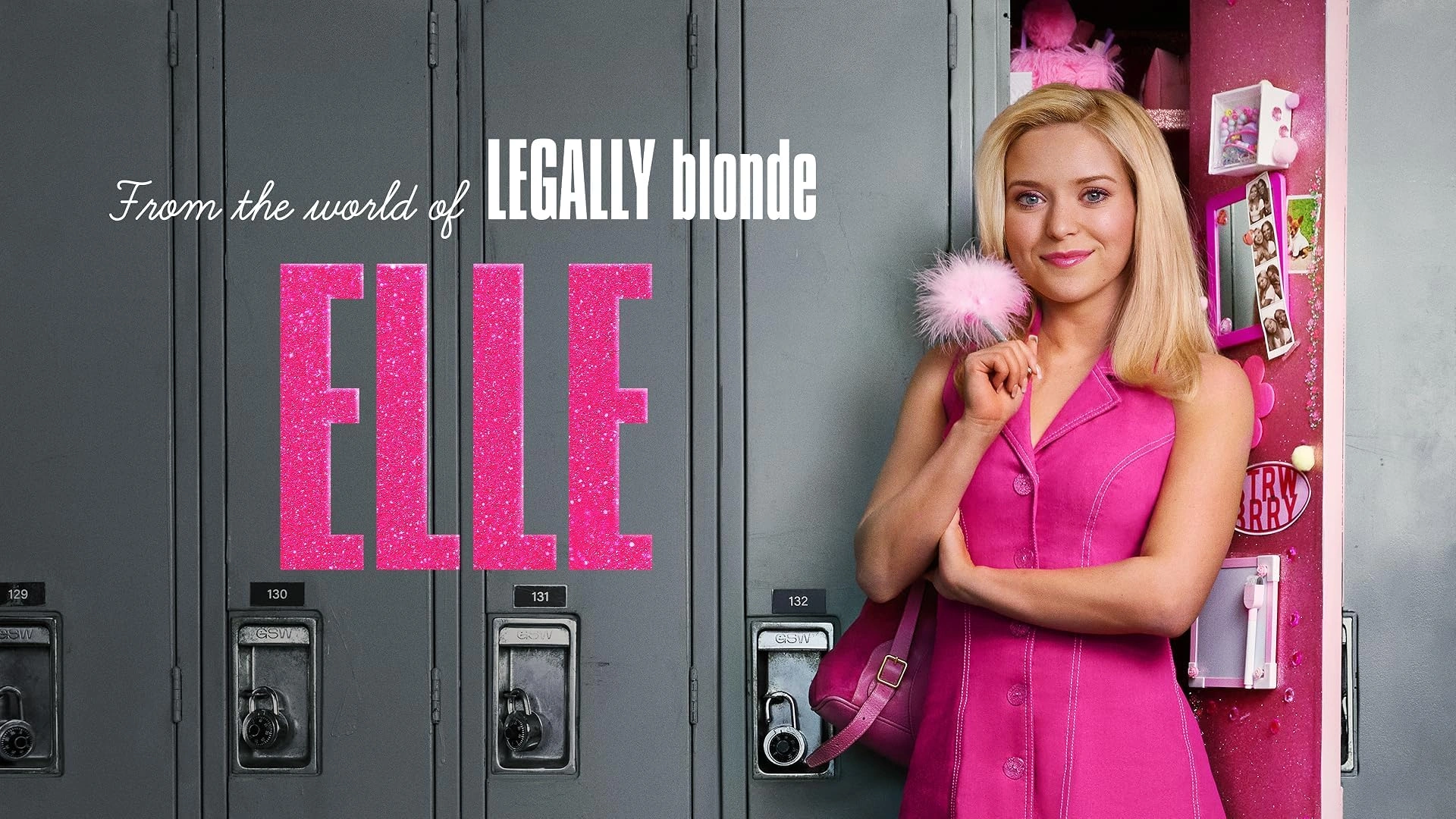

Pink arrives in Seattle like a clerical error nobody at Rainier West High wants to correct. The joke in Prime Video’s Elle is immediate and clean: take the future Harvard Law heroine of Legally Blonde, rewind her to 1995, drop her into a grunge-heavy high school, and watch Beverly Hills sunshine collide with flannel, rain, and cafeteria cynicism. It is a good pitch. It is also a pitch that starts sweating the second the franchise timeline walks into the room.
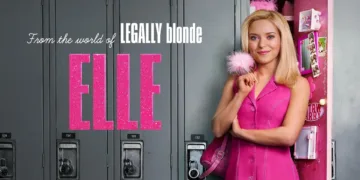
Lexi Minetree plays teenage Elle Woods at 16, back when her problems are social rather than legal. At her sweet 16 pool party in Los Angeles, she is planning the perfect junior year with the kind of confidence that treats popularity as a civic duty.
She wants to co-lead cheer with best friend Madison, find the perfect guy, and arrange her life into something glossy enough to laminate. Then her father Wyatt, played by Tom Everett Scott, botches a high-profile nose job, and the Woods family moves to Seattle to lie low. Plastic surgery malpractice has rarely done so much plot labor.
Seattle gives the series its best visual engine. Elle’s pink outfits turn every hallway into a reaction shot. Rainier West is a sea of band shirts, Doc Martens, gray flannel, and students who look personally offended by moisturizer.
On her first day, Elle introduces herself with cheerful specificity, naming iced coffee, July, and people dressing tennis-y. The room hears privilege speaking in cursive. The cut from one grunge clique to another in the cafeteria is one of the show’s sharper gags, since every supposed subculture seems to shop from the same sad laundry basket. That is where Elle works at its easiest: as a bright object dropped into a hostile color palette. The wardrobe department understands the assignment better than some of the scripts do.
A Prequel With Homework Problems
The hardest case against Elle is filed by Legally Blonde itself. The 2001 film works because Elle Woods reaches Harvard with no practice in being dismissed by an institution that thinks it has her measured. Her transformation lands because Harvard is her first big collision with a world that mistakes femininity for frivolity. Giving her a version of that lesson in high school creates a problem the show never fully beats.
The pilot feels especially trapped by the original movie. Elle is underestimated by people who mistake pink for emptiness. She tries to win over a hostile institution. She uses social fluency and kindness as weapons nobody respects until they work. She gets pushed into an embarrassing party setup that recalls the law-school mixer. Later, her ability to read fashion codes helps her crack a problem, which cannot help calling back to the perm logic that helped make Legally Blonde famous. Recognition arrives. Freshness waits in the car.
The series improves when it stops nudging the viewer in the ribs. Bruiser’s arrival is welcome because a tiny dog can survive almost any franchise calculation. The scented pink paper gag is cute enough to pass. The worse callbacks are the ones that sound like future biography being underlined in red pen, especially when someone basically points Elle toward law as if the show is worried we forgot which IP paid for the lights.
As strict canon, Elle is wobbly. If teenage Elle has already learned to survive a hostile school, face class assumptions, expose institutional wrongdoing, and win over people who sneer at her appearance, her later panic at Harvard feels smaller. The series wants to preserve the original arc while borrowing its shape in advance. That is not prequel logic. That is time theft with a bow on it.
The Lead Keeps It Upright
Minetree has the most thankless job in the series: play a younger version of a character so linked to Reese Witherspoon that every syllable risks becoming an audition tape. She comes through with a performance that is bright, technically careful, and better than the material around her in several scenes. The voice has the right upward flick. The posture has the right poised bounce. The smile has the correct danger level, which is to say she can make optimism look like a tactical decision.
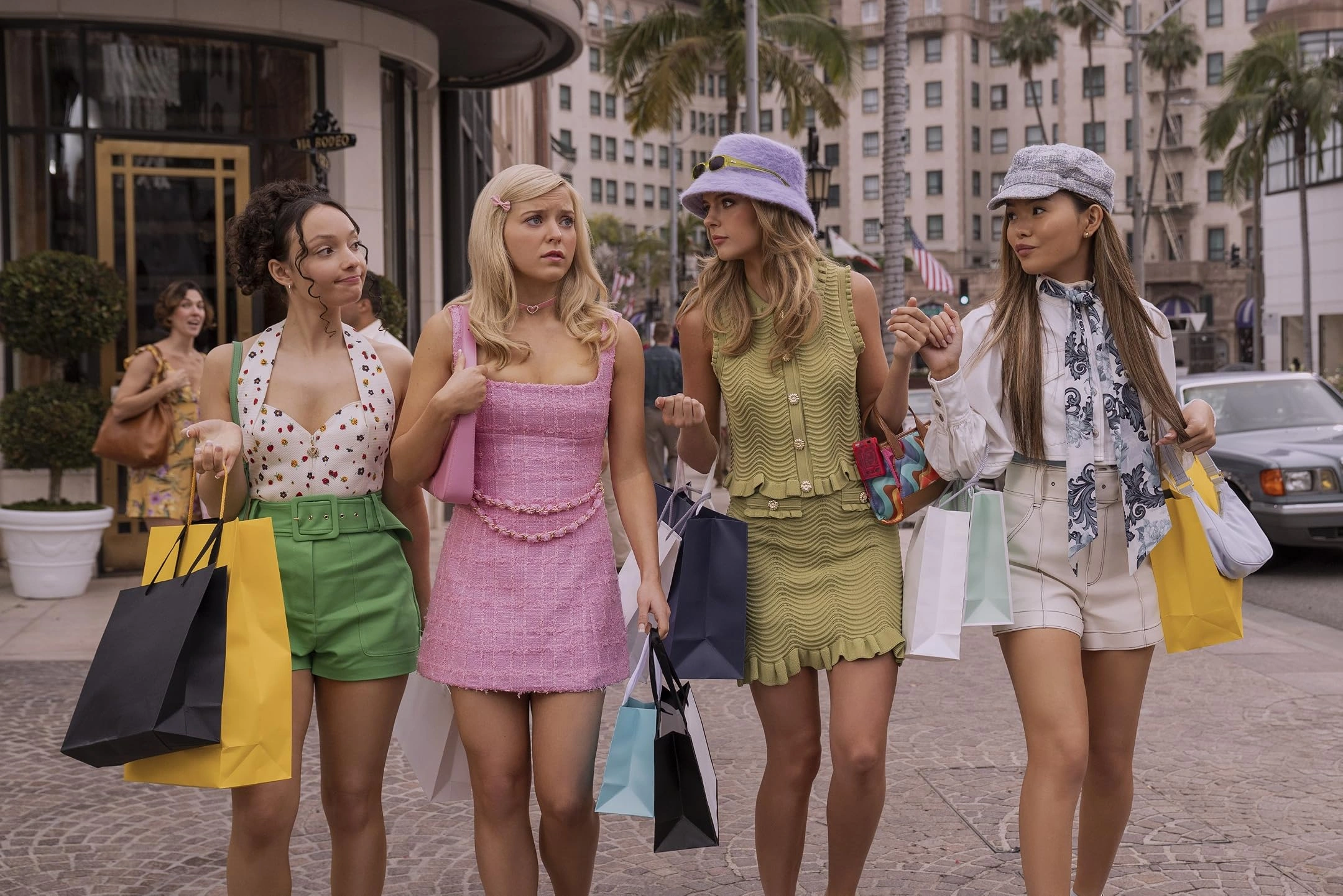
Her best choice is letting this Elle be less polished. Minetree’s Elle is not yet the woman who can walk into a courtroom and turn mockery into oxygen. She is earnest, reckless, and still learning that a good intention can land badly. The Donna subplot gives the series its sharpest moral beat.
Elle publicly praises school secretary Donna for quietly helping students, including using petty cash so a kid can eat lunch. Elle thinks she is honoring generosity. The administration fires Donna for breaking rules. For once, Elle’s charm does not erase the damage. It causes some.
That mistake gives the show an edge it needs. Elle can be humiliated at school, but she still has money, family safety, and the confidence of someone used to doors opening. Donna does not. The series briefly sees the gap between kindness as gesture and kindness as consequence. It should stare there longer.
Minetree’s strongest pairing is with Gabrielle Policano’s Liz, the zine-writing, music-obsessed student who has every reason to find Elle exhausting. Liz is not a full Vivian Kensington replacement, which helps. She is guarded rather than cruel, irritated rather than imperious.
Their scenes have a fizzy push-pull rhythm: Elle keeps trying to bond, Liz keeps refusing the emotional paperwork, and somehow both of them keep showing up. When Elle starts getting under Liz’s armor, the show finds a friendship that feels earned by behavior rather than plot assignment.
June Diane Raphael nearly steals the adult side of the series as Eva, Elle’s mother. Eva could have been a one-note Beverly Hills ornament, and the first impression leans that way. Then Seattle starts closing in on her. She has no social map, no easy circle, and no version of herself that works in this new weather.
Her friendship with Dean Wilson, played by the late James Van Der Beek, gives her story a political and emotional charge. Raphael can make a line about a turtleneck feel like an emergency broadcast. Give her a room and she will find the exit, then judge the wallpaper.
Teen TV In Too Many Sizes
Elle is often pleasant. The issue is that it keeps choosing the wrong container for its pleasures. This should be a quick, snappy teen comedy with a legal-curiosity streak and a strong ensemble. Too many episodes run closer to 45 or 60 minutes, which turns small conflicts into padded assignments. A show about teenage Elle Woods should not feel like it is waiting for the next bell.
The comedy lands best when it comes from Elle misreading a space with total sincerity. Her reaction inside a mosh pit, “This doesn’t seem sanitary!”, is exactly the right kind of joke: specific to her, specific to the setting, and short enough to leave no bruise. Her failed attempt to adapt by bedazzling a Nirvana shirt with heart sequins is another clean beat, because the costume does the setup and the students’ disgust does the punchline. No one needs to explain why it fails. The rhinestones are already testifying.
The weaker jokes treat the 1990s as a prop bin. The Bikini Kill wordplay plays like a writer’s room sticky note that survived too many drafts. Some references exist because the show wants credit for knowing the era. The product placement in early scenes has the opposite problem, dragging the viewer out of 1995 with brand names that feel polished for a sponsor deck. Elle Woods can sell many things. She should not have to sell the scene too.
The school mystery becomes a mixed blessing. Donna’s firing gives Elle a reason to investigate Rainier West’s administration, and the principal’s suspected financial misconduct provides stakes beyond popularity. The Dean Wilson mayoral material links the school plot to adult ambition.
Still, the mystery often feels installed rather than grown. Episode-ending twists try to create urgency that the social story has not always earned. There is even enough darkness around the conspiracy for the show to flirt with a murder-mystery tone, which is a strange hat for this franchise to try on. It does not go with the shoes.
The romantic material is gentler, and often duller. Dustin, the skateboarder-activist, works because Zac Looker plays him as someone amused by Elle before he is charmed by her. Miles, the sweet cross-country crush, has less definition. He is handsome, available, then complicated by existing attachments. The triangle checks the teen-TV box, but it rarely changes how Elle sees herself. Romance here is curriculum, not chemistry.
The 1995 Filter
The period setting is one of Elle’s better tools, at least before the show starts swinging it around like a museum docent with caffeine. The absence of smartphones gives the teen conflicts a softer shape. Rumors travel by hallway. Crushes require proximity. A Blockbuster trip can carry emotional weight because choosing a tape still counts as a social act. For a series built around someone who believes face-to-face charm can solve nearly anything, 1995 is useful terrain.
The soundtrack helps sell the split between Elle and Seattle. Mariah Carey’s “Fantasy” belongs to her Los Angeles glow. Garbage, Soundgarden, Radiohead, and the grunge-adjacent needle drops belong to the city’s self-image. The contrast gives the show rhythm before the scripts always know what to do with it.
Seattle itself is where the fantasy gets shaky. Rainier West treats grunge less like a culture and more like a dress code enforced by thunderclouds. Every student seems to have received the same memo: no color, no cheer, no mercy for California girls. The show wants the local kids to represent anti-conformity, then dresses them in the same anti-conformist uniform. That joke works once. After that, it starts looking like the costume department had a bulk discount on gloom.
The students’ politics also feel suspiciously polished for 1995. Their activism gives Elle useful friction, especially through Dustin and Liz, but the language sometimes sounds imported from a later teen show. The result is a Seattle that belongs less to a specific year than to a streaming platform’s memory of a year. Nobody wants historical homework from a Legally Blonde prequel, but a little mess would help. The real 1990s had sharper edges than this rain-slicked diorama.
What keeps the setting alive is Elle’s refusal to treat difference as a permanent barrier. She joins causes she barely understands, says the wrong thing, overcorrects, and returns with cookies, ideas, or a plan nobody requested. The show’s nicest high-school moments come from that insistence: the forced proximity of the Breakfast Club-style episode, the cafeteria social-map joke, the slow thaw with Liz, the campaign to get Donna reinstated. Elle’s superpower is not intelligence alone. It is her assumption that people are reachable, which is both lovely and, in high school, clinically dangerous.
The Case For Letting Elle Be Elle
The series improves whenever it stops defending its existence as a prequel and starts behaving like a teen show with its own stakes. Elle trying to repair Donna’s firing is stronger than Elle accidentally reenacting Harvard in miniature. Eva feeling lonely in Seattle is stronger than another wink toward future Elle Woods trivia. Liz resisting Elle’s friendship is stronger than any line that tells us this girl might make a good lawyer someday.
There is a good show hiding here, and it is not the origin story of a famous movie character. It is the story of a rich, sheltered, startlingly sincere teenager learning that charm has limits and kindness needs aim. Minetree can carry that show. Raphael can make the adult half sing. Policano and Looker give Rainier West enough texture to push back against its flannel-wallpaper problem. The pieces are there.
The franchise pieces are the ones that keep getting in the way. Each direct echo of Legally Blonde invites a comparison Elle cannot win, because the film had comic speed, a cleaner arc, and Witherspoon operating at star-is-born voltage. This series has warmer stretches, a few smart social details, and a lead performer who deserves a second season with fewer handcuffs. Let teenage Elle stop foreshadowing adult Elle for five minutes. She might actually surprise everyone, including the people who made the show.
The coming-of-age television dramedy series Elle premieres its first season globally for digital streaming on Prime Video on July 1, 2026. Audiences can watch all eight episodes of the introductory season exclusively on the subscription platform. Serving as an official high school prequel to the iconic 2001 film Legally Blonde, the narrative follows a teenage Elle Woods in 1995 as her family abruptly relocates from the glamorous luxury of Beverly Hills to a gray, rainy high school in Seattle, forcing the fashion-loving optimist to navigate a cynical grunge culture while unearthing a major school conspiracy.
Where to Watch Elle Online




Full Credits
Title: Elle
Distributor: Prime Video
Release date: July 1, 2026
Rating: TV-14
Running time: 45–60 minutes per episode
Director: Jason Moore, Sammi Cohen, Pete Chatmon, Stacie Passon
Writers: Laura Kittrell, Caroline Dries, Josh Schwartz, Stephanie Savage
Producers and Executive Producers: Reese Witherspoon, Laura Kittrell, Lauren Neustadter, Caroline Dries, Amanda Brown, Marc Platt, Josie Craven, Jason Moore
Cast: Lexi Minetree, June Diane Raphael, Tom Everett Scott, Jacob Moskovitz, Zac Looker, Amy Pietz, Gabrielle Policano, Chandler Kinney
Director of Photography (Cinematographer): Prime Video Production Crew
Editors: Prime Video Post-Production Team
Composer: Prime Video Music Department
The Review
Elle
Elle has the right shoes and the wrong map. Lexi Minetree gives teenage Elle enough sparkle to survive the pilot’s heavy franchise recycling, and June Diane Raphael nearly steals the family subplot from under her. The Seattle grunge setting makes for sharp visual comedy, especially when pink meets flannel, yet the mystery plot and love-triangle filler keep stretching a premise that needed quicker feet. Fun in bursts, shaky as canon, pleasant as teen TV.
PROS
- Lexi Minetree’s bright lead turn
- June Diane Raphael’s Eva subplot
- Elle and Liz’s sweet friction
- Strong 1995 visual contrast
- Fun grunge-era comic setups
CONS
- Weak fit with Legally Blonde canon
- Pilot repeats the movie too closely
- Mystery plot feels padded
- Romance beats lack urgency
- Seattle setting gets flattened