




















Television has spent decades treating technological progress as scenery: a few smoking factories, a telegraph key, perhaps an inventor shouting that the future has arrived. Sparks of Tomorrow is far more interested in who gets to imagine that future and who already owns the machinery standing in its way.
Kyoto Animation’s alternate-history drama places Kihachi Sakamoto in a Meiji-era Japan where steam has retained its industrial dominance and electricity remains a half-formed possibility. As a child, Kihachi travels with his older brother Seiroku, whose 20th Century Electrical Catalog collects ideas for a coming electrical age. Seiroku later strings lights across a public pathway, briefly illuminating the night before the police arrive and send the brothers running.
The scene turns scientific experimentation into public disruption. People stop. Authorities chase. Two businessmen nearby recognize that Seiroku’s interest gives electricity commercial significance. Progress already has spectators, police, and investors.
Four years later, Seiroku has gone to war and never returned. Kihachi repairs machinery and treats his own experiments with defensive contempt. The boy who once ran beneath electric lights now needs evidence before granting value to anything, including himself. Apparently technological revolutions still require a wounded young man with terrible self-esteem. Some television traditions survive every timeline.
Faith Meets Machinery
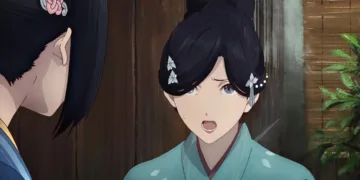
Inako Momokawa gives the series its strongest character counterweight because her faith is presented through action rather than a stack of speeches about optimism. At a shrine, she begs the gods to let her speak with her dead mother. Kihachi accidentally activates his gramophone, and Inako briefly assumes Paradise has answered.
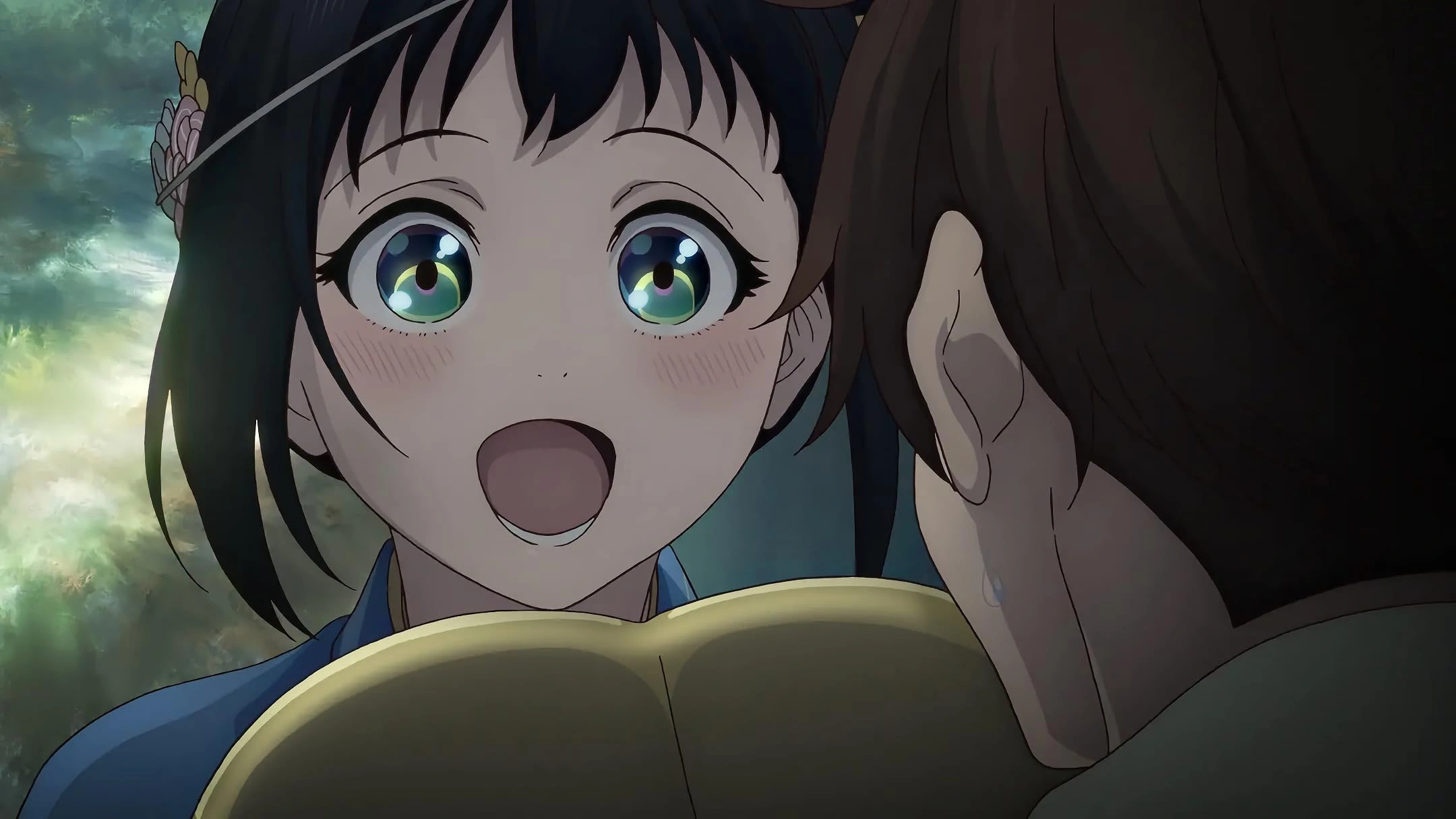
The joke could have made her merely foolish. Instead, the gramophone becomes a smart demonstration of how technology changes meaning according to who encounters it. Kihachi hears a mechanism. Inako hears the possibility of crossing death. He records her voice, plays it back, and watches her confront an experience she has no vocabulary for.
Their later encounter with Kihachi and Yajiro’s projector develops the same idea. Yajiro paints Paradise. Kihachi’s filament bulbs give those paintings light and movement. Inako sees the resulting projection and calls it extraordinary while Kihachi dismisses it as a trick.
That difference matters. Kihachi believes invention receives value only after external proof. Inako grants value before institutions, markets, or experts arrive to certify it. Her declaration that believing is her talent sounds almost painfully sincere, yet the episode keeps validating the principle through concrete decisions. She escapes her family home carrying Seiroku’s Catalog. She seeks Kihachi after collapsing on the road. She tells him his work matters while he is busy constructing arguments for why it does not.
Their chemistry grows from this ideological friction. Kihachi gives physical shape to invisible ideas. Inako keeps insisting invisible ideas deserve the chance to become physical.
Steam Has an Heir
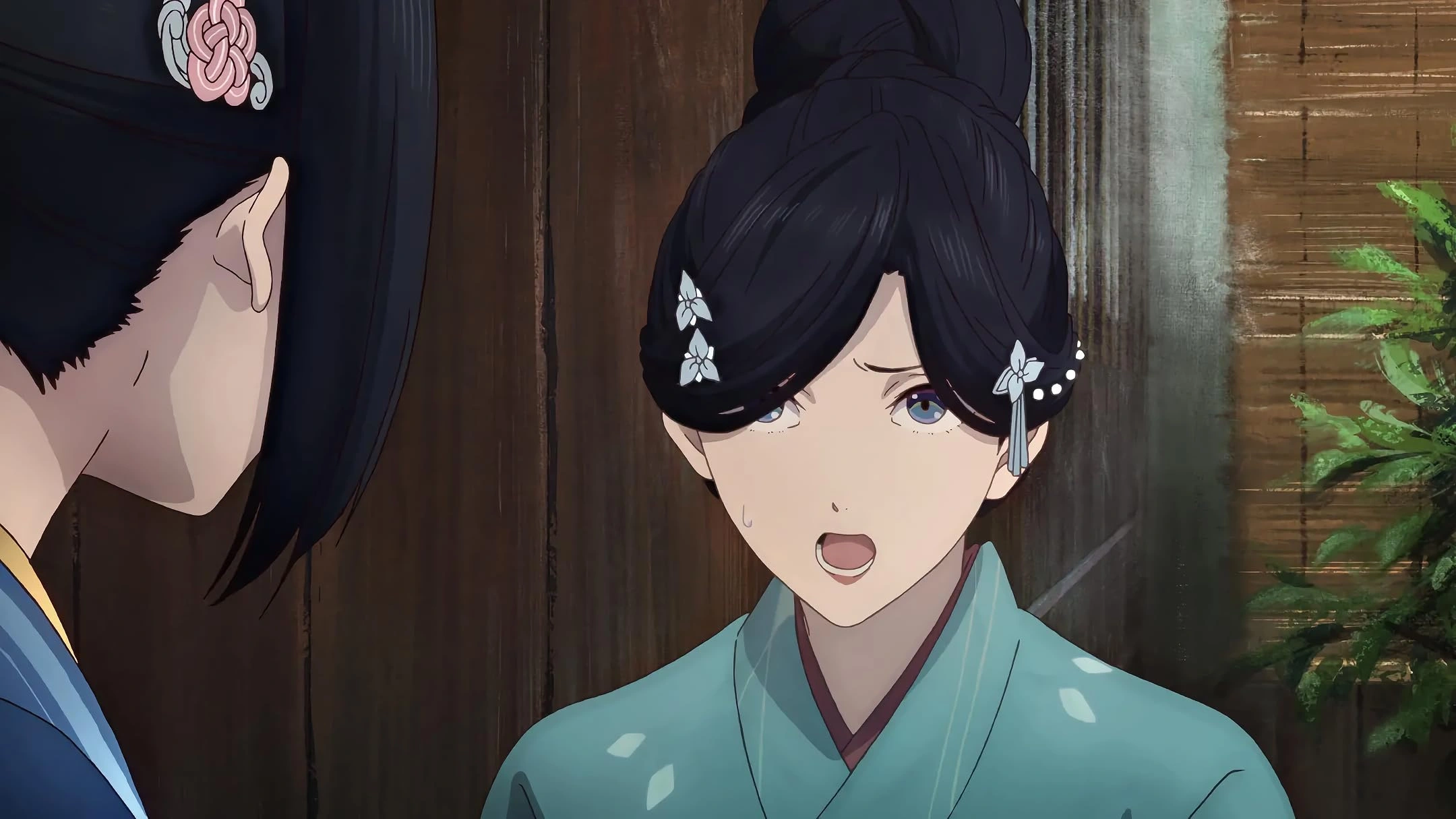
The premiere’s sharper political argument arrives through Yosuke Mizoe, heir to the family controlling the country’s leading steam-engine business. He visits the indebted Momokawa household, demands payment, then proposes marriage to Inako when her father cannot settle the account.
Money, marriage, and industrial power become parts of the same transaction. Yosuke’s presentation is gloriously excessive. An attendant follows him with an incense burner, turning the air around his body into another luxury he appears unwilling to share with ordinary people. His search for Seiroku’s Electrical Catalog carries similar entitlement. He tears through the Momokawa property because the possibility of electricity is already a threat to the economic order that produced him.
The series could easily reduce Yosuke to a steam-powered cartoon villain, and his first appearances certainly flirt with that problem. His melodramatic movements and invasive behavior are pushed close to parody. Yet his fixation on the Catalog gives the conflict a useful material foundation. He is frightened by an idea because ideas can destroy inherited advantages once somebody builds them.
Noriko’s decision to secretly hand the Catalog to Inako is equally significant. Her father accepts Yosuke’s coercive proposal, but the sisters create their own channel of resistance inside the household. Inako’s escape is clumsy, panicked, and physically messy. It still moves Seiroku’s knowledge away from the man trying to monopolize it.
The episode closes with Kihachi finally holding the book tied to his missing brother as Yosuke reaches him before he can examine it. The future, apparently, already has a copyright dispute.
A City Painted Through Smoke
Kyoto Animation gives this ideological conflict a visual grammar that rarely settles for decorative steampunk. Steam occupies space aggressively. Smoke drifts through streets, machinery crowds the environment, and vehicles announce themselves through weight and exhaust. Electricity appears in thinner forms: a filament glowing, a projector flickering, lights briefly tracing a path through darkness.
The backgrounds are especially expressive. Worn shrines, overgrown spaces, quilts hanging above narrow streets, and visible brush textures make Kyoto feel touched by weather and human use. The softer watercolor surfaces sometimes clash with glossy character designs and conspicuous CGI machinery. Kihachi’s electric fantasy sequence pushes the digital sheen so far that the stylistic break becomes part of the point, his imagination suddenly producing a future too artificial and excessive for the world currently surrounding him.
Tonal shifts are less controlled. Kihachi jumping at a cat or Yosuke staging another flamboyant entrance can sit awkwardly beside Seiroku’s disappearance and Inako praying for her mother. The comedy occasionally behaves like another series has wandered into the room and refused to leave.
Still, Sparks of Tomorrow finds its richest idea in the collaboration between Yajiro, Kihachi, and Inako. One paints Paradise. One invents a way to project it. One looks at the image and believes it matters. Scientific development is rarely the solitary achievement television likes to package around a single genius. Here, creation depends on artists, mechanics, believers, families, and the people wealthy enough to fear what happens next. For an industry forever chasing the next technological disruption, that is a rather pointed little spark.
The highly anticipated steampunk anime series Sparks of Tomorrow premiered its first episode on Japanese television networks and globally via Netflix on July 5, 2026. Viewers can watch the weekly episodic release on Netflix with an active subscription. Set in an alternate reality Meiji-era Kyoto where steam power reigns supreme, the plot follows an unlikely duo who team up to locate a missing handwritten notebook that holds the technological secrets to realizing an “Age of Electricity.”
Where to Watch Sparks of Tomorrow Online


Full Credits
Title: Sparks of Tomorrow
Distributor: Tokyo MX, BS11, ABC TV, TV Aichi, Netflix
Release date: July 5, 2026
Rating: TV-14
Running time: 24 minutes per episode
Director: Minoru Ōta
Writers: Tatsuhiko Urahata, Hiro Yūki
Producers and Executive Producers: Kyoto Animation Production Team, Lantis, Heart Company
Cast: Yūma Uchida, Sora Amamiya, Kōki Uchiyama, Daisuke Ono, Shunsuke Takeuchi, Minako Kotobuki, Yō Taichi, Ayahi Takagaki, Daichi Endō, Daisuke Hirakawa
Director of Photography (Cinematographer): Hiroki Ueda
Editors: Kyoto Animation Editorial Department
Composer: Hitomi Kotō
The Review
Sparks of Tomorrow
Sparks of Tomorrow treats technological change as a social argument rather than shiny period decoration. Kihachi's projector, Inako's gramophone misunderstanding, and Yosuke's incense-clouded entrances turn electricity, faith, and inherited power into competing ways of imagining Japan's future. Kyoto Animation occasionally lets tonal comedy collide awkwardly with grief, yet its painted streets and painstaking machinery give invention genuine emotional force. A television industry obsessed with louder hooks could learn something from a premiere willing to make curiosity its engine.
PROS
- Rich alternate-history world
- Kihachi and Inako's sharp dynamic
- Exceptional painted backgrounds
- Technology carries thematic weight
- Distinct supporting characters
CONS
- Abrupt tonal shifts
- CGI can jar against backgrounds
- Dense premiere ensemble