























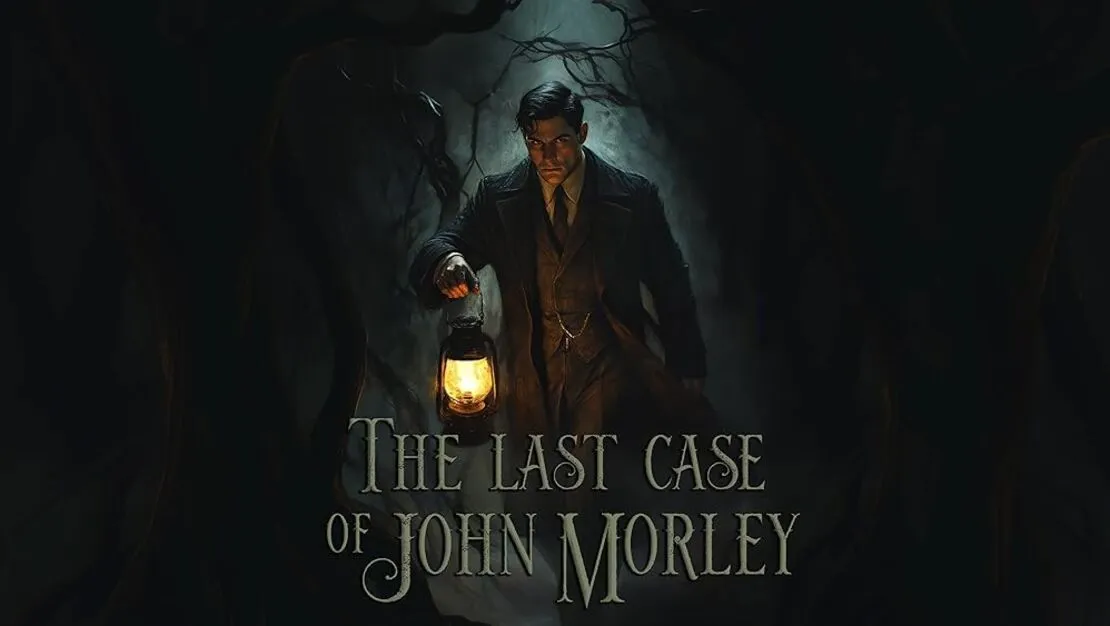

What is the expiry date on a mystery? Does a killing that the public has filed away still have the power to hit hard after twenty years of silence? The Last Case of John Morley frames those questions inside the grit of post-war London and turns them into a tightly guided first-person investigation. The experience leans heavily on psychological tension and controlled narrative delivery.
We step into the role of John Morley, a Private Investigator whose life has been shaped by failure and lingering injury. Fresh from a hospital stay, he returns to a world of heavy debts and professional isolation, his office stripped of support after his long absence.
That stalled life shifts as soon as Lady Margaret Fordside walks through his door. She offers a generous fee to re-open a case the public has already accepted as closed, the 1922 murder of her daughter Elody. Fordside rejects the official verdict and gives Morley a clear directive: identify the real killer. That single task pulls the player toward the long-abandoned family villa, a house frozen at the moment of catastrophe. From the outset the game positions itself as a narrative adventure that favors tightly controlled storytelling beats over the intricate clue-linking systems associated with deep detective simulators.
Shadow and Suspense: Atmosphere and Story Pacing
The story structure commits fully to a straight, linear path, using the cold case frame to keep tension running. Setting the investigation two decades after the crime creates an immediate hook. However, that decision demands a generous suspension of disbelief. For Morley to function as a detective, the deserted manor needs to sit untouched for twenty years.
The player encounters upended furniture and spilled drinks that somehow remain perfectly preserved, tiny details that still serve as intact clues. The absence of decay supports the puzzle design yet pushes the player to read the location as a staged set, with credibility as a crime scene pushed into the background. The design leans into this contrivance and puts atmosphere ahead of realistic investigative procedure.
Indigo Studios has a clear talent for building focused, oppressive spaces, and that sensibility defines this project. The environments, the rotting manor and later the empty psychiatric hospital, feel built to unsettle. Darkness, moody lighting, and sharp audio cues work together to create a constant sense of dread.
The game echoes classic psychological thrillers in the way the setting starts to feel like another character watching from the edges. Morley never faces direct physical danger, yet the game still leans into psychological horror. Sudden jump scares and uneasy ambient sounds keep players tense. This focus on internal fear and environmental decay separates the game from action-oriented horror and helps it sit comfortably within the studio’s preference for slow, tension-driven mysteries.
Elody’s death anchors the emotional pull of the experience. Documents scattered through the environment and brief flashbacks slowly assemble a picture of loss and concealed ties. Late in the game the script attempts a substantial twist. For that sort of reveal to hit hard, the material leading up to it needs careful misdirection. Here the game lands in an uneven place. Hints along the main path reveal too much too early, which suggests the plot could have benefited from richer alternatives and suspects with stronger development.
That early clarity dulls the final reveal. With more space for suspicion to shift and for supporting figures to gain definition, the twist could have carried greater weight. Even so, the game plants the player firmly in a decadent, mid-20th-century English mood. The documents scattered around the estate act as vital tools, opening doors to the past and deepening both the history of the house and the emotional charge of its rooms.
The Passive Detective: Mechanics and Puzzles
Moment to moment, the game rests on a straightforward first-person exploration loop. The player moves through corridors and rooms, interacts with marked objects, tackles small puzzles, and unlocks the next pocket of story. This structure keeps the pace tight and forward leaning, always pushing the investigation deeper into the mansion and into the core mystery.
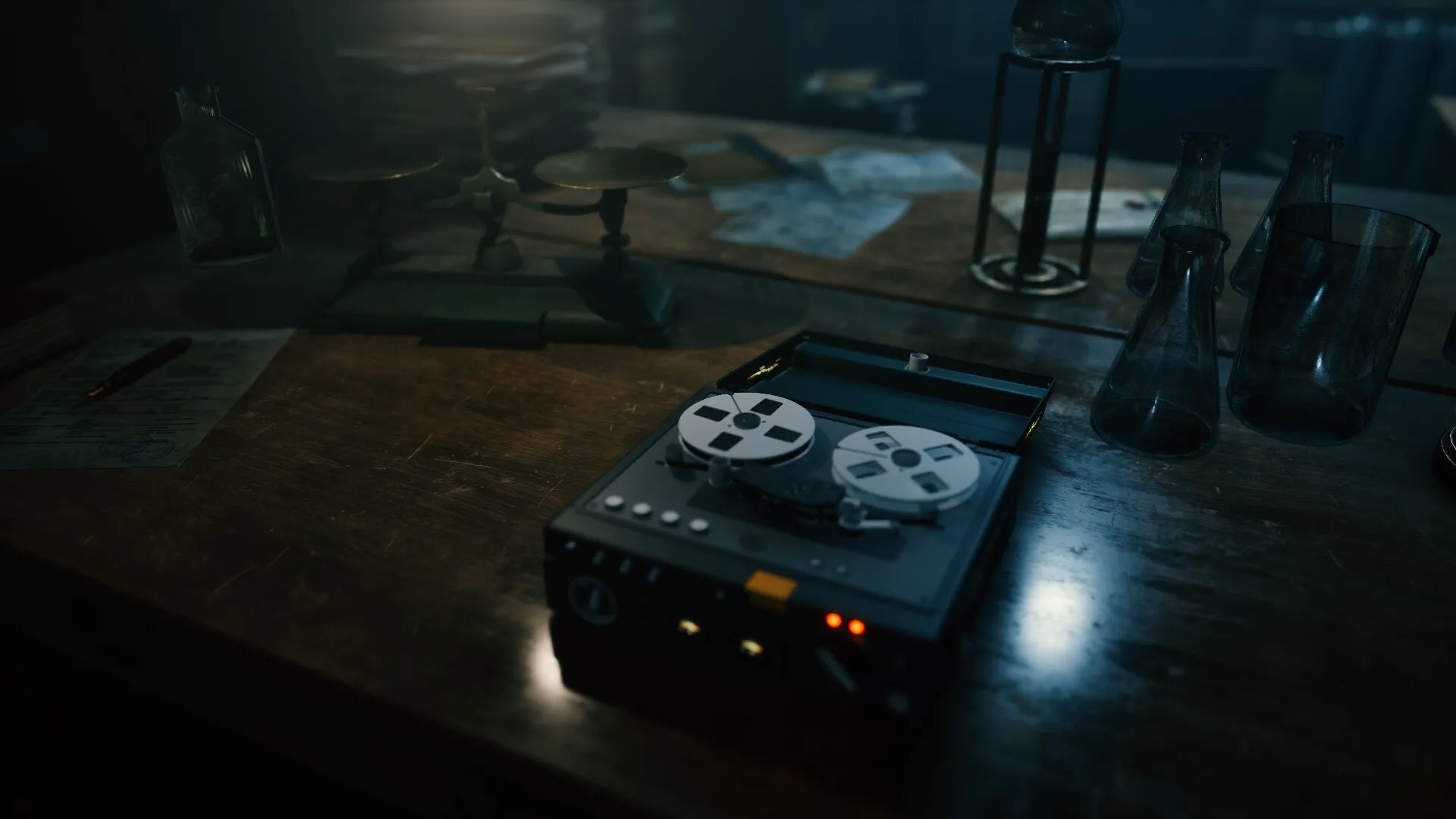
The designers make a conscious choice to step away from classic deduction systems. Morley operates as a relatively passive investigator. Key information in the environment lights up through visual signals described as green glows or “fireflies.” Interacting with these points triggers fixed visual reconstructions of past events. This device guarantees that players receive every crucial detail in a controlled order, which supports the narrative and steers the experience toward a guided film strip with little room for hands-on sleuthing.
The player primarily observes and assembles fragments that the game lays out in sequence. Detective titles that ask players to place clues on boards or risk incorrect accusations rely on the thrill of a personal leap of logic. Here, failure carries almost no risk, so the rush of a hard-won “eureka” moment gives way to steady story momentum.
Puzzles sit neatly inside this progression. They tend to be light and direct, often taking the shape of simple locks that accept numeric codes or require recall of a specific detail from a nearby room or document. They function as brief pauses that ask for attention to space and detail and avoid demanding lateral thinking. Players who seek demanding mental challenges may find these tasks obvious and low key.
Quality of Life decisions create sharper friction. The game offers no in-game notebook or clue inventory. A structure built around discovering and reusing codes and sequences still expects players to hold that information in memory or on physical notes. That absence works against the design. The lack of quick access to past findings encourages repeated backtracking to reread documents, stretches the modest runtime, and cuts into the carefully built mood.
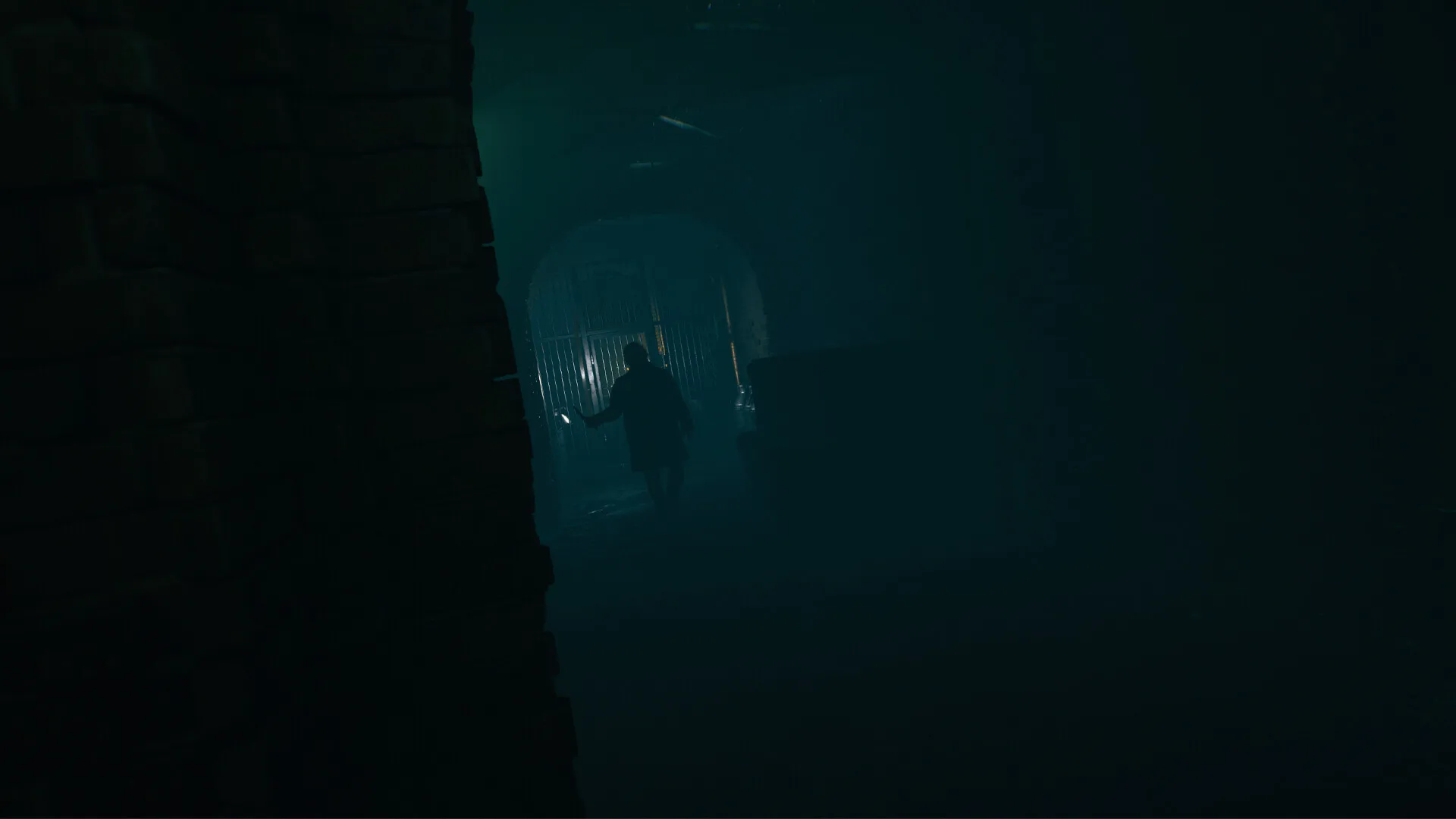
This choice feels out of step with a genre that often leans on in-game tools to track complex information. Late in the story, basic resource pressure appears when Morley’s lantern breaks without much warning. Players then move through progressively darker hospital corridors with restricted vision, a change that adds strain and visual discomfort without any real sense of survival pressure.
Budget Aesthetics and Technical Rough Edges
From a production angle, The Last Case of John Morley clearly comes from a small indie team, and the visuals carry that limitation. The game aims for modest fidelity, and the art direction squeezes a surprising amount from the available assets. Hard-boiled noir mood comes through in the layout of the spaces, with a strong emphasis on shadow and sharp contrast. The design of the decaying interiors can be striking, and there are stretches where it feels natural to stop, look around, and absorb the peeling walls and ruined ornamentation.
Technical issues repeatedly chip away at that work. Bugs appear with regularity. Character models sometimes snag on props or invisible bits of level geometry. Visual hiccups, including objects that pop in and out of sight depending on distance or light, pull the player out of the fiction and weaken the sense of place. One specific problem on PC involves the TAB key, which can completely lock character movement and force a quit and reload.
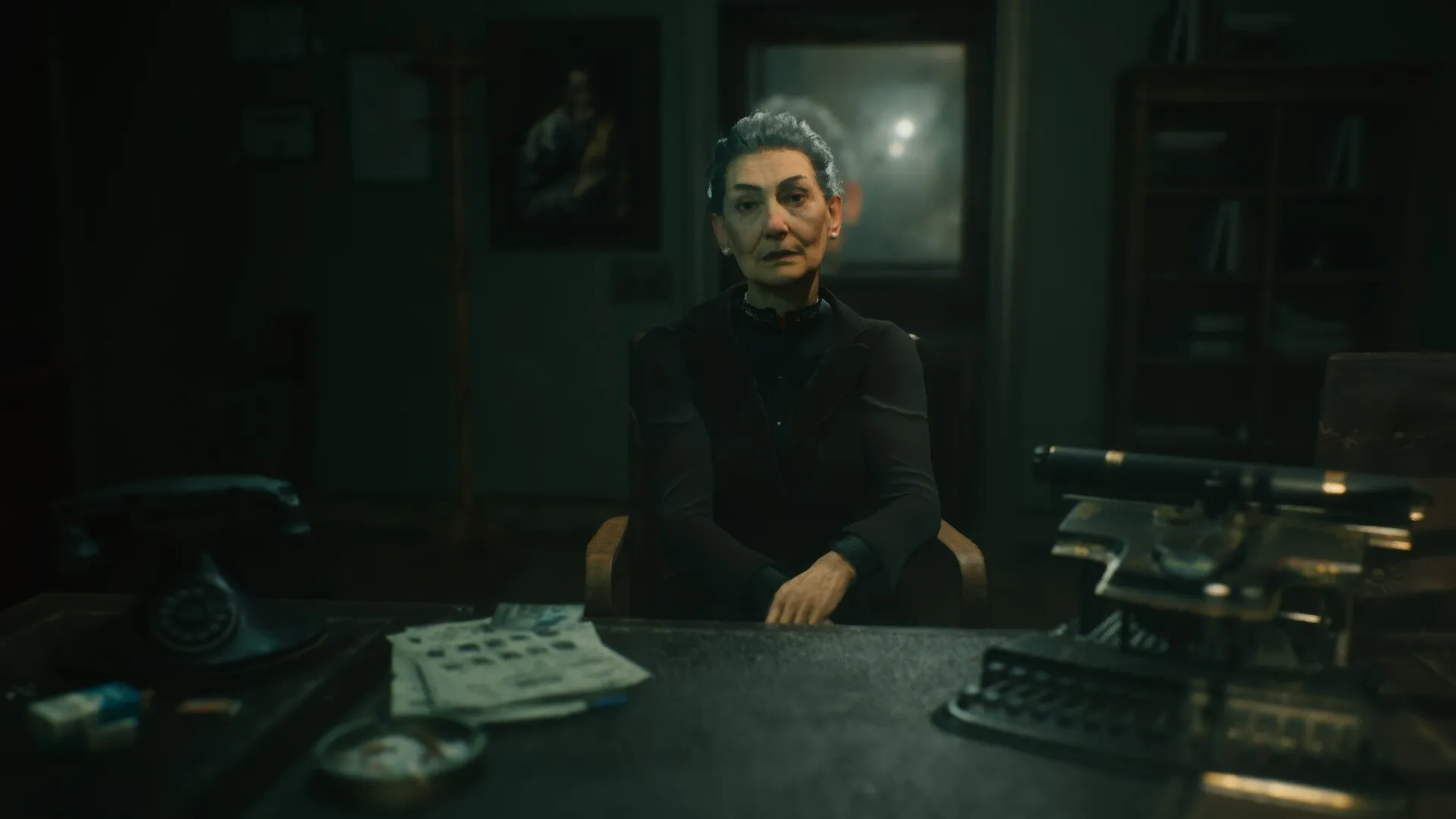
Character models carry their own problems. Facial expressions and body animation often look stiff and basic, which creates an occasionally unsettling or “iffy” look in dialogue scenes. That lack of nuance sits at odds with the intense psychological drama that the script tries to stage.
The save system adds more friction. The autosave checkpoints arrive at awkward points, often after a major puzzle or once an area has been fully cleared. Hitting a bug or making a minor mistake can wipe ten minutes or more of progress. For a game that aims for smooth narrative flow, that structure turns small technical stumbles into a source of outsized frustration and can leave players irritated with the system itself.
Whispers in the Dark: Sound Design and Performance
Sound carries much of the game’s tension. Ambient creaks, distant knocks, and sharp stingers work together to heighten the sense of threat in empty rooms. A carefully selected score built around piano lines adds a classic film noir pulse to long stretches of quiet exploration and reinforces the sense of walking through a haunted memory.
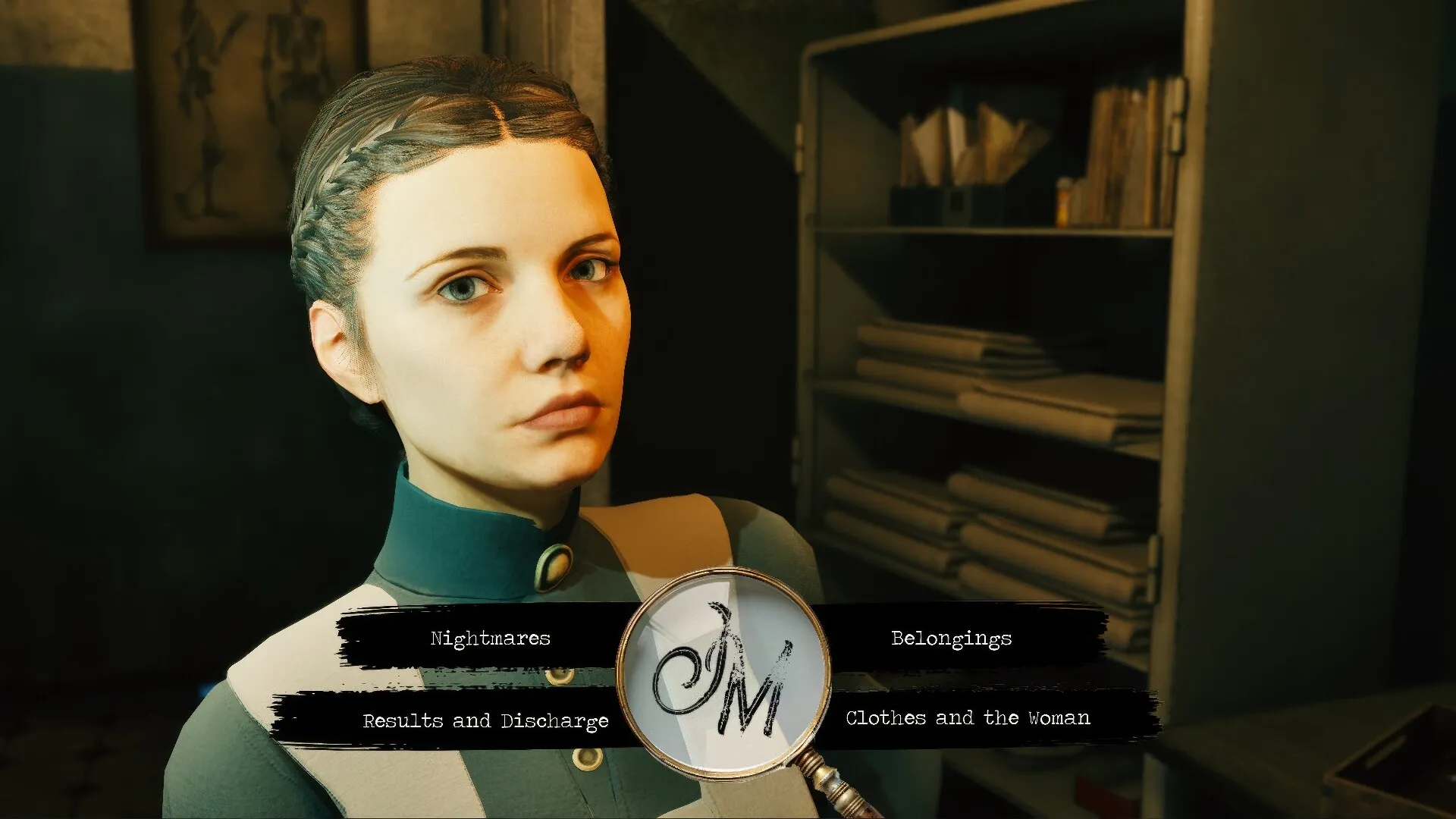
Voice work lands in a mixed place, a familiar situation for smaller projects. The choice to fully voice the game deserves credit, yet the delivery varies. John Morley’s performance usually reaches a functional level, though it often falls short of the fear and intensity that the unfolding events suggest. The script compounds this gap by asking him to verbalize nearly every thought.
He talks through each step and observation, which turns inner deduction into running commentary. That constant narration strips away some of the silence and interior poise traditionally associated with a noir detective and makes the character feel less enigmatic. Secondary performances range in strength. Lady Margaret Fordside, for example, sometimes delivers lines with a flat tone that fails to match the gravity of a two-decade-old murder.
Value and The Shortest Investigation
The Last Case of John Morley offers a brief experience, landing at roughly 2.5 to 3 hours for most playthroughs. That length shapes a straightforward story that moves briskly from scene to scene. The tight structure leaves little slack, yet it also means that deeper themes and relationships only receive brief attention, which limits the degree of emotional attachment the plot can generate.
The rigid linear path and single ending leave very little space for replay. Once the mystery is solved, the interactive part of the design has delivered everything it can.
The question of value ties directly to the modest price point and the game’s ability to deliver a single, contained experience. Players drawn to short, atmospheric mystery games that resolve in one sitting are likely to accept the brief runtime.
The game supplies a concentrated hit of noir-style suspense that invites a look. Technical flaws and passive investigation keep it from reaching its full potential, yet the experience still fulfills its pitch as a compact, somewhat predictable psychological mystery that manages to hold on to its gloomy tone from opening to final scene.
The Review
The Last Case of John Morley
The Last Case of John Morley offers a tense, atmospheric trip into a world of hard-boiled mystery and psychological horror. The small team excels at crafting a compelling setting and a tragic, linear narrative that works best as a one-sitting experience. However, its significant technical glitches, lack of an inventory system, and passive puzzle design prevent it from becoming a truly memorable detective title. It is a flawed, short burst of atmosphere worth exploring for the genre enthusiast, provided expectations for polish and depth are tempered.
PROS
- Excellent use of lighting, shadow, and sound to create a constant sense of dread and noir decay.
- The 20-year-old cold case provides a tragic and intriguing central mystery.
- The short, linear structure ensures the narrative moves along efficiently without unnecessary filler.
- The environmental construction successfully evokes a decadent, mid-20th-century aesthetic.Prone to bugs, character sticking, object pop-in, and a disruptive TAB key error.
CONS
- Prone to bugs, character sticking, object pop-in, and a disruptive TAB key error.
- Deduction is handed to the player; there is a distinct lack of challenging mechanics or manual evidence connection.
- The absence of an in-game notebook forces frustrating backtracking and external note-taking.
- The game is completed in 2.5 to 3 hours with virtually no replay value.
- The supporting cast often delivers flat performances that undermine the emotional scenes.
- Autosave checkpoints are placed too far apart, leading to significant loss of progress upon failure.