



















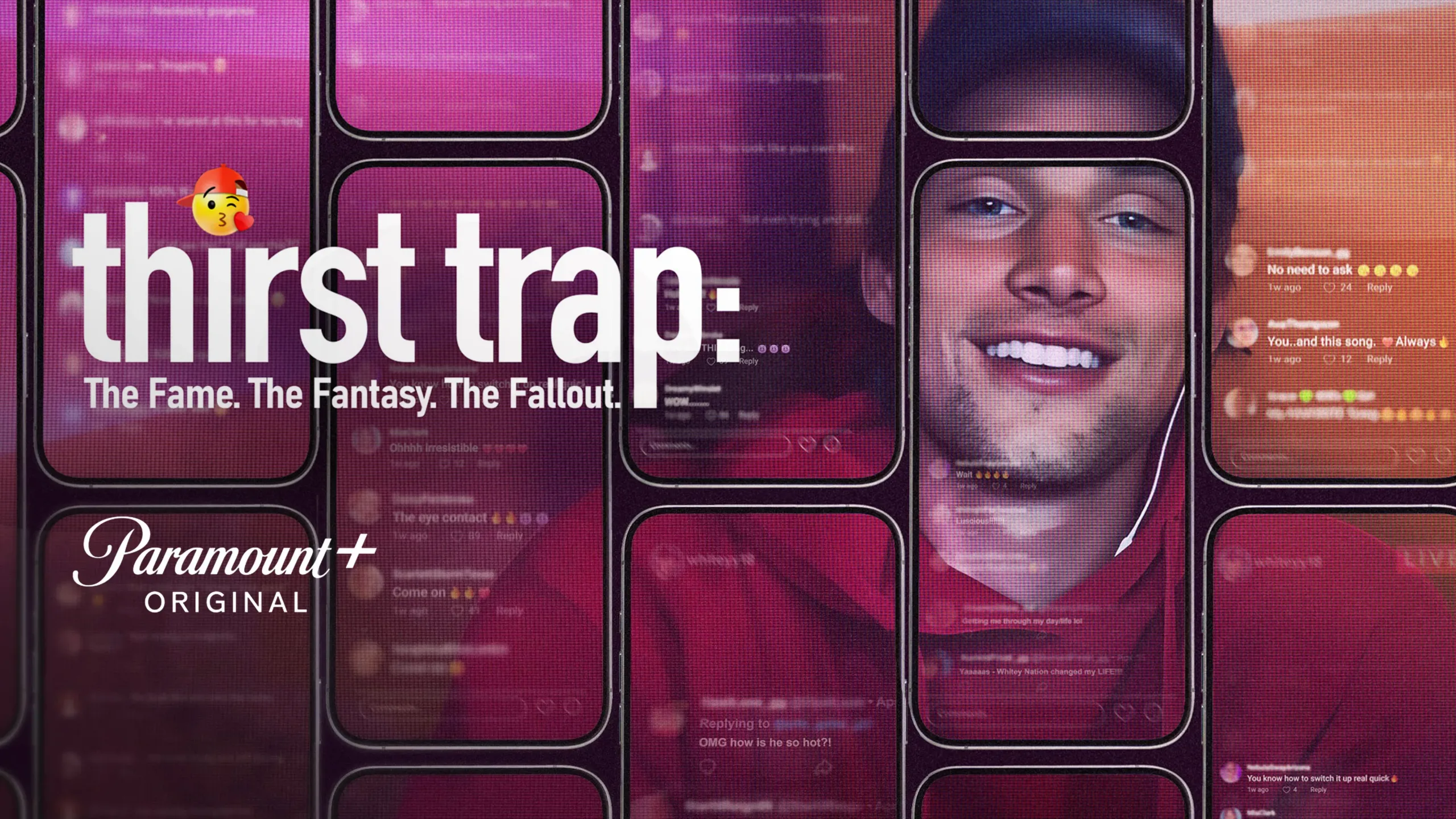

Consider the state of cultural consumption when one of the loudest dramas of the moment revolves around a clean-cut Canadian lip-syncing into his phone and the middle-aged women who bankroll the performance. Thirst Trap: The Fame. The Fantasy. The Fallout., a two-part docuseries, studies the ecosystem of contemporary digital stardom with a mix of curiosity and unease. The series follows William White (@whiteyy18), a TikTok influencer who experienced sudden, intense visibility during the 2020 lockdowns.
His viral breakthrough, a lip-sync to Barry Manilow’s “Mandy,” secured his place with a demographic long sidelined by youth-oriented platforms: older female fans. The project frames itself as a dark inquiry into the parasocial relationship, tracing how a harmless digital crush slides into fixation and eventually into a toxic social meltdown.
Built around interviews with White and central members of his devoted fan group, known as the “Grotto Girls,” the documentary studies the mechanics of this ecosystem. It tracks the rapid financial and psychological exchanges that shape this contemporary version of celebrity and expose how volatile it can become.
The Replication of Obsession
White’s ascent marks a significant shift in how female desire appears in popular culture. His look and performance style, a “sexy baby” persona that reads as attractive yet non-threatening, muscular yet persistently “clean-cut,” create an outlet for middle-aged women seeking a romantic fantasy figure. His appeal feels specific and recognizable, echoing the image of uncomplicated heartthrobs from earlier eras of pop idolatry.
The phenomenon creates space for a particular group of women, many with substantial financial independence, to articulate sexual and romantic longing in public. They recreate familiar patterns from earlier fan cultures, and this time the entire exchange happens in real time on digital platforms.
Money intensifies the speed and severity of that pattern. Fans are urged to send payments, often sizable, through services like PayPal. The series notes that some viewers contribute large sums over extended periods, effectively underwriting White’s lifestyle and allowing him to present himself as a full-time influencer. This direct flow of cash blurs the distinction between consumer and patron and nurtures a feeling of ownership among the most dedicated followers. As financial commitment grows, personal lines grow thinner. Documented behavior moves quickly beyond screens. Fans mail gifts to the home of White’s parents.
They track his whereabouts, appearing in cities he visits in hopes of a fleeting encounter. The show gently links this escalation to the isolation of the pandemic, which offered fertile conditions for these intensified attachments to grow, with digital fantasy standing in for offline connection. The pattern recalls long-standing models of celebrity worship and argues that with enough time, disposable income, and access, any demographic can sink into a deeply unsettling version of obsession that mirrors some of the most possessive tendencies in entertainment history.
When the Persona Fractures
The collapse of the WhiteyyNation community provides the series with its most chaotic and disturbing passages. The crisis begins with White’s involvement with a fan known as “DisneyMama,” an episode that sparks fierce jealousy and tears the fanbase apart. This encounter, which places parasocial fantasy alongside clumsy real-world intimacy, sets off a toxic chain reaction that spreads across platforms. The conflict grows into harassment campaigns, with fans turning against one another. The documentary records extreme incidents of stalking and a particularly horrifying event in which explicit images belonging to a fan, who is also a sex worker, are sent to her son. The hostility moves past criticism and becomes organized emotional aggression.
White’s response to this collapse reveals the limits of the persona his fans helped construct. Faced with the fallout of the fantasy he cultivated, he responds with immaturity and defensiveness. His “heel turn” takes shape through angry outbursts and vicious language aimed at critics.
In interviews, he does not appear as a remorseful idol. He comes across as a young man overwhelmed by pressure, often shallow, reactive, and short on self-awareness. The gentle, non-threatening figure his followers once celebrated disappears the moment scrutiny intensifies. The docuseries captures the turmoil with vigor, yet its interpretive frame remains thin.
It points toward a crisis of loneliness in contemporary society but rarely pauses to probe deeper psychological or sociological explanations. Viewers are left to confront the sheer absurdity of the behavior, both from White and from his most devoted supporters, without a clear analytical guide to the forces driving them toward these extremes. The preference for spectacle over rigorous interrogation shapes the project into a sharp record of digital excess while leaving its commentary on social isolation relatively underdeveloped.
The Addictive Nature of the Cycle
The ending of the docuseries carries its sharpest commentary on the entertainment machine that surrounds White. The series attempts to shape his story into a redemptive arc that features a stay in rehab, a reunion with his family, and a conspicuous, lavish baptism in Greece. White publicly declares a desire to move away from “thirst traps” and pursue a more sober, disciplined life. Loyal followers embrace this shift and express renewed enthusiasm for his supposed transformation.
However, the closing stretch of the film undercuts that arc. The documentary reveals that White’s public farewell to social media lasts only forty-eight hours. He reportedly quits and returns to the platform over twelve times, slipping back into the same style of content he had promised to abandon. This repetitive pattern dismantles the portrait of recovery that the narrative attempts to build only moments earlier. It reframes the Grecian baptism and its grand promises as a temporary, performative gesture aimed at controlling his image and re-energizing his base.
The series indicates that White relies on the algorithmic cycle of attention, validation, and income with an intensity that mirrors the fixation of his most obsessive fans. The docuseries ends on an unrelentingly bleak note. The structure that produced his rapid rise and ugly fallout remains intact, ready for another subject. The final impression is of a culture in which the pursuit of attention outruns any concern for real well-being, locked into a punishing, self-perpetuating loop inside the digital economy.
The two-part docuseries Thirst Trap: The Fame. The Fantasy. The Fallout. premiered on September 9, 2025, and is available for streaming exclusively on Paramount+. The series chronicles the meteoric rise and subsequent chaos surrounding TikTok heartthrob William White, offering interviews with White and his obsessive fanbase to examine the blurring lines between digital fantasy and real-world boundary breaking.
Full Credits
Title: Thirst Trap: The Fame. The Fantasy. The Fallout.
Distributor: Paramount+ (Paramount+ Original, from See It Now Studios)
Release date: September 9, 2025
Running time: 2 Episodes (Approx. 51 minutes and 40 minutes)
Director: Trish Neufeld
Producers and Executive Producers: Susan Zirinsky, Terence Wrong, James Buddy Day, Aaron Fishman, Jon Nadeau, Paige K. Boudreau, Aysu Saliba, Cara Tortora
Cast: William White, Amanda Woodstrom, Storm, Stephanie Carter
The Review
Thirst Trap: The Fame. The Fantasy. The Fallout.
The docuseries expertly captures a digital cultural sickness: the transactional nature of parasocial fame fueled by isolation. It delivers highly watchable internet drama, providing vivid footage of fan obsession and the toxicity that follows. However, it functions primarily as a polished, sensational explainer, substituting genuine sociological inquiry for narrative shock. Its most valuable contribution is the bleak, cyclical conclusion, which confirms the mutual addiction to the algorithmic machine, leaving the viewer unsettled about the reality of modern digital existence.
PROS
- Offers excellent, timely documentation of a niche, current internet phenomenon.
- Provides an unfiltered look at the extreme emotional and financial escalation of fan obsession.
- The final scene, showing the influencer's immediate relapse into posting, is dramatically effective.
- Engages directly with the topic of older female desire and its expression in the digital age.
CONS
- The series is often superficial, lacking deep sociological or psychological analysis of the isolation it depicts.
- The two-part format feels unnecessarily stretched; the content could have been a punchier feature film.
- It focuses too heavily on the sensational aspects of the drama without offering necessary context.
- The primary subject, William White, presents as shallow, limiting any opportunity for viewer empathy.