

























![Kingdom Hearts Collection [I-III] Review](https://gazettely.com/wp-content/uploads/2026/10/Kingdom-Hearts-Collection-I-III-1-360x180.webp "Kingdom Hearts Collection [I-III] Review: KHII Holds Steady as Newer Entries Fluctuate 37")



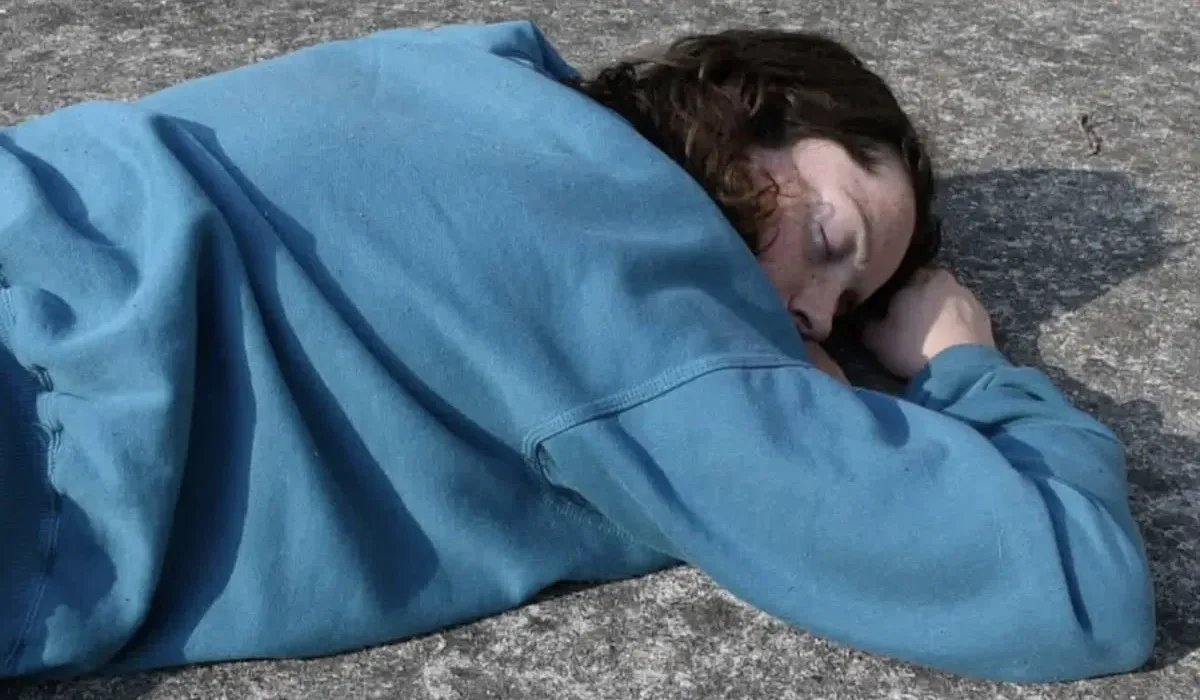

Isabel Pagliai’s feature debut Fantaisie feels like something pulled from the fault line between waking and sleeping, a film that hovers on the edge of document and dream. It abandons familiar story scaffolding for a form that leans on sensation and mood. The first contact with its subject, Louise, arrives in fragments rather than as a stable portrait. Her voice comes first, a sorrow-heavy, lilting song suspended in total darkness.
Then a yellow notebook appears, a private archive of fear and longing, read aloud by an unseen man. From these simple elements, Pagliai shapes an early tension between a young woman’s sealed, interior existence and the unruly weather of her mind. Fantaisie becomes a dark, melancholic reflection on inner life, exposed in a way that feels almost painfully raw.
Louise: The Cartography of an Enigma
Louise remains opaque, outlined less by action than by the flow of her reflections and diary entries. The writings themselves, frequently carried by Thomas, the male narrator, act as the only secure coordinates in a world that otherwise shifts and trembles. The film arranges a series of deceptively ordinary scenes inside a house. This interior zone functions as her secluded territory, a protected inside. Its layout never fully clarifies, and that uncertainty matches the endless reach of thought, a kind of mental pocket where she can exist without intrusion.
A decisive change arrives when that seclusion gives way and she moves from her room into the nocturnal woods. There she meets Thomas. The passage from house to forest turns her inner ache outward and provides a counterweight to the long accumulation of sorrow, gathering into an image of her body half-claimed by a moonlit pond, a contemporary figure drifting through fantasy.
The film’s ethical, collaborative construction, built from Louise’s own writings and experiences, gives the work an almost overwhelming emotional charge. Her line “I want to be tied up and set free” condenses an existential contradiction, a desire for transformation that collides with a deep, nearly immobilizing passivity.
The Eclectic Eye and Digital Glare
Pagliai’s images carry an intentionally varied grammar. She alternates calm, painterly stillness with raw, lo-fi handheld shots. This visual clash echoes Louise’s state of being, where frozen emotional paralysis coexists with restless agitation. Light plays a central role in this design. Illumination arrives as something sharp and theatrical, from the artificial blaze of smartphone screens and from outdoor light that brushes the world beyond the house. Louise often appears in obscurity, her features briefly carved out by the tremble of a small screen.
Those devices pour songs and film fragments into her solitude. The digital scraps take on a kind of eerie concreteness when she steps into the woods, as if the stored images and sounds acquire a body there. In one especially jarring passage, her monologue about a possibly violent sexual assault runs alongside swirling, grotesque, distorted visuals.
The suggested presence of AI-generated material in these flashes amplifies the film’s sense of estrangement and hints that technology pushes its way even into the private territory of memory and fantasy. The direction sets aside standard habit and builds a visual structure that gives priority to emotional grain rather than classical order.
Trauma, Transcendence, and Inner Fire
Fantaisie reflects on how personal trauma is worked through and on the fraught movement from girlhood into adulthood. The phrase “le feu interieur” (inner fire) operates as a guiding idea. The film feels extremely raw, moving straight into the throbbing wound of a young person’s loneliness and hurt.
Its surreal, dreamlike atmosphere behaves like a crucible where thought and feeling can turn over, allowing pain to move from the inside out. Within this space, heavy sadness sits beside flashes of dark humour and absurdity. The sense of closeness comes from the deeply personal source material and from the collaborative tie between director and subject. The film functions almost like a form of midwifery, attending to a passage that cannot be hurried. Fantaisie invites the viewer to yield to the experience it shapes, one that places sensory and emotional immersion ahead of the tidy cause-and-effect demands of a traditional, logical plot.
The film Fantaisie (international title: Fantasy) is a French docu-fiction drama that had its World Premiere at the 36th FIDMarseille (Marseille International Film Festival) in July 2025. It is a feature debut for director Isabel Pagliai, known for her intimate, genre-blending style. As of late 2025, the film is continuing its run on the international festival circuit, including the Viennale and Doclisboa, and it is not yet available for general streaming or theatrical release in most territories.
Full Credits
Title: Fantaisie (Fantasy)
Distributor: 5 à 7 Films (Production Company), Kino Lorber (US Distributor – limited release noted in search snippets, though primarily festival distribution as of now)
Release date: World Premiere: July 2025 (36th FIDMarseille)
Running time: 79 minutes
Director: Isabel Pagliai
Writers: Isabel Pagliai, Mathias Bouffier
Producers and Executive Producers: Martin Bertier, Helen Olive
Cast: Jara Sofija Ostan (Louise), Sasa Tabakovic (Thomas), Mina Svajger, Natasa Burger
Director of Photography (Cinematographer): Isabel Pagliai
Editors: Mathias Bouffier
The Review
Fantaisie
Fantaisie is a fearless deconstruction of the inner life, where the boundaries between subject and artifice dissolve completely. Pagliai uses her eclectic visual language—from static compositions to digital distortions—to map the turbulent geography of Louise's psyche. The film demands surrender, offering an intimate, visceral exploration of pain and transformation that rejects conventional storytelling. It is an act of profound cinematic courage, a document of one young person's emotional passage.
PROS
- Profound rawness and honesty rooted in the collaborative, personal nature of the production.
- Striking, eclectic style that integrates painterly compositions with modern digital aesthetics.
- Intimate, complex exploration of trauma, identity, and the existential paralysis of transition.
- Prioritizes feeling and atmosphere over logical plot progression.
CONS
- Unconventional structure includes scenes that may feel slow or overly extended to some viewers.
- The lack of a traditional narrative arc and the dark, melancholic tone may limit its appeal to general audiences.
- Certain dramatic points, such as the potential assault, are left intentionally ambiguous, which may feel unresolved.







