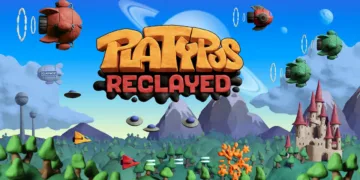






























Platypus Reclayed arrives as a full reconstruction of Anthony Flack’s 2002 horizontal shooter, and its defining characteristic remains impossible to ignore: every asset you see was physically sculpted from clay. This is the F-27 Platypus spacecraft, your vessel for defending a peaceful planet against waves of invaders across five distinct environments. Each area contains multiple stages where you’ll dodge bullets, collect power-ups, and face increasingly complex enemy formations.
The remaster goes far beyond a simple resolution boost. Flack resculpted every ship, enemy, and backdrop from scratch, then photographed them in 4K. The result feels less like a preserved artifact and more like a televised Claymation special given interactive form. This is classic arcade shooting refined for modern displays, with accessibility options that welcome newcomers while still offering punishing difficulty for veterans. The package includes Platypus Classic, letting you switch to the original 2002 version with its native aspect ratio and resolution. That inclusion highlights just how far the visual overhaul has pushed this remake beyond its source material.
Clay That Breathes
The visual transformation defines this remaster’s ambition. Flack didn’t upscale textures or apply filters to the original assets. He rebuilt everything. Ships, enemies, environments, and UI elements all received new physical sculptures before being photographed with modern equipment. The clay models achieve a tactile quality that makes the screen feel like a window into a miniature diorama rather than a digital space.
Technical improvements support this handcrafted aesthetic. The 4K resolution captures fine details in the clay surfaces: fingerprint impressions, subtle color gradations, the slightly irregular edges that come from working with physical materials. Widescreen support expands the playfield without distorting the original compositions. Additional parallax layers add depth to backgrounds, separating foreground action from distant scenery in ways the 2002 release couldn’t achieve.
The damage feedback system stands out as particularly clever. Enemies don’t simply flash or change color when hit. Instead, Swiss cheese-style holes appear across their clay bodies, growing larger and more numerous as they approach destruction. This serves both functional and aesthetic purposes: you get clear visual confirmation of your damage output while watching enemies gradually disintegrate in ways that feel consistent with their material construction.
Environmental variety helps maintain visual interest across the five areas. Each region introduces distinct color palettes and architectural styles, from industrial complexes to natural landscapes. The bonus gallery includes photographs of the actual clay models used in production, offering fascinating insight into the physical construction process. These images reveal the scale of the reconstruction effort and the attention paid to lighting and composition during the photography sessions.
Switching to Platypus Classic mode provides immediate perspective on how much has changed. The original assets look charmingly handmade but clearly dated, with lower resolution and simpler compositions. The remaster maintains that handcrafted spirit while achieving a level of visual polish that competes with modern indie productions.
Weapons, Waves, and Weird Firepower
Platypus Reclayed offers three ship configurations before each run: a balanced option, a high-damage glass cannon, and a tanky vessel with reduced offensive power. The high-shield variant can absorb two hits before destruction, making it ideal for learning enemy patterns. You can also customize your ship’s color, a small touch that adds personal expression to your craft.
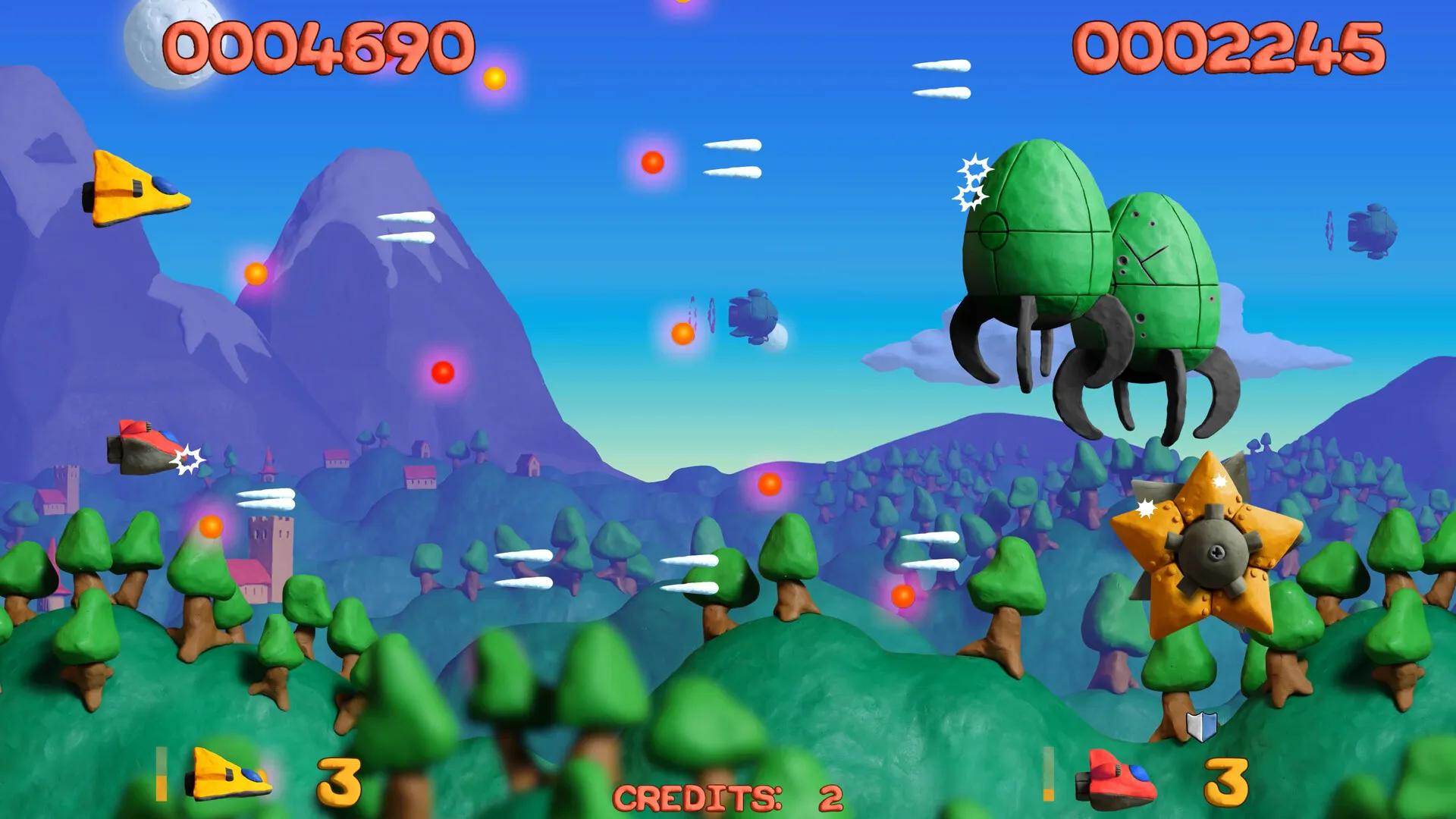
Control flexibility stands out immediately. Keyboard, gamepad, and mouse-only schemes all work smoothly, with the mouse proving surprisingly effective for precise maneuvering. The gamepad implementation includes haptic feedback and vibrations that punctuate impacts and power-up collections. Two-player local co-op supports drop-in participation at any moment, even mid-stage, with separate score tracking for each player.
The power-up system follows arcade shooter tradition with creative flourishes. You begin with a basic laser that feels underpowered by design. Destroying waves of orange enemies releases star-shaped collectibles that cycle your weapon through various augmentations. Standard options include spread shots, homing missiles, and auto-fire configurations. These function exactly as expected, providing reliable damage upgrades without surprises.
The unusual weapons inject personality into the arsenal. Donuts, sausages, hearts, and cheese wedges fly across the screen alongside boxing gloves mounted on springs. Fireballs grow larger when you hold the fire button, creating risk-reward decisions about when to release. Electric beams arc between targets. These creative weapons appear less frequently than standard options, which feels like a missed opportunity given how much character they add to combat.
Each power-up functions as a temporary shield, absorbing one hit before disappearing and reverting you to basic weapons. This dual functionality creates tension around weapon management. Losing a powerful upgrade to a stray bullet hurts, especially during difficult sections where firepower determines survival. Support modules dropped by balloon-carrying equipment provide additional guns that orbit your ship, though these also vanish after taking damage.
The power-up acquisition method can frustrate. Orange enemies must be eliminated quickly to trigger weapon drops, and missing even one enemy in the wave means losing the entire power-up opportunity. During challenging sections where you’re struggling with basic weapons, failing to secure an upgrade compounds the difficulty spike. The punishment feels harsh considering how dramatically weapons impact your combat effectiveness.
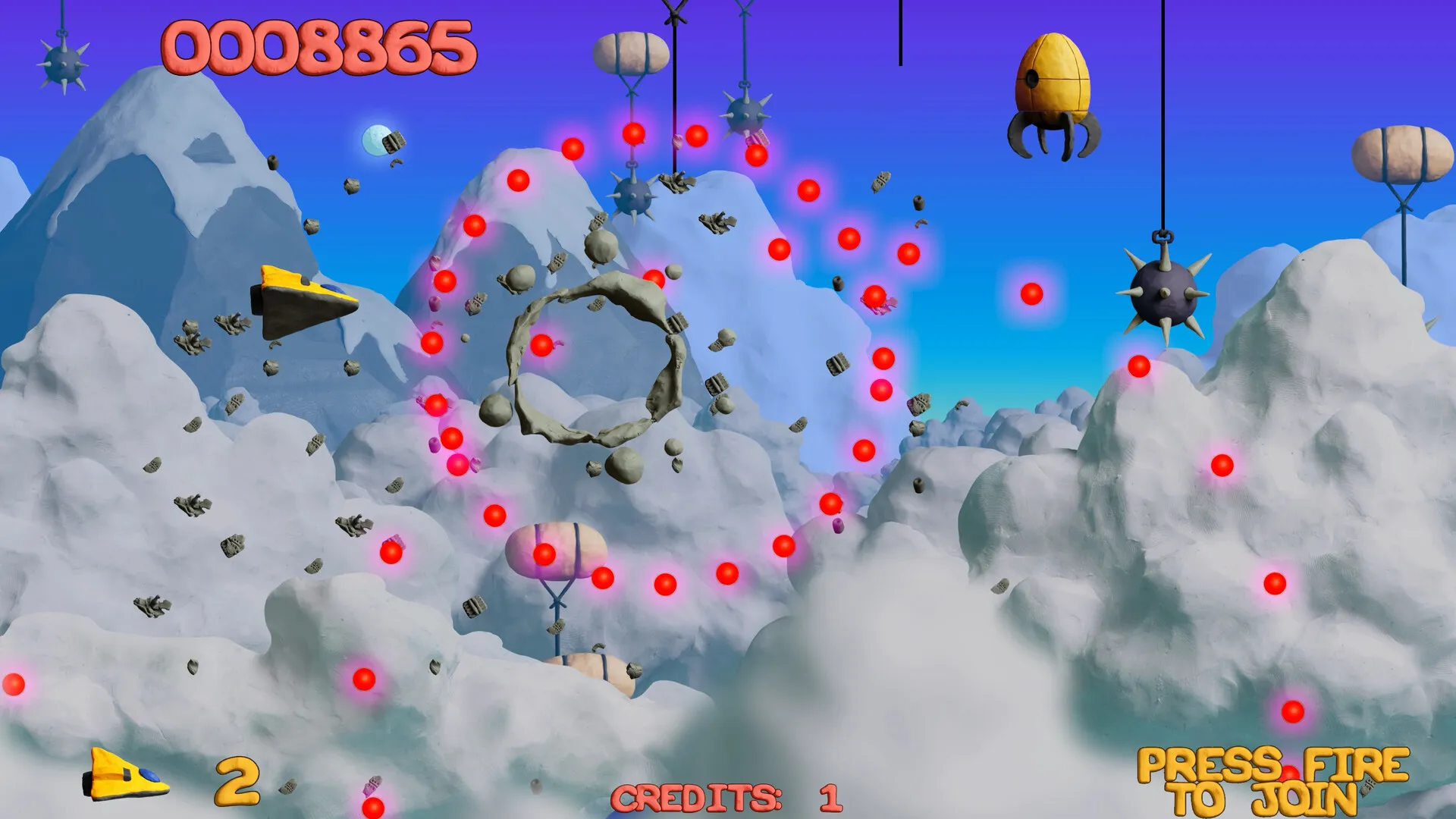
Stage design maintains variety through environmental hazards and enemy configurations. Early levels introduce the basic vocabulary: airborne fighters, ground installations, aquatic vessels emerging from below. Later stages add complexity through enemies that attack from behind, forcing constant spatial awareness. One memorable section fills the screen with mines suspended by hot air balloons. Shooting the balloons triggers massive bullet spreads, requiring careful navigation around the hazards rather than aggressive destruction.
Enemy variety keeps encounters fresh. Each area introduces new opponent types with distinct movement patterns and attack behaviors. Some enemies fire straight projectiles, others launch homing missiles that must be dodged or destroyed. The environmental clarity occasionally falters, making it unclear which objects can be safely flown over versus which cause collision damage. This ambiguity leads to frustrating deaths while learning each stage’s geometry.
Pacing stays tight throughout most stages. Enemy formations arrive in rapid succession, minimizing downtime between combat scenarios. Brief respites come from collecting score bonuses: fruit and coins shower down from defeated enemies, enticing you into dangerous positions just as new threats arrive. This risk-reward dynamic mirrors classic arcade design, where greed and survival instincts constantly compete.
Mastery Through Repetition
The difficulty system provides granular options spanning from accessible to brutal. Easy mode equips you with starting advantages: a pre-installed support module, extra lives, and multiple credits for continuing after death. Each credit lets you resume with a fresh ship and full health, significantly reducing the penalty for mistakes. Even with these assists, easy mode presents genuine challenge during later stages.
Higher difficulties remove the safety nets. Credits become scarce or disappear entirely, and enemy formations grow denser with faster bullets. The fifth area remains locked on easy difficulty, requiring commitment to normal or harder settings to see the complete game. This gating encourages skill development while respecting that some players simply want to experience all content without extreme difficulty.
Progression structure balances arcade traditions with modern concessions. Five main areas each contain multiple sub-stages, with roughly 30 minutes required to complete an area on a successful run. Expect multiple attempts before mastering each region. Once you clear all stages in an area, that area becomes a starting point for future runs. This checkpoint system prevents the frustration of restarting from the beginning after exhausting credits, letting you focus on conquering specific sections rather than replaying mastered content.
Boss encounters cap each area, testing your pattern recognition and resource management. These fights function as skill checks, requiring consistent execution rather than introducing gimmicks. Separate leaderboards track high scores, encouraging competition and replay. Achievements provide additional completion goals beyond simple level progression.
Training mode offers targeted practice for difficult sections. You can select specific advanced portions of levels, choose your starting weapon, and set usage limits to simulate different scenarios. This mode proves invaluable for learning enemy patterns in challenging areas without grinding through entire stages. Score Attack mode flips the script: one life, maximum points before death, with leaderboard tracking for competitive players.
The audio design complements the eccentric visual style. Electronic tracks drive the action with melodies that evoke 8-bit arcade heritage while benefiting from modern production clarity. The music maintains the quirky personality established by the claymation aesthetic without overpowering the action. Announcer voice calls punctuate key moments, though they can be disabled for players who find them distracting. The remastered audio achieves crispness that the original release lacked.
Content scope remains modest: five areas with four accessible on easy difficulty. The reasonable price point reflects this limitation. The original 2002 version remains available separately for less, making the remaster’s pricing appropriate for the reconstruction effort involved. Replay value comes from score chasing, difficulty escalation, and the satisfaction of perfecting challenging sections. Quality trumps quantity here, with each area feeling distinct and memorable rather than padding runtime with repetitive content.
Some enemies prove consistently annoying across difficulty settings. Certain opponent types combine frustrating movement patterns with aggressive attacks that feel cheap rather than challenging. These encounters disrupt the flow established by better-designed enemy configurations. The occasional environmental ambiguity mentioned earlier compounds these frustrations, creating moments where failure feels arbitrary rather than earned.
The Review
Platypus Reclayed
Platypus Reclayed succeeds as a passion project that honors its source material while justifying the remaster treatment. The complete clay reconstruction delivers visual craft rarely seen in shooters, and the tight arcade action remains engaging across multiple runs. Frustrations around power-up acquisition and certain enemy designs prevent this from reaching genre peak status, yet the creative weapons, flexible difficulty options, and genuine handmade charm create an experience worth exploring. Quality craftsmanship and smart modernization choices make this a solid recommendation for shooter fans seeking something visually distinctive.
PROS
- Stunning clay reconstruction with photorealistic 4K models
- Creative weapon variety (donuts, boxing gloves, cheese wedges)
- Flexible control options including excellent mouse support
- Smart checkpoint system prevents excessive repetition
- Training mode for targeted practice
CONS
- Power-up system punishes missed orange enemies harshly
- Some enemy types feel cheap rather than challenging
- Unusual weapons appear too infrequently
- Environmental collision clarity occasionally unclear
- Modest content scope (five areas total)