
























![Kingdom Hearts Collection [I-III] Review](https://gazettely.com/wp-content/uploads/2026/10/Kingdom-Hearts-Collection-I-III-1-360x180.webp "Kingdom Hearts Collection [I-III] Review: KHII Holds Steady as Newer Entries Fluctuate 37")



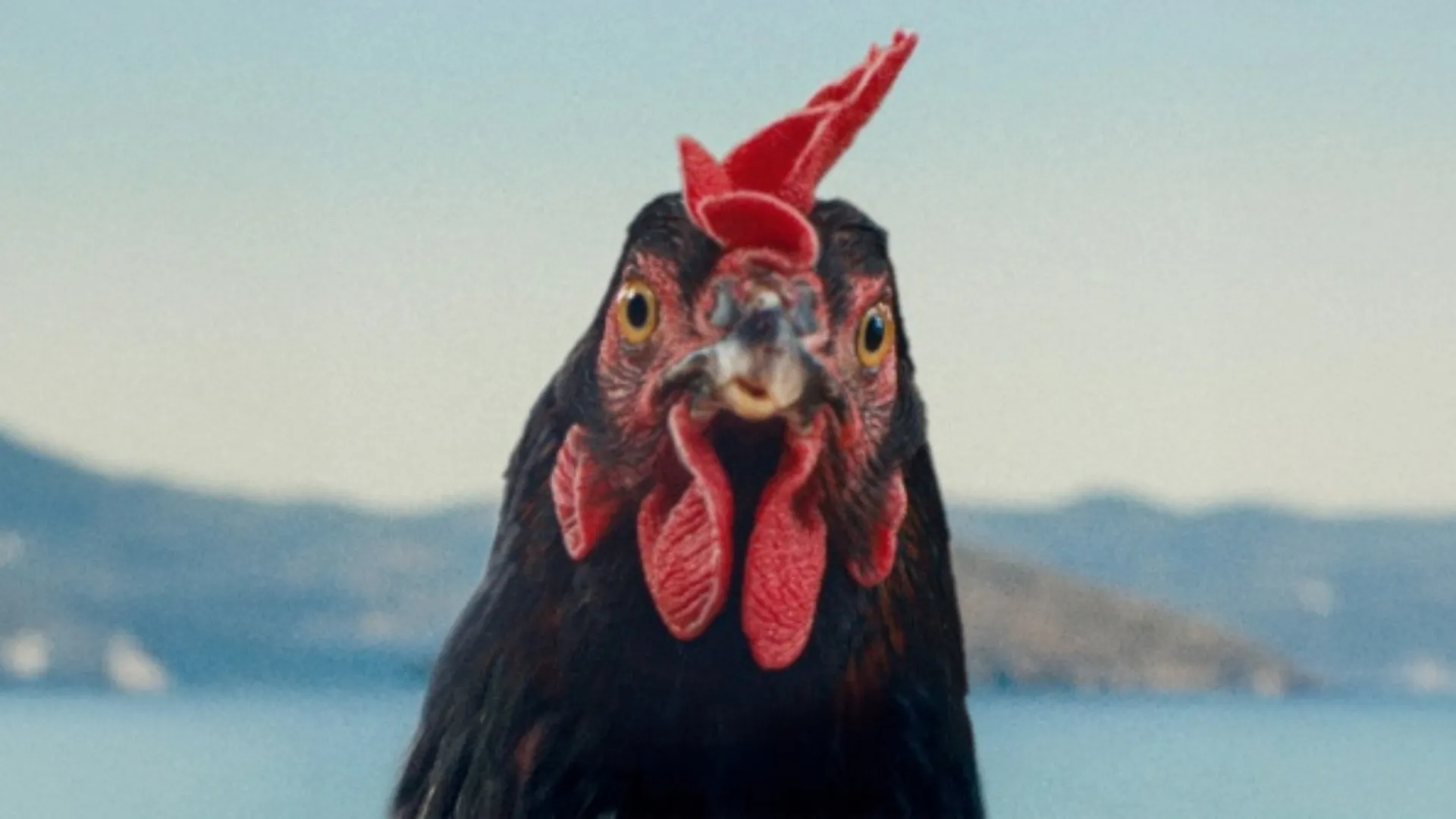

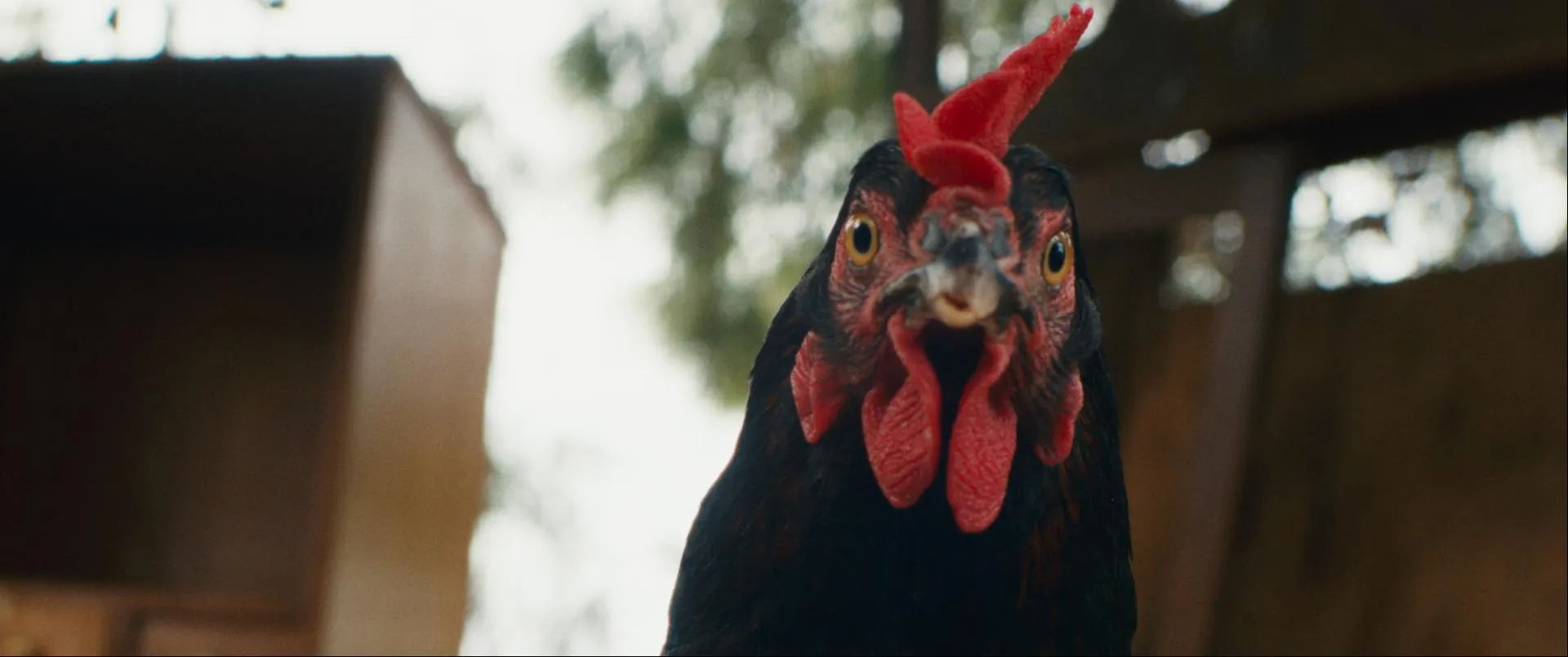
What is a world stripped of human meaning? Hen offers an answer, not through dialogue or drama, but through the unblinking eye of a chicken. The film begins with a rupture in the clockwork of industrial slaughter; a single black hen, a genetic anomaly destined for the discard pile, is instead thrust into the vast, indifferent chaos of the Greek countryside.
Her journey is not one of heroics but of pure, unthinking momentum. She finds a tenuous haven at a seaside restaurant, a place of human decay where she becomes an accidental oracle, a silent witness to the sordid transactions of men. György Pálfi’s film is an audacious act of perspective, using the absolute innocence of an animal’s gaze to refract the complexities of human cruelty. It is a cinematic meditation that asks not what it means to be human, but what humanity looks like from the outside in.
The Craft of the Coop: A Cinematic Feat
The camera in Hen is a creature of the earth. It never grants us the comfort of a human vantage point, choosing instead to scrabble in the dust, its perception tethered to the protagonist. This technique is more than a stylistic choice; it is an enforced ignorance, a form of phenomenological cinema that reduces the world to a torrent of raw sensation.
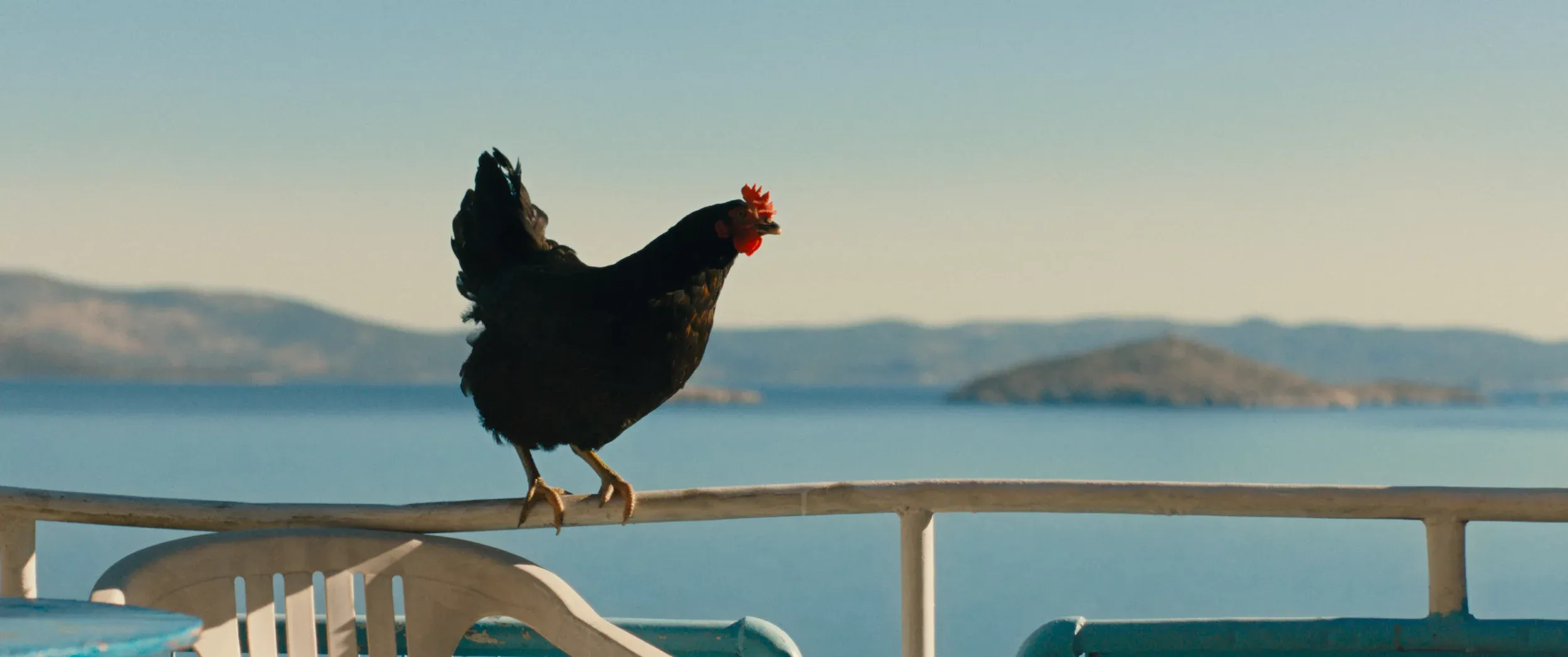
Human figures become towering abstractions, their intentions knowable only through the tremors they send through the hen’s world: the sudden shadow, the approaching boot, the hand that offers grain or snatches away an egg. We are forced to abandon our cognitive dominance, to experience a reality that is felt before it is understood.
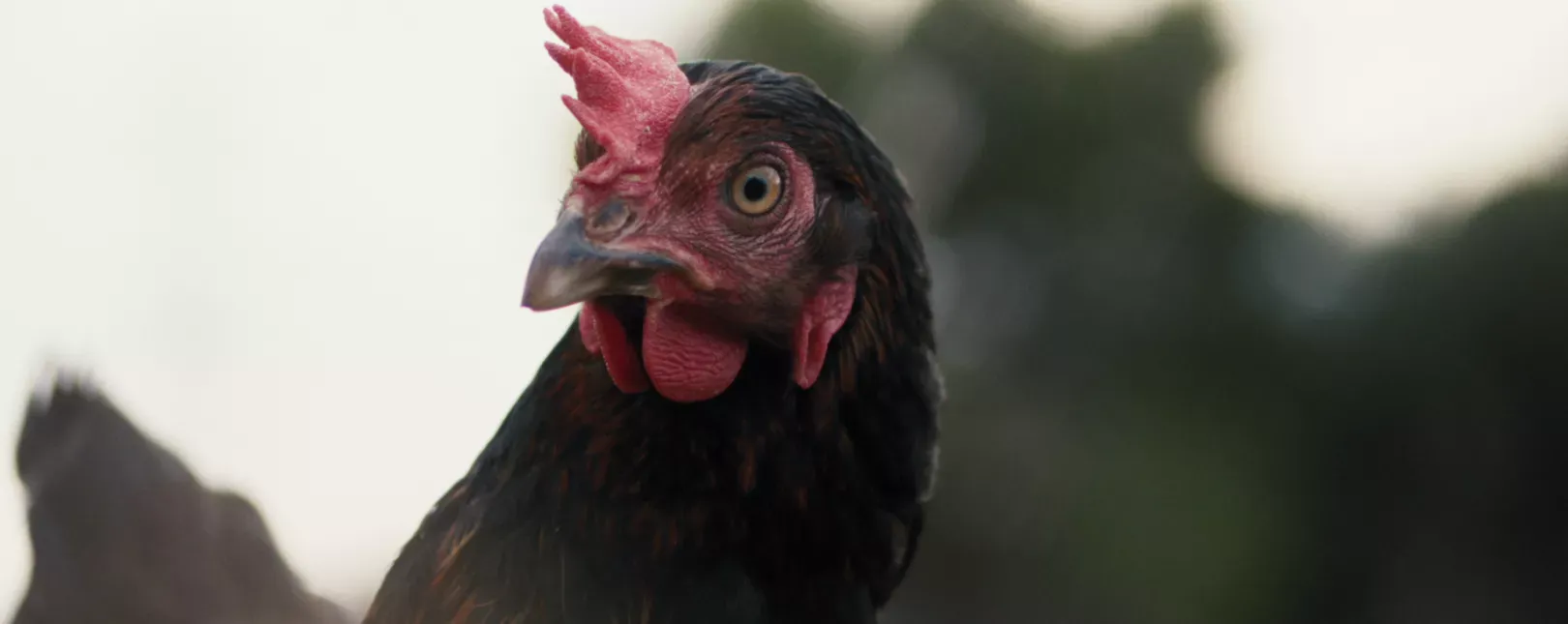
The director’s commitment to this raw reality extends to his absolute refusal of digital artifice. The hen is not a marvel of CGI but a composite being, an assembly of eight living, breathing birds. This choice is a quiet rebellion against the sanitized perfection of modern filmmaking. It embraces the unpredictable, the untamable, the stubborn fact of a living creature whose “performance” cannot be dictated, only captured. This tangible authenticity makes the film’s central conceit possible.
The character of the hen is constructed not in the animal’s actions but in the charged space between images. Through the silent alchemy of the Kuleshov effect, an editor’s splice becomes an act of creation. A cut from a violent human act to the hen’s impassive, avian stare generates a phantom consciousness. We, the audience, project our own horror and pathos onto her blankness. We are made complicit in the act of giving her a soul, and in doing so, are forced to question the very nature of the empathy we feel. Is it her inner life we are witnessing, or is it merely the echo of our own?
Parable of the Persecuted: Narrative and Theme
The hen’s existence is a study in pure immanence, a life unburdened by past or future. Her narrative is a closed loop of primal imperatives: seek sustenance, evade the fox’s jaws, submit to the rooster’s clumsy lust, and obey the fierce, biological command to protect the fragile potential of her eggs. Her world contains no morality, only the stark opposition of survival and its negation.
This simple, instinctual drama plays out against the backdrop of a far more sordid human theater. At the restaurant, a family’s quiet rot fuels a smuggling operation that begins with inanimate goods and inevitably escalates to human cargo. The film is unflinching in its portrayal of this degradation. The men involved are not mythical monsters but creatures of casual cruelty, their actions stripped of any grand evil and reduced to the banality of a business transaction.
Herein lies the film’s devastating central metaphor. The hen, a creature bred for consumption, becomes a perfect mirror for the refugees hidden in the back of a sweltering van. Both are reduced to the status of objects, their existence valued only by the profit they might yield.
They are inventory. The film observes this grim symmetry with a strange, dark humor, a bleak chuckle at the absurdity of a system where the line between a chicken and a human is erased by the cold logic of the market. It is a quiet critique of a world that has mastered the art of turning living beings into things, a world where the ultimate horror is not malice, but indifference.
A Symphony of the Barnyard: The Auditory World
The world of Hen is first and foremost a world of sound, a pre-linguistic reality constructed from the rustle of straw, the frantic clucking of alarm, and the distant, indecipherable murmur of human voices. This soundscape is the hen’s native language, a constant flow of raw sensory data where a predator’s footfall carries more weight than any uttered word.
The muffled speech of humans becomes just another texture in this landscape, stripped of the authority and meaning we reflexively grant it. It is the sound of an alien species, their concerns utterly disconnected from the urgent realities of the dirt and the coop.
Upon this foundation of natural sound, the filmmakers lay a delicate, and deliberately artificial, layer of music. The score functions as an emotional translator, imposing a human framework on the hen’s inscrutable actions. A tender Greek love song elevates the chaotic ritual of chicken courtship into a poignant romance; the majestic swell of Ravel’s “Bolero” transforms the mundane, repetitive act of laying an egg into an event of cosmic significance.
This is the film’s most profound manipulation. The music guides our response, insisting on a depth of feeling that the animal itself cannot possess. It forges a bridge of empathy across an unbridgeable species divide, but that bridge is built from the materials of our own projections. The auditory craft makes us care, turning a simple bird into a compelling protagonist. It leaves us, however, with the unsettling question of whose story we have truly heard: hers, or the one we have been so beautifully conditioned to imagine.
Hen (Greek: Kota), is a 2025 drama film directed by György Pálfi. The movie follows the adventurous journey of a Leghorn chicken who escapes an industrial farm and tries to raise a family, all while an unseen human tragedy tied to a smuggling ring unfolds in the background. The film, a co-production between companies from Germany, Greece, and Hungary, premiered on September 8, 2025, at the Toronto International Film Festival (TIFF) in the Platform Prize competition. As of now, it is currently making its rounds through various international film festivals.
Full Credits
The Review
Hen
A haunting and technically brilliant cinematic experiment, Hen uses its audacious premise to hold a dark mirror up to humanity. By locking us into the sensory world of its animal protagonist, the film transforms a simple survival story into a profound, unsettling meditation on innocence, cruelty, and the indifference of a world that turns living beings into objects. It is a challenging, unforgettable piece of filmmaking that finds its power not in what it says, but in what it forces us to see through the unblinking eye of another.
PROS
- A singular and deeply original narrative concept.
- Masterful cinematography and editing create a fully immersive animal perspective.
- Philosophically rich themes that explore human cruelty and the commodification of life.
- Authentic use of real animals, avoiding digital artifice.
CONS
- The human characters are intentionally secondary and can feel underdeveloped.
- Its bleak tone and deliberate pacing may prove challenging for some viewers.
- The emotional connection to the protagonist relies heavily on the viewer's own projection.







