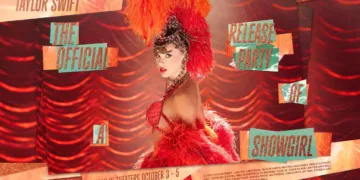
























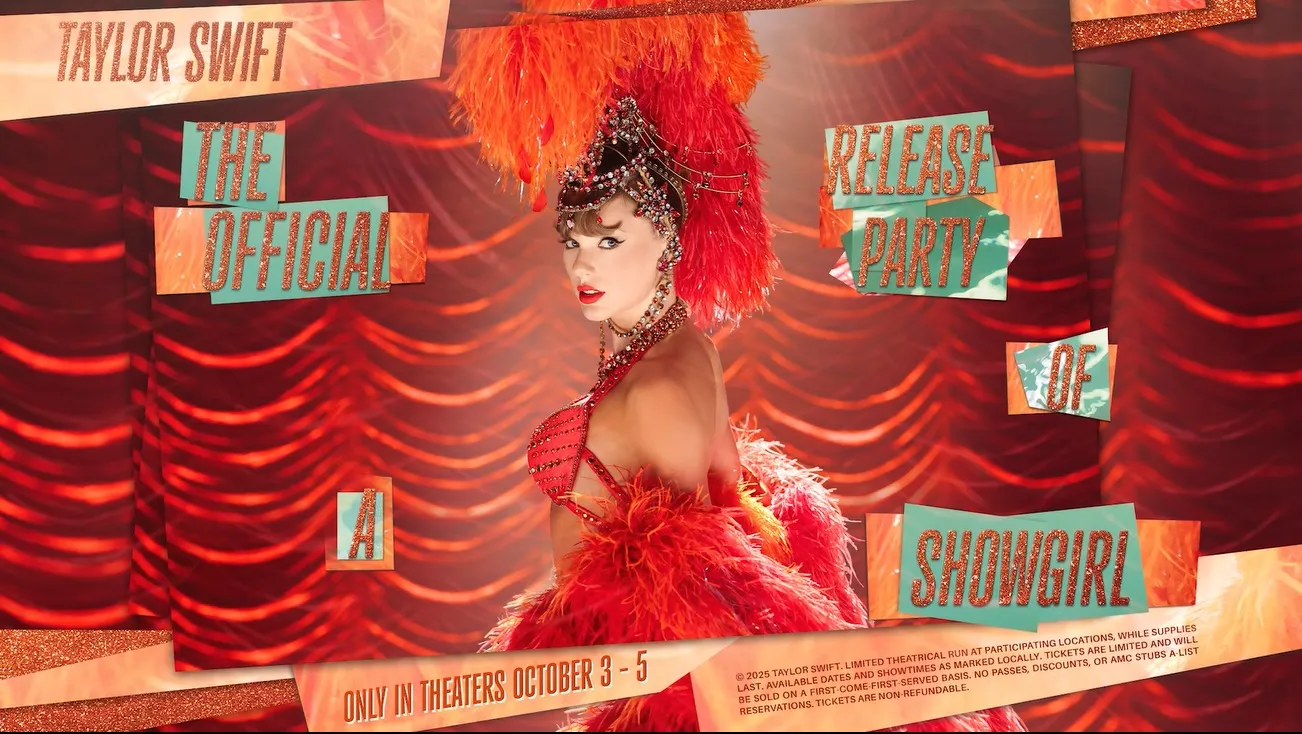

An opening title card warns of stroboscopic effects, a fitting prelude to a 90-minute cascade of fractured, strobing images designed less for cinematic immersion and more for mass consumption. This is Taylor Swift: The Official Release Party of a Showgirl, an event that uses the vocabulary of film to achieve the goals of a marketing campaign.
It is a hybrid creation, a high-gloss listening party that bundles a single, polished music video with behind-the-scenes scraps, a full suite of lyric animations, and direct-to-camera monologues from the artist herself. The strategy is undeniably sharp, a commercial sleight-of-hand that transmutes the free, scattered content of a typical album rollout on YouTube into a premium, limited-run theatrical attraction. The entire affair is positioned as an exclusive communion for the faithful, a carefully managed spectacle where the communal act of watching feels more significant than the material being watched.
The Centerpiece and Its Deconstruction: The “Ophelia” Spectacle
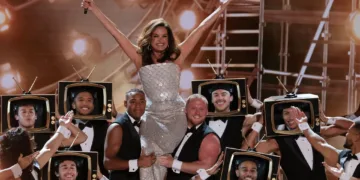
The artistic heart of the project, and its most defensible claim to the big screen, is the music video for “The Fate of Ophelia.” It is a work of immense visual ambition, a whirlwind of elaborate, theatrical sets, dazzling costume changes, and tightly executed choreography by Mandy Moore. The concept propels Swift through a century of showgirl archetypes, from the languid tragedy of a Pre-Raphaelite model being painted by John Everett Millais to the synchronized, aquatic glamour of a Busby Berkeley musical to the smoky ambiance of a 1960s cabaret.
With the esteemed cinematographer Rodrigo Prieto behind the camera, the video boasts a rich, cinematic texture. His lighting and composition give the piece a visual weight that stands in stark, almost jarring contrast to the flimsy digital aesthetic of the film’s other components. The polished execution and extravagant scale make it abundantly clear where the bulk of the creative and financial resources were allocated. This is the showpiece, the polished gem in a setting of lesser materials.
What proves most compelling, however, are the fleeting glimpses behind the curtain. The film is interspersed with tantalizingly brief segments from the making of the “Ophelia” video, and in these moments, a different kind of performance is revealed. Here, Swift is the director, a figure of confident and meticulous command, fully in control of her vision. We see her on a Zoom call, storyboarding shots on a computer; we watch her collaborate with dancers, sharing a joke or refining a specific movement; we hear her offer concise, articulate feedback to her crew to perfect a take.
These fragments offer a valuable perspective on the immense creative machinery and the tight-knit community required to manufacture the effortlessness of the final product. They reveal the intricate labor behind the magic, humanizing the artist while simultaneously reinforcing her image as a formidable industry force. The structural choice to play the “Ophelia” video twice, once to open the show and once to close it, feels like a deliberate reinforcement of this idea. The second viewing, coming after the deconstruction, re-frames the video. It is no longer just a piece of art; it has become a product whose construction we now appreciate, a testament to the hard work that the album itself purports to celebrate.
The Filler: Visuals and Commentary on a Loop
Beyond the main attraction, the majority of the runtime is dedicated to lyric videos for the album’s remaining 11 tracks, and it is here that the experience unravels. A stark visual uniformity defines this long central section of the show. Each song is set to the same looping, kaleidoscopic animation, a digital effect that fractures and mirrors scraps of footage from the “Ophelia” shoot.

This stylistic choice, described in the opening warning as a “rectangular-lensed kaleidoscope,” results in a monotonous and numbing presentation. Instead of offering unique visual interpretations that deepen each song, the videos blur into a single, extended piece of animated wallpaper. Swift herself is the only figure present, often multiplied into an army of identical performers, creating a hermetically sealed world that admits no outside influence. The effect is one of aesthetic exhaustion.
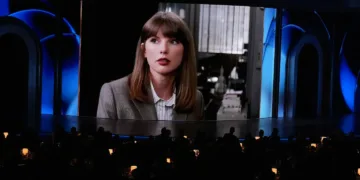
Swift introduces each of these videos with a short, direct-to-camera explanation of her process or inspiration. While her narration is delivered with the charismatic and engaging air she has perfected, the insights offered are decidedly superficial. Her commentary is a masterclass in strategic vagueness, relying on broad generalizations where specificity would be most revealing. Her explanations for songs with obvious real-world muses are models of practiced coyness.
The lusty, double-entendre-laden “Wood” is presented with a knowing glance as a simple song about superstitions. The pointed lyrics of “Actually Romantic” are vaguely summarized as a letter to someone who dislikes you. Even the lyrics themselves are sometimes softened for this family-friendly presentation, with an explicit line like “open my thighs” magically transformed into the more poetic “open my skies.”
This entire guided tour of her own work feels disingenuous. This combination of repetitive, low-fidelity visuals and shallow, guarded commentary is fundamentally ill-suited for a theatrical setting. The material lacks the substance to command the focused attention demanded by a cinema screen, feeling thin and stretched when presented as a main event.
The Star as Auteur and Brand Manager
The behind-the-scenes footage consistently reinforces the image of Swift as a hands-on workhorse, the singular auteur meticulously crafting every facet of her creative output. This portrayal is effective, offering a humanizing look at her process while cementing her status as the chief architect of her own colossal empire. The confidence she projects is impressive, but it is also a performance, another role in the life of a showgirl.
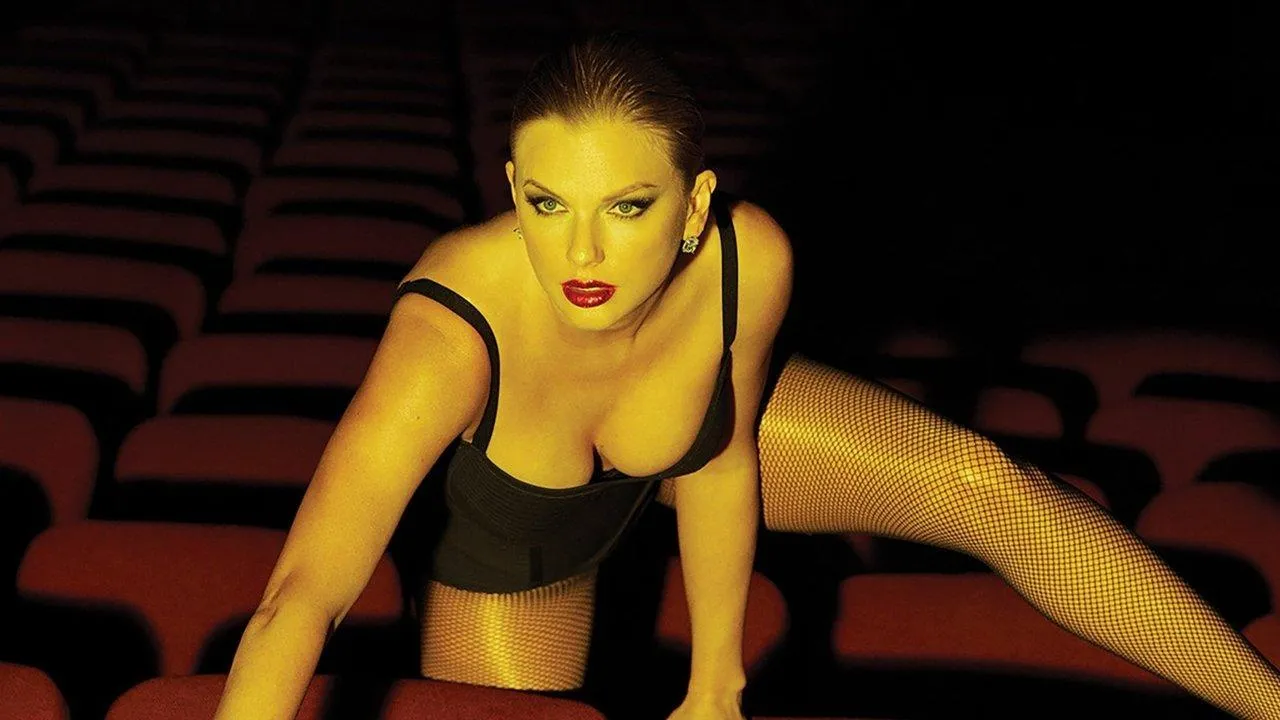
She simultaneously maintains her carefully calibrated persona of humility and relatability. A self-deprecating introduction and a chatty, conversational tone are the tools she uses to sustain the intimate, parasocial connection with her audience that has become the foundation of her brand’s immense power. She performs the part of the approachable everywoman from an unbreachable fortress of global fame.
This positions her as an unreliable narrator of her own art. Her explanations often seem designed less to illuminate and more to manage her public narrative, carefully curating the meaning of her songs. The entire event becomes a meta-commentary on the nature of authenticity in modern superstardom. The album’s stated theme is the hard work of being a performer, and here we see her performing the role of the authentic artist explaining that work. This performance is itself part of the show, a carefully managed presentation that prioritizes brand safety over the messier truths of artistic transparency.
A New Form of Fandom Tax? The Theatrical Release Strategy
The true purpose of this “film” appears to be the facilitation of a communal fan experience, where the on-screen content is secondary to the act of gathering. Theaters are transformed into temporary convention halls, spaces for collective effervescence.
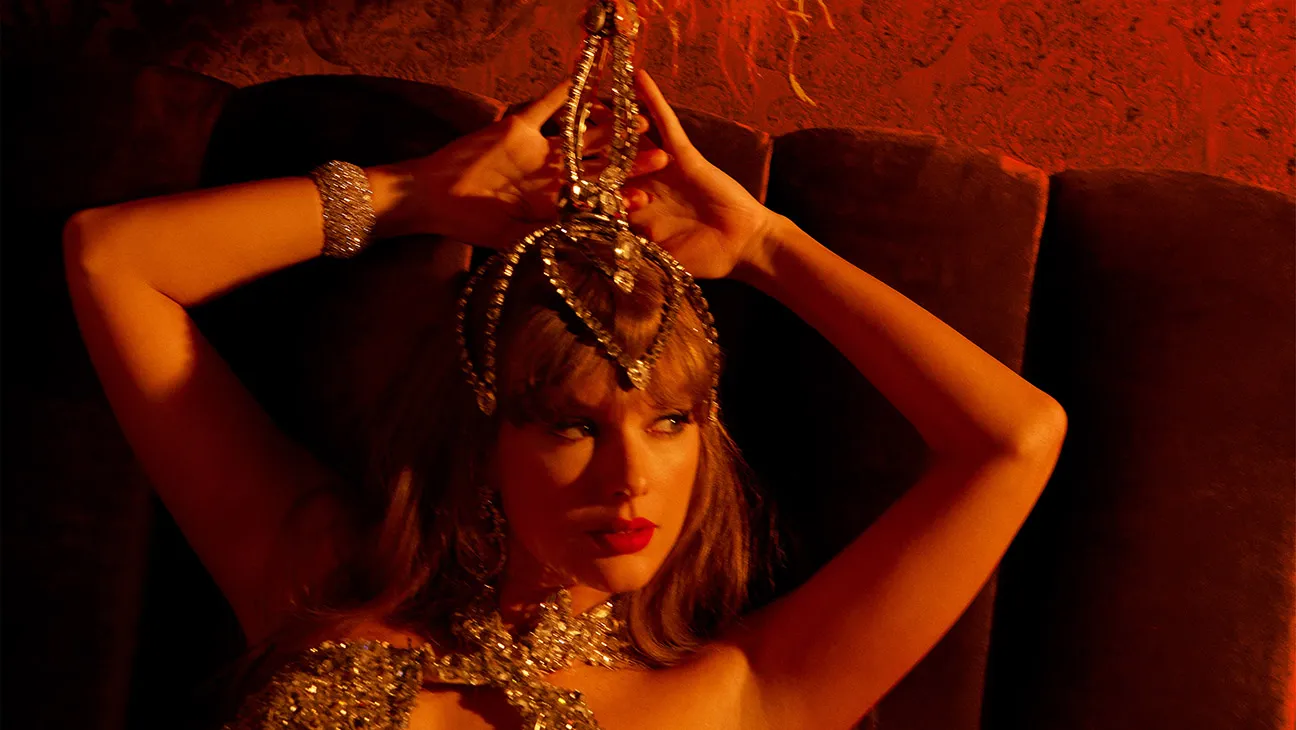
The primary product for sale, then, is the event itself: the opportunity for fans to celebrate a new album together, to feel included in an exclusive cultural moment. The value is experiential, not cinematic. This release strategy is a logical extension of Swift’s recent commercial activities. It is another instance of packaging standard promotional materials as a premium product for her most loyal supporters, turning what would otherwise be a marketing expense into a significant revenue stream. It is the monetization of devotion, a tax on loyalty.
With its projected box office success, this model may well set a new precedent for how superstars release music. It further blurs the lines between art, promotion, and direct-to-fan commerce, potentially creating a new prototype for the industry. The album launch is no longer just a digital or physical release; it can be an immersive, ticketed affair. This represents a potential paradigm shift in entertainment, one that leverages the deep emotional bonds of fandom to create new and lucrative commercial opportunities.
Taylor Swift: The Official Release Party of a Showgirl is an 89-minute theatrical event film celebrating the release of Taylor Swift’s 12th studio album, The Life of a Showgirl. It premiered on Friday, October 3, 2025, and was available for a limited run through Sunday, October 5, in theaters across North America, including AMC Theatres, Cinemark, and Regal locations. The film gave fans a cinematic listening experience, featuring the world premiere of the music video for the album’s lead single, “The Fate of Ophelia,” alongside brand new lyric videos for all tracks, and exclusive, never-before-seen personal reflections and behind-the-scenes footage from Taylor Swift about the making of the album and video. The theatrical screenings encouraged fans to sing and dance along in the spirit of a true release party.
Full Credits
Director: Taylor Swift
Writers: Taylor Swift, Max Martin, Shellback
Producers and Executive Producers: Taylor Swift, Max Martin, Shellback
Cast: Taylor Swift, Sabrina Carpenter, Mandy Moore, Kam, Jan, Paul, Amos, Melanie
Director of Photography (Cinematographer): Rodrigo Prieto
Editors: Chancler Haynes
Composer: Taylor Swift, Max Martin, Shellback
The Review
Taylor Swift: The Official Release Party of a Showgirl
This theatrical event is less a film and more a testament to Taylor Swift's commercial power. While the "Fate of Ophelia" music video and its behind-the-scenes snippets offer genuine flashes of high-end creativity, they are buried within a padded presentation of glorified lyric videos and superficial commentary. Ultimately, it’s a brilliant piece of marketing and a communal fan experience disguised as a movie, making it essential for diehards but a hollow, thinly-stretched product for anyone else. It's an experience built on brand loyalty, not cinematic substance.
PROS
- The music video for "The Fate of Ophelia" is a visually stunning and ambitious centerpiece.
- Brief behind-the-scenes segments provide a compelling look at Swift's confident directorial process.
- Functions effectively as a communal event for the most dedicated fans.
CONS
- The bulk of the film consists of repetitive and visually monotonous lyric videos.
- The artist's commentary is shallow and feels more like brand management than genuine insight.
- The overall content feels thin and ill-suited for a paid theatrical release.
- It operates primarily as a commercial product rather than a cohesive artistic statement.