




























• Latest
  • Trending
Altered Review

Altered Review: Genetic Inequality and Narrative Strains

Dora Review

Dora Review: Psychological Distress Written on the Skin

Think Good Review

Think Good Review: The Exhaustion Behind Every Small Disagreement

Disney/Pixar Toy Story: Retro Roundup! Review

Disney/Pixar Toy Story: Retro Roundup! Review: An Archive Worth Exploring Between Attempts

Spring Review

Spring Review: Mourning Becomes an Act of Resistance

Dernsie: The Amazing Life of Bruce Dern Review

Dernsie: The Amazing Life of Bruce Dern Review: Admiration Works Best With Evidence

Crescendo Review

Crescendo Review: Mozart Keeps the Company Moving

Vertiginous Review

Vertiginous Review: Reality Can Wait Until After Breakfast

Warhammer 40,000: Boltgun 2 Review

Warhammer 40,000: Boltgun 2 Review: The Pleasure of Being Dangerously Overconfident

The Nightmare Upstairs: What Happened to Ty and Bryn? Review

The Nightmare Upstairs: What Happened to Ty and Bryn? Review: Cameras Capture What Interviews Cannot Resolve

Aquí Review

Aquí Review: Coetzee’s Questions Find Their Feet

Relentless Memory Review

Relentless Memory Review: Listening for Katrülaf

World Without Cows Review

World Without Cows Review: Warm Encounters, Uneasy Confidence

  • Home
  • Privacy Policy
  • Terms and Conditions
  • Gazettely Review Guidelines
Thursday, October 15, 2026
GAZETTELY
  • Home
  • Movie and TV News
    Midday Meal

    Majid Majidi’s “Midday Meal” Wins Best Film at Busan, Qualifies for Oscars

    Evac

    Renny Harlin to Direct Prison Rescue Thriller “Evac”

    LaRoyce Hawkins

    LaRoyce Hawkins Exits “Chicago P.D.” After 11 Seasons as Atwater

    The Lowdown

    “The Lowdown” Returns With Tommy Lee Jones as Ethan Hawke’s Estranged Father

    Christy Carlson

    Christy Carlson Romano Says She Earned Half of Shia LaBeouf’s Pay on “Even Stevens”

    Sylvester Stallone

    Sylvester Stallone Has “Millions of Regrets” About Doing His Own Stunts

    Kelsey Grammer

    Kelsey Grammer to Play Late-Life EMT in NBC Drama “Pops”

    You Can See Everything

    A24’s “You Can See Everything” Eyes Biggest Documentary Opening Since the Pandemic

    Peter Safran

    Peter Safran Confirms “Swamp Thing” Is Alive as DC Studios Moves Into Skydance Era

  • Movie and TV Reviews
    Dora Review

    Dora Review: Psychological Distress Written on the Skin

    Think Good Review

    Think Good Review: The Exhaustion Behind Every Small Disagreement

    Spring Review

    Spring Review: Mourning Becomes an Act of Resistance

    Dernsie: The Amazing Life of Bruce Dern Review

    Dernsie: The Amazing Life of Bruce Dern Review: Admiration Works Best With Evidence

    Crescendo Review

    Crescendo Review: Mozart Keeps the Company Moving

    Vertiginous Review

    Vertiginous Review: Reality Can Wait Until After Breakfast

    The Nightmare Upstairs: What Happened to Ty and Bryn? Review

    The Nightmare Upstairs: What Happened to Ty and Bryn? Review: Cameras Capture What Interviews Cannot Resolve

    Aquí Review

    Aquí Review: Coetzee’s Questions Find Their Feet

    Relentless Memory Review

    Relentless Memory Review: Listening for Katrülaf

  • Game Reviews
    Disney/Pixar Toy Story: Retro Roundup! Review

    Disney/Pixar Toy Story: Retro Roundup! Review: An Archive Worth Exploring Between Attempts

    Warhammer 40,000: Boltgun 2 Review

    Warhammer 40,000: Boltgun 2 Review: The Pleasure of Being Dangerously Overconfident

    over the hill Review

    over the hill Review: Funselektor Finds Its Feet in Low Gear

    Tales of Eternia Remastered (1)

    Tales of Eternia Remastered Review: Good Plans, Unreliable Execution

    Allogloom Review

    Allogloom Review: Finding Affection Among the Flesh-Eating Moths

    Deep Dish Dungeon Review

    Deep Dish Dungeon Review: Making a Home in Hostile Ruins

    Time To Wake Up Review

    Time To Wake Up Review: Blinking Through an Uneven Nightmare

    Bluey’s Happy Snaps Review

    Bluey’s Happy Snaps Review: Familiar Places, Fresh Reasons to Look

    Planet Zoo 2 1

    Planet Zoo 2 Review: Breeding Beyond the Fence

  • The Bests
No Result
View All Result
  • Home
  • Movie and TV News
    Midday Meal

    Majid Majidi’s “Midday Meal” Wins Best Film at Busan, Qualifies for Oscars

    Evac

    Renny Harlin to Direct Prison Rescue Thriller “Evac”

    LaRoyce Hawkins

    LaRoyce Hawkins Exits “Chicago P.D.” After 11 Seasons as Atwater

    The Lowdown

    “The Lowdown” Returns With Tommy Lee Jones as Ethan Hawke’s Estranged Father

    Christy Carlson

    Christy Carlson Romano Says She Earned Half of Shia LaBeouf’s Pay on “Even Stevens”

    Sylvester Stallone

    Sylvester Stallone Has “Millions of Regrets” About Doing His Own Stunts

    Kelsey Grammer

    Kelsey Grammer to Play Late-Life EMT in NBC Drama “Pops”

    You Can See Everything

    A24’s “You Can See Everything” Eyes Biggest Documentary Opening Since the Pandemic

    Peter Safran

    Peter Safran Confirms “Swamp Thing” Is Alive as DC Studios Moves Into Skydance Era

  • Movie and TV Reviews
    Dora Review

    Dora Review: Psychological Distress Written on the Skin

    Think Good Review

    Think Good Review: The Exhaustion Behind Every Small Disagreement

    Spring Review

    Spring Review: Mourning Becomes an Act of Resistance

    Dernsie: The Amazing Life of Bruce Dern Review

    Dernsie: The Amazing Life of Bruce Dern Review: Admiration Works Best With Evidence

    Crescendo Review

    Crescendo Review: Mozart Keeps the Company Moving

    Vertiginous Review

    Vertiginous Review: Reality Can Wait Until After Breakfast

    The Nightmare Upstairs: What Happened to Ty and Bryn? Review

    The Nightmare Upstairs: What Happened to Ty and Bryn? Review: Cameras Capture What Interviews Cannot Resolve

    Aquí Review

    Aquí Review: Coetzee’s Questions Find Their Feet

    Relentless Memory Review

    Relentless Memory Review: Listening for Katrülaf

  • Game Reviews
    Disney/Pixar Toy Story: Retro Roundup! Review

    Disney/Pixar Toy Story: Retro Roundup! Review: An Archive Worth Exploring Between Attempts

    Warhammer 40,000: Boltgun 2 Review

    Warhammer 40,000: Boltgun 2 Review: The Pleasure of Being Dangerously Overconfident

    over the hill Review

    over the hill Review: Funselektor Finds Its Feet in Low Gear

    Tales of Eternia Remastered (1)

    Tales of Eternia Remastered Review: Good Plans, Unreliable Execution

    Allogloom Review

    Allogloom Review: Finding Affection Among the Flesh-Eating Moths

    Deep Dish Dungeon Review

    Deep Dish Dungeon Review: Making a Home in Hostile Ruins

    Time To Wake Up Review

    Time To Wake Up Review: Blinking Through an Uneven Nightmare

    Bluey’s Happy Snaps Review

    Bluey’s Happy Snaps Review: Familiar Places, Fresh Reasons to Look

    Planet Zoo 2 1

    Planet Zoo 2 Review: Breeding Beyond the Fence

  • The Bests
No Result
View All Result
GAZETTELY
No Result
View All Result
Altered Review

Champagne Problems Review: Minka Kelly Leads a Sparkling Slice of Holiday Escapism

The Session Man Review: Assessing the Legacy of Rock's Most Valuable Unknown Player

Home Entertainment Movies

Altered Review: Genetic Inequality and Narrative Strains

Vimala Mangat by Vimala Mangat
11 months ago
in Entertainment, Movies, Reviews
Reading Time: 5 mins read
A A
0
Share on FacebookShare on TwitterShare on PinterestShare on WhatsAppShare on TelegramSummarize with ChatGPTSummarize with Perplexity

Timo Vuorensola, known for the audacious, genre-mixing scale of Iron Sky, brings that same big-swing sensibility to the sci-fi thriller Altered. The film imagines a world rebuilt after an apocalypse, now ruled by a rigid genetic hierarchy. Society splits into two groups: the privileged, engineered elite called the Genetics and the marginalized, often mutated poor referred to as the Specials.

The Genetics hold control over gleaming cities through their grip on the Genesis Tree, a source of nuclear power extracted from its Genesis Flowers. Within the Specials’ makeshift settlements, we meet Leon (Tom Felton), a physically disabled mechanic who also cares for the young Chloe (Elizaveta Bugulova). Their lives depend on surviving a system built to keep them down, and that struggle frames a story of rebellion driven by bio-power and personal loyalty.

World-Building and Narrative Pacing

Altered reaches for large-scale world-building, echoing the dense political canvases that sometimes shape sprawling Bollywood epics. The film opens with a rush of exposition. Names, titles, and layers of “fantasy science” about the Genesis Tree appear in quick succession, and the viewer must handle a flood of rules and tensions almost immediately.

This early information dump aims for richness but risks leaving international audiences scrambling to keep up. Frequent bursts of jargon about class structure and control of energy slow the rhythm of the film and often work against the sense of propulsion that can give science fiction an unfiltered sense of fun.

The central plot follows Leon and Chloe as they conduct illegal Genesis extraction runs from the Special District, which attracts the attention of the elite and the secretive Anti-Genesis Squad. The script frames this activity as part of a larger social critique, with themes of class hierarchy and severe income inequality running through the narrative. Prop 42, pushed by figures like Senator Frank, functions as a blunt eugenics metaphor wrapped in political language about “equality.”

The film gestures toward contemporary issues ranging from police abuse to uneven healthcare access, yet the script never settles on a specific argument. The wide spread of concerns keeps the film from reaching the sharp thematic focus of global dystopian landmarks or the concentrated political bite that defines parts of parallel Indian cinema. The social critique feels hazy, full of references to many problems but hesitant to land on a clear position.

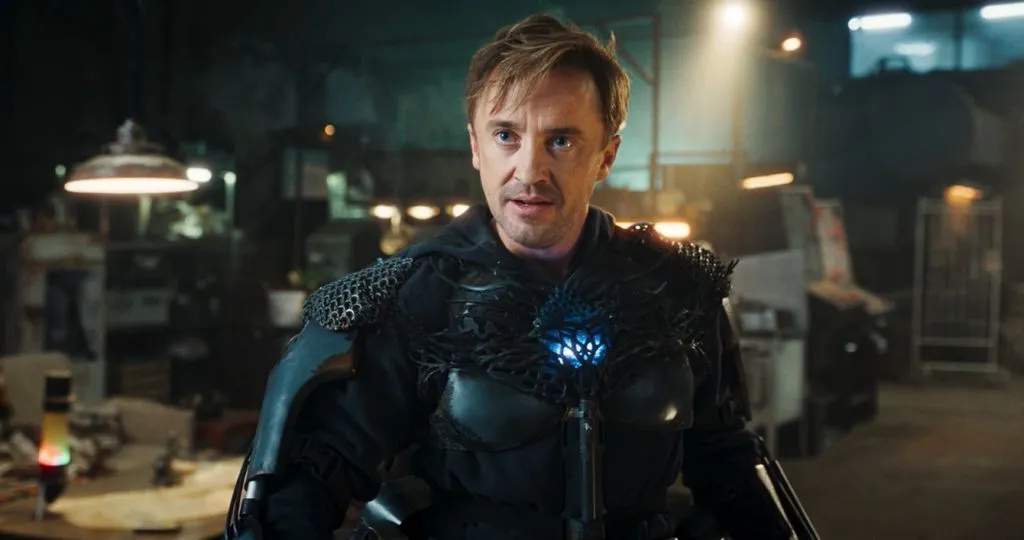
The film’s most marketable hook, Leon’s mechanical suit, appears late, only turning into a “plant-fueled war machine” at the midpoint of the brief running time. Action scenes that rely on the suit remain scarce. The story then makes a sudden turn in the final stretch.

The focus swings away from scrap-heap science fiction and moves toward Leon’s family history, his dead mother, and an extended emphasis on scientific intrigue and political scheming. This pivot into dense exposition affects the rhythm of the film and makes the 79-minute feature feel significantly longer, reducing the sense of release that the supersuit promises.

Character Strains and Theatrical Staging

Tom Felton’s work as Leon suffers from his effort to hold an American accent. That constant tension in his delivery pulls attention away from the inner life of the character. The script’s treatment of Leon’s physical disability, his use of a wheelchair, creates deeper concern. The film often presents his condition as an “irrevocable disease” that must be overcome, and this choice aligns with dated and harmful tropes. His resilience rarely shapes the way the story describes him.
Altered Review

When Leon calls himself “a piece of shit on wheels,” the line exposes a harsh self-loathing that the film seems to accept and never seriously challenges. The narrative pressure for him to regain the ability to walk through the mechanical suit sends a quiet message that his disability represents a defect that must be altered before he can step fully into a heroic role, and any suggestion of self-acceptance fades.

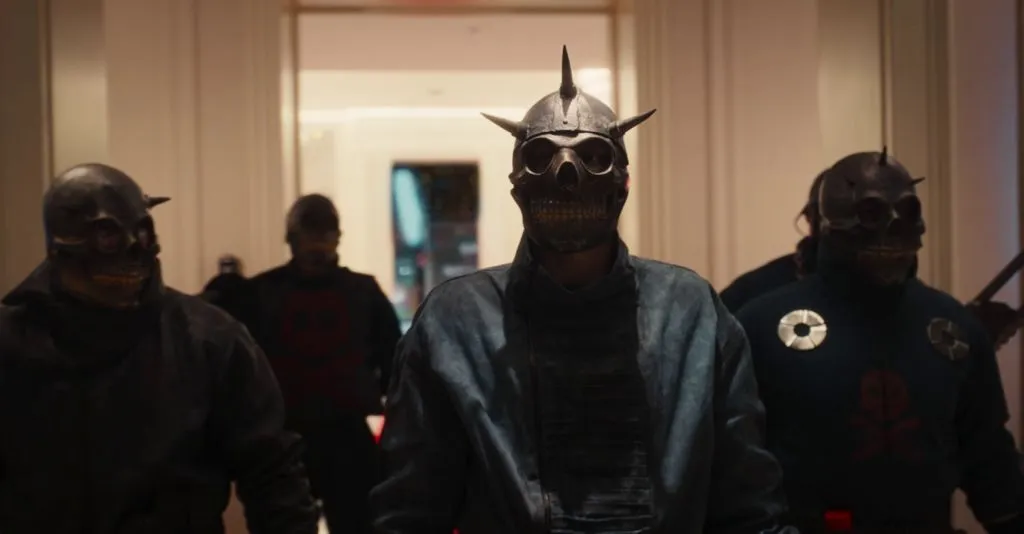
The ensemble, which includes many Finnish performers, frequently struggles with English dialogue. This stiffness in the supporting cast, including Aggy K. Adams as pop star Mira and the antagonists Senator Frank (Richard Brake) and the enforcer Hughes (Igor Jijikin), makes many of their dramatic moments uncomfortable to watch.

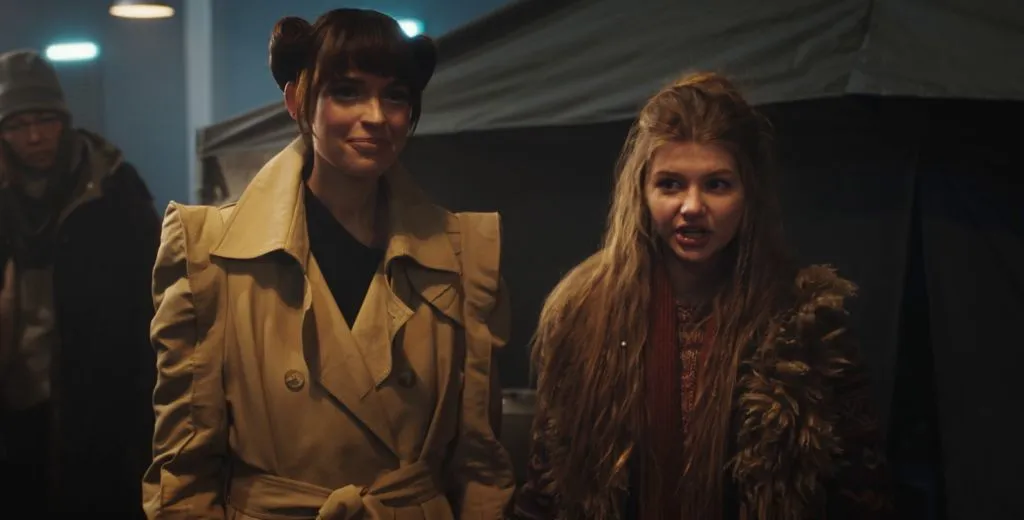
Mira’s position as a figure for unity, who aligns herself with Leon and Chloe, has strong conceptual potential. Chloe (Elizaveta Bugulova) mainly functions as Leon’s brave, warm emotional anchor and often ends up in danger because of his choices. The villains convey the cold resolve of a corrupt ruling class, yet the lack of ease in delivery from many secondary players drains weight from scenes that aim for emotional impact.

The dialogue carries both stiffness and a blunt simplicity that often feels like the product of first-take line readings. Jokes about “flower power” and the choice to label adversaries plainly as “bad guys” flatten the conflict. This basic level of speech keeps the film far from the layered, culturally alert genre storytelling seen in international cinema, where precise dialogue can develop character and social context at the same time.

Aesthetic Vision and Thematic Faltering

Altered leans on a familiar dystopian look, heavily informed by cyberpunk imagery. Neon-lit cinematography mixes with a gritty sense of urban decay and creates a setting that can be visually striking, which feels notable given the modest reported budget of $15 million. The separation between the sterile, glittering Genetics Districts and the dim, ramshackle homes of the Specials is sharply drawn and recalls touchstones such as Blade Runner.
Altered Review

At the same time, that visual design loses strength whenever the film relies on the reported cheap CGI used for certain effects, and the strong mood struggles against uneven technical craft. The production feels most convincing in moments that rely on tangible sets and moody lighting, and digital spectacle rarely carries the same weight.

The film places more weight on mood and political plotting than on continuous action. Since the supersuit receives limited screen time, the science fiction action promised by the premise remains restricted. The cinematography and shot choices often stand out, with close-ups and specific lighting setups pushed to heighten emotional beats. The pairing of a haunting score with these visual choices underlines the dystopian tone in several scenes.

The central theme revolves around the tension between identity and ideals of genetic perfection. The film raises questions about humanity in an age where science can reshape the species. Its philosophical ambition reaches beyond what the script can handle. The film settles for generic, mild slogans about unity, summed up in lines like “we are all one,” and never reaches layered, culturally specific reflections.

The closing movement, a sequence in which the villains attract the Specials with false promises of enhancement, is assembled with care on a visual level, yet it leads to a feeling that the film drifts to a halt. The flower-based supersuit gives the premise real promise, but the writing smothers the sense of excitement and never delivers a sophisticated payoff to its discussion of class, eugenics, and genetic hierarchy.

Altered is a sci-fi action thriller set in a dystopian future where genetic enhancements are common, leading to a stark societal divide between the “enhanced” elite and the marginalized “Specials.” Written and directed by Timo Vuorensola, the film follows outcasts Leon (Tom Felton) and Chloe as they fight for justice against the corrupt system. The movie was released in US theaters and on digital platforms on November 21, 2025, distributed by Well Go USA Entertainment.

Credits

Title: Altered

Distributor: Well Go USA Entertainment

Release date: November 21, 2025 (US Theatrical and On Digital)

Rating: PG-13

Running time: 1 hour 27 minutes

Director: Timo Vuorensola

Writers: Timo Vuorensola

Producers and Executive Producers: Andreas Klein, Marko Moellers, Doris Pfardrescher, Juris Razgulajevs

Cast: Tom Felton, Elizaveta Bugulova, Richard Brake, Igor Zhizhikin, Aggy K. Adams, Aleksey Filimonov, Sergey Tsyrulnikov

Director of Photography (Cinematographer): Anton Bakarski

Composer: Ryan Otter

The Review

Altered

4 Score

Altered presents a visually stunning dystopian landscape, powered by a truly ambitious sci-fi concept. The film's aesthetic blend of cyberpunk and neo-noir is its greatest strength. However, the narrative struggles under the weight of excessive exposition and inconsistent pacing. The attempt at social commentary on genetic inequality remains vague, and the character portrayal of Leon is marred by regressive tropes. While Director Vuorensola delivers style, the execution lacks the necessary polish and depth to fulfill the promise of its imaginative world.

PROS

  • Ambitious and complex sci-fi concept.
  • Striking visual aesthetic (cyberpunk/neo-noir).
  • Effective atmosphere and moody cinematography.
  • Short runtime (mercy for a struggling plot).

CONS

  • Narrative is heavily front-loaded with exposition.
  • Inconsistent pacing and disruptive story shifts.
  • Social commentary is too vague and non-specific.
  • Stiff performances and struggles with American accents.
  • Problematic, regressive portrayal of disability.
  • The central action element (supersuit) appears too late.

Review Breakdown

  • Overall 0
Tags: ActionAggy K. AdamsAleksey FilimonovAlteredCrimeElizaveta BugulovaFeaturedIgor ZhizhikinRichard BrakeSci-FiThrillerTimo VuorensolaTom FeltonWell Go USA Entertainment
Previous Post

Champagne Problems Review: Minka Kelly Leads a Sparkling Slice of Holiday Escapism

Next Post

The Session Man Review: Assessing the Legacy of Rock’s Most Valuable Unknown Player

This Week's Top Reads

  • Is This Seat Taken? Review

    Is This Seat Taken? Review: A Satisfying Mental Workout

    1324 shares
    Share 0 Tweet 0
  • Treasure Island Review: David Oyelowo Commands an Uneven Adventure

    0 shares
    Share 0 Tweet 0
  • Trust Review: Squandered Potential and an Incoherent Plot

    6 shares
    Share 0 Tweet 0
  • Dustfall Review: Crime Television That Stays With the Survivor

    0 shares
    Share 0 Tweet 0
  • Adult Supervision Review: Children Need Help Their Fathers Cannot Quite Give

    0 shares
    Share 0 Tweet 0
  • Murder In A Small Town Season 2 Review: Politics and Police Work

    5 shares
    Share 0 Tweet 0
  • Blue Lights Season 4 Review: Who Gets Exposed, Who Stays Protected

    1 shares
    Share 0 Tweet 0

Must Read Articles

The Diplomat Season 4 Review
TV Shows

The Diplomat Season 4 Review: Every Marriage Has a Foreign Policy

5 hours ago
Whalefall Review
Movies

Whalefall Review: Breathing Lessons from a Damaging Father

7 hours ago
Ludwig Season 2 Review
TV Shows

Ludwig Season 2 Review: Lucy Gets the Credentials and the Story Gets Better

1 day ago
Crystal Lake Review
TV Shows

Crystal Lake Review: Cardellini Carries the Carnage

1 day ago
Time Season 3 Review
TV Shows

Time Season 3 Review: Rehabilitation Left Off the Rota

2 days ago
Loading poll ...
Coming Soon
Which of Alfred Hitchcock's 1960s thrillers is your all-time favorite?

Gazettely is your go-to destination for all things gaming, movies, and TV. With fresh reviews, trending articles, and editor picks, we help you stay informed and entertained.

© 2021-2026 All Rights Reserved for Gazettely

What’s Inside

  • Movie & TV Reviews
  • Game Reviews
  • Featured Articles
  • Latest News
  • Editorial Picks

Quick Links

  • Home
  • About US
  • Contact Us
  • Advertise with Us
  • Review Guidelines

Follow Us

Facebook X-twitter Youtube Instagram
No Result
View All Result
  • Gazettely | Movie, TV & Game Reviews, News, and Rankings
  • Movies
  • Entertainment News
  • Movie and TV Reviews
  • TV Shows
  • Game News
  • Game Reviews
  • Contact Us

© 2024 All Rights Reserved for Gazettely




