






























Cotton Queen introduces Russian-Sudanese writer-director Suzannah Mirghani as a confident feature filmmaker. The production occupies a significant place in Sudanese cinema, presented as the first fiction feature written and directed by a Sudanese woman. Expanded from her successful short film Al-Sit, the film settles into a secluded cotton-farming village in Sudan, where long-standing customs regulate everyday rhythms.
The story examines the clash between this entrenched tradition, embodied by the formidable matriarch Al-Sit, and the pull of modernity and outside influence represented by agri-businessman Nadir and his technology.
The narrative follows Nafisa, a bright young woman positioned between these forces, balancing her romantic feelings for local lad Babiker with the family expectation that she safeguard the village’s economic future. Mirghani shapes the film as an accessible, layered mix of coming-of-age drama, cultural reflection, and light touches of magic realism.
Matriarchy, Desire, and Economic Pressure
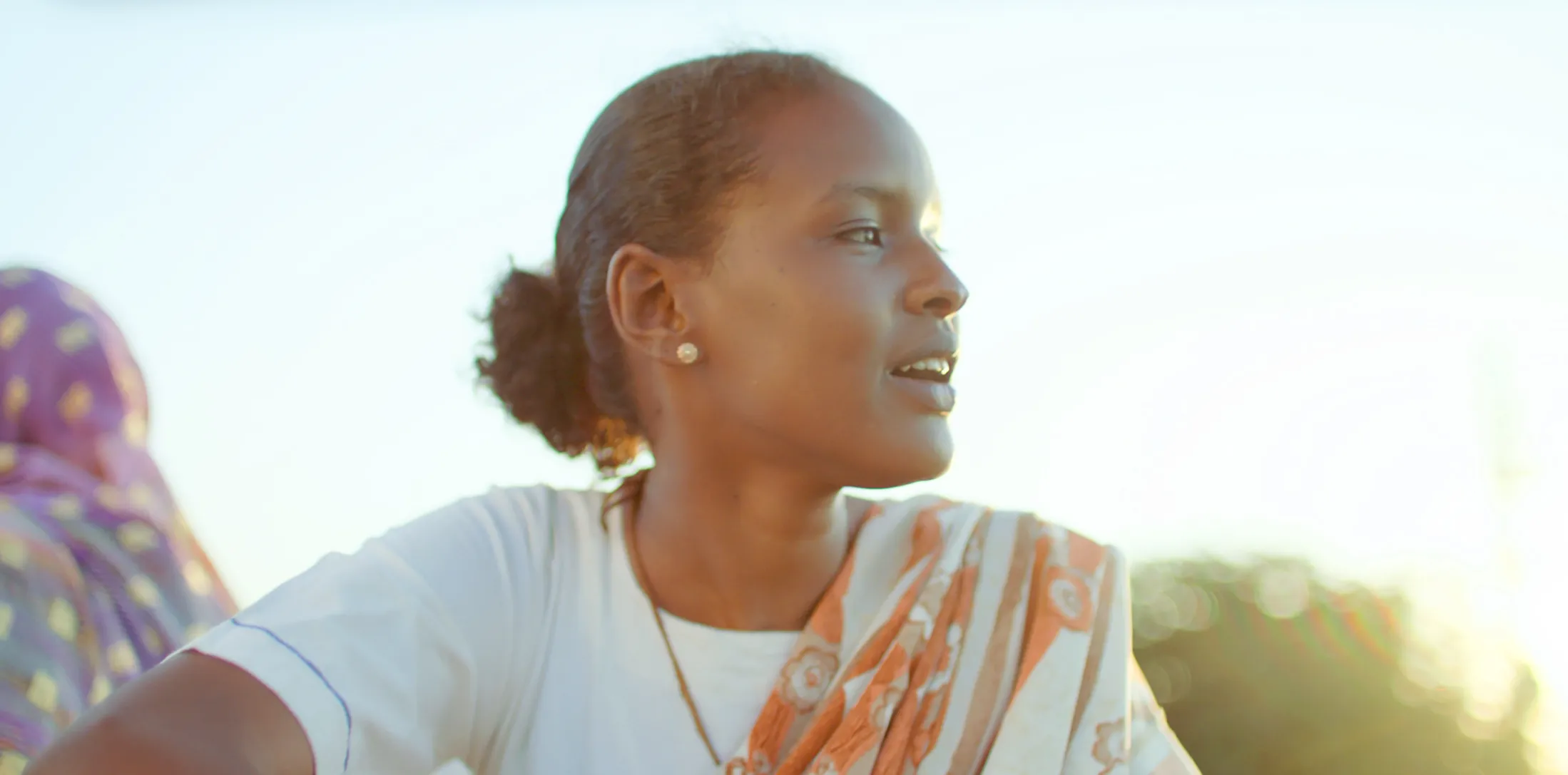
The drama grows from carefully written characters and the power relations within a village structure led by women. Nafisa (Mihad Murtada) serves as the viewer’s compassionate guide, a recognizably ordinary figure. She writes poetry and carries a hidden love for a young farmer, ambitions that feel modest yet emotionally charged.
Family pressure positions marriage to the wealthy outsider Nadir as essential for collective socioeconomic security, placing her personal feelings against a sense of obligation to her household and community. Murtada plays her with a gentle, appealing presence and a calm resolve that always feels grounded.
Al-Sit (Rabha Mohamed Mahmoud), the village elder and “Cotton Queen,” stands as the counterweight. The film treats her as a near-mythic presence whose authority comes from a legendary act of resistance against British colonialists. She insists on customs such as hand-picking cotton, believing this method protects the purity of the crop, while the practice also preserves her influence over the work and movement of young women in the village. Mahmoud’s performance carries a distinct charisma and power, presenting a steely and often concealed agenda behind a polished surface.
The core conflict runs between Al-Sit’s established autonomy and Nadir’s modern, capital-driven incursion. His “magi seeds” rely on a business model that demands annual repurchases, marking him as a new kind of colonist who seeks economic control of the land. This creates an echo of earlier historical patterns.
Pressure on Nafisa to accept Nadir’s proposal comes from both Al-Sit and Nafisa’s mother, Aisha, turning the young woman’s intimate decision into a symbolic contest over the community’s future. The abandoned “English house,” Nadir’s dusty residence, deepens this sense of a lingering colonial presence, a preserved relic that reminds viewers of the instability created when the powerful are granted what they consider their rightful power.
Visual Poetry and Cultural Specificity
The film gains much of its force from its look and from its grounded cultural world. Frida Marzouk’s cinematography lends the images a crisp and clean clarity. Vivid, earth-toned colors, segmented ochres, white cotton fields, and clear blue skies create a poetic link between the people and the landscape. The lyrical framing of the Nile and the sun-kissed cotton rows gives the village a feeling of time suspended, distinct from conflict-torn images of the region.
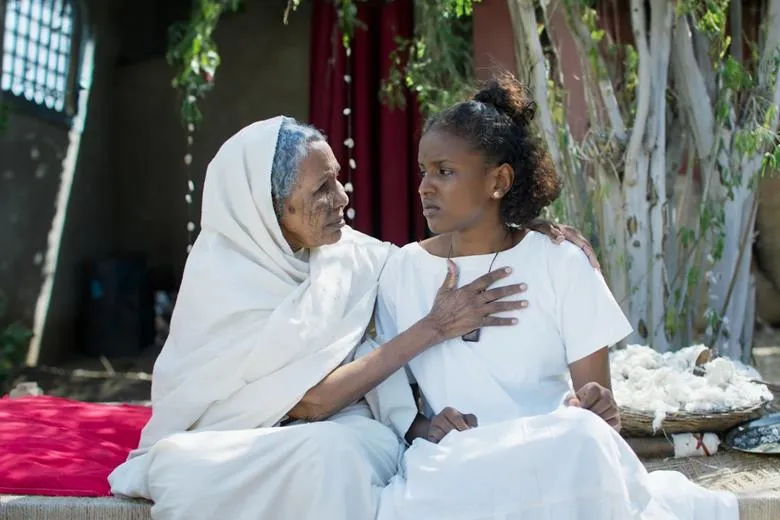
Cotton Queen offers intimate cultural detail about Sudanese village life. The film lingers on daily routines, including the shared labor of cotton picking, communal gatherings, and the tight web of social relations, yet avoids idealizing the village’s isolation. Mobile phones move easily through the frame and signal a community that participates in the contemporary world.
The script examines the strain between tradition and modernity with complexity. Deeply rooted practices, such as consulting soothsayers, sit beside an awareness of modern concerns like GM crops and women’s rights. Mirghani brings attention to harmful customs such as female genital mutilation, indicating that the path toward change involves confronting internal practices along with external economic or political forces. The film maintains a close focus on character and local pressures while also touching on weighty international subjects, including capitalism and post-colonial legacies.
Narrative Voice and Execution
Suzannah Mirghani directs with assurance and shapes a modest film that carries substantial historical and thematic weight within a straightforward narrative. She leans on the tone of a magic-realist fable to express the emotional reality of the village’s tensions. The thematic line remains clear, and she avoids a single decisive verdict in the debate between tradition and change. The film explores the nuances of each position and finds complexity in the apparently well-meant choices of every figure involved.
The film contains striking elements, yet the broader narrative execution shows some limitations that feel characteristic of a first feature. Subplots tied to small-town gossip and simmering tensions can feel familiar or heavy-handed, which reduces the intensity of the drama. The build-up to the climax also feels somewhat forced, relying on behavior that seems out of character and on flashbacks that weaken the impact of the final confrontation.
Even with these issues, Cotton Queen emerges as a clear calling card for Mirghani. The film signals her strong potential, her confident visual sense, and her evident respect for the culture she presents. It succeeds as an empathetic portrait of its characters and as a sincere cultural study that merits international attention.
Cotton Queen is the feature film debut of Sudanese-Russian filmmaker Suzannah Mirghani, a dramatic expansion of her award-winning 2020 short film Al-Sit. The movie premiered at the Venice International Film Critics’ Week in August/September 2025, continuing to be screened at international festivals like Thessaloniki, where it won the top prize. The film tells the story of Nafisa, a teenage girl in a traditional Sudanese cotton-farming village who must contend with her powerful grandmother, Al-Sit, and the arrival of a businessman who threatens their traditional way of life. The film is a co-production across several nations, including Germany, France, Palestine, Egypt, Qatar, Saudi Arabia, and Sudan. As a recent festival film, its wide theatrical release is anticipated for early 2026, with MENA distribution rights acquired by MAD Solutions and Film Clinic.
Credits
Title: Cotton Queen
Distributor: Totem Films (World Sales), Studiocanal (World Sales), MAD Solutions, Film Clinic (MENA distribution)
Release date: Premiered at the Venice International Film Critics’ Week in August/September 2025.
Running time: 93 minutes, 94 minutes
Director: Suzannah Mirghani
Writers: Suzannah Mirghani
Producers and Executive Producers: Caroline Daube, Didar Domehri, Annemarie Jacir, Ossama Bawardi, Mohamed Hefzy, Jessica Khoury, Alaa Karkouti, Maher Diab, Jutta Feit, Julia I. Peters, Stefanie Plattner, Suzannah Mirghani, Gordon Spragg, Michael Arnon, Laurin Dietrich, Alexander Funk, Rasha Abu Rish
Cast: Mihad Murtada, Rabha Mohamed Mahmoud, Talaat Fareed, Haram Bisheer, Mohamed Musa, Hassan Kassala, Fatma Farid, Aya Yassin Altageel, Tagali Magdy, Tibr Magdy
Director of Photography (Cinematographer): Frida Marzouk
Editors: Amparo Mejías, Simon Blasi, Frank Müller
Composer: Amine Bouhafa
The Review
Cotton Queen
Cotton Queen is an empathetic and culturally rich debut that succeeds as a character study of a young woman caught between tradition and modern influence. While the film falters in its final act with a somewhat forced conclusion and occasionally heavy-handed subplots, it's a valuable showcase of director Suzannah Mirghani’s compelling voice and unique perspective on Sudanese life. It is a powerful first effort that clearly signals a promising filmmaking career.
PROS
- Offers an intimate, complex look into Sudanese village life and its customs.
- Mihad Murtada and Rabha Mohamed Mahmoud give powerful, grounding performances.
- Crisp cinematography uses color and setting effectively to create a sense of place.
- Represents a significant step for female filmmaking in Sudan.
CONS
- The film's conclusion feels forced and relies on unearned plot devices.
- Some subplots and thematic metaphors lack subtlety.
- Can feel slightly uneven due to the reliance on some cliché plot devices.