






















![Kingdom Hearts Collection [I-III] Review](https://gazettely.com/wp-content/uploads/2026/10/Kingdom-Hearts-Collection-I-III-1-360x180.webp "Kingdom Hearts Collection [I-III] Review: KHII Holds Steady as Newer Entries Fluctuate 40")
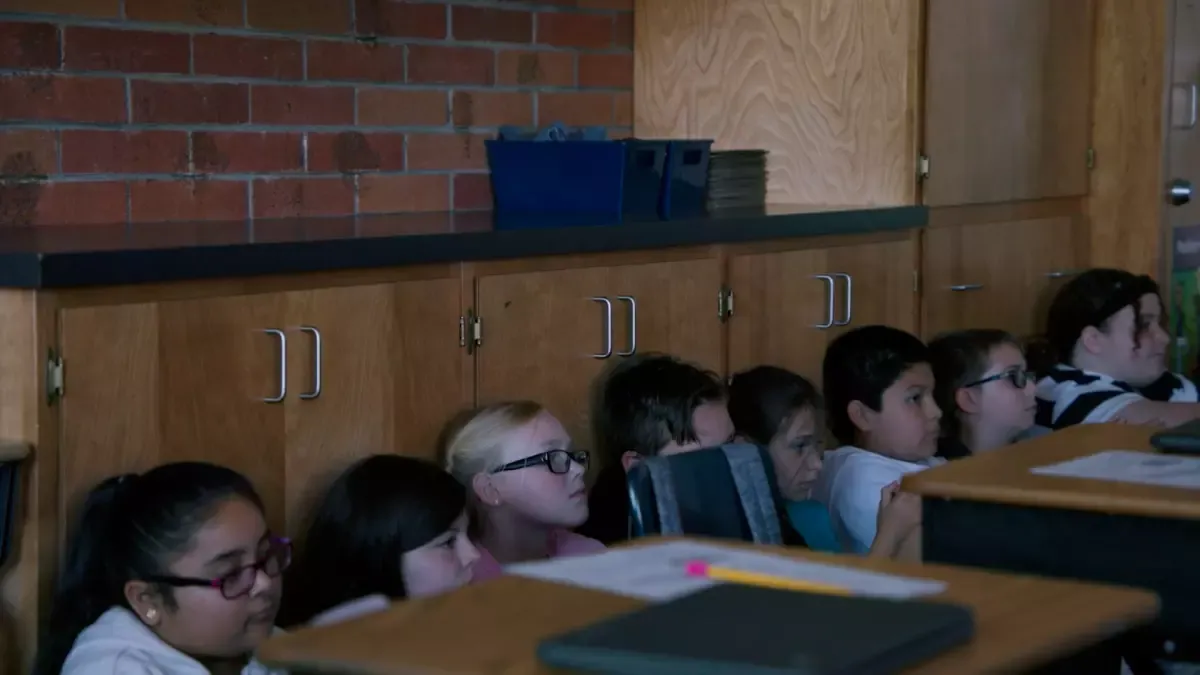

Zackary Canepari and Jessica Dimmock’s documentary, Thoughts & Prayers: How to Survive an Active Shooter in America, takes a blunt look at a country that has grown used to living in emergency mode. The title, a phrase repeated after each tragedy until it feels hollow, signals the film’s outlook, while the direction stays formally neutral. The documentary turns its attention to the $3-billion “active shooter preparedness industry” that has expanded alongside repeated mass shootings.
The result is a bleak portrait of American failure meeting American entrepreneurship, shot with an observational calm that holds space for both the absurd and the terrifying. That restraint creates emotional distance, placing the viewer in the role of a steady, unwilling witness. The film shows a society that has accepted the problem as permanent, shifting responsibility for survival onto students, teachers, and the emergency-response economy. What plays out is grim, with a faint satirical edge, like a record of adaptation written in real time.
Commerce in Crisis: The $3 Billion Industry
The film lays out the preparedness market with patient specificity, emphasizing its valuation north of $3 billion. This section feels like a catalogue from a dystopian store. Bulletproof backpacks are displayed alongside classroom shelters designed to sit in the corner, and bulletproof wall hangings appear with the buyer’s own image printed on the surface. “Innovation” stretches from robot dogs to specialized tourniquets meant to be applied quickly in mass-casualty situations.
Each item is presented as practical, yet the camera’s steady gaze keeps returning to the same point: tragedy is profitable here. One entrepreneur says, plainly and without malice, that every new shooting helps his family business. The documentary treats that statement as evidence of a commercial surge that fills the vacuum left by political will.
Products and training packages turn the crisis into an economic lane to occupy, while legislative change fades into a few distant soundbites. The focus remains on adaptation, and the film makes clear that this is where national energy has gone.
Trauma as Curriculum: The Rituals of Readiness
Thoughts & Prayers cuts deepest when it tracks the training forced on the people with the least power to avoid it. The pacing here mirrors a mandatory, high-stress simulation that never ends, like a survival tutorial with no off-switch. The stages begin early.
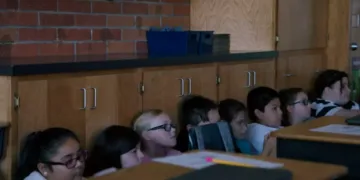
Lockdown drills show up in Pre-K classrooms, where teachers use “dinosaurs” as stand-ins for gunmen, signaling the age at which fear enters school life. In high school, the drills escalate into full-scale scenarios. Students wear prosthetics to mimic gruesome injuries and practice first aid on peers made to look like they are bleeding out.
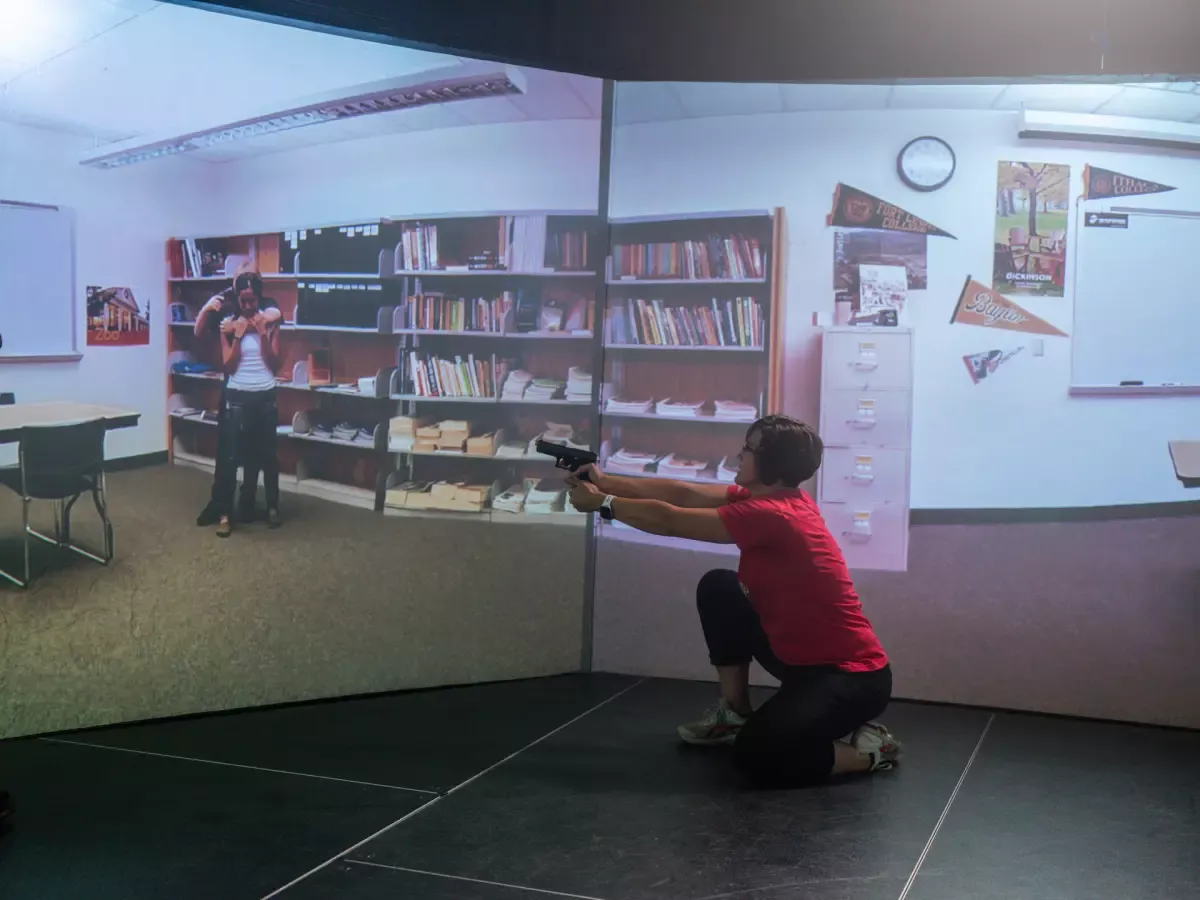
Educators are pulled into the same conditioning loop. In Utah, the film follows teachers who are already overworked as they go through concealed-carry training, asked to picture combat as part of their profession. The visual style matters: static, steady framing observes these exercises with a flat routine that makes the surreal feel ordinary.
The emotional burden is voiced by a freshman who spells out her fear of going to school and her exhaustion with a culture where adult “rights” outrank student lives. As the film watches these rituals repeat, the effect becomes stark. Drills settle into habit, helplessness becomes learned, and tragedy stops feeling like a distant risk and starts feeling expected.
The Inevitable Practice: Articulating the Horror
The documentary builds to its climactic sequence, a massive, immersive mass-casualty drill held at a high school in Medford, Oregon. It operates as the film’s narrative payoff, gathering the themes of earlier scenes into one overwhelming event. Students are covered in dramatic makeup to play victims, while masked “shooters” move through the hallways. The high-stress atmosphere turns the school into a stage for communal trauma, rehearsed in front of everyone who has to live there afterward.
The symbolic force lands after the drill, during a press conference. A sign reading “fake press conference” is replaced with one reading “real press conference,” and the shift happens without friction. The film treats that seamless swap as the clearest statement of purpose.
These drills train communities to live with horror they already assume will return, turning preparation into ritual and inevitability into routine. The documentary’s quiet, watchful approach lets that reality speak for itself. Absurdity sits beside devastation, and the crisis is shown as something embedded in American life.
The documentary film Thoughts & Prayers premiered in the United States on Tuesday, November 18, 2025, on HBO. It is a sobering, feature-length examination of the $3-billion active shooter preparedness industry that has grown in America. The film captures the current landscape of safety rituals, drills, and products used in schools and communities across the country. As of today, November 22, 2025, the documentary is available to stream on Max (formerly HBO Max).
Full Credits
Title: Thoughts & Prayers
Distributor: HBO
Release Date: November 18, 2025 (United States)
Rating: TV-MA
Running Time: 85 minutes (1 hour, 25 minutes)
Director: Zackary Canepari, Jessica Dimmock
Producers and Executive Producers: Claire Read, Gary Kout (Producers), Zackary Canepari, Jessica Dimmock (Executive Producers)
Cast: The film features interviews with and observations of students, teachers, active shooter preparedness entrepreneurs, and various community members. No listed leading professional actors.
Director of Photography (Cinematographer): Jarred Alterman
Editors: Carter Gunn, Myles Kane
Composer: Matthew Joynt
The Review
Thoughts & Prayers
The film is a powerfully restrained document of American failure. By focusing on the $3-billion preparedness industry and the traumatic, ritualized training of students and educators, it effectively showcases a society that has normalized the unacceptable. The observational style is deeply unsettling, transforming the crisis from a political issue into a normalized, profit-driven domestic reality. It's a vital, emotionally devastating experience that leaves the viewer hollowed by the sense of learned helplessness it captures.
PROS
- Powerful and original subject matter (The rise of the "active shooter preparedness" industry).
- Masterful narrative pacing and structure (Building effectively to the mass casualty drill).
- Exceptional emotional resonance (Capturing the trauma and resignation of students and teachers).
- Stark, composed cinematography enhances the film's sense of formal neutrality and despair.
CONS
- The film's neutral, restrained style might be interpreted as lacking explicit outrage by some viewers.
- The score or soundtrack is occasionally heavy-handed, undermining the observational neutrality.
- Focus on societal adaptation means the political debate is minimized to brief clips.
- The subject matter can be intensely distressing and emotionally draining to watch.