


























Deadly Vows, directed by Jared Cohn and Bella Bahar Danesh, begins with a wedding that feels smothered by ominous music, as if the score is already warning the guests. That opening immediately states its intentions: this is a thriller inspired by true events that wants to expose the persistent reality of domestic abuse. The story quickly positions Darya (Shiva Negar), a dedicated doctor and mother, as the emotional center.
Her first struggle, escaping her volatile husband Sam (Peter Facinelli), expands four years later into a situation marked by targeted violence. Darya fights for her own survival and for the safety of her children. The film fixes its tone early, moving from the fragile promise of marriage to the raw fear of a darkened Las Vegas bedroom, then into the uneasy calm of a hard-won but fragile independence. It presents a survival narrative shaped by the constant pull of a past relationship that refuses to release its grip.
Thematic Tension and Structural Compromise
Deadly Vows pursues a direct thematic goal: it wants to show how psychological and physical danger continues for many survivors of abuse long after they leave. At the same time, it aims to operate as a tightly wound suspense thriller and an urgent piece of social awareness.
That double function creates constant friction in how the story unfolds. The script leans heavily on familiar genre beats, such as the dramatic stalker sequence and the conveniently timed police visit, and this forward rush undercuts the chance to build a deeper character study.
The film offers brief windows into Darya’s inner life and complex history, including her experience as a refugee after the 1978 Iranian revolution. That detail suggests a larger philosophical frame about identity and freedom, yet the script uses it more as shading on the surface of her character than as a guiding thread. The pacing feeds this sense of instability.
Major emotional moments arrive, register for a moment, and then move aside quickly to keep the plot machinery turning. The audience moves on before Darya, or the viewer, can fully sit with the trauma. The inner world of the character feels secondary to the need for the next narrative shock.
The Players in the Shadow Play
The ensemble gives the film its most dependable strength, grounding a script that sometimes feels thinner than the subject demands. Shiva Negar’s work as Darya carries the movie. She conveys quiet dignity and fierce resolve as a woman rebuilding her life while constantly looking over her shoulder.
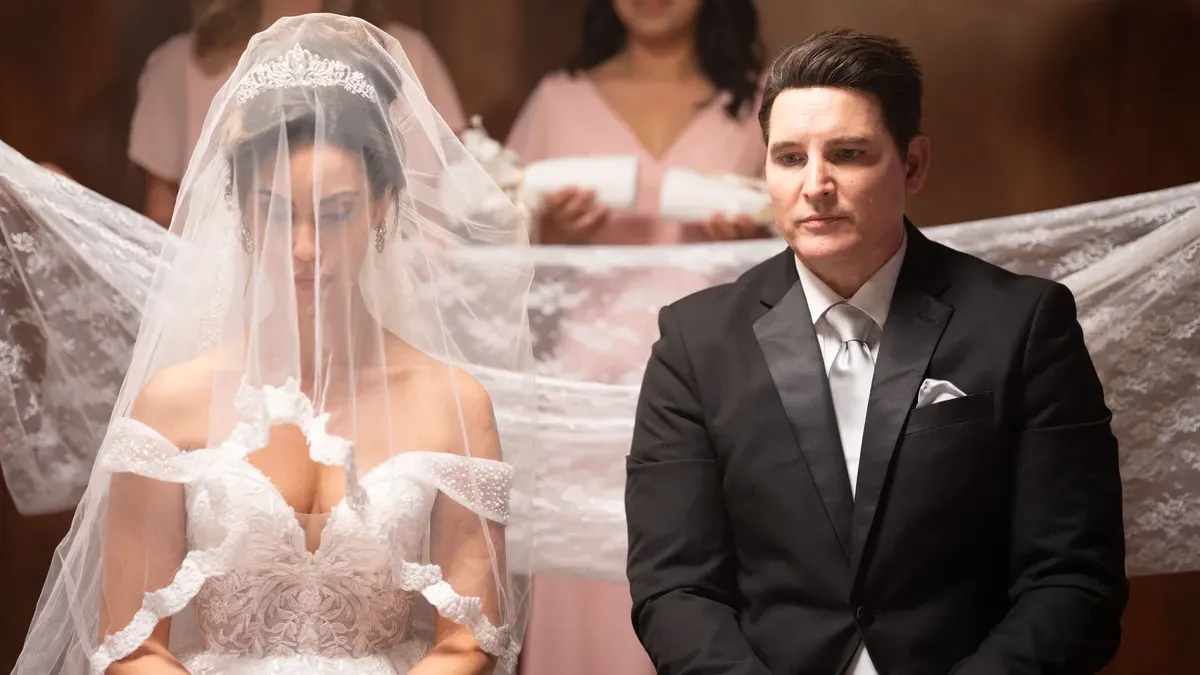
Her performance holds both vulnerability and deep determination, and that mix provides the emotional center that the script often hurries past. Facing her, Peter Facinelli’s Sam brings a chilling energy, a classic abuser figure whose manipulative charm can flip without warning into dark aggression. He makes the cycle of apologetic remorse followed by renewed violence feel disturbingly believable, even as the script speeds up his descent for the sake of plot.
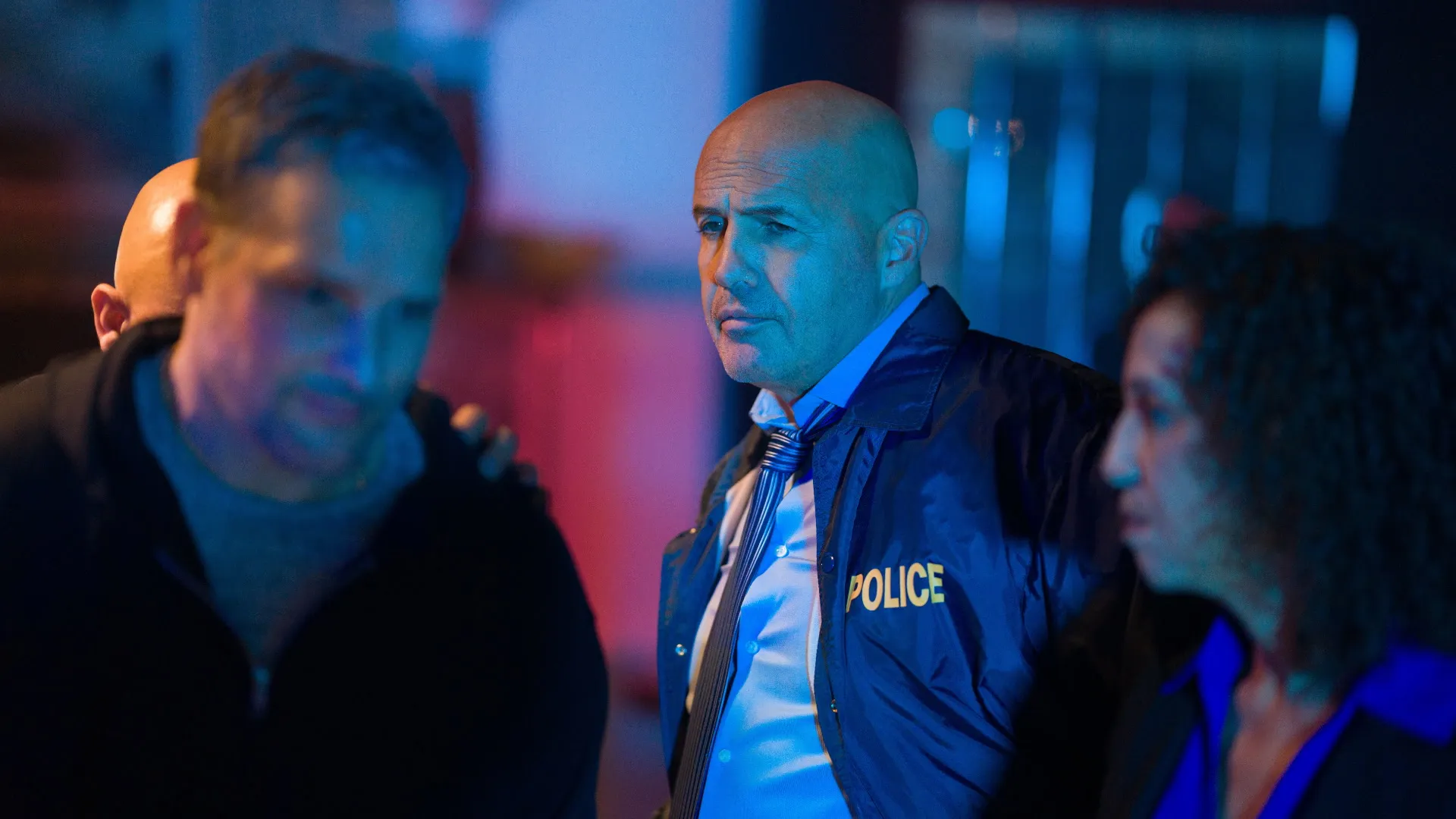
The supporting cast gathers several respected performers who seem ready for richer material. Shohreh Aghdashloo, for instance, carries a natural authority and depth that hints at a reservoir of story that never fully emerges on screen. Billy Zane, as the jaded detective, adds a tired clarity to the repetitive nature of domestic violence cases.
Shane West’s Max, introduced as a tentative romantic possibility, arrives with a gentleness that could have opened up questions about trust and guilt in a new relationship. The writing keeps him mostly functional, a narrative tool with very little sense of a fully explored person. The cast feels capable of complicated, layered interaction, yet the film positions them as pieces in a thriller mechanism.
Expressionism, Pacing, and Moral Weight
Visually, Deadly Vows leans toward a neo-noir sensibility. The cinematography favors shadows and tight framing that press in on Darya, mirroring the psychological pressure she carries. These choices echo classic expressionistic approaches, where light and composition reflect states of mind.
The lighting underlines a kind of moral and emotional chiaroscuro, the clear split between Darya’s public life and the concealed danger that surrounds her. At times, though, the visual urgency races past the emotional truth. Pacing that begins with a deliberate rhythm drifts into disjointed shifts when scenes built for psychological devastation wrap up too quickly, trading emotional depth for sheer forward momentum.
The treatment of violence stands out. The filmmakers rely on implication and avoid graphic imagery. That approach lowers the chance of intense distress for viewers and quietly mirrors Darya’s own habit of minimizing or distancing herself from the abuse. This emphasis on suggestion functions as an ethical decision that tries to lift the material above exploitation.
Deadly Vows clearly intends to raise awareness and support survivors, and that sincerity fuels the film from scene to scene. At the same time, a constant pull between emotional honesty and the familiar comfort of suspense cinema leaves the experience uneven. The desire for genre excitement presses against the quieter, devastating truth within Darya’s story.
Deadly Vows is a psychological thriller inspired by true events, focusing on the harrowing journey of Darya, a survivor of domestic abuse. After escaping her charming but violent husband, Sam, Darya discovers he has ordered a hit on her life, forcing her to go on the run to protect herself and her family. The film, directed by Jared Cohn and co-directed by Bella Bahar Danesh, had its North American release scheduled for November 14, 2025, and is expected to be available on Digital and On-Demand platforms through its distributor, Quiver Distribution.
Full Credits
Title: Deadly Vows
Distributor: Quiver Distribution
Release date: November 14, 2025 (North America)
Running time: 1 hour 38 minutes (98 minutes)
Director: Jared Cohn
Co-Director: Bella Bahar Danesh
Writers: Niall Cassin, Bella Bahar Danesh, Georgia Menides, Sofia Monzerratt
Producers: Bella Bahar Danesh, Luna Zhang, Daemon Hillin, Jared Cohn
Cast: Shiva Negar, Peter Facinelli, Billy Zane, Shane West, Shohreh Aghdashloo, Michael Sifain, William Guirola, Marisa Petroro, Catherine Bruhier, Micah Fitzgerald
Director of Photography (Cinematographer): Michael Su
Editors: Eric Chase
Composer: Nadeem Majdalany
The Review
Deadly Vows
Deadly Vows is an intense thriller defined by a powerful moral commitment to discussing domestic abuse and survival. The film's strength lies in the sincerity of its mission and the compelling performance of Shiva Negar. However, the narrative struggles to reconcile the demands of a high-stakes thriller with the necessary depth of a character study. While watchable and often urgent, the reliance on rapid plot mechanics limits the emotional impact and prevents the story from fully honoring the complex trauma it seeks to portray. It is a vital attempt at bringing a difficult subject to a wider audience, though uneven in its execution.
PROS
- Committed to raising awareness about the harsh reality of domestic abuse and survival.
- Shiva Negar anchors the film with a compelling blend of vulnerability and resilience.
- Chooses implication over graphic depiction, respecting the subject matter and potential audience trauma.
- The main cast delivers an authentic and fraught tension.
CONS
- The film sacrifices character depth for genre thriller conventions (e.g., plot shortcuts).
- The narrative moves too quickly over significant emotional events, minimizing their impact.
- Elements like Darya's refugee background and the new romance are superficial.
- Talented actors are underutilized due to the script's focus on plot progression.