
















![Kingdom Hearts Collection [I-III] Review](https://gazettely.com/wp-content/uploads/2026/10/Kingdom-Hearts-Collection-I-III-1-360x180.webp "Kingdom Hearts Collection [I-III] Review: KHII Holds Steady as Newer Entries Fluctuate 37")



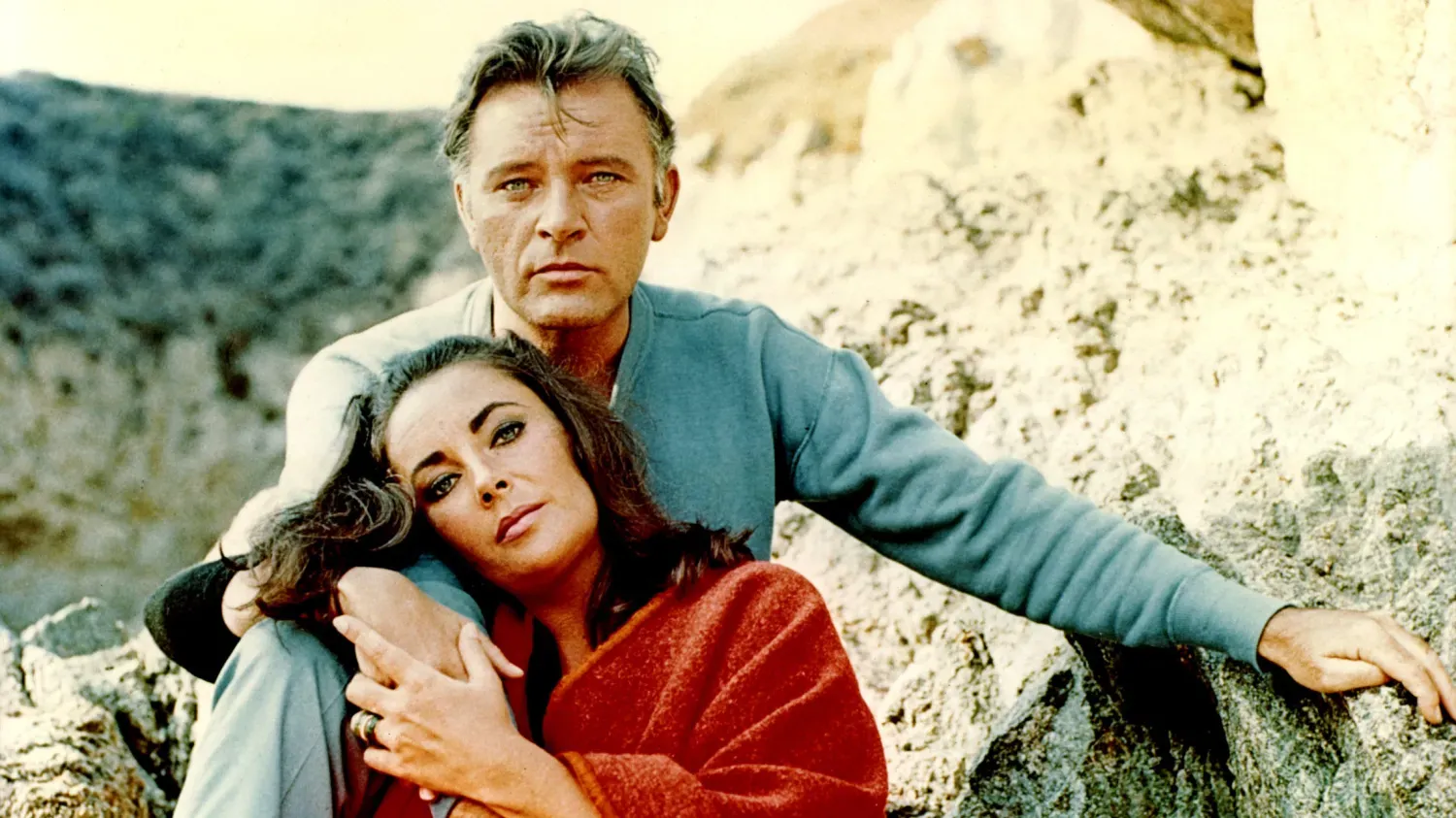

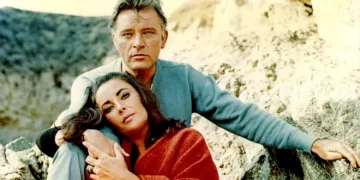
A freeze-frame lingers on a weathered face, eyes shadowed with intelligence and long, accumulated fatigue, before the baritone arrives: a voice broad enough for the Old Vic or a Hollywood paycheque. The voice belongs to Richard Burton, the Welsh actor at the centre of Adrian Sibley’s documentary Richard Burton: Wild Genius (BBC Two). Sibley shapes the film around a persona built from raw ability and spectacular self-destruction.
Compressed into an hour, the story moves at a brisk, cinematic pace, tracing Burton’s improbable path from the bible-black village of Pontrhydyfen to international fame and, finally, to his quiet burial at 58 in tax-friendly Switzerland. Matthew Rhys reads Burton’s personal diaries with care, setting an intimate thread against the archival images and home-movie fragments, and opening a necessary window onto a life lived at an overwhelming scale. This brief portrait searches for the source of the legendary noise around a career marked by exceptional talent and squandered opportunity.
The Exile’s Shadow
The film draws its strongest current from Burton’s beginnings. He appears as a motherless child in a mining family, his early years steeped in a Welsh sense of self that never leaves him. Siân Phillips and Michael Sheen describe him as a pioneering émigré from a country with very few paths for actors who wanted to work beyond its borders.

His move to the stage reads as an act of fierce ambition and of profound dislocation. Sibley’s film patiently strips away the public “hell-raiser” mask to reveal a man often remembered as generous and considerate. Testimony from his daughter Kate and his widow Sally shapes a gentle chorus of memory.
Sally Burton’s description of her husband as a “great Welsh warrior who just died on a foreign battlefield” lands with the weight of a final inscription on a grave. The film lingers on the tension within this figure who carried intense pride in his birthplace while building a life far from it. Sheen recalls Burton’s remark that he would have preferred to play rugby for Wales instead of Hamlet and firmly rejects it, reading the statement as a symptom of guilt over abandoning his homeland.
Cleopatra and the Cost of Conflict
Sibley traces Burton’s tumultuous adult life through his intimate relationships, from his first marriage to Sybil to the blazing, volatile pairing with Elizabeth Taylor. Claire Bloom, speaking with undimmed candour at 94, offers the documentary some of its most arresting material.
She remembers their early affair with professional clarity and contributes a pointed anecdote from the shoot of The Spy Who Came in from the Cold. Burton drank so heavily that the crew had to hide fragments of his dialogue around the interior of a car, turning the set into a discreet field of cue cards. The detail captures the damage of his habits more sharply than any statistic.
The film returns again and again to Burton’s screen work. Taylor locks him in harrowing combat in Who’s Afraid of Virginia Woolf?, and in Cleopatra she orders him to kneel. These scenes function as mirrors, reflecting the ferocity and volatility that marked their private life.
The documentary presents alcoholism as the central destructive force of his later years, a method he used to manage deep conflicts about the masculinity of his profession as an actor. That pattern of drinking and self-harm ends with his death at 58, cutting short a working life that might have contained many more performances. When Sally Burton recalls his final reunion with Taylor in the stage production of Private Lives, her tired sigh carries the sense of a drama that never learned how to close its last act.
The Diarist and the Craft
Sibley handles the archival material with care. A straightforward chronological structure provides clarity, while the selection of film clips gives the commentary a precise visual spine. The footage of Burton at work does more than decorate the narrative. It exposes fissures in his inner life, revealing how he poured his own psychology into characters such as Doctor Faustus.
The documentary draws its deepest charge from Burton’s mind on the page. His diaries, voiced by Matthew Rhys, reveal a quiet, reflective figure who writes with sharp insight and startling stylistic flair. His description of Taylor as “beautiful beyond the dreams of pornography” shows a writer whose command of language extends far beyond the delivery of Shakespearean lines.
A carefully chosen period soundtrack and a solid roster of contributors keep the familiar biographical milestones from going flat, and the story retains a sense of immediacy. Sibley’s film operates as a piece of cultural criticism that treats Burton’s life as a study in tension: the magnificent voice, the restless intellect and the heavy, unresolvable guilt that shaped the legend of Richard Burton.
The documentary series Richard Burton: Wild Genius premiered on BBC Two in the United Kingdom and became available on the BBC iPlayer, a UK-based streaming platform. The film was released on November 12, 2025, to coincide with the centenary of the legendary Welsh actor’s birth. The documentary traces Burton’s life from his working-class roots in a Welsh mining village to his tumultuous Hollywood career, exploring his genius, his intense relationships (notably with Elizabeth Taylor), and his lifelong struggle with alcohol. The documentary runs for approximately 59 minutes per episode, offering an hour-long, fast-paced look at his extraordinary life.
Full Credits
Title: Richard Burton: Wild Genius
Distributor: BBC Two, BBC iPlayer
Release date: November 12, 2025
Running time: 59 minutes
Director: Adrian Sibley
Producers and Executive Producers: Adrian Sibley, Siân Price (Executive Producer), Jess Rosenwald (Production Manager), Sally Weale (Associate Producer)
Cast: Richard Burton (archive footage), Elizabeth Taylor (archive footage), Matthew Rhys, Michael Sheen, Claire Bloom, Siân Phillips, Sally Burton, Kate Burton, Gabriel Byrne, Iwan Rheon, Nancy Schoenberger
Director of Photography (Cinematographer): Aled Jenkins, Joe Cooper, Sam Shinn
Editors: Jules Cornell
Composer: John Hardy, Lennert Busch, Tic Ashfield
The Review
Richard Burton: Wild Genius
Richard Burton: Wild Genius offers a brisk yet emotionally resonant portrait of a colossal talent. The documentary successfully moves beyond the tabloid image, using candid testimony and the actor's own eloquent diaries to capture his intellectual fire and the deep-seated conflicts that fueled his self-destruction. While its limited runtime necessitates a rapid sweep of events, the film is an essential, insightful examination of the cost of fame on a man who never quite resolved the contradiction between his humble origins and his dazzling success.
PROS
- Powerful testimony from close family and collaborators (Claire Bloom, Sally Burton, Michael Sheen).
- Sensitive and effective use of Richard Burton's personal diaries (read by Matthew Rhys).
- Successfully grounds Burton's struggles in his Welsh identity and the era's cultural limitations.
- Skillfully assembled archival footage that illuminates his private life through his screen roles.
CONS
- The one-hour runtime makes the coverage of a complex life feel rushed and superficial in parts.
- Covers some biographical ground that may be familiar to those already knowledgeable about Burton.
- The pacing is sometimes too rapid, leaving little time to fully unpack the profound issues like alcoholism.