





















Liz Garbus and Elizabeth Wolff move at full speed in their documentary Give Me the Ball!, a portrait of an icon told with the snap and urgency of a great match. The title comes from a childhood moment: a young Billie Jean King insisting on joining any game that required a ball.
The film is built around a present-day interview with King, now 82, seated for the camera in fuchsia horn-rimmed glasses and a teal athletic jacket. Her wit still lands with the clean sting of a backhand, and her energy can make much younger people look sluggish. Garbus and Wolff fold in an enormous trove of archival footage and rare photographs that animate her recollections.
The documentary tracks her climb to the top of tennis and her role as a leader in the fight for gender equality. Its editing follows the tempo of professional tennis, cutting between period material and present-day reflection with a steady rhythm that keeps the film feeling like live competition and biography at once.
Foundations of a Power Hitter
The story begins in Long Beach with a young girl named Billie Jean Moffitt. Raised in a family with modest means, she learned the sport through free youth clinics, placing her in direct competition with the affluent children who typically filled the courts.
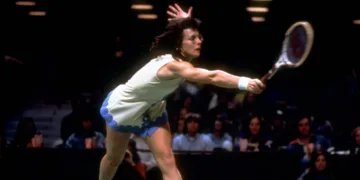
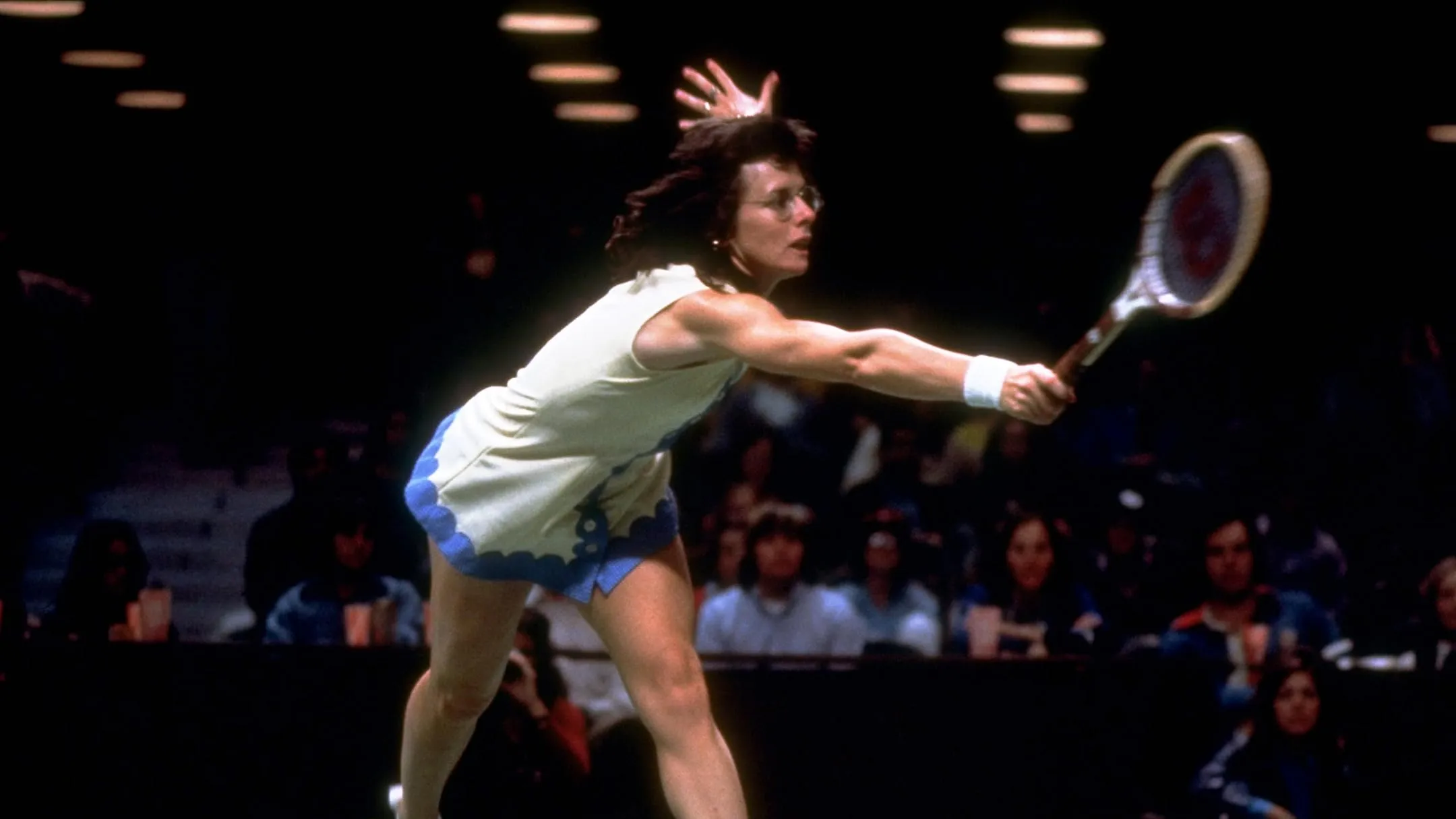
Her style took shape through raw physicality. She played as a power hitter, taking control at the net and moving with relentless intent. Archival footage captures her striking from every corner with a ferocity that startled the players around her.
That ferocity met resistance in the 1950s. In one early memory, an official reprimands her for wearing shorts instead of a skirt for a group photo. The expectation was simple: look lady-like. Her priority was also simple: win. Critics regularly said she played like a man. King carried that charge with her and made a quiet pact with herself to become the best in the world. She held to that commitment at a time when female players could barely earn a living in the sport.
The Business of Fairness
In the 1960s, the pay gap between male and female tennis players was staggering, and King read it as second-class citizenship. She understood that fixing the problem demanded a structural overhaul. She led a breakaway group, the Original 9, in forming a separate professional tour for women. Each player signed a symbolic one-dollar contract, a plain statement of shared commitment.
The film also shows King as a sharp strategist with a corporate mind. She targeted executives who had daughters, convinced that those men might care about what opportunities could look like for women. That approach produced a partnership with Philip Morris and the Virginia Slims brand.
The tour’s success demonstrated that women could draw ticket buyers in force. During these early years of building a new league from scratch, her husband Larry King served as a crucial business partner. Together, they worked to secure the financial backing needed to keep the movement alive through the establishment’s disapproval.
Spectacle and the Hidden Self
The documentary hits its peak with the 1973 Battle of the Sexes match against Bobby Riggs, a 55-year-old hustler who sold chauvinism as a marketing hook. King understood the stakes as larger than a trophy. She feared a loss could push the women’s movement back for decades. Her plan was tactical: use soft lobs to wear down the older Riggs through long volleys.
As the film shows her projecting confidence in public, it also turns to the turmoil she carried privately. She wrestled with her sexual identity and developed a severe eating disorder under the pressure of maintaining an image. The documentary covers the painful legal battle with Marilyn Barnett that resulted in King being outed. The moment brings immense suffering, followed by a sense of liberation.
Her reach moves past tennis and into pop culture through her friendship with Elton John and his tribute song “Philadelphia Freedom.” Modern champions such as Serena Williams and Chris Evert appear to credit her with shaping their careers. By the end, King remains feisty and present in the sporting world today.
Give Me the Ball! premiered at the Sundance Film Festival on January 26, 2026, receiving widespread acclaim for its intimate and high-energy portrayal of tennis legend Billie Jean King. As an ESPN Films production within the celebrated 30 for 30 series, the documentary is scheduled to air on ESPN and will be available for streaming on Disney+ and Hulu shortly after its festival run. The film utilizes a blend of rare archival footage and contemporary interviews to capture King’s transformative influence on both professional sports and global gender politics.
Where to Watch Give Me the Ball! (2026) Online
Full Credits
Title: Give Me the Ball!
Distributor: ESPN Films, Disney+
Release date: January 26, 2026
Rating: TV-PG
Running time: 101 minutes
Director: Liz Garbus, Elizabeth Wolff
Writers: Liz Garbus, Elizabeth Wolff
Producers and Executive Producers: Liz Garbus, Elizabeth Wolff, Dominic Crossley-Holland, Dan Cogan, Chris James, Gentry Kirby, Jon Bardin, Tommy Coriale, Louis Mole, Isabel Davis, Jay de Andrade, Ben Lampkin, Heather Anderson, Marsha Cooke, Brian Lockhart, Burke Magnus, Seth Abraham
Cast: Billie Jean King, Ilana Kloss, Elton John, Rosie Casals, Chris Evert, Serena Williams, Julie Heldman
Director of Photography (Cinematographer): Tony Hardmon, Thorsten Thielow
Editors: Joshua L. Pearson
Composer: Laura Karpman
The Review
Give Me the Ball!
This documentary is an electric, high-velocity portrait that perfectly captures the kinetic energy of its subject. It successfully balances the public triumphs of a sporting legend with the deeply personal costs of being a trailblazer. Through zippy editing and candid present-day interviews, the film serves as both a historical time capsule and an inspiring call to action for future generations. It is a masterfully assembled tribute that feels as urgent today as the battles it depicts.
PROS
- The pacing mirrors the intensity of a tennis match, keeping the energy high throughout.
- King’s modern-day interviews are remarkably candid, funny, and deeply insightful.
- The film provides a rich look at the misogyny and classism of the 1970s sporting world.
- It doesn’t shy away from the personal toll of King’s activism, including her struggles with identity and health.
CONS
- While the editing is zippy, the overall biographical flow follows a somewhat standard linear path.
- For viewers well-versed in sports history, some segments—like the Battle of the Sexes—may cover familiar territory.