



























• Latest
  • Trending
The Projectionist Review

The Projectionist Review: Rockwell’s Return to the Monochrome

Dora Review

Dora Review: Psychological Distress Written on the Skin

Think Good Review

Think Good Review: The Exhaustion Behind Every Small Disagreement

Disney/Pixar Toy Story: Retro Roundup! Review

Disney/Pixar Toy Story: Retro Roundup! Review: An Archive Worth Exploring Between Attempts

Spring Review

Spring Review: Mourning Becomes an Act of Resistance

Dernsie: The Amazing Life of Bruce Dern Review

Dernsie: The Amazing Life of Bruce Dern Review: Admiration Works Best With Evidence

Crescendo Review

Crescendo Review: Mozart Keeps the Company Moving

Vertiginous Review

Vertiginous Review: Reality Can Wait Until After Breakfast

Warhammer 40,000: Boltgun 2 Review

Warhammer 40,000: Boltgun 2 Review: The Pleasure of Being Dangerously Overconfident

The Nightmare Upstairs: What Happened to Ty and Bryn? Review

The Nightmare Upstairs: What Happened to Ty and Bryn? Review: Cameras Capture What Interviews Cannot Resolve

Aquí Review

Aquí Review: Coetzee’s Questions Find Their Feet

Relentless Memory Review

Relentless Memory Review: Listening for Katrülaf

World Without Cows Review

World Without Cows Review: Warm Encounters, Uneasy Confidence

  • Home
  • Privacy Policy
  • Terms and Conditions
  • Gazettely Review Guidelines
Thursday, October 15, 2026
GAZETTELY
  • Home
  • Movie and TV News
    Midday Meal

    Majid Majidi’s “Midday Meal” Wins Best Film at Busan, Qualifies for Oscars

    Evac

    Renny Harlin to Direct Prison Rescue Thriller “Evac”

    LaRoyce Hawkins

    LaRoyce Hawkins Exits “Chicago P.D.” After 11 Seasons as Atwater

    The Lowdown

    “The Lowdown” Returns With Tommy Lee Jones as Ethan Hawke’s Estranged Father

    Christy Carlson

    Christy Carlson Romano Says She Earned Half of Shia LaBeouf’s Pay on “Even Stevens”

    Sylvester Stallone

    Sylvester Stallone Has “Millions of Regrets” About Doing His Own Stunts

    Kelsey Grammer

    Kelsey Grammer to Play Late-Life EMT in NBC Drama “Pops”

    You Can See Everything

    A24’s “You Can See Everything” Eyes Biggest Documentary Opening Since the Pandemic

    Peter Safran

    Peter Safran Confirms “Swamp Thing” Is Alive as DC Studios Moves Into Skydance Era

  • Movie and TV Reviews
    Dora Review

    Dora Review: Psychological Distress Written on the Skin

    Think Good Review

    Think Good Review: The Exhaustion Behind Every Small Disagreement

    Spring Review

    Spring Review: Mourning Becomes an Act of Resistance

    Dernsie: The Amazing Life of Bruce Dern Review

    Dernsie: The Amazing Life of Bruce Dern Review: Admiration Works Best With Evidence

    Crescendo Review

    Crescendo Review: Mozart Keeps the Company Moving

    Vertiginous Review

    Vertiginous Review: Reality Can Wait Until After Breakfast

    The Nightmare Upstairs: What Happened to Ty and Bryn? Review

    The Nightmare Upstairs: What Happened to Ty and Bryn? Review: Cameras Capture What Interviews Cannot Resolve

    Aquí Review

    Aquí Review: Coetzee’s Questions Find Their Feet

    Relentless Memory Review

    Relentless Memory Review: Listening for Katrülaf

  • Game Reviews
    Disney/Pixar Toy Story: Retro Roundup! Review

    Disney/Pixar Toy Story: Retro Roundup! Review: An Archive Worth Exploring Between Attempts

    Warhammer 40,000: Boltgun 2 Review

    Warhammer 40,000: Boltgun 2 Review: The Pleasure of Being Dangerously Overconfident

    over the hill Review

    over the hill Review: Funselektor Finds Its Feet in Low Gear

    Tales of Eternia Remastered (1)

    Tales of Eternia Remastered Review: Good Plans, Unreliable Execution

    Allogloom Review

    Allogloom Review: Finding Affection Among the Flesh-Eating Moths

    Deep Dish Dungeon Review

    Deep Dish Dungeon Review: Making a Home in Hostile Ruins

    Time To Wake Up Review

    Time To Wake Up Review: Blinking Through an Uneven Nightmare

    Bluey’s Happy Snaps Review

    Bluey’s Happy Snaps Review: Familiar Places, Fresh Reasons to Look

    Planet Zoo 2 1

    Planet Zoo 2 Review: Breeding Beyond the Fence

  • The Bests
No Result
View All Result
  • Home
  • Movie and TV News
    Midday Meal

    Majid Majidi’s “Midday Meal” Wins Best Film at Busan, Qualifies for Oscars

    Evac

    Renny Harlin to Direct Prison Rescue Thriller “Evac”

    LaRoyce Hawkins

    LaRoyce Hawkins Exits “Chicago P.D.” After 11 Seasons as Atwater

    The Lowdown

    “The Lowdown” Returns With Tommy Lee Jones as Ethan Hawke’s Estranged Father

    Christy Carlson

    Christy Carlson Romano Says She Earned Half of Shia LaBeouf’s Pay on “Even Stevens”

    Sylvester Stallone

    Sylvester Stallone Has “Millions of Regrets” About Doing His Own Stunts

    Kelsey Grammer

    Kelsey Grammer to Play Late-Life EMT in NBC Drama “Pops”

    You Can See Everything

    A24’s “You Can See Everything” Eyes Biggest Documentary Opening Since the Pandemic

    Peter Safran

    Peter Safran Confirms “Swamp Thing” Is Alive as DC Studios Moves Into Skydance Era

  • Movie and TV Reviews
    Dora Review

    Dora Review: Psychological Distress Written on the Skin

    Think Good Review

    Think Good Review: The Exhaustion Behind Every Small Disagreement

    Spring Review

    Spring Review: Mourning Becomes an Act of Resistance

    Dernsie: The Amazing Life of Bruce Dern Review

    Dernsie: The Amazing Life of Bruce Dern Review: Admiration Works Best With Evidence

    Crescendo Review

    Crescendo Review: Mozart Keeps the Company Moving

    Vertiginous Review

    Vertiginous Review: Reality Can Wait Until After Breakfast

    The Nightmare Upstairs: What Happened to Ty and Bryn? Review

    The Nightmare Upstairs: What Happened to Ty and Bryn? Review: Cameras Capture What Interviews Cannot Resolve

    Aquí Review

    Aquí Review: Coetzee’s Questions Find Their Feet

    Relentless Memory Review

    Relentless Memory Review: Listening for Katrülaf

  • Game Reviews
    Disney/Pixar Toy Story: Retro Roundup! Review

    Disney/Pixar Toy Story: Retro Roundup! Review: An Archive Worth Exploring Between Attempts

    Warhammer 40,000: Boltgun 2 Review

    Warhammer 40,000: Boltgun 2 Review: The Pleasure of Being Dangerously Overconfident

    over the hill Review

    over the hill Review: Funselektor Finds Its Feet in Low Gear

    Tales of Eternia Remastered (1)

    Tales of Eternia Remastered Review: Good Plans, Unreliable Execution

    Allogloom Review

    Allogloom Review: Finding Affection Among the Flesh-Eating Moths

    Deep Dish Dungeon Review

    Deep Dish Dungeon Review: Making a Home in Hostile Ruins

    Time To Wake Up Review

    Time To Wake Up Review: Blinking Through an Uneven Nightmare

    Bluey’s Happy Snaps Review

    Bluey’s Happy Snaps Review: Familiar Places, Fresh Reasons to Look

    Planet Zoo 2 1

    Planet Zoo 2 Review: Breeding Beyond the Fence

  • The Bests
No Result
View All Result
GAZETTELY
No Result
View All Result
The Projectionist Review

The Day She Returns Review: Minimalist Pacing and Philosophical Inquiry

Powerwash Simulator 2: Adventure Time Pack DLC Review: A Cel-Shaded Scrubbing Session

Home Entertainment Movies

The Projectionist Review: Rockwell’s Return to the Monochrome

Scott Clark by Scott Clark
5 months ago
in Entertainment, Movies, Reviews
Reading Time: 5 mins read
A A
0
Share on FacebookShare on TwitterShare on PinterestShare on WhatsAppShare on TelegramSummarize with ChatGPTSummarize with Perplexity

Alexandre Rockwell situates his story inside Film Noir Cinema in Greenpoint, Brooklyn, and the choice immediately gives the drama its governing shape. The theater stands as a relic from a fading era, a physical echo of Sully’s own condition after twelve years in prison for a manslaughter charge he barely understands.

Sully has built a life out of quiet habits. His sparse apartment, the empty seats, and the daily rhythm of projection and retreat all point to a man who has learned survival through absence. For a while, the story honors that stillness. Then the past arrives with a collector’s patience. Old associates return with demands. Ramona, his former boss, wants a debt settled.

The noir engine starts in familiar fashion, yet Rockwell slows the machinery until every step feels like a moral negotiation. The conflict is plain: Sully wants a life beyond his old crimes, and that life keeps being claimed by people who still speak the language of debt.

The mood stays somber, almost devotional. Inside the theater, screen images feel firmer than the streets outside. Rockwell uses a traditional noir premise, then strips away the easy charge of genre mechanics. What remains is atmosphere, guilt, and a man trying to read the story he has apparently been living.

Faces of the Past

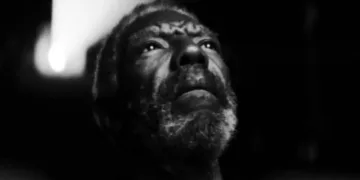
Vondie Curtis-Hall builds Sully from restraint. His performance depends on posture, pauses, and a face that seems to have stored every year spent behind bars. He gives the character a quiet intensity, shaped by a fading hold on the present. The role needs gravity, and Curtis-Hall supplies it with controlled ease. Kevin Corrigan’s Duck, a corrupt detective, brings a serrated energy to the film.

His cynicism cuts through the gloom and gives the danger a practical texture. He feels dangerous because he feels plausible, which is often scarier than theatrical menace. David Proval’s Aaron brings the story into a more domestic register. As Sully’s brother, a man whose mind is slipping away, he turns the possibility of a rebuilt life into something painfully fragile. Their scenes suggest that peace, for Sully, would require care, patience, and luck, three items rarely found in noir inventory.

Kasi Lemmons gives Ramona the authority of someone who never has to raise her voice to control a room. Her scenes with the ensemble carry the suggestion of old arrangements, old injuries, and old debts. Karyn Parsons, appearing as Rosa, carries a haunting presence tied to Sully’s deepest wound. The cast gives the film its lived-in weight. These people seem to have known one another long before the camera arrived, and that shared past does much of the storytelling.

The Geometry of the Frame

Sam Motamedi’s black-and-white photography gives the film its moral architecture. High contrast shapes the rooms Sully occupies, turning each space into a pressure chamber of light and shadow. Dialogue matters, yet the frame often tells the story first. One of Rockwell’s bolder formal choices comes through frequent aspect-ratio shifts. The image widens and narrows as if responding to Sully’s fractured state of mind.

The device suggests a man whose sense of reality has been trained by the cinema he operates, a life processed through projection, framing, and flicker. It is a technical flourish with a narrative purpose, which is the kind of flourish noir can actually use. Richard Edson’s score follows a similar discipline. It works beneath the surface, tracking the film’s movement from tentative hope to sudden menace with restraint.

The music helps organize the mood changes quietly. Rockwell also threads classic cinema through Sully’s inner life. Clips of Buster Keaton and Fellini appear like messages from another artistic age. They create a conversation between Sully’s grief and the history of moving images. The effect gives the film a self-aware quality and keeps the focus on Sully’s experience. Shadow, light, music, and screen memory all serve the character study, giving the familiar noir grammar a more reflective shape.

The Persistence of the Image

The film treats memory as a faulty storyteller. Sully is haunted by a past that remains vivid in feeling and broken in sequence. His recollections arrive as fragments, and the story asks him to assemble them before any peace can be possible. The movie theater becomes his shelter, a dark room where grief can be processed at a safer distance. It also lets him hide from the city’s harsher glare, which makes the place both sanctuary and trap.

The plot remains clear about the difficulty of breaking a violent cycle. Old mistakes return with names, faces, and claims. Sully’s path requires a confrontation with history, and the film earns its emotional charge by making that confrontation feel exhausting. The tone moves between crime-thriller grit and a softer sentimentality. That combination could have collapsed into awkwardness, yet the performances keep the material steady.

The resolution offers closure through fatigue, with triumph kept at a distance. A sliver of light appears in the monochrome world because Sully has endured enough to recognize it. The past remains fixed, yet the future can still be shaped by how he carries its images forward. Rockwell’s film becomes a character study about guilt, memory, and the strange power of cinema to tell us what we have lived through before we fully understand it.

The Projectionist arrived as a highlighted selection during the 2026 Slamdance Film Festival. It premiered in February of this year at the DGA Theater in Los Angeles. Currently, the film appears in select independent theaters across North America following its acquisition by the distributor Utopia. Audiences seeking to view the work can find it at boutique cinemas and through specialized festival circuits. Plans for a digital rollout are expected for later this summer as the theatrical run concludes.

Full Credits

  • Title: The Projectionist

  • Distributor: Utopia

  • Release date: February 19, 2026

  • Running time: 94 minutes

  • Director: Alexandre Rockwell

  • Writers: Alexandre Rockwell

  • Producers and Executive Producers: Quentin Tarantino, Jack Auen, Alexandre Rockwell, Elaine Walsh

  • Cast: Vondie Curtis-Hall, Karyn Parsons, Kasi Lemmons, David Proval, Kevin Corrigan, Michael Buscemi

  • Director of Photography (Cinematographer): Sam Motamedi

  • Editors: Alexandre Rockwell

  • Composer: Richard Edson

The Review

The Projectionist

7.5 Score

The Projectionist succeeds as a melancholic study of a man tethered to his past by the very reels he spins. Alexandre Rockwell trades traditional thriller pacing for a slow, textural immersion into memory and noir tradition. The experimental aspect ratio shifts might feel arbitrary to some. However, the strength of the ensemble, particularly Vondie Curtis-Hall, provides a necessary emotional anchor. It is a film for those who appreciate the texture of cinema and the weight of a life lived in shadows. It demands patience and rewards it with a haunting, quiet clarity.

PROS

  • Vondie Curtis-Hall anchors the film with a deeply physical and still portrayal of a broken man.
  • Sam Motamedi utilizes high-contrast black-and-white photography to create a rich neo-noir atmosphere.
  • The score by Richard Edson effectively mirrors the internal emotional shifts of the protagonist.
  • The supporting ensemble of seasoned actors brings a lived-in history to the criminal underworld.

CONS

  • The narrative momentum often stutters when shifting between meditative drama and thriller elements.
  • The frequent changes in aspect ratio lack a clear or consistent narrative purpose.
  • Violent outbursts occasionally disrupt the established somber mood in a way that feels jarring.

Review Breakdown

  • Overall 0
Tags: Alexandre RockwellBlack Horse ProductionsCrimeDavid ProvalDramaFeaturedKaryn ParsonsKasi LemmonsKevin CorriganMichael BuscemiThe ProjectionistUtopiaVondie Curtis-Hall
Previous Post

The Day She Returns Review: Minimalist Pacing and Philosophical Inquiry

Next Post

Powerwash Simulator 2: Adventure Time Pack DLC Review: A Cel-Shaded Scrubbing Session

0 0 votes
Article Rating
Subscribe
Login
Notify of
guest
guest
0 Comments
Oldest
Newest Most Voted

This Week's Top Reads

  • Is This Seat Taken? Review

    Is This Seat Taken? Review: A Satisfying Mental Workout

    1324 shares
    Share 0 Tweet 0
  • Treasure Island Review: David Oyelowo Commands an Uneven Adventure

    0 shares
    Share 0 Tweet 0
  • Trust Review: Squandered Potential and an Incoherent Plot

    6 shares
    Share 0 Tweet 0
  • Dustfall Review: Crime Television That Stays With the Survivor

    0 shares
    Share 0 Tweet 0
  • Adult Supervision Review: Children Need Help Their Fathers Cannot Quite Give

    0 shares
    Share 0 Tweet 0
  • Murder In A Small Town Season 2 Review: Politics and Police Work

    5 shares
    Share 0 Tweet 0
  • Blue Lights Season 4 Review: Who Gets Exposed, Who Stays Protected

    1 shares
    Share 0 Tweet 0

Must Read Articles

The Diplomat Season 4 Review
TV Shows

The Diplomat Season 4 Review: Every Marriage Has a Foreign Policy

9 hours ago
Whalefall Review
Movies

Whalefall Review: Breathing Lessons from a Damaging Father

10 hours ago
Ludwig Season 2 Review
TV Shows

Ludwig Season 2 Review: Lucy Gets the Credentials and the Story Gets Better

1 day ago
Crystal Lake Review
TV Shows

Crystal Lake Review: Cardellini Carries the Carnage

2 days ago
Time Season 3 Review
TV Shows

Time Season 3 Review: Rehabilitation Left Off the Rota

2 days ago
Loading poll ...
Coming Soon
Which of Alfred Hitchcock's 1960s thrillers is your all-time favorite?

Gazettely is your go-to destination for all things gaming, movies, and TV. With fresh reviews, trending articles, and editor picks, we help you stay informed and entertained.

© 2021-2026 All Rights Reserved for Gazettely

What’s Inside

  • Movie & TV Reviews
  • Game Reviews
  • Featured Articles
  • Latest News
  • Editorial Picks

Quick Links

  • Home
  • About US
  • Contact Us
  • Advertise with Us
  • Review Guidelines

Follow Us

Facebook X-twitter Youtube Instagram
No Result
View All Result
  • Gazettely | Movie, TV & Game Reviews, News, and Rankings
  • Movies
  • Entertainment News
  • Movie and TV Reviews
  • TV Shows
  • Game News
  • Game Reviews
  • Contact Us

© 2024 All Rights Reserved for Gazettely

wpDiscuz
0
0
Would love your thoughts, please comment.x




