

























![Kingdom Hearts Collection [I-III] Review](https://gazettely.com/wp-content/uploads/2026/10/Kingdom-Hearts-Collection-I-III-1-360x180.webp "Kingdom Hearts Collection [I-III] Review: KHII Holds Steady as Newer Entries Fluctuate 37")



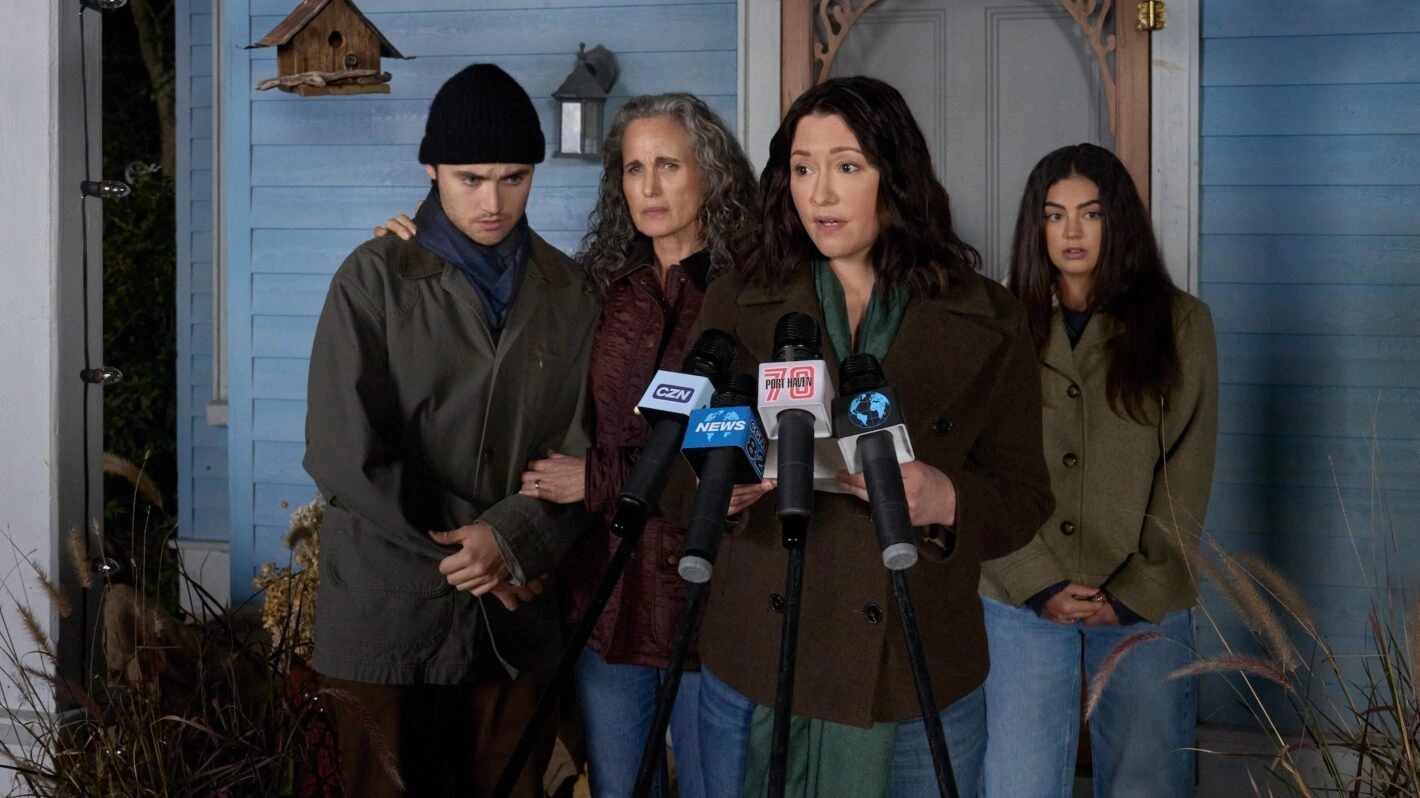

The final season of The Way Home returns to the fog-soaked landscape of Port Haven, where the Landry family continues to wrestle with the unruly pond on their property. The water still functions as a temporal portal, sending Kat, her mother Del, and her daughter Alice through decades of family history.
The story has widened since the initial search for the lost Jacob Landry, shifting from one family wound toward the secrets that shaped the town itself. The season opens with a glimpse of a future wedding, a clean narrative signal that the pond now reaches beyond the past. The emotional stakes move toward the Augustine family line, giving this final chapter a clear dramatic assignment: reconcile the choices made by three generations of women.
The script is working toward resolution, with attention placed on the events that fractured the Landry and Augustine bonds. The premiere also hints at a change in the rules governing the pond. In a series built on emotional time travel, a rule change is never a small matter. It gives the characters new ways to confront the histories they keep circling.
Revelations, Relocations, and the Search for Tessa
A seven-month leap pushes the story forward. Alice stands on the edge of high school graduation, and the house carries a quieter rhythm as she prepares for a new life in New York. Compared with her usual trips across centuries, this transition may sound almost ordinary, yet the effect on the household is substantial. The early episodes hinge on a painful revelation from the past.
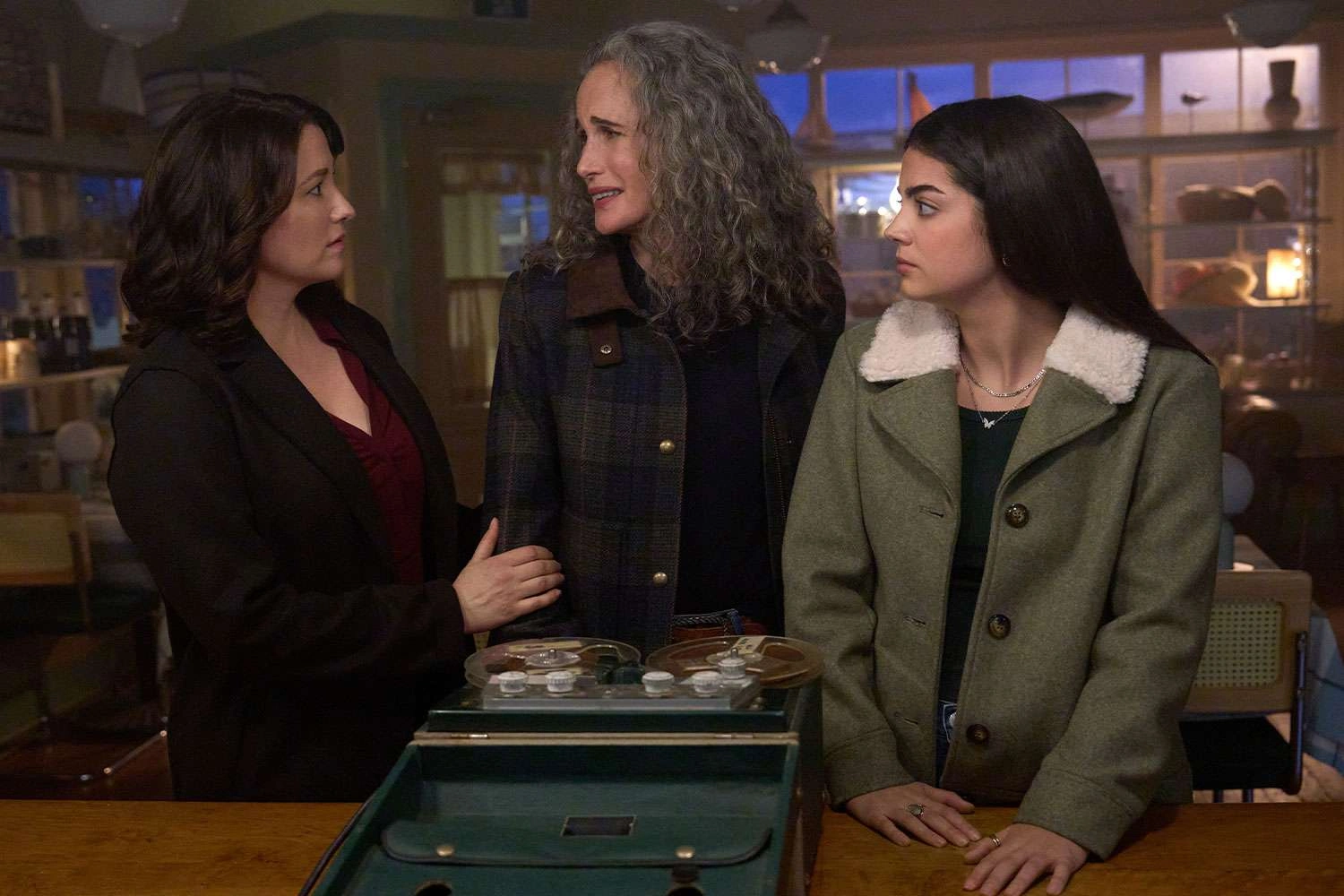
Kat learns that she was the person who left baby Elliot in a basket on her own doorstep in 1983. That discovery complicates her present relationship with Elliot and reshapes his childhood trauma as something she unknowingly helped set in motion. The mystery of Elliot’s mother, Tessa, becomes a major engine for the season. Her suitcase offers concrete proof of her life in Port Haven. A photograph of Tessa with a young Elliot confirms her presence before she vanished. For Elliot, that evidence disrupts the belief that she simply abandoned him.
Jacob remains out of reach. He has moved to Toronto and refuses to communicate directly with his family. The Alice in Wonderland books he sends to Alice operate as cryptic reminders of his absence, turning a gift into another silence Del must live with. That silence leaves a steady unease beneath the celebration of Alice’s milestones. Jacob’s relocation creates its own form of exile, built from modern roads, distance, and the plain refusal to answer. Kat and Elliot carry their own strain.
Kat waits for a proposal he intends to make at the end of the summer, and the delay gives the present-day story a feeling of suspension. The temporal mysteries keep moving; the relationship stalls. The writers use that friction to show the gap between emotional readiness and the desire for perfect timing. Elliot’s habit of circling his anxieties remains one of his clearest traits, which is endearing until it becomes narratively inconvenient.
Silent Shadows: Crossing into 1925 and 1976
The arrival of 1925 as a destination gives the season a stronger cinematic texture. Alice discovers silent film footage that opens a window into the era. In that footage, Kat and Fern look deeply frightened. The image appears before Kat arrives in that timeline, planting dread before anyone enters the pond. Life in 1925 is shaped by social change and concealed danger.
Kat forms a bond with a younger Fern as they move toward the days preceding a documented explosion in the Lingermore tunnels. That event hangs over their scenes, giving ordinary exchanges the pressure of a countdown. Kat’s search for Tessa in this period reveals the historical weight carried by the Augustine family.
Alice is sent to 1976, where she reconnects with Evelyn Goodwin and her father, Colton. The period has an uneasy mood. Evelyn’s marriage to Lewis’s father is presented as quiet misery, and Alice’s presence lets her witness the origins of conflicts that still echo in her own time.
The future wedding scene stays active as a major puzzle. Kat, Del, and Alice emerge from the pond in a time beyond 2026, and their conversation about a mysterious male figure suggests that someone important is missing or has died. The sequence invites the audience to identify the person being mourned or celebrated. Fern becomes the link across eras. Her riddles point to a precise understanding of the pond’s logic. She seems to know where and when the travelers belong, which suggests a closed loop she has already watched unfold.
Personal Growth and the Stakes of Connection
Elliot Augustine’s arc is built around a severe internal struggle. His history of abandonment makes his wariness of the pond credible. His reluctance to jump makes sense. Most people would hesitate if their family tree required a map and a working knowledge of 19th-century history.
His eventual decision to seek the truth about Tessa marks a meaningful step in his development. He pushes past his fear of the answers waiting for him. Del Landry faces her own change as the empty nest becomes unavoidable. Her relationship with Sam gives her a new source of support, and Sam’s knowledge of the pond’s secret removes a wall between them.
Alice finds confidence through music. She works through her hesitation and begins sharing her original songs. Her relationships with Noah and Max grow more tangled as her move to New York approaches. Max remains a steady presence, and the secrets between them test that bond. Kat gains a sharper sense of independence after being separated from Elliot in the past.
Her investigations in 1925 give her room to act on her own, which restores a degree of agency to a character often pulled by family obligation and temporal chaos. Her encounters with the Goodwin family show how deep Port Haven’s roots run. The series makes clear that the Augustine and Landry lines are tied to the Goodwins across a century. Each character has to measure personal desire against responsibility to family legacy. The season gives particular weight to the growth of the women as they move toward an uncertain future.
Patterns of the Past: Legacy and the Weight of Truth
The time capsules become one of the season’s most affecting narrative devices. The 1975 and 2026 capsules represent attempts to speak across generations. Del’s letter to her unborn child carries a strong emotional charge, connecting the woman she was with the mother she became. Maternal love shapes the season’s emotional logic.
It links the experiences of three generations and gives the search for Tessa a clear thematic purpose. That search becomes an inquiry into how far a child will go to understand a parent’s choices. The show studies cycles of history through generational trauma, with characters recognizing the patterns they keep repeating. Their shared task is to break the silence that has defined the family for decades.
Secrets operate like currency in Port Haven. Del’s decision to withhold information creates visible distance between her and Kat. Once those truths surface, their dynamic shifts. The narrative keeps returning to the balance between destiny and choice. The pond appears to bring travelers to specific moments for a reason, suggesting that their actions belong to a larger design.
The characters must decide if they are passive participants in history or if they can change the future. The script leans toward a careful answer: the past may be fixed, yet the emotional response to it remains a choice. This season is strongest when it focuses on the courage required to face the truth. The Landrys and Augustines are learning that the way home is paved with the secrets they once tried to leave behind.
The Way Home Season 4 premiered on April 19, 2026, marking the final stage for this time-traveling family drama. Viewers can watch the series on the Hallmark Channel, with new episodes becoming available for streaming the following day on the Hallmark+ platform. This season follows the Landry women as they uncover the mysteries of the Port Haven pond and their interconnected histories.
Where to Watch The Way Home Season 4 Online










Full Credits
Title: The Way Home Season 4
Distributor: Hallmark Channel, Hallmark+
Release date: April 19, 2026
Rating: TV-PG
Running time: 45 minutes
Director: Grant Harvey, Michelle Latimer, Norma Bailey
Writers: Heather Conkie, Alexandra Clarke, Marly Reed, Jessica Runck, Michael Hanley
Producers and Executive Producers: Marly Reed, Arnie Zipursky, Lauren MacKinlay, Larry Grimaldi, Hannah Pillemer, Fernando Szew, Heather Conkie, Alexandra Clarke, Andie MacDowell, Chyler Leigh, Susanne Berger, John Calvert
Cast: Chyler Leigh, Evan Williams, Sadie Laflamme-Snow, Andie MacDowell, Jefferson Brown, Alex Hook, David Webster, Spencer MacPherson, Julia Tomasone, Jordan Doww
Director of Photography (Cinematographer): Mark Dobrescu
Editors: Ric Thomas
Composer: Robert Carli
The Review
The Way Home Season 4
The Way Home Season 4 maintains its commitment to emotional honesty and complex world-building. It successfully bridges the gap between speculative fiction and family drama. The evolution of the pond’s mechanics adds fresh stakes without losing the focus on maternal bonds. While some subplots in the present day feel slower, the trips into 1925 and 1976 offer profound insights into the characters' legacies. It is a confident final chapter for a series that values heart as much as its temporal puzzles.
PROS
- Strong performances from the lead actresses.
- Expansion of the pond's rules to include forward travel.
- Careful exploration of family secrets and ancestral history.
- Productive use of multiple timelines to provide character depth.
CONS
- Slow pacing in current romantic arcs.
- Repetitive hesitation from Elliot regarding his past.
- Jacob’s absence removes a vital emotional connection.







