











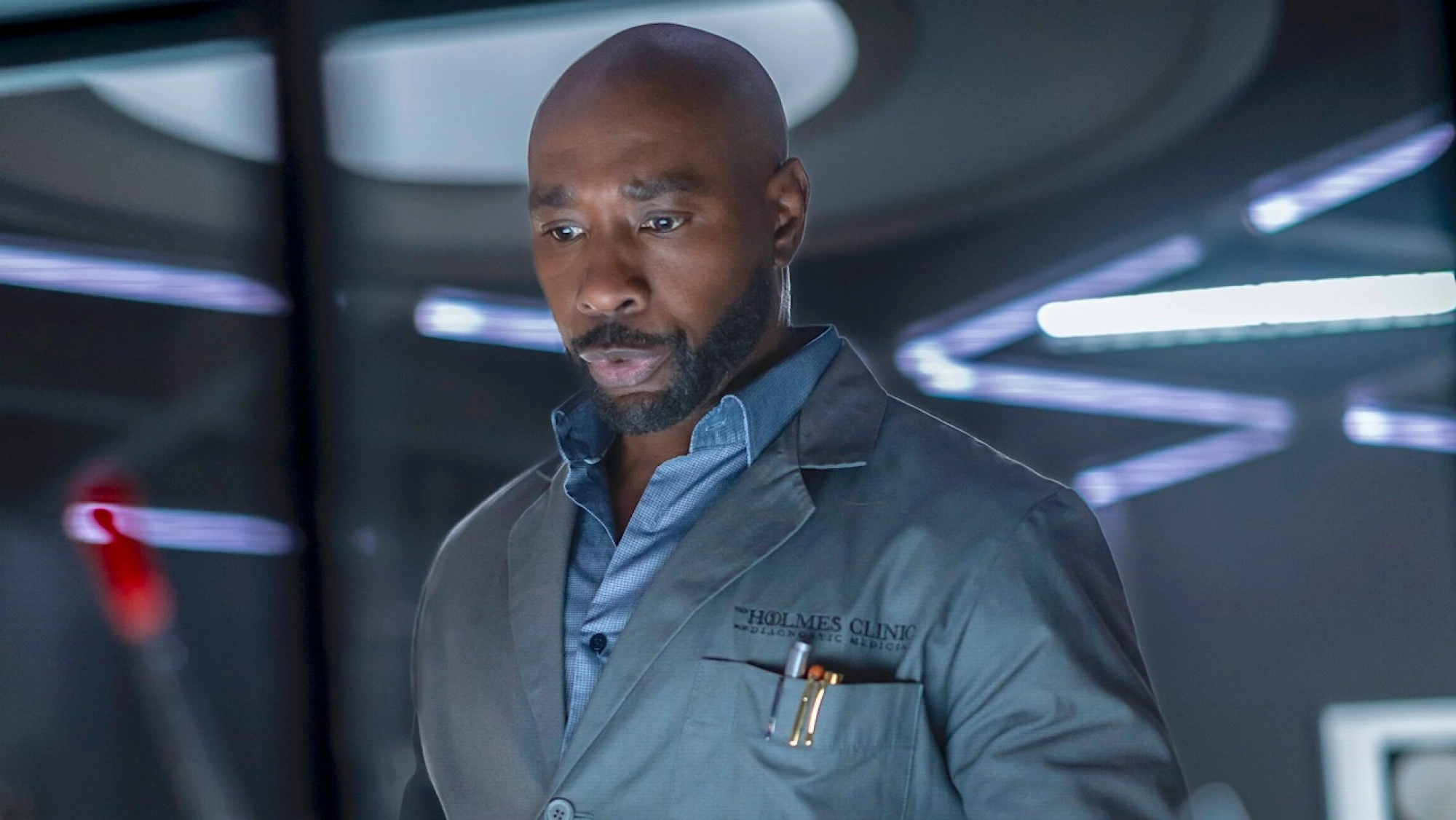

CBS’s Watson aired its series finale Sunday night, closing out a 33-episode run that ended prematurely — and with a deliberately unresolved ending that creator Craig Sweeny now confirms could mean anything, including Watson dying on the operating table.
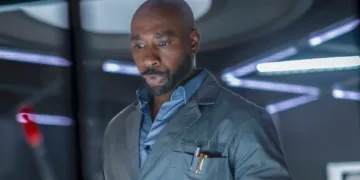
The medical drama, which premiered in January 2025 and starred Morris Chestnut as a post-Sherlock Dr. John Watson running a rare-disease clinic in Pittsburgh, shot its second season without knowing whether the show would survive. CBS formally canceled it in late March 2026, after production had already wrapped, citing steep audience declines. Season 2 averaged a 0.17 rating in the 18-49 demographic and 2.86 million viewers — down 57% in the demo and 44% in total viewership compared to its first season.
Sweeny told Deadline the finale was written as a season closer first, with an added coda pointing toward a potential future for Watson and his love interest, Mary. That closing scene — set at 221B Baker Street in London — carries an intentional ambiguity. “It could be a fantasia Watson is seeing as he’s on the operating table in what may be his dying moments,” Sweeny said, adding that he has his own interpretation but prefers to leave audiences to form theirs.
The season’s central twist — Robert Carlyle’s Sherlock Holmes materializing as an amnesiac patient at Watson’s own clinic after spending most of the season as a hallucination tied to Watson’s brain tumor — was itself a late creative pivot. Sweeny revealed the writers originally planned Holmes only as a delusion, a device for Watson to uncover his glioblastoma diagnosis.
They changed course after seeing what Carlyle brought to the role. A planned Season 3 would have placed Watson in the dual position of treating Sherlock’s lingering medical complications while navigating the end of the young doctors’ three-year fellowships at the clinic.
CBS head Amy Reisenbach, addressing the cancellation at the network’s 2026-27 schedule presentation, called Chestnut “maybe one of the greatest No. 1’s I’ve ever dealt with” before pointing to the network’s high ratings threshold and the need to clear space for new programming. Chestnut, for his part, responded on Instagram with measured grace, calling the cancellation “the nature of the beast” and urging fans to follow the careers of his castmates.
Sweeny, a veteran of CBS’s Elementary who spent five years on that series as executive producer, expressed grief at the curtailed run while crediting a genetics expert, Dr. Shäron Moalem, for grounding the show’s science-forward medical cases. He singled out the working environment — the show was written in Los Angeles and filmed in Vancouver — as exceptional. “I’ve never known anything quite like the warm and collegial vibe that prevailed on Watson,” he said, attributing much of that culture to Chestnut’s leadership.
The cancellation leaves several storylines open: an unresolved investigation into a character’s death, a search for a birth mother, and a breakup among the clinic’s staff. Sweeny was blunt about the loss. “We had a lot more to say with the show,” he said, “so of course it’s sad.”